Buying Servo Motors in Bulk for Robotics: MOQs, Lead Times, and Warranty Terms
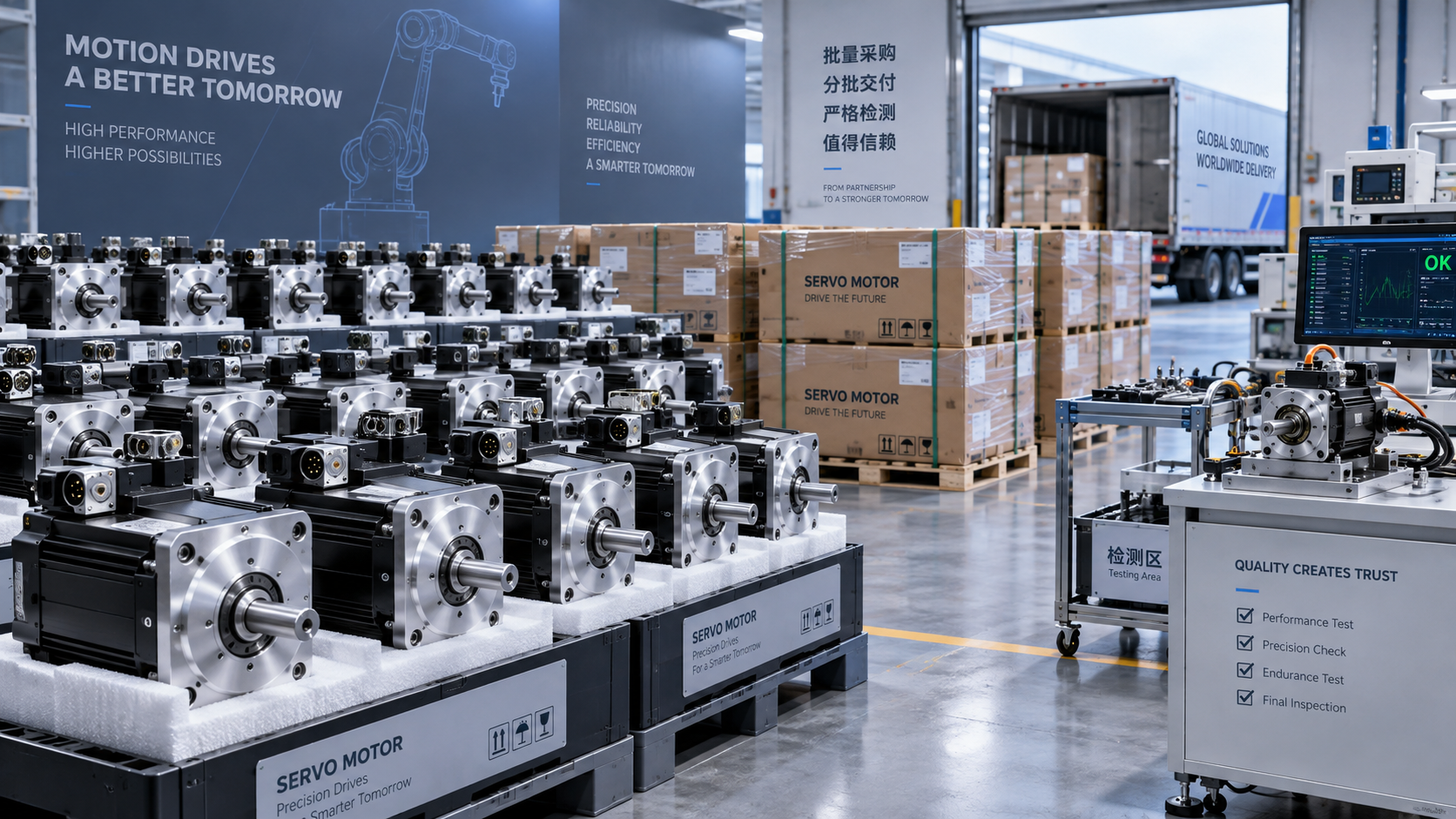
Buying servo motors in bulk for robotics makes commercial sense when the motor configuration is stable, demand supports the order commitment, and delivery dates align with robot assembly. A lower unit price can lose its value quickly if the purchase creates excess inventory, leaves one critical axis short of motors, or starts the warranty clock months before installation.
For procurement teams comparing servo motors wholesale for robotics, three terms deserve close attention: what the minimum order quantity actually covers, when usable motors will reach the production line, and how failures will be handled. These terms should be evaluated together. A large order with staged deliveries may protect cash flow, but its value depends on cancellation rights, stock ownership, and whether warranty coverage starts separately for each shipment.
Make the quoted configuration precise before negotiating volume
A bulk price comparison is useful only when suppliers are quoting equivalent, approved configurations. “Servo motor” can describe a standalone industrial motor, an integrated motor and drive, or an actuator assembly that includes gearing and control electronics. The purchase specification must identify what is included and which additional components the robotics team must source.
For a standalone motor, engineering should approve the exact model, winding or voltage variant, feedback device, brake option, shaft, connectors, and cable requirements. Where the quotation covers an integrated actuator, the specification also needs to define the gearbox, drive, communication interface, and relevant firmware configuration. A shared power rating does not establish interchangeability.
Robotic duty adds another constraint. Repeated acceleration, holding loads, thermal conditions, and radial or axial forces can affect suitability. Procurement does not need to perform the sizing calculation, but it does need an approved operating envelope against which supplier commitments and warranty exclusions can be assessed. Peak torque alone is an inadequate purchasing specification.
Keep this approved configuration attached to the quotation and purchase agreement. Require written approval before substitutions or changes to components that could affect fit, control compatibility, or performance. Otherwise, a supplier may meet the stated quantity and delivery date while shipping a revision that still requires engineering review.
Read the MOQ as an inventory commitment
There is no universal minimum order quantity for robotics servo motors. An order fulfilled from distributor stock may have different constraints from a factory production run, and customization can introduce separate batch requirements. Ask what creates the minimum: an individual part number, an option combination, a production setup, or the total commercial order.
This distinction matters for robots using several motor sizes. A supplier may offer attractive pricing at an aggregate volume while requiring a separate minimum for every configuration. If demand is uneven across axes, procurement can end up holding excess motors for one joint while repeatedly expediting another.
Request written answers to a few specific questions:
- Does the MOQ apply per motor model, per configured variant, or across the order?
- Can approved variants be combined to reach a price tier?
- Is the first production order subject to a different minimum from repeat orders?
- Are engineering samples available separately, and do they match the intended production configuration?
- Do custom options carry separate setup charges or noncancelable commitments?
Distinguish the quantity needed to obtain a discount from the quantity that must be received at once. A blanket agreement with scheduled releases can make a volume commitment manageable, provided the supplier accepts the arrangement. It does not automatically reduce financial exposure: the buyer may still be liable for finished stock, work in progress, or dedicated components if the robot program slows.
The agreement should therefore specify the firm order horizon, permitted schedule changes, storage charges, payment triggers, and treatment of unreleased quantities. If the supplier holds finished motors, establish when ownership transfers and who carries the risk of damage or deterioration during storage.
Demand stability should guide the negotiating position. For a validated robot platform with repeatable production, a larger commitment may be justified. During design validation or an uncertain launch, paying more per motor can be less expensive than owning a discounted batch that becomes unusable after a connector, encoder, or mechanical change.
Use matched robot sets to evaluate the order
Translate the proposed purchase into complete robot builds. An inventory balance that looks sufficient in total units may still prevent assembly because one required configuration is missing. Purchasing by matched sets, where practical, makes release schedules easier to connect to production needs.
Service stock should remain visible as a separate requirement. Motors reserved for field replacements are unavailable for planned assembly unless the business accepts the resulting service exposure. Allocating the same inventory to both purposes understates the quantity needed and can make an otherwise reasonable MOQ appear easier to absorb than it is.
Turn lead time into a dated delivery commitment
A quotation stating a lead time of several weeks leaves important questions unanswered. The period might begin at purchase order acceptance, deposit receipt, drawing approval, or final configuration signoff. It may end when motors leave the factory, rather than when they arrive and become available for assembly.
Ask the supplier to identify the start event and end event explicitly. Then map the intervening steps: configuration approval, component procurement, production, testing, shipment, transport, customs clearance where applicable, and incoming acceptance. The relevant purchasing date is when accepted motors are available for the scheduled build.
For customized configurations, approval delays can move the entire schedule. Procurement and engineering should agree who signs off drawings and specifications, what information is required, and how quickly decisions can be made. A supplier commitment contingent on unresolved technical details provides limited protection for the production plan.
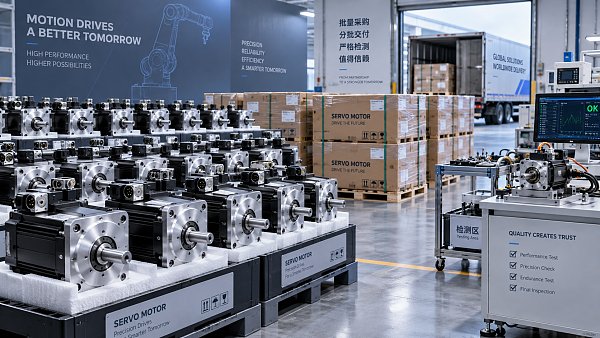
Also distinguish stock availability from replenishment capability. An initial order may ship from inventory, while later releases depend on production capacity or component availability. Ask whether the quoted quantity is physically available, allocated to the order, or expected from a future batch. Request separate commitments for the first shipment and subsequent releases.
Delivery terms should name the applicable Incoterms rule, version, and place where relevant. Those terms help establish transport responsibilities, costs, and risk transfer; they do not by themselves guarantee an arrival date or define acceptance. Record the promised shipment or delivery dates separately, together with the documents needed for import and receipt.
Partial shipments can help—or leave assembly blocked
Agree whether split shipments are allowed and whether each shipment will contain complete sets for the planned robots. A delivery of readily available configurations may look like progress while leaving the assembly line waiting for the one motor that completes every build.
For a delay, the contract should establish when the supplier must notify the buyer, what the recovery plan must contain, and how additional freight costs will be handled. Where commercially achievable, include remedies such as cancellation rights for undelivered quantities after an agreed delay. Assess those remedies alongside practical alternatives: available service stock, flexible assembly sequencing, or a qualified substitute.
A second source only provides useful protection if its motor has been approved for the robot. Differences in mounting, feedback, drive compatibility, or tuning can make an apparently similar product unsuitable for immediate substitution. Any qualification time belongs in the contingency plan.
Evaluate warranty terms against the robot’s service needs
Warranty duration is only one part of coverage. Start with the triggering event: manufacture, shipment, delivery, or commissioning. A shipment-based warranty can be substantially consumed while motors sit in a warehouse or wait for deployment. This is especially relevant when a bulk purchase covers a long production period.
For scheduled releases, seek a separate warranty start for each delivered batch. If commissioning-based coverage is available, define the evidence needed to establish commissioning and any maximum period between delivery and installation. Clear dates prevent later disagreement over which units remain covered.
Next, review the exclusions against the approved application. A defect warranty may exclude overload, overheating, contamination, improper installation, unauthorized repair, or operation outside specified limits. Those exclusions need to be considered alongside the agreed torque profile, mounting arrangement, cooling conditions, environment, and drive settings. An unclear operating limit creates room for disputes over whether a failure is a product defect or an application problem.
Ask engineering to retain the approved application data and configuration records. Motor serial numbers should link to the receiving batch and, where feasible, the robot in which each unit is installed. This supports both individual claims and investigation of failures affecting multiple units.
The remedy determines the operational value
A repair-or-replace warranty can still leave the buyer facing removal labor, return freight, diagnosis delays, and interrupted service. Establish what the supplier will actually do after a claim and what the buyer must provide.
- Who authorizes the return, and what evidence is required?
- Who pays outbound and return freight, including cross-border handling costs?
- Are early failures handled differently from failures later in service?
- Is advance replacement available, and under what payment or security conditions?
- What response and repair turnaround commitments are offered?
- How is warranty coverage treated for repaired or replacement units?
Separate product remedies from broader loss recovery. Unless the contract expressly provides otherwise, buyers should not assume that warranty coverage includes robot downtime, removal and reinstallation, or losses arising from interrupted production. These exposures may require spare stock or service arrangements even when the motor itself is covered.
For bulk orders, discuss how repeated failures will be handled. Agree on escalation, investigation, identification of potentially affected batches, and corrective action. A supplier replacing individual motors without addressing a recurring cause can leave the robotics business carrying continuing disruption.
Also identify the party responsible for the claim. When purchasing through a distributor, establish whether it administers the warranty, what manufacturer support applies, and whether the motors come through an authorized channel. Authenticity, traceability, and warranty eligibility should be resolved before payment.
Compare the commercial package before releasing the order
Evaluate each quotation using the same demand plan and approved configuration. Add freight, duties where applicable, setup charges, required accessories, inspection, financing, and storage to the purchase price. Then assess exposure to excess stock, delayed builds, and failures outside the agreed remedy. Where reliable probabilities are unavailable, compare defined scenarios instead of assigning precise risk costs.
A useful comparison asks what happens under three conditions: production follows the forecast, demand falls, or a critical shipment is delayed. The cheapest quote may remain attractive in all three. Alternatively, flexible releases, a smaller commitment, or a stronger replacement arrangement may justify a higher unit price.
Before placing the bulk order, close the gaps between engineering approval and commercial acceptance. The order package should contain the controlled specification, MOQ rules, release schedule, dated delivery commitments, incoming acceptance criteria, warranty start event, exclusions, and claim process. Acceptance criteria should distinguish visible shipping damage, incorrect configuration, and functional defects so that each has a clear reporting and resolution path.
Where the robot design is still being validated, use an approved pilot quantity to settle configuration and acceptance requirements before committing to the production batch. Once the design and demand are sufficiently stable, negotiate volume around the builds the business can support. A worthwhile bulk agreement gives procurement a clear answer to three practical questions: how much the company must buy, when complete motor sets will be usable, and what support follows if those motors fail.
Get weekly intelligence in your inbox.
No noise. No sponsored content. Pure intelligence.
 Oct 16, 2026Wholesale Solar Panels: How to Compare Bulk Quotes by Total Landed CostWholesale Solar Panels: How to Compare Bulk Quotes by Total Landed Cost
 Oct 15, 2026Supply Chain Intelligence for Sourcing: How to Vet New SuppliersSupply Chain Intelligence for Sourcing: How to Vet New Suppliers
 Oct 14, 2026When should you hire a consultant for manufacturing bottlenecks?When should you hire a consultant for manufacturing bottlenecks?
 Oct 14, 2026What ESG Requirements Apply to Solar PV Exporters Selling to Europe?What ESG Requirements Apply to Solar PV Exporters Selling to Europe?
 Oct 14, 2026Buying Servo Motors in Bulk for Robotics: MOQs, Lead Times, and Warranty TermsBuying Servo Motors in Bulk for Robotics: MOQs, Lead Times, and Warranty Terms
 Oct 13, 2026AI Transportation Management Software: Evaluating ETA Accuracy and IntegrationAI Transportation Management Software: Evaluating ETA Accuracy and Integration
 Oct 12, 2026How Predictive Maintenance AI Detects Machine Failures Before Unplanned DowntimeHow Predictive Maintenance AI Detects Machine Failures Before Unplanned Downtime
 Oct 10, 2026How to Scope Packaging Automation for High-Mix Lines Without Creating BottlenecksHow to Scope Packaging Automation for High-Mix Lines Without Creating Bottlenecks
 Oct 08, 2026How Digital Health Improves Diagnostic Accuracy and Workflow in Clinical LabsHow Digital Health Improves Diagnostic Accuracy and Workflow in Clinical Labs
 Oct 07, 2026Selecting Voice Picking Systems for German Warehouses: Integration, Languages and ROISelecting Voice Picking Systems for German Warehouses: Integration, Languages and ROI
 Oct 06, 2026How to Choose Last Mile Dispatch Software for On-Time Delivery at ScaleHow to Choose Last Mile Dispatch Software for On-Time Delivery at Scale
 Oct 05, 2026Vietnam’s Consumer Electronics Market: Demand Shifts and Sourcing OpportunitiesVietnam’s Consumer Electronics Market: Demand Shifts and Sourcing Opportunities
 Oct 04, 2026Digital Health Investment Priorities for Providers: Improving Access, Outcomes, and EfficiencyDigital Health Investment Priorities for Providers: Improving Access, Outcomes, and Efficiency
 Oct 03, 2026How to Specify an FR4 Custom PCB Board for High-Voltage and High-Heat DesignsHow to Specify an FR4 Custom PCB Board for High-Voltage and High-Heat Designs
 Oct 02, 2026ERP Software Market Intelligence: Adoption, Pricing, and Vendor Signals to WatchERP Software Market Intelligence: Adoption, Pricing, and Vendor Signals to Watch
 Oct 01, 2026How to Select Calibrated Temperature Data Loggers for GMP Cold Storage MonitoringHow to Select Calibrated Temperature Data Loggers for GMP Cold Storage Monitoring
 Sep 30, 2026Custom Molded Rubber Pricing: What Drives Unit Cost and Tooling Fees?Custom Molded Rubber Pricing: What Drives Unit Cost and Tooling Fees?
 Sep 29, 2026How to Evaluate Energy Management Software Vendors for Multi-Site OperationsHow to Evaluate Energy Management Software Vendors for Multi-Site Operations
 Sep 28, 2026How to Select a DIN Rail Smart Meter for Multi-Circuit Energy MonitoringHow to Select a DIN Rail Smart Meter for Multi-Circuit Energy Monitoring
 Sep 27, 2026TWS Earbuds in Vietnam: Demand Drivers, Price Tiers, and Retail Channel OpportunitiesTWS Earbuds in Vietnam: Demand Drivers, Price Tiers, and Retail Channel Opportunities
 Sep 26, 2026How UAE Clinics Can Qualify a Smart Glucometer Supplier for Accuracy and ComplianceHow UAE Clinics Can Qualify a Smart Glucometer Supplier for Accuracy and Compliance
 Sep 25, 2026Buying Aesthetic Lasers in the USA: FDA Status, Wavelengths, and Service SupportBuying Aesthetic Lasers in the USA: FDA Status, Wavelengths, and Service Support
 Sep 24, 2026Laser Cutting Brass Sheet: How to Prevent Burrs and Heat Marks on Thin PartsLaser Cutting Brass Sheet: How to Prevent Burrs and Heat Marks on Thin Parts
 Sep 23, 2026How to Choose Lightweight ANC Headphones for Comfortable All-Day TravelHow to Choose Lightweight ANC Headphones for Comfortable All-Day Travel
 Sep 22, 2026IPX5 TWS Bluetooth Earbuds: What Protection Do They Offer for Workouts?IPX5 TWS Bluetooth Earbuds: What Protection Do They Offer for Workouts?
 Sep 21, 2026What to Look for in a Grid Integration Company for Utility-Scale Solar ProjectsWhat to Look for in a Grid Integration Company for Utility-Scale Solar Projects
 Sep 20, 2026Microgrid Controller Pricing: What Drives Cost in Commercial Energy Projects?Microgrid Controller Pricing: What Drives Cost in Commercial Energy Projects?