How to Scope Packaging Automation for High-Mix Lines Without Creating Bottlenecks
A high-mix packaging line rarely fails because one machine is too slow. It fails because automation is scoped around a local task—case packing, labeling, bagging, palletizing—while product variation, replenishment, inspection, handoffs, and changeovers are treated as secondary details. The new machine then runs well during a controlled demonstration but waits for material, starves downstream equipment, or creates an accumulating queue that operators must manage manually.
The practical answer is to scope industrial automation for packaging around line flow under variation, not around maximum machine speed. Start with the real production mix, identify the constraint that currently limits shipped output, and define the automation boundary so it protects that constraint rather than moving congestion elsewhere. For a project manager, this means specifying operating scenarios, interfaces, recovery behavior, and changeover requirements before comparing machine capacities.
Begin with the production patterns that create the problem
“High mix” can mean several different things, and each one affects automation scope differently. A line may handle many SKUs with similar carton sizes, or only a few products with large swings in pack count, orientation, labeling, case dimensions, and order frequency. Those are not equivalent automation challenges.
Before equipment discussions begin, map the actual packaging families rather than relying on a broad SKU count. Group products by the attributes that force a mechanical, control, material, or quality change. Useful attributes include:
- Primary pack format, such as pouch, bottle, tray, tube, or wrapped product
- Product stability and orientation requirements on conveyors
- Pack count and collation pattern
- Carton, shipper, and pallet dimensions
- Label content, label location, and print-and-apply rules
- Required inspection points, serialization, lot coding, or verification steps
- Changeover frequency and the permitted time window for each change
- Whether packaging materials arrive in a consistent condition
This exercise often reveals that one “line” is actually serving several operating models. For example, a standard product family may run in longer batches with stable packaging, while promotional packs or customer-specific configurations require frequent adjustment. Designing every station for the fastest standard run can make the shorter, variable runs harder to manage. Designing every station for the most unusual SKU can produce unnecessary complexity and cost.
A better scope identifies which product families deserve automated change parts, recipe control, guided adjustments, manual handling, or a separate processing path. The goal is not to automate every variation in the same way. It is to prevent variation from interrupting the line’s limiting process.
Find the real constraint before adding speed
Packaging projects are often initiated when output targets rise, but the reported slow point is not always the true bottleneck. An operator may see a case packer waiting and conclude that it needs more speed. The case packer may actually be waiting because an upstream labeling station pauses for verification, because cartons are replenished inconsistently, or because finished cases have nowhere to go during pallet changes.
Observe the line across normal operating conditions: startup, a routine SKU change, short runs, replenishment periods, minor stops, quality holds, and end-of-shift material depletion. A bottleneck is the process that limits sustained output after these conditions are considered—not simply the machine with the lowest nameplate rate.
Capacity calculations should use a sustained rate, not an ideal cycle rate. Include the operational losses that are relevant to the proposed scope: changeovers, material replenishment, expected micro-stops, inspection rejects, planned cleaning, and recovery after faults. The purpose is not to create a perfect forecast. It is to stop a packaging machine from being sized against an unrealistic input condition.
Set the automation boundary around stable handoffs
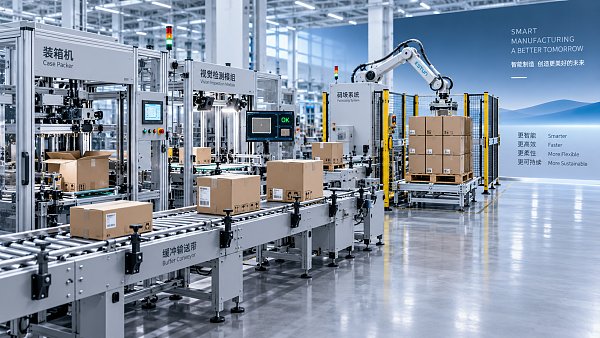
Once the constraint is understood, the next decision is where automation begins and ends. This boundary should be drawn at points where product, packaging material, and process status can be transferred predictably. A technically impressive standalone machine can still create trouble when its upstream and downstream interfaces are vague.
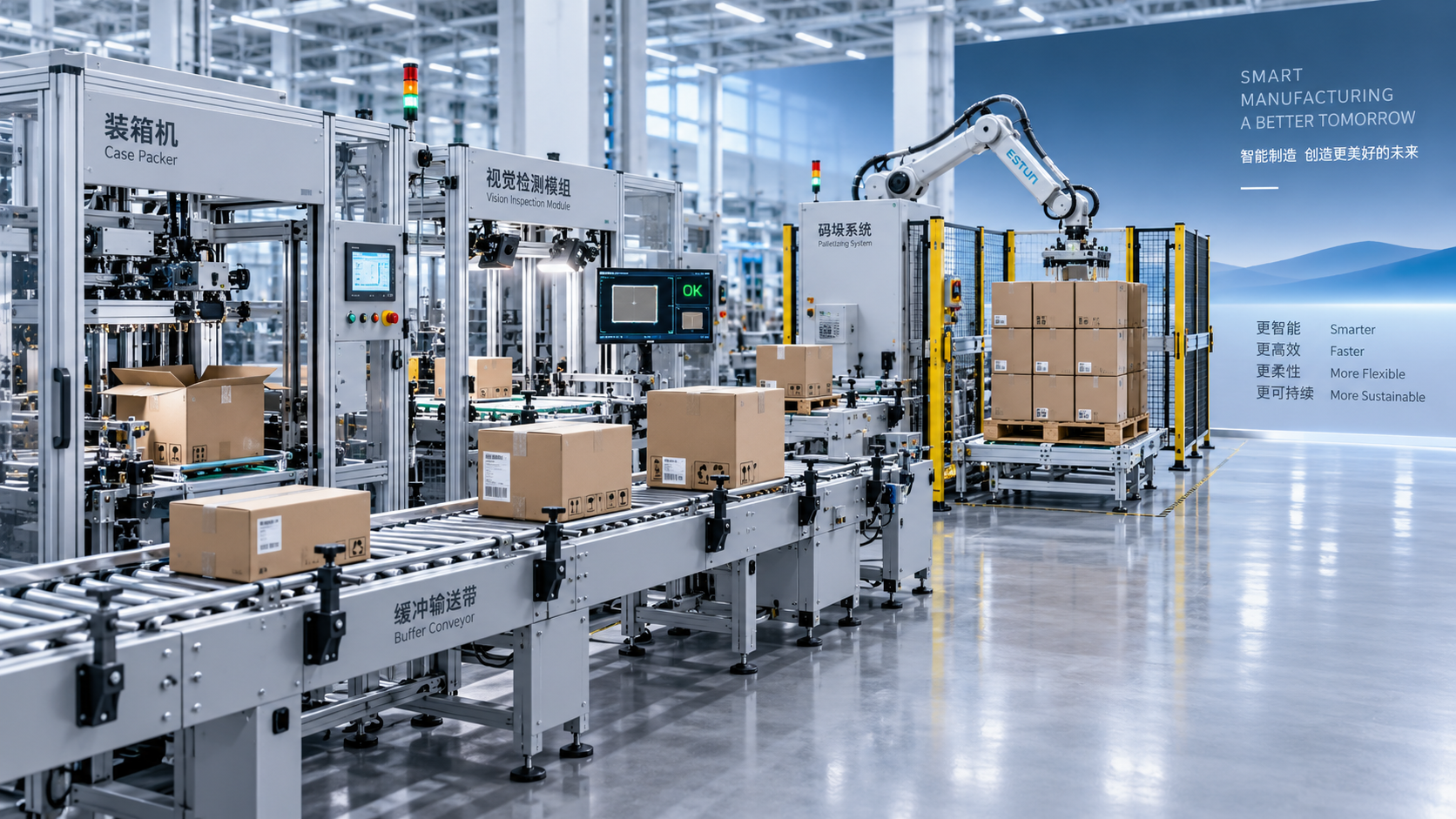
Consider a cartoning cell. Its scope may include product infeed, leaflet insertion, carton erection, coding, inspection, rejection, and discharge to case packing. If the project only specifies the cartoner itself, unresolved questions remain: Who ensures products arrive in the correct orientation? What happens when the coding system rejects a carton? How are rejected units segregated and reconciled? How much buffer can exist before the next station? Can case packing continue during a short cartoner interruption, or must it stop immediately?
These questions determine whether the cell supports flow or merely relocates manual work. Define each handoff in practical terms:
- Product condition: orientation, spacing, accumulation tolerance, fragility, and allowable back pressure.
- Material condition: carton blank quality, label roll changes, adhesive supply, film splices, and replenishment access.
- Control condition: start/stop signals, speed reference, fault communication, recipe selection, and status visibility.
- Quality condition: inspection criteria, reject confirmation, rework rules, and treatment of uncertain units.
- Physical condition: clearance for guarding, operator access, maintenance, cleaning, and material delivery routes.
A scope is incomplete when it names equipment but does not define these transfer conditions. The commissioning team then has to resolve them under time pressure, often by slowing the system or relying on manual intervention.
Use buffers deliberately, not as a substitute for design
Accumulation can protect throughput, but it can also conceal an unstable process. The right buffer allows one station to recover from a brief interruption without immediately stopping the entire line. The wrong buffer increases product handling, complicates traceability, consumes floor space, and leaves operators dealing with a larger recovery event.
Buffer size should be based on the interruptions it is intended to absorb. A short controlled buffer may be appropriate between processes with different cycle behavior. Longer accumulation may be justified when a downstream operation has planned interruptions, such as a pallet exchange. It is less useful where products are sensitive to pressure, require sequence integrity, or become difficult to reconcile after inspection failures.
Project teams should also decide how accumulation behaves at its limits. When the buffer fills, which upstream station slows first? When it empties, which downstream station receives priority? Does the system reduce speed smoothly or stop and restart repeatedly? These control rules matter as much as physical conveyor length. Repeated stop-start operation can reduce the practical value of fast equipment, especially where products shift, labels lose position, or sensors require re-stabilization.
Make changeover performance a design requirement
In high-mix operations, changeover time is not an operational inconvenience outside the automation scope. It is one of the main reasons a line may fail to meet its output plan. A machine that changes quickly in isolation can still cause lengthy downtime if format parts are hard to identify, recipes are unclear, downstream stations must be reset separately, or verification takes too long.
Specify changeover at the line level. For each packaging family, document which actions are automatic, which are guided, which require tools, and which need an independent quality check. The requirement should address repeatability, not only speed. A fast changeover that produces repeated startup rejects or inconsistent carton quality is not a successful one.
Questions that expose hidden changeover work
- Which settings change mechanically, and can they be indexed, servo-controlled, or clearly marked?
- Are format parts unique enough to prevent incorrect installation?
- Can the correct recipe be selected through a controlled process rather than memory?
- Do printers, vision systems, labelers, and inspection devices receive the new product data at the same time?
- What material must be removed or purged before the next product can run?
- Is a first-off approval required, and where will that work occur without blocking the line?
Not every adjustment needs full automation. On a line with infrequent format changes, robust manual adjustments with clear visual references may be more practical than a complex automatic mechanism. Where several changes occur each shift, repeatable recipe-driven adjustments and mistake-proofed parts may have greater value than another increment of maximum running speed.
Design the exception path before approving the normal cycle
Supplier demonstrations usually focus on a stable product stream and acceptable packaging materials. Project success depends more heavily on what happens when normal conditions break: a skewed carton, unreadable code, missing leaflet, tipped product, depleted label roll, sensor obstruction, or a mismatch between the scheduled order and the selected recipe.
For each significant fault, define the intended response. Some faults should trigger an automatic reject while production continues. Others require a controlled stop because product identity or pack integrity could be compromised. The operator must be able to understand the fault, reach the relevant area safely, clear it without disturbing good product, and restart the line without creating an uncontrolled backlog.
Industrial automation for packaging should therefore include recovery time as part of the functional requirement. A station that clears a fault quickly and returns to a verified state can be more valuable than a faster station that requires extensive intervention after a minor disruption. Review access doors, machine guarding, reject bin capacity, material loading height, HMI messages, and the visibility of product flow during recovery.
Coordinate equipment controls with production information
High-mix lines rely on correct product information as much as mechanical movement. Recipe management should connect the product being scheduled with the settings used by packers, coders, labelers, inspection systems, and any downstream identification process. The specific architecture will vary, but the responsibilities should be unambiguous.
Decide where the authoritative product record resides, who can release or edit a recipe, and how changes are confirmed at the machine. A recipe should cover more than speed settings. Depending on the process, it may include carton dimensions, label template, code format, inspection thresholds, reject logic, collation pattern, and pallet configuration.
Integration planning also needs to address fault ownership. When an upstream machine slows, the downstream cell needs a defined response. When a vision system rejects multiple packs, operators need a clear indication of whether the issue is printing, product presentation, lighting, recipe selection, or the inspection device itself. A control system that only reports “line fault” creates longer interruptions and makes improvement work difficult.
Validate the scope with operating scenarios, not only a capacity target
Before finalizing a purchase specification, test the proposed design against representative scenarios. Include the fastest routine product, the most frequent changeover, the smallest stable product, the largest case configuration, a typical material replenishment event, a rejected unit, and a short downstream interruption. These scenarios reveal whether the proposed automation matches the actual workload.
Acceptance criteria should distinguish between equipment function and line performance. A machine may meet its individual cycle test while the integrated line still fails because buffers, controls, material supply, or operator tasks were not included in the requirement. Define who is responsible for each interface and what evidence will demonstrate that the complete sequence works.
The strongest project scope is usually not the one with the most automation. It is the one that protects the true constraint, accommodates realistic variation, gives operators manageable recovery paths, and makes changes predictable. That is how packaging automation raises usable output without simply creating a faster bottleneck somewhere else.
Get weekly intelligence in your inbox.
No noise. No sponsored content. Pure intelligence.
 Oct 12, 2026How Predictive Maintenance AI Detects Machine Failures Before Unplanned DowntimeHow Predictive Maintenance AI Detects Machine Failures Before Unplanned Downtime
 Oct 10, 2026How to Scope Packaging Automation for High-Mix Lines Without Creating BottlenecksHow to Scope Packaging Automation for High-Mix Lines Without Creating Bottlenecks
 Oct 08, 2026How Digital Health Improves Diagnostic Accuracy and Workflow in Clinical LabsHow Digital Health Improves Diagnostic Accuracy and Workflow in Clinical Labs
 Oct 07, 2026Selecting Voice Picking Systems for German Warehouses: Integration, Languages and ROISelecting Voice Picking Systems for German Warehouses: Integration, Languages and ROI
 Oct 06, 2026How to Choose Last Mile Dispatch Software for On-Time Delivery at ScaleHow to Choose Last Mile Dispatch Software for On-Time Delivery at Scale
 Oct 05, 2026Vietnam’s Consumer Electronics Market: Demand Shifts and Sourcing OpportunitiesVietnam’s Consumer Electronics Market: Demand Shifts and Sourcing Opportunities
 Oct 04, 2026Digital Health Investment Priorities for Providers: Improving Access, Outcomes, and EfficiencyDigital Health Investment Priorities for Providers: Improving Access, Outcomes, and Efficiency
 Oct 03, 2026How to Specify an FR4 Custom PCB Board for High-Voltage and High-Heat DesignsHow to Specify an FR4 Custom PCB Board for High-Voltage and High-Heat Designs
 Oct 02, 2026ERP Software Market Intelligence: Adoption, Pricing, and Vendor Signals to WatchERP Software Market Intelligence: Adoption, Pricing, and Vendor Signals to Watch
 Oct 01, 2026How to Select Calibrated Temperature Data Loggers for GMP Cold Storage MonitoringHow to Select Calibrated Temperature Data Loggers for GMP Cold Storage Monitoring
 Sep 30, 2026Custom Molded Rubber Pricing: What Drives Unit Cost and Tooling Fees?Custom Molded Rubber Pricing: What Drives Unit Cost and Tooling Fees?
 Sep 29, 2026How to Evaluate Energy Management Software Vendors for Multi-Site OperationsHow to Evaluate Energy Management Software Vendors for Multi-Site Operations
 Sep 28, 2026How to Select a DIN Rail Smart Meter for Multi-Circuit Energy MonitoringHow to Select a DIN Rail Smart Meter for Multi-Circuit Energy Monitoring
 Sep 27, 2026TWS Earbuds in Vietnam: Demand Drivers, Price Tiers, and Retail Channel OpportunitiesTWS Earbuds in Vietnam: Demand Drivers, Price Tiers, and Retail Channel Opportunities
 Sep 26, 2026How UAE Clinics Can Qualify a Smart Glucometer Supplier for Accuracy and ComplianceHow UAE Clinics Can Qualify a Smart Glucometer Supplier for Accuracy and Compliance
 Sep 25, 2026Buying Aesthetic Lasers in the USA: FDA Status, Wavelengths, and Service SupportBuying Aesthetic Lasers in the USA: FDA Status, Wavelengths, and Service Support
 Sep 24, 2026Laser Cutting Brass Sheet: How to Prevent Burrs and Heat Marks on Thin PartsLaser Cutting Brass Sheet: How to Prevent Burrs and Heat Marks on Thin Parts
 Sep 23, 2026How to Choose Lightweight ANC Headphones for Comfortable All-Day TravelHow to Choose Lightweight ANC Headphones for Comfortable All-Day Travel
 Sep 22, 2026IPX5 TWS Bluetooth Earbuds: What Protection Do They Offer for Workouts?IPX5 TWS Bluetooth Earbuds: What Protection Do They Offer for Workouts?
 Sep 21, 2026What to Look for in a Grid Integration Company for Utility-Scale Solar ProjectsWhat to Look for in a Grid Integration Company for Utility-Scale Solar Projects
 Sep 20, 2026Microgrid Controller Pricing: What Drives Cost in Commercial Energy Projects?Microgrid Controller Pricing: What Drives Cost in Commercial Energy Projects?
 Sep 19, 2026How to Choose a GaN Charger for Laptops Without Compromising Power or PortabilityHow to Choose a GaN Charger for Laptops Without Compromising Power or Portability
 Sep 18, 2026Floating Solar Farm Costs: CAPEX, OPEX, and the Site Factors That Shape ROIFloating Solar Farm Costs: CAPEX, OPEX, and the Site Factors That Shape ROI
 Sep 17, 2026Drone Delivery Solutions for Last-Mile Routes: Site, Payload, and Range PlanningDrone Delivery Solutions for Last-Mile Routes: Site, Payload, and Range Planning
 Sep 16, 2026When Low-Volume Electronics Manufacturing Makes More Sense Than Mass ProductionWhen Low-Volume Electronics Manufacturing Makes More Sense Than Mass Production
 Sep 15, 2026Wholesale WiFi Smart Switches: What Buyers Should Verify Before OrderingWholesale WiFi Smart Switches: What Buyers Should Verify Before Ordering
 Sep 14, 2026How to Select IoT Sensors for Reliable Monitoring in Harsh Industrial EnvironmentsHow to Select IoT Sensors for Reliable Monitoring in Harsh Industrial Environments