
Mechanical Industry Launches New Energy Intelligent Connected Vehicle Industry-Education Integration Collaborative Innovation Center in Songjiang:校企共建‘出口导向型’智能驾驶测试舱与功能安全
Mechanical Industry Launches New Energy Intelligent Connected Vehicle Industry-Education Integration Collaborative Innovation Center in Songjiang
Introduction
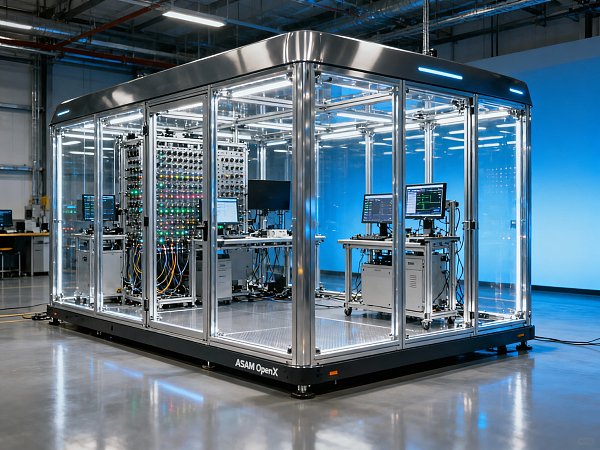
On March 29, 2026, the Mechanical Industry Education Development Center, in collaboration with China Automotive Technology and Research Center (CATARC), initiated the Industry-Education Integration Collaborative Innovation Center in Songjiang. The center's first phase includes the development of an intelligent connected vehicle (ICV) testing and training platform that adheres to ASAM OpenX standards, ISO 26262 ASIL-B level verification, and UDS diagnostic protocols. This platform has already opened data interfaces for export-oriented automakers like BYD and NIO, enabling their overseas models to swiftly comply with EU UN R155 CSMS audits. For European Tier1 suppliers and ODM clients, this signifies a systematic enhancement in the compliance responsiveness of Chinese ICV component suppliers. This development is particularly relevant for the automotive, education, and smart manufacturing sectors, as it bridges the gap between industry needs and academic training while boosting China's competitiveness in global ICV markets.
Event Overview
The launch of the Industry-Education Integration Collaborative Innovation Center marks a significant step in aligning China's ICV industry with international standards. The platform's focus on ASAM OpenX, ISO 26262, and UDS protocols ensures that Chinese automakers and suppliers can meet stringent global compliance requirements, particularly for the EU market. The center's immediate collaboration with BYD and NIO highlights its practical application in supporting export-oriented vehicle development.
Impact on Sub-Industries
Automotive Manufacturers (OEMs)
Export-focused OEMs like BYD and NIO stand to benefit directly from the center's testing platform, which accelerates compliance with EU regulations. This reduces time-to-market for overseas models and enhances their competitiveness in Europe.
Intelligent Driving Component Suppliers
Chinese Tier1 and Tier2 suppliers gain access to standardized testing and validation tools, improving their ability to meet functional safety and diagnostic protocol requirements. This is critical for securing contracts with global automakers and European Tier1 suppliers.
Vocational and Higher Education Institutions
The center's emphasis on industry-education integration provides a model for curriculum development, ensuring that graduates possess skills aligned with real-world ICV testing and validation needs.
Key Focus Areas and Recommended Actions
Monitor Platform Adoption and Expansion
Companies should track how the center's testing platform is adopted by other automakers and suppliers. Early engagement could provide a competitive edge in compliance and certification.
Align Internal Processes with OpenX and ISO 26262
Firms should review their development and validation processes to ensure compatibility with the center's standards, particularly for EU-bound products.
Explore Collaboration Opportunities
Smaller suppliers and startups should consider partnerships with the center or its member organizations to access advanced testing resources and improve their market positioning.
Editorial Perspective
From an industry standpoint, this initiative signals China's strategic push to strengthen its ICV ecosystem through standardization and education. While the immediate impact is visible in export compliance, the long-term effect could reshape the global supply chain by elevating the role of Chinese suppliers. However, the center's success will depend on sustained industry participation and the integration of its outputs into broader manufacturing and R&D processes.
Conclusion
The Songjiang center represents a pragmatic approach to addressing the dual challenges of global ICV compliance and workforce readiness. For industry stakeholders, it offers a tangible resource to navigate complex regulatory landscapes while fostering innovation. At this stage, the initiative is best understood as a foundational step with significant potential for scaling and international collaboration.
Source Information
Primary Source: Mechanical Industry Education Development Center and CATARC joint announcement (March 29, 2026). Ongoing developments, including additional partnerships and platform capabilities, warrant continued observation.
Get weekly intelligence in your inbox.
No noise. No sponsored content. Pure intelligence.
 Oct 08, 2026How Digital Health Improves Diagnostic Accuracy and Workflow in Clinical LabsHow Digital Health Improves Diagnostic Accuracy and Workflow in Clinical Labs
 Oct 07, 2026Selecting Voice Picking Systems for German Warehouses: Integration, Languages and ROISelecting Voice Picking Systems for German Warehouses: Integration, Languages and ROI
 Oct 06, 2026How to Choose Last Mile Dispatch Software for On-Time Delivery at ScaleHow to Choose Last Mile Dispatch Software for On-Time Delivery at Scale
 Oct 05, 2026Vietnam’s Consumer Electronics Market: Demand Shifts and Sourcing OpportunitiesVietnam’s Consumer Electronics Market: Demand Shifts and Sourcing Opportunities
 Oct 04, 2026Digital Health Investment Priorities for Providers: Improving Access, Outcomes, and EfficiencyDigital Health Investment Priorities for Providers: Improving Access, Outcomes, and Efficiency
 Oct 03, 2026How to Specify an FR4 Custom PCB Board for High-Voltage and High-Heat DesignsHow to Specify an FR4 Custom PCB Board for High-Voltage and High-Heat Designs
 Oct 02, 2026ERP Software Market Intelligence: Adoption, Pricing, and Vendor Signals to WatchERP Software Market Intelligence: Adoption, Pricing, and Vendor Signals to Watch
 Oct 01, 2026How to Select Calibrated Temperature Data Loggers for GMP Cold Storage MonitoringHow to Select Calibrated Temperature Data Loggers for GMP Cold Storage Monitoring
 Sep 30, 2026Custom Molded Rubber Pricing: What Drives Unit Cost and Tooling Fees?Custom Molded Rubber Pricing: What Drives Unit Cost and Tooling Fees?
 Sep 29, 2026How to Evaluate Energy Management Software Vendors for Multi-Site OperationsHow to Evaluate Energy Management Software Vendors for Multi-Site Operations
 Sep 28, 2026How to Select a DIN Rail Smart Meter for Multi-Circuit Energy MonitoringHow to Select a DIN Rail Smart Meter for Multi-Circuit Energy Monitoring
 Sep 27, 2026TWS Earbuds in Vietnam: Demand Drivers, Price Tiers, and Retail Channel OpportunitiesTWS Earbuds in Vietnam: Demand Drivers, Price Tiers, and Retail Channel Opportunities
 Sep 26, 2026How UAE Clinics Can Qualify a Smart Glucometer Supplier for Accuracy and ComplianceHow UAE Clinics Can Qualify a Smart Glucometer Supplier for Accuracy and Compliance
 Sep 25, 2026Buying Aesthetic Lasers in the USA: FDA Status, Wavelengths, and Service SupportBuying Aesthetic Lasers in the USA: FDA Status, Wavelengths, and Service Support
 Sep 24, 2026Laser Cutting Brass Sheet: How to Prevent Burrs and Heat Marks on Thin PartsLaser Cutting Brass Sheet: How to Prevent Burrs and Heat Marks on Thin Parts
 Sep 23, 2026How to Choose Lightweight ANC Headphones for Comfortable All-Day TravelHow to Choose Lightweight ANC Headphones for Comfortable All-Day Travel
 Sep 22, 2026IPX5 TWS Bluetooth Earbuds: What Protection Do They Offer for Workouts?IPX5 TWS Bluetooth Earbuds: What Protection Do They Offer for Workouts?
 Sep 21, 2026What to Look for in a Grid Integration Company for Utility-Scale Solar ProjectsWhat to Look for in a Grid Integration Company for Utility-Scale Solar Projects
 Sep 20, 2026Microgrid Controller Pricing: What Drives Cost in Commercial Energy Projects?Microgrid Controller Pricing: What Drives Cost in Commercial Energy Projects?
 Sep 19, 2026How to Choose a GaN Charger for Laptops Without Compromising Power or PortabilityHow to Choose a GaN Charger for Laptops Without Compromising Power or Portability
 Sep 18, 2026Floating Solar Farm Costs: CAPEX, OPEX, and the Site Factors That Shape ROIFloating Solar Farm Costs: CAPEX, OPEX, and the Site Factors That Shape ROI
 Sep 17, 2026Drone Delivery Solutions for Last-Mile Routes: Site, Payload, and Range PlanningDrone Delivery Solutions for Last-Mile Routes: Site, Payload, and Range Planning
 Sep 16, 2026When Low-Volume Electronics Manufacturing Makes More Sense Than Mass ProductionWhen Low-Volume Electronics Manufacturing Makes More Sense Than Mass Production
 Sep 15, 2026Wholesale WiFi Smart Switches: What Buyers Should Verify Before OrderingWholesale WiFi Smart Switches: What Buyers Should Verify Before Ordering
 Sep 14, 2026How to Select IoT Sensors for Reliable Monitoring in Harsh Industrial EnvironmentsHow to Select IoT Sensors for Reliable Monitoring in Harsh Industrial Environments
 Sep 13, 2026How Procurement Teams Can Improve Supplier Reliability With Supply Chain VisibilityHow Procurement Teams Can Improve Supplier Reliability With Supply Chain Visibility
 Sep 12, 2026Smart Manufacturing Trends 2026: What Leaders Should Prioritize for ROISmart Manufacturing Trends 2026: What Leaders Should Prioritize for ROI



























