Which Industrial Automation Trends Should Export Factories Prioritize?
As global competition, labor pressure, and supply chain volatility reshape manufacturing, export-oriented factories must invest in automation that delivers measurable commercial value. What industrial automation trends should export-oriented factories prioritize first? The answer lies in solutions that improve production flexibility, quality consistency, traceability, and energy efficiency while supporting compliance across international markets. From AI-driven inspection and collaborative robots to connected factory data platforms, the right priorities can help manufacturers strengthen buyer trust, control costs, and build more resilient export operations.
The key word is prioritize. Many factories can identify dozens of available technologies, but few can implement them all without disrupting output, tying up capital, or creating isolated systems that are difficult to maintain. The most valuable automation projects are not necessarily the most advanced on paper. They address a clear production constraint: unstable quality, excessive manual handling, weak process records, slow changeovers, avoidable energy consumption, or limited visibility into delivery risk.
Which automation trends deserve attention before others?
For most export-oriented plants, four priorities stand above the rest: connected production data, automated quality control, flexible handling and assembly, and energy-aware operations. These areas have a direct relationship with the issues overseas customers increasingly evaluate before placing or renewing orders: conformance, consistency, documentation, responsiveness, and responsible manufacturing performance.
Advanced technologies such as autonomous mobile robots, digital twins, private industrial networks, and generative AI can be important. However, they tend to create value only after the factory has established reliable equipment data, stable processes, and workable internal ownership. A factory with inconsistent work instructions and poor machine-maintenance discipline will not solve its operational problems merely by adding sophisticated software.
Should factories begin with connected data rather than new robots?
In many cases, yes. The practical starting point is a connected factory data layer that makes production status visible across machines, lines, quality stations, and warehouses. This does not require replacing every legacy machine. Existing equipment can often be connected through sensors, programmable logic controllers, gateways, or manual digital reporting where direct integration is not economical.
The objective is to build a trustworthy record of what happened during production: machine run time, downtime reasons, output by shift, scrap levels, rework, process parameters, material consumption, and inspection results. When these data points remain in separate spreadsheets, paper forms, or individual machine screens, management sees problems after delivery performance has already been affected.
A useful manufacturing execution system or production-monitoring platform should answer operational questions quickly:
- Which work orders are behind schedule, and why?
- Which machine or process step creates the most unplanned downtime?
- Has the defect rate changed after a tooling, material, or operator change?
- Can a batch be traced to its incoming material, process route, inspection records, and shipment?
- Are actual cycle times aligned with quoted capacity and lead times?
This is especially relevant in export business because customers frequently ask for evidence rather than assurances. Traceability requirements may come from contractual quality agreements, sector-specific regulations, product-liability concerns, or sustainability reporting expectations. A well-designed data structure makes it easier to respond to customer audits, investigate claims, and protect the factory when responsibility for a defect is disputed.
Connectivity should not be confused with simply installing dashboards. A visually impressive screen has little value if operators use inconsistent codes for downtime, quality teams record defects differently by shift, or data are not connected to production orders. The difficult work is defining common data rules and ensuring that the records match actual shop-floor conditions.
Why is AI-based visual inspection becoming a higher-priority investment?
Machine vision has been used in industrial production for decades, particularly where dimensions, labels, barcodes, presence checks, and repeatable surface conditions can be measured under controlled lighting. The newer trend is the use of AI-assisted vision to identify more variable defects, such as cosmetic surface flaws, incomplete assemblies, weld irregularities, printing defects, and packaging errors.
Export factories should prioritize AI-driven inspection where quality variation is costly, visual checks are labor-intensive, or customer acceptance criteria are becoming more demanding. It can be particularly effective in sectors involving metal parts, consumer products, electronics assembly, medical-device components, batteries, and precision packaging.
Its commercial value goes beyond reducing the number of inspectors. Automated inspection improves the repeatability of decisions and creates digital evidence. If a buyer reports a defect months after delivery, the factory may be able to retrieve production images, inspection outcomes, batch information, and process conditions rather than relying solely on handwritten records.
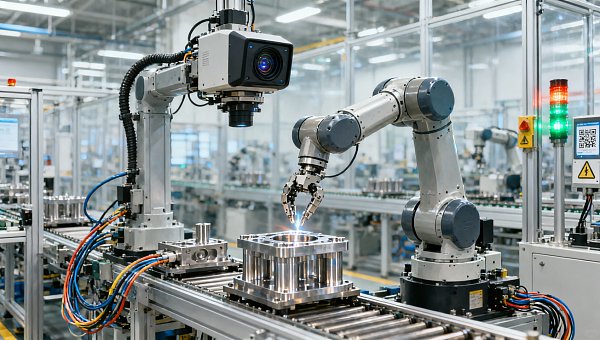
Yet AI inspection is not a universal replacement for human judgment. Performance depends heavily on image quality, stable lighting, well-defined defect categories, and representative training data. A system trained on a narrow set of examples may perform poorly when the material finish, supplier batch, camera angle, or product design changes. False rejects can create unnecessary rework; missed defects can damage customer confidence.
Before committing to a large installation, a factory should test the system on a defined defect family and measure the results against experienced inspectors. The evaluation should include false-positive rates, false-negative rates, throughput, maintenance requirements, data-storage needs, and the process for updating the model when specifications change. The strongest projects treat AI as part of a quality system, not as a stand-alone camera purchase.
Where do collaborative robots make more sense than conventional industrial robots?
Collaborative robots, often called cobots, are gaining adoption because they can be deployed in smaller footprints and reprogrammed more easily than many traditional robotic cells. They are useful where product variation is moderate, production volumes change frequently, or manual repetitive tasks create ergonomic and staffing problems.
Common applications include machine tending, screwdriving, adhesive dispensing, pick-and-place work, basic assembly, end-of-line packing, palletizing, and test-station loading. For factories producing multiple export orders in smaller batches, the ability to move a cobot between tasks can matter more than achieving the absolute highest cycle speed.
However, a cobot is not automatically the best answer to every labor shortage. Conventional industrial robots usually remain more suitable for high-speed, heavy-payload, high-volume, or hazardous applications. The relevant question is not whether a robot can perform the task, but whether the full cell can do so reliably. This includes fixtures, grippers, part presentation, safety design, changeover time, exception handling, and operator training.
Factories often underestimate the importance of upstream consistency. If components arrive randomly oriented, dimensions vary significantly, or packaging is unstable, the robot project may require expensive feeding and vision systems before it can run unattended. In those cases, process simplification or fixture redesign may deliver a better return than robotics alone.
Is autonomous material movement a priority for export operations?
Autonomous mobile robots and automated guided vehicles can reduce dependence on manual internal transport, particularly in large facilities with repetitive movement between receiving, storage, machining, assembly, inspection, and dispatch. They are most compelling where material flow is predictable, forklift traffic is congested, or labor is repeatedly diverted from value-adding tasks.
For export-oriented production, their strategic benefit is often schedule reliability rather than labor reduction alone. A line may have sufficient machines and operators but still lose output because materials, containers, labels, or inspection samples do not arrive when required. Automated material movement can reduce these hidden delays when linked to real-time production schedules and warehouse locations.
Implementation is not simple. Floor quality, aisle width, traffic rules, charging arrangements, fire-safety requirements, rack layouts, and integration with warehouse systems all affect results. A poorly mapped facility can turn mobile automation into another source of congestion. Start with one repeatable transport route and validate performance before redesigning the entire logistics flow.
How important is traceability for maintaining export customer trust?
Traceability is becoming a baseline capability in many industrial supply chains, although the required depth differs widely by product and market. In highly regulated fields, records may need to link materials, operators, equipment settings, inspection outcomes, and shipment details. In less regulated consumer or industrial goods, customers may mainly require lot identification, supplier material records, and documented corrective actions.
The trend is clear: buyers expect faster answers when quality, compliance, or origin questions arise. Automation can make traceability practical by using barcode, QR code, RFID, serialisation, digital work instructions, and system-linked inspection records.
The goal should be proportional traceability, not maximum data collection. Recording every possible event can make the system burdensome and difficult to use. Instead, factories should identify the events that materially affect product conformity and customer obligations. For example, critical process parameters, lot changes, calibration status, final inspection, and shipment identification may matter far more than tracking every minor movement of a non-critical component.
Data governance also matters. Where production systems are connected to suppliers, customers, or cloud platforms, factories should define who can access which records, how long data are retained, and how backups and cybersecurity controls are managed. Export customers may increasingly review cyber-risk practices as part of supplier qualification, especially where connected products, industrial electronics, or sensitive design files are involved.
Should energy management be treated as an automation project?
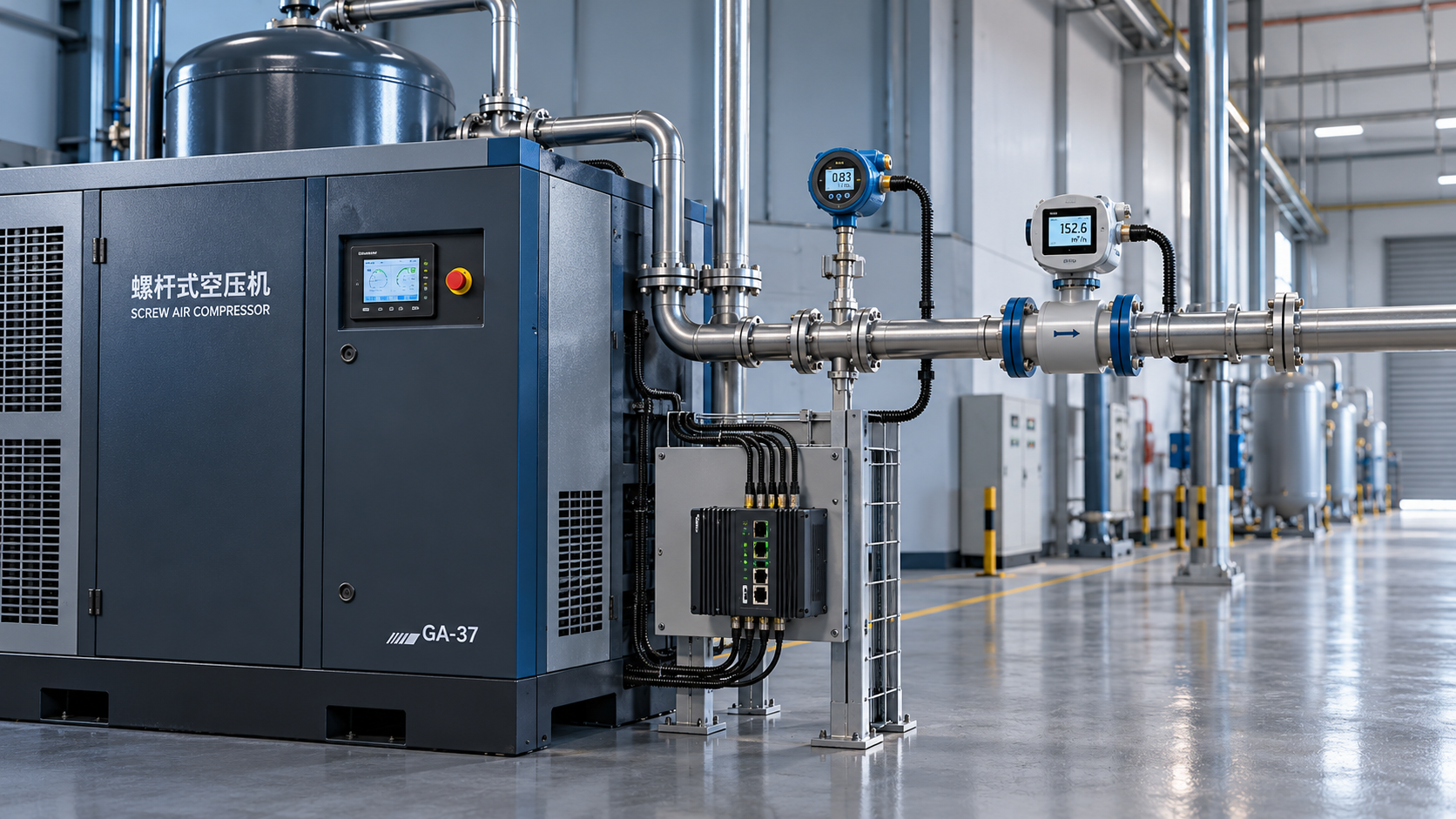
Yes, particularly for facilities with energy-intensive equipment or customers that request emissions information. Energy monitoring is no longer limited to utility billing. Modern systems can measure electricity, gas, compressed air, water, steam, and machine-level consumption, then relate usage to output, operating conditions, and downtime.
This matters because energy waste is often hidden inside routine operations: compressed-air leaks, idling equipment, poorly sequenced heating systems, oversized motors, unnecessary peak demand, or defective maintenance practices. Without sub-metering and production context, a factory may know that its monthly bill increased but not which process caused the increase.
Automation can support energy efficiency through load scheduling, automatic shutdown rules, predictive maintenance alerts, variable-speed controls, and demand monitoring. The strongest business case appears when energy data are tied to units produced or production batches. That allows management to see whether a product line is becoming less efficient, whether a process change improved performance, and whether quoted costs remain realistic.
Factories should avoid treating energy dashboards as ESG decoration. Their usefulness depends on reliable meters, a clear baseline, and accountability for acting on findings. Where carbon reporting is required by a customer or market framework, reported figures should be based on a documented methodology rather than estimates generated by a software interface.
What role does predictive maintenance play in export competitiveness?
Predictive maintenance is valuable when unplanned failures threaten shipment schedules, create expensive scrap, or repeatedly interrupt bottleneck equipment. Vibration, temperature, current draw, oil condition, and cycle-time data can reveal early signs of mechanical or electrical deterioration. Maintenance teams can then schedule intervention before a failure stops production.
Not every asset needs advanced monitoring. A low-cost, easily replaced fan does not justify the same investment as a critical forging press, CNC spindle, injection molding machine, furnace, or coating line. The practical approach is to rank equipment by its impact on safety, output, quality, repair lead time, and availability of spare parts.
Predictive maintenance also requires disciplined follow-through. If alerts are generated but no one verifies them, the system becomes noise. If teams replace parts solely because an algorithm suggests it, maintenance costs can rise without improving reliability. The best programs combine sensor data with technician knowledge, maintenance history, and a clear escalation process.
Does digital twin technology belong on the immediate investment list?
Digital twins are frequently discussed as a major industrial automation trend, but their immediate relevance depends on the maturity of the factory. A useful digital twin can model equipment behavior, production flows, energy use, or entire plant layouts to test changes before they are implemented physically. This can support capacity planning, line balancing, process optimisation, and new-factory design.
For a complex operation with frequent product changes, expensive downtime, or major expansion plans, simulation can produce meaningful value. For a factory still struggling to collect reliable machine data or maintain accurate bills of materials, a digital twin may be premature. The underlying data and process discipline must come first.
It is better to view digital twins as an advanced capability built on connected operations, not as a substitute for them.
How should factories rank automation projects financially?
Payback period remains important, but it should not be the only measure. Export-oriented factories need to calculate the full operational effect of an automation project:
- Direct labor saved or redeployed;
- Reduced scrap, rework, returns, and warranty exposure;
- Higher throughput and shorter lead times;
- Lower downtime on critical production assets;
- Improved audit readiness and traceability;
- Energy and consumables savings;
- Reduced dependence on difficult-to-fill roles;
- Potential effect on customer retention and qualification.
These benefits should be weighed against integration costs, spare parts, software subscriptions, cybersecurity measures, operator training, maintenance capability, and likely production disruption during commissioning. A low-priced automation cell can become expensive if the integrator cannot provide responsive support, documentation, or access to replacement components.
Factories should also test whether an investment improves a real bottleneck. Automating a fast process while an upstream quality hold or downstream packing constraint remains unresolved may produce little commercial benefit.
What is the most common automation mistake?
The most common mistake is buying technology before defining the operating problem. A project may be approved because a competitor installed robots, a trade show demonstrated AI, or a customer mentioned smart manufacturing. Those are weak reasons unless they connect to a measurable factory constraint.
Another frequent error is treating automation as an engineering project only. Production, quality, maintenance, IT, finance, and commercial teams all affect the outcome. A solution that improves cycle time but cannot provide the records a customer requires, or one that works technically but complicates order changes, may not support export growth.
Successful factories typically begin with a small number of high-confidence use cases, establish baseline performance, assign process ownership, and scale only after the operating model works. The most valuable industrial automation trend is therefore not a specific machine or software category. It is the shift toward connected, evidence-based manufacturing in which quality, delivery, cost, and compliance are managed from the same operational facts.
- smart manufacturing
- energy efficiency
- energy management
- energy monitoring
- collaborative robots
- automated guided vehicles
- programmable logic controllers
- autonomous mobile robots
- industrial automation
- robotics
- sensors
- digital twin
- predictive maintenance
- machine vision
- Industrial automation trends
- What industrial automation trends should export-oriented factories prioritize first
Get weekly intelligence in your inbox.
No noise. No sponsored content. Pure intelligence.
 Oct 24, 2026Tesla Q3 2026 Storage Deployments Rank Second Highest as Revenue Falls 16%Tesla Q3 2026 Storage Deployments Rank Second Highest as Revenue Falls 16%
 Oct 24, 2026Freight Forwarding Services Pricing: Comparing Quotes Beyond Base RatesFreight Forwarding Services Pricing: Comparing Quotes Beyond Base Rates
 Oct 23, 2026IndexBox Issues Off-Grid Solar Outlook to 2035, Forecasting 8.2% CAGRIndexBox Issues Off-Grid Solar Outlook to 2035, Forecasting 8.2% CAGR
 Oct 23, 2026NSF/ANSI 49 Biosafety Cabinets: Product Certification vs. Field TestingNSF/ANSI 49 Biosafety Cabinets: Product Certification vs. Field Testing
 Oct 22, 2026Mitsubishi Electric Develops Industry-First Humanoid Robot–CNC Machining SystemMitsubishi Electric Develops Industry-First Humanoid Robot–CNC Machining System
 Oct 22, 2026Aerospace Aluminum Machining: How to Control Distortion in Thin-Wall PartsAerospace Aluminum Machining: How to Control Distortion in Thin-Wall Parts
 Oct 21, 2026Genesis Energy commissions 200 MWh battery storage system at HuntlyGenesis Energy commissions 200 MWh battery storage system at Huntly
 Oct 21, 2026Buying AMI Smart Meters Wholesale: Compatibility Checks and Total CostsBuying AMI Smart Meters Wholesale: Compatibility Checks and Total Costs
 Oct 20, 2026Werner Enterprises Issues Q3 Earnings Warning as Costs RiseWerner Enterprises Issues Q3 Earnings Warning as Costs Rise
 Oct 20, 2026Are Digital Twins Viable for SMEs? Costs, Use Cases, and Data RequirementsAre Digital Twins Viable for SMEs? Costs, Use Cases, and Data Requirements
 Oct 19, 2026Choosing a Wholesale Servo Motor Exporter: Traceability and Warranty ChecksChoosing a Wholesale Servo Motor Exporter: Traceability and Warranty Checks
 Oct 18, 2026Syringe Manufacturing Equipment: Evaluating Throughput and Assembly AccuracySyringe Manufacturing Equipment: Evaluating Throughput and Assembly Accuracy
 Oct 17, 2026Air Freight Forwarding Services: How to Compare Quotes for Urgent ShipmentsAir Freight Forwarding Services: How to Compare Quotes for Urgent Shipments
 Oct 16, 2026Wholesale Solar Panels: How to Compare Bulk Quotes by Total Landed CostWholesale Solar Panels: How to Compare Bulk Quotes by Total Landed Cost
 Oct 15, 2026Supply Chain Intelligence for Sourcing: How to Vet New SuppliersSupply Chain Intelligence for Sourcing: How to Vet New Suppliers
 Oct 14, 2026How energy costs shape smart manufacturing investment in EuropeHow energy costs shape smart manufacturing investment in Europe
 Oct 14, 2026How skills shortages slow smart manufacturing in Southeast AsiaHow skills shortages slow smart manufacturing in Southeast Asia
 Oct 14, 2026How CNC wire-cut machining maintains tight tolerances in thick partsHow CNC wire-cut machining maintains tight tolerances in thick parts
 Oct 14, 2026Can automated feeding stabilize metal forming in smart factories?Can automated feeding stabilize metal forming in smart factories?
 Oct 14, 2026Can CT inspection detect internal defects in metal additive parts?Can CT inspection detect internal defects in metal additive parts?
 Oct 14, 2026When does additive manufacturing reduce lead time for spare parts?When does additive manufacturing reduce lead time for spare parts?
 Oct 14, 2026How production volume affects ROI on an automated painting lineHow production volume affects ROI on an automated painting line
 Oct 14, 2026What data does manufacturing bottleneck analysis consulting need?What data does manufacturing bottleneck analysis consulting need?
 Oct 14, 2026When should you hire a consultant for manufacturing bottlenecks?When should you hire a consultant for manufacturing bottlenecks?
 Oct 14, 2026What Are Electronics Exporters' Top Supply Chain Resilience Gaps in 2026?What Are Electronics Exporters' Top Supply Chain Resilience Gaps in 2026?
 Oct 14, 2026How Do You Measure AI Adoption Maturity in a Traditional Factory?How Do You Measure AI Adoption Maturity in a Traditional Factory?
 Oct 14, 2026Are Chinese AI-Assisted Surgical Devices Gaining Global Trust?Are Chinese AI-Assisted Surgical Devices Gaining Global Trust?