Can Logistics Optimization Software Reduce Customs Clearance Delays?
Can logistics optimization software reduce customs clearance delays for cross-border trade? For global procurement teams, exporters, and supply chain leaders, the answer increasingly depends on how effectively they connect shipment data, compliance workflows, document accuracy, and real-time visibility. As customs requirements become more complex, intelligent logistics platforms can help businesses identify bottlenecks earlier, reduce documentation errors, and build more resilient cross-border operations.
The important qualification is that software does not “clear customs” by itself. Customs authorities make release decisions based on declarations, supporting records, risk assessments, inspections, duties, permits, and applicable trade controls. What software can do is reduce the preventable operational failures that cause a shipment to arrive with incomplete, inconsistent, late, or poorly governed information.
In practice, the best results come when logistics optimization is treated as part of a broader customs-readiness process rather than as a tracking tool with a compliance label.
What kinds of customs delays can software realistically reduce?
Not all clearance delays have the same cause. Some are outside a shipper’s control, including congestion at ports, random examinations, government system outages, labor disruption, geopolitical restrictions, and changes in enforcement priorities. A platform cannot remove those events.
It can, however, reduce delays linked to weak data quality and fragmented handoffs. These are often the most common and most manageable causes of avoidable holds:
- Commercial invoices that do not match packing lists, purchase orders, or customs declarations;
- Incorrect or inconsistent product descriptions;
- Missing country-of-origin information;
- Unverified HS or tariff classifications;
- Incorrect declared values, currencies, Incoterms, or quantities;
- Late submission of entry data before a carrier or destination cutoff;
- Missing certificates, licenses, test reports, or product registrations;
- Failure to identify restricted-party, sanctions, dual-use, or controlled-goods exposure;
- Communication gaps between the manufacturer, freight forwarder, broker, consignee, and carrier.
Logistics optimization software is most useful when it detects these risks before cargo reaches a border. A corrected invoice submitted two days before arrival may prevent a hold. The same correction requested after a customs query can turn into storage charges, missed delivery appointments, production disruption, or customer dissatisfaction.
How does the software reduce documentation-related delays?
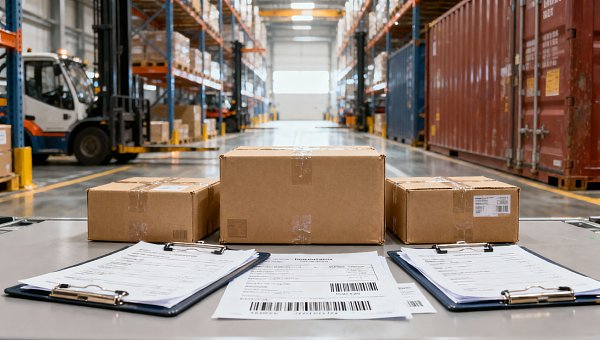
Document management is where many digital logistics systems create their clearest operational value. Cross-border shipments often involve multiple versions of the same commercial data. Sales teams issue the invoice, warehouses prepare packing details, forwarders create transport instructions, customs brokers prepare declarations, and consignees may provide importer-of-record information. If those records are maintained in separate spreadsheets, emails, and portals, inconsistencies are almost inevitable.
A well-configured platform establishes a shared data source. Product information, supplier details, addresses, shipment quantities, declared values, Incoterms, and document templates can be pulled from approved records rather than re-entered manually at each stage. Validation rules can flag obvious conflicts, such as a packing list quantity exceeding the invoice quantity, a missing unit of measure, or a declared value that differs materially from the purchase order.
This is not merely an administrative improvement. Customs declarations are data-driven. Authorities increasingly compare information across filings, carrier manifests, historical entries, trade databases, and risk-screening systems. Small discrepancies that were once corrected informally may now trigger a formal query, document request, or examination.
For organizations handling recurring shipments, master-data governance is especially important. Reusing a flawed commodity description or tariff code at scale can create a recurring clearance problem and may also expose the importer to duty underpayment, penalties, or post-entry audits. Software can help enforce approved product records, but the records must be reviewed by people with adequate customs and product knowledge.
Can real-time visibility prevent a customs hold?
Visibility does not eliminate a customs hold, but it changes how quickly a business can react. The difference between knowing that a shipment is “in transit” and knowing that it has reached a specific pre-arrival filing deadline, been selected for documentary review, or is awaiting a broker response can be commercially significant.
Advanced logistics platforms combine carrier milestones, port or airport status, broker updates, document status, and exception alerts. This allows operational teams to distinguish between a normal transit delay and a customs-related exception that needs immediate action.
For example, a shipment of industrial components may arrive at destination with the entry filed but a certificate of origin still missing. An integrated alert can assign the issue to the responsible party, record the deadline, and show whether the supplier has uploaded the required file. Without that workflow, the problem may remain hidden in a broker email until demurrage or detention risk has already increased.
Visibility becomes more valuable in multimodal shipments. Cargo can move from factory to consolidation warehouse, port, transshipment hub, destination terminal, bonded facility, and final delivery point. Customs responsibility and document requirements may change across these handoffs. A system that maps the shipment against milestones and ownership points makes it easier to identify where a compliance task has stalled.
Does automation improve tariff classification and origin compliance?
It can support these decisions, but it should not be mistaken for legal or technical determination. HS classification and origin analysis are among the most consequential elements of customs compliance. They influence duty rates, trade remedy exposure, licensing requirements, eligibility for preferential tariffs, statistical reporting, and sometimes product-control obligations.
Software can centralize classification records, preserve decision history, prompt reviews when product specifications change, and apply rules to identify potentially inconsistent classifications. Some systems use data matching or artificial intelligence to suggest likely codes based on descriptions and historical entries. These capabilities can accelerate research and identify anomalies.
They do not remove the need for expert review where goods are technically complex, newly developed, bundled, assembled in multiple countries, or subject to special regulations. A generic product name such as “steel part,” “electronic module,” or “medical accessory” is rarely sufficient for reliable classification. Material composition, function, design, technical parameters, end use, and degree of processing may all matter.
Origin is similarly more complex than the shipping country. A product shipped from one country may have been manufactured elsewhere, while preferential origin under a trade agreement can depend on specific processing rules, regional value content, tariff-shift tests, or documentary evidence. Software can make origin certificates easier to collect and monitor, but it cannot make an unsupported claim defensible.
Where logistics optimization software has the greatest impact
The strongest use cases are usually high-volume, repeatable trade lanes where small errors are multiplied across many shipments. Businesses importing standardized components, exporting finished goods through regular channels, managing multiple suppliers, or operating under tight delivery schedules often see the greatest operational benefit.
Three conditions tend to make implementation worthwhile.
First, customs data is currently fragmented. If commercial teams, suppliers, logistics providers, and brokers use separate systems with no controlled handoff, document errors are likely to be frequent. A platform can impose a more disciplined workflow.
Second, delay costs are measurable. Companies should look beyond customs brokerage fees. The financial impact may include storage, demurrage, detention, expedited freight, factory downtime, inventory buffers, late-delivery penalties, and lost sales. In a just-in-time production environment, a single delayed inbound shipment can cost more than months of software subscription fees.
Third, the organization can act on exceptions. Alerts only help when there is an owner, a response deadline, and access to the required data or documents. A system that generates dozens of unassigned warnings may create noise rather than control.
What software cannot fix
The expectation that a digital platform will make customs clearance predictable in every market is unrealistic. Some border risks are fundamentally external.
A shipment may be delayed because customs selects it for physical inspection. A food, chemical, medical, energy, or electronics shipment may require review by agencies beyond customs. New import restrictions, anti-dumping measures, environmental rules, product-safety requirements, or sanctions developments can affect clearance even when documentation is complete. Port congestion and capacity shortages can also delay cargo after formal release.
Software cannot compensate for a supplier that cannot provide accurate technical information, a product team that has not assessed regulatory requirements, or a commercial agreement that leaves importer-of-record responsibilities unclear. It also cannot resolve a dispute over valuation, classification, origin, or licensing without competent legal, customs, or trade-compliance input.
The practical lesson is that logistics optimization software reduces process risk, not sovereign risk. Its value lies in making controllable issues visible early enough to manage them.
What should be assessed before selecting a platform?
The key question is not whether a platform offers shipment tracking. Most do. The more useful question is whether it improves the specific customs decisions and handoffs that create delays in a particular trade operation.
Data integration should be examined closely. A platform needs reliable connections with enterprise resource planning systems, warehouse systems, transport-management tools, broker portals, carrier feeds, and document repositories where appropriate. Manual data extraction from one system and re-entry into another recreates the errors that automation is supposed to remove.
Compliance workflow capability matters more than a polished dashboard. Useful features include document completeness checks, configurable approval steps, version control, exception management, audit trails, broker communication records, product master-data controls, and deadline alerts for pre-arrival filings or permit validity.
Geographic coverage also deserves scrutiny. Customs filing processes, data fields, languages, duty structures, and government interfaces vary widely. A system with strong functionality in one major market may depend on external brokers or manual workarounds elsewhere. For multi-country trade, the implementation team should test the actual lanes, product categories, and entities involved rather than relying on a generic coverage map.
Data security and access governance are equally important. Customs files can contain commercial invoices, pricing, supplier information, customer details, product specifications, and compliance records. The platform should support role-based permissions, clear retention practices, exportable audit records, and contractual clarity on data ownership and third-party access.
How should businesses measure whether delays are actually improving?
Measuring only average transit time can hide the benefit or failure of a customs workflow. A more useful baseline separates transport movement from border processing and records the causes of exceptions.
Relevant indicators may include:
- Percentage of entries cleared without document amendment;
- Number of customs holds caused by missing or inconsistent documents;
- Average time from customs query to complete response;
- Pre-arrival filing completion rate;
- Storage, demurrage, detention, and expedited-shipping costs linked to clearance events;
- Frequency of tariff classification, origin, or valuation corrections;
- On-time delivery performance for shipments requiring customs release.
These measures should be reviewed by lane, supplier, product family, broker, and destination market. A total company average can conceal a chronic problem with one supplier’s documentation, one product category, or one border process.
Is the investment justified for smaller or lower-volume operations?
Not every operation needs a large enterprise platform. For lower-volume trade, disciplined templates, a structured document repository, a qualified customs broker, and a clear internal approval process may deliver more value than a complex implementation. The risk rises when shipment volume, destination complexity, product regulation, supplier count, or time sensitivity rises.
A sensible approach is to begin with the lane where customs-related disruption is most expensive or most frequent. Map the current process from purchase order through final release. Identify where data is entered, who owns each document, when information reaches the broker, and which errors recur. That exercise often reveals whether the primary issue is lack of software, weak master data, unclear accountability, or inadequate supplier controls.
When the root problem is fragmentation, logistics optimization software can materially reduce customs clearance delays for cross-border trade. When the root problem is incorrect product knowledge or poor compliance governance, software should be part of the remedy, not the substitute for it.
The most durable gains come from combining digital visibility with clean product data, timely document collection, clearly assigned responsibilities, and periodic review of changing customs requirements. In cross-border logistics, faster clearance is rarely the result of a single tool. It is the result of making the right information complete, consistent, and available before customs needs to ask for it.
Get weekly intelligence in your inbox.
No noise. No sponsored content. Pure intelligence.
 Oct 24, 2026Tesla Q3 2026 Storage Deployments Rank Second Highest as Revenue Falls 16%Tesla Q3 2026 Storage Deployments Rank Second Highest as Revenue Falls 16%
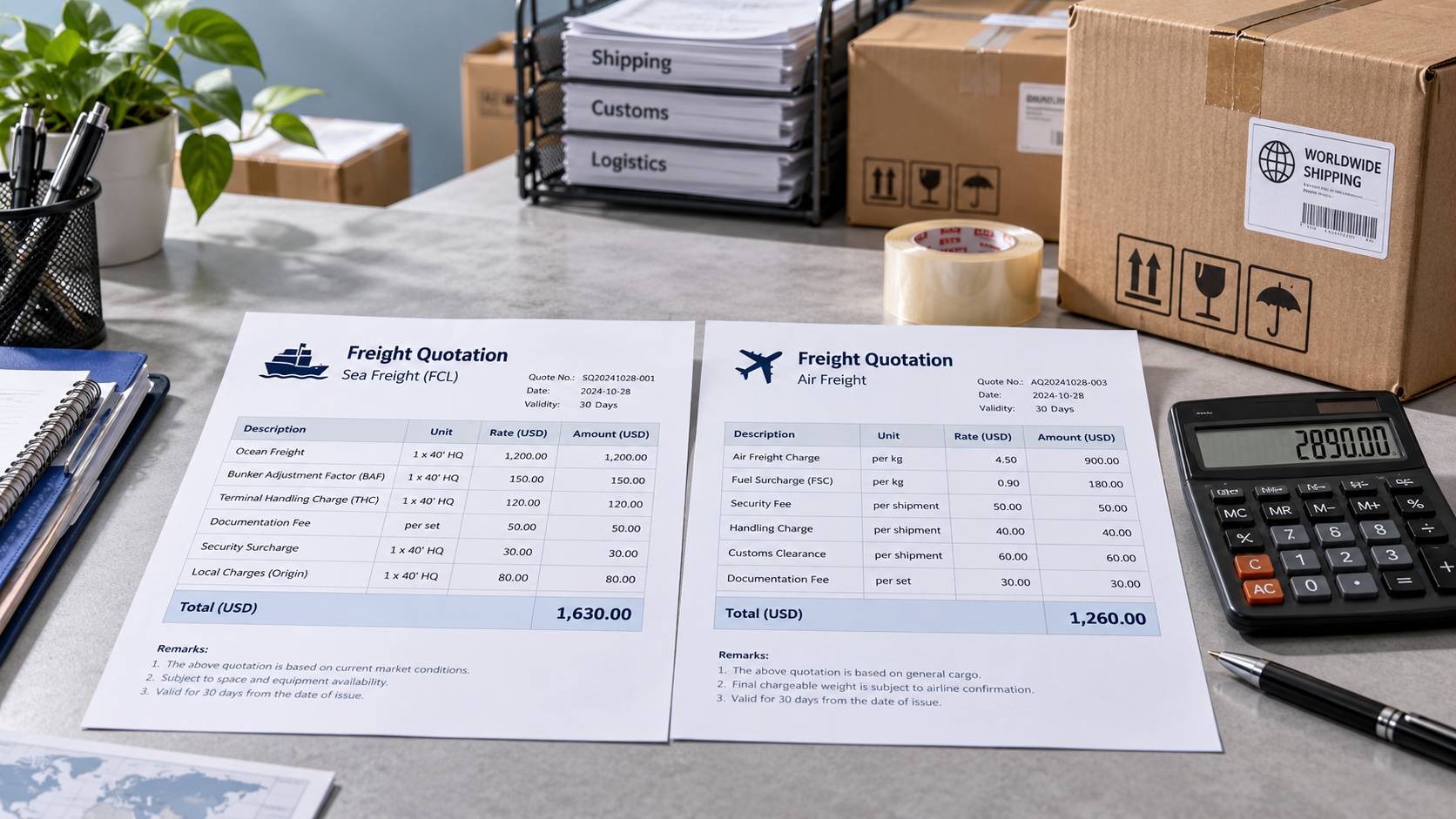
 Oct 24, 2026Freight Forwarding Services Pricing: Comparing Quotes Beyond Base RatesFreight Forwarding Services Pricing: Comparing Quotes Beyond Base Rates
 Oct 23, 2026IndexBox Issues Off-Grid Solar Outlook to 2035, Forecasting 8.2% CAGRIndexBox Issues Off-Grid Solar Outlook to 2035, Forecasting 8.2% CAGR
 Oct 23, 2026NSF/ANSI 49 Biosafety Cabinets: Product Certification vs. Field TestingNSF/ANSI 49 Biosafety Cabinets: Product Certification vs. Field Testing
 Oct 22, 2026Mitsubishi Electric Develops Industry-First Humanoid Robot–CNC Machining SystemMitsubishi Electric Develops Industry-First Humanoid Robot–CNC Machining System
 Oct 22, 2026Aerospace Aluminum Machining: How to Control Distortion in Thin-Wall PartsAerospace Aluminum Machining: How to Control Distortion in Thin-Wall Parts
 Oct 21, 2026Genesis Energy commissions 200 MWh battery storage system at HuntlyGenesis Energy commissions 200 MWh battery storage system at Huntly
 Oct 21, 2026Buying AMI Smart Meters Wholesale: Compatibility Checks and Total CostsBuying AMI Smart Meters Wholesale: Compatibility Checks and Total Costs
 Oct 20, 2026Werner Enterprises Issues Q3 Earnings Warning as Costs RiseWerner Enterprises Issues Q3 Earnings Warning as Costs Rise
 Oct 20, 2026Are Digital Twins Viable for SMEs? Costs, Use Cases, and Data RequirementsAre Digital Twins Viable for SMEs? Costs, Use Cases, and Data Requirements
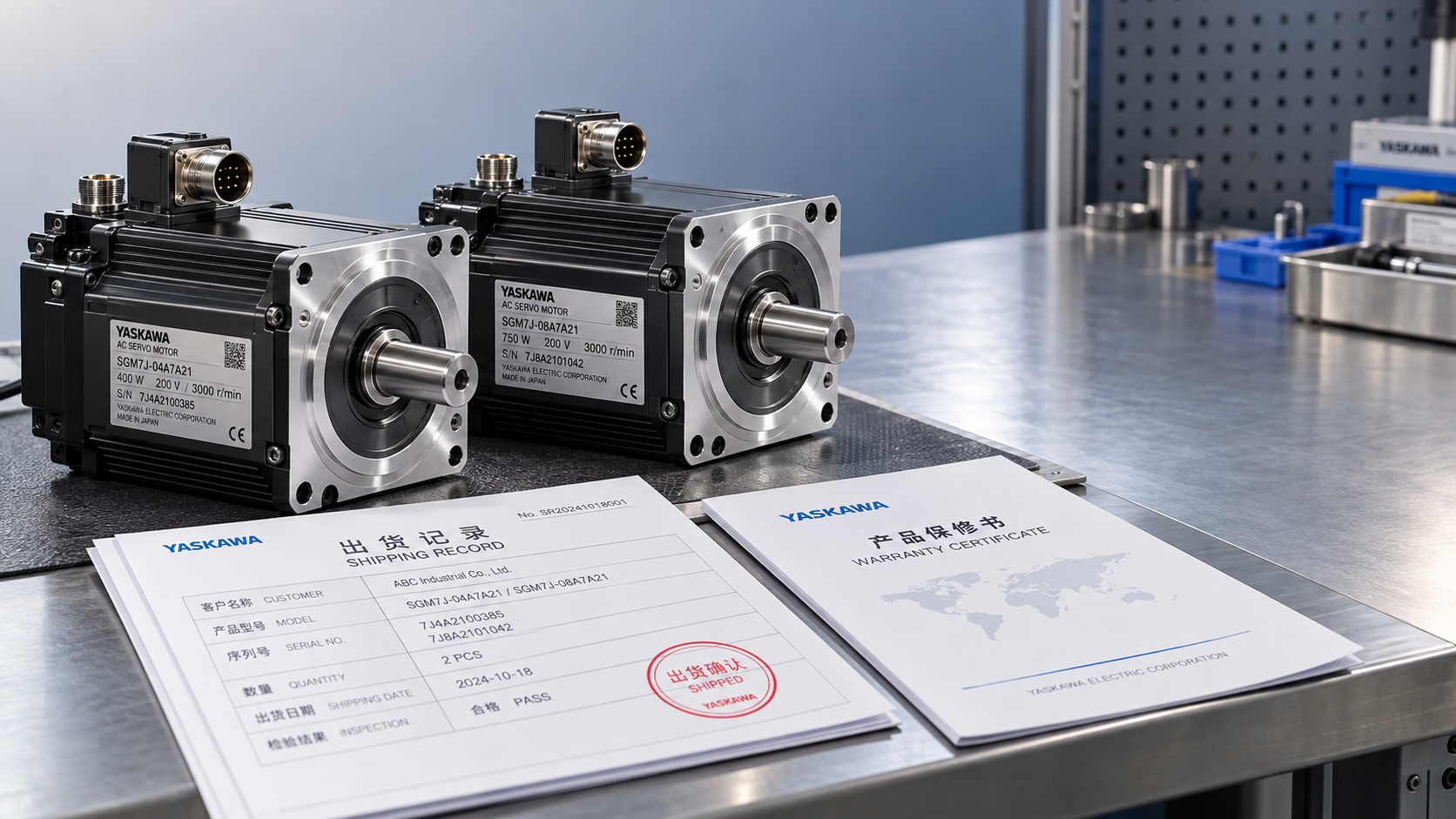
 Oct 19, 2026Choosing a Wholesale Servo Motor Exporter: Traceability and Warranty ChecksChoosing a Wholesale Servo Motor Exporter: Traceability and Warranty Checks
 Oct 18, 2026Syringe Manufacturing Equipment: Evaluating Throughput and Assembly AccuracySyringe Manufacturing Equipment: Evaluating Throughput and Assembly Accuracy
 Oct 17, 2026Air Freight Forwarding Services: How to Compare Quotes for Urgent ShipmentsAir Freight Forwarding Services: How to Compare Quotes for Urgent Shipments
 Oct 16, 2026Wholesale Solar Panels: How to Compare Bulk Quotes by Total Landed CostWholesale Solar Panels: How to Compare Bulk Quotes by Total Landed Cost
 Oct 15, 2026Supply Chain Intelligence for Sourcing: How to Vet New SuppliersSupply Chain Intelligence for Sourcing: How to Vet New Suppliers
 Oct 14, 2026How energy costs shape smart manufacturing investment in EuropeHow energy costs shape smart manufacturing investment in Europe
 Oct 14, 2026How skills shortages slow smart manufacturing in Southeast AsiaHow skills shortages slow smart manufacturing in Southeast Asia
 Oct 14, 2026How CNC wire-cut machining maintains tight tolerances in thick partsHow CNC wire-cut machining maintains tight tolerances in thick parts
 Oct 14, 2026Can automated feeding stabilize metal forming in smart factories?Can automated feeding stabilize metal forming in smart factories?
 Oct 14, 2026Can CT inspection detect internal defects in metal additive parts?Can CT inspection detect internal defects in metal additive parts?
 Oct 14, 2026When does additive manufacturing reduce lead time for spare parts?When does additive manufacturing reduce lead time for spare parts?
 Oct 14, 2026How production volume affects ROI on an automated painting lineHow production volume affects ROI on an automated painting line
 Oct 14, 2026What data does manufacturing bottleneck analysis consulting need?What data does manufacturing bottleneck analysis consulting need?
 Oct 14, 2026When should you hire a consultant for manufacturing bottlenecks?When should you hire a consultant for manufacturing bottlenecks?
 Oct 14, 2026What Are Electronics Exporters' Top Supply Chain Resilience Gaps in 2026?What Are Electronics Exporters' Top Supply Chain Resilience Gaps in 2026?
 Oct 14, 2026How Do You Measure AI Adoption Maturity in a Traditional Factory?How Do You Measure AI Adoption Maturity in a Traditional Factory?
 Oct 14, 2026Are Chinese AI-Assisted Surgical Devices Gaining Global Trust?Are Chinese AI-Assisted Surgical Devices Gaining Global Trust?