Lithium Carbonate Prices Rebound, Export Cost Pressure Returns
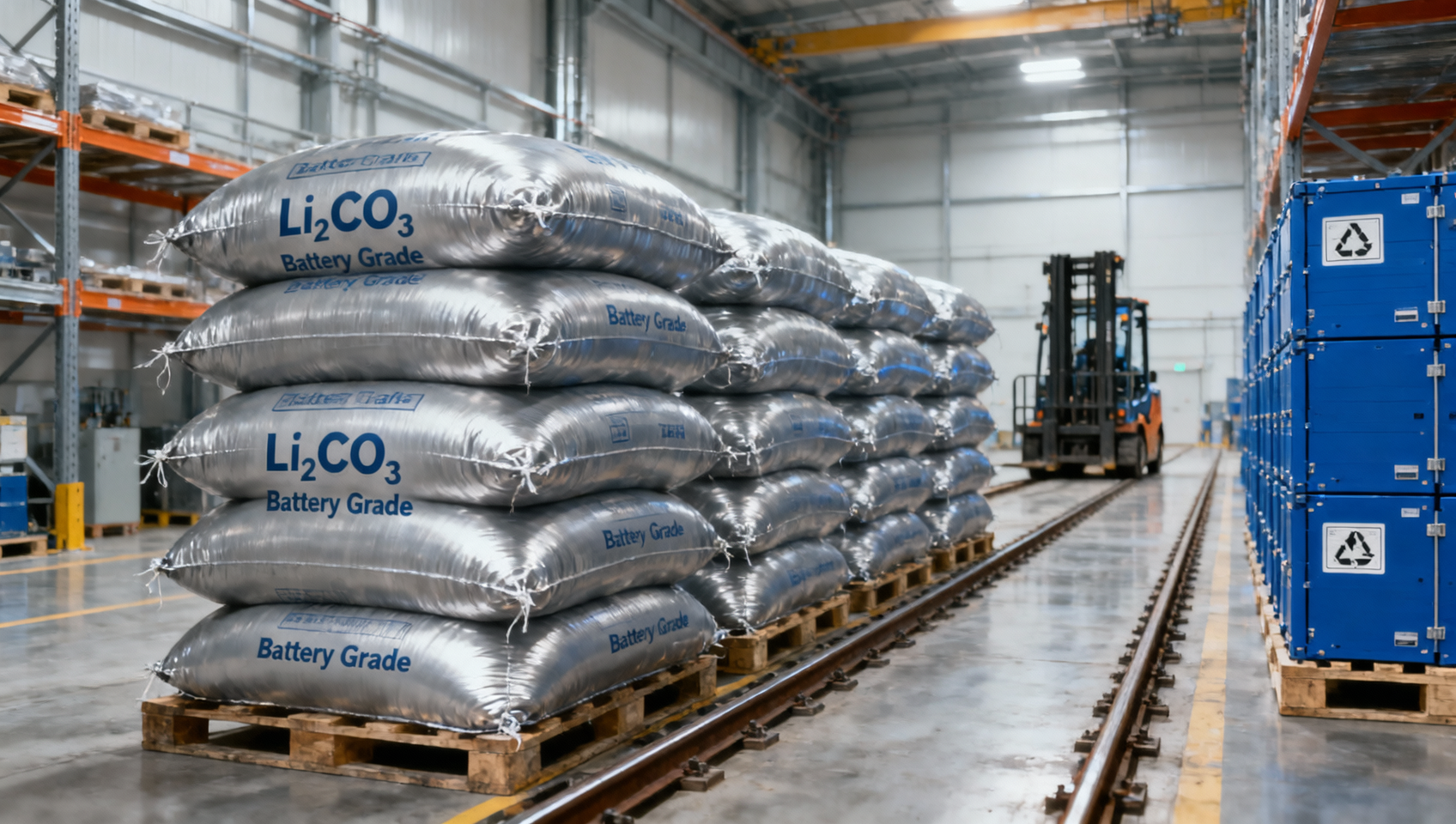
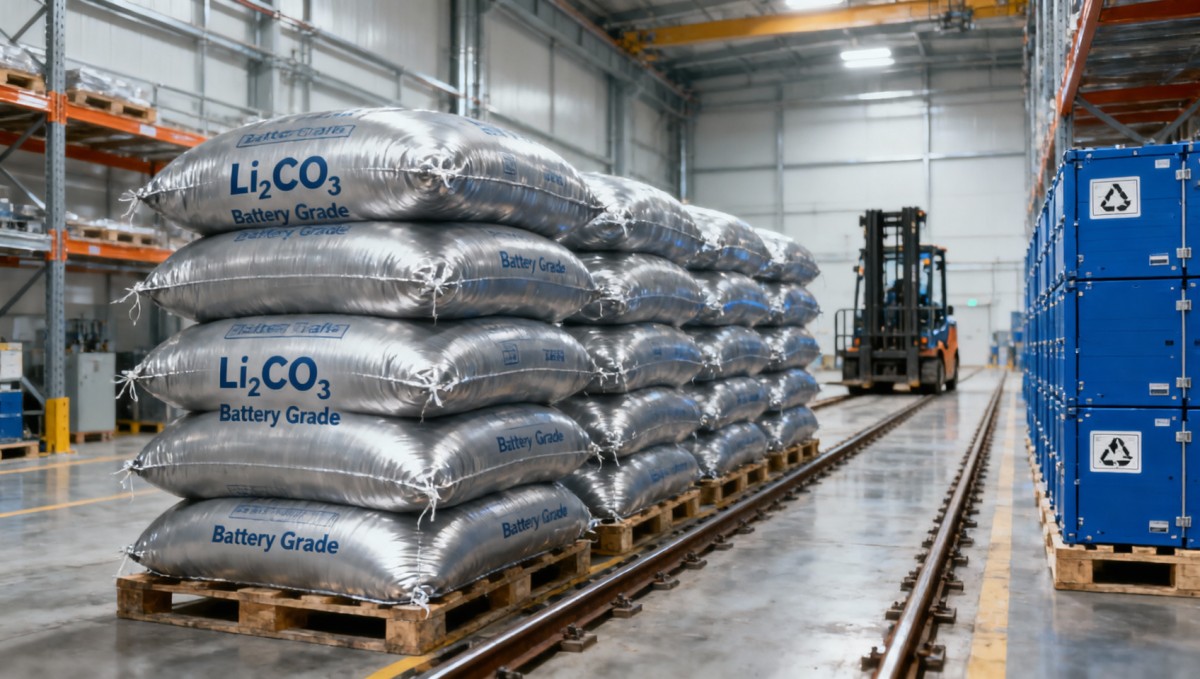
Lithium carbonate prices have reversed their downward trend, with battery-grade lithium carbonate averaging RMB 128,000/ton on April 14 — a 9.4% week-on-week increase. This shift stems from supply disruptions at South American brine operations and domestic smelter maintenance. Exporters of energy storage batteries, EV charging infrastructure power modules, and electric two-wheeler battery packs now face renewed cost pressure — making this development highly relevant for battery manufacturers, international distributors, and supply chain planners.
Event Overview
On April 14, the average price of battery-grade lithium carbonate rose to RMB 128,000 per ton, up 9.4% from the previous week. The increase is attributed to supply disturbances from South American salt lake producers and scheduled maintenance at domestic lithium carbonate refineries. Some export orders now carry lead times of 8–10 weeks, and overseas distributors are reassessing Q2 procurement budgets and inventory strategies.
Impact on Specific Industry Segments
Direct Exporters & International Trading Firms
These firms face immediate pricing recalibration: rising lithium carbonate costs directly affect landed cost calculations for battery modules shipped to overseas markets. Lead time extensions (to 8–10 weeks) also compress order-to-revenue cycles and increase working capital requirements.
Raw Material Procurement Teams
Procurement departments sourcing lithium compounds — especially those under fixed-price supply agreements or with quarterly reset clauses — may see margin erosion if upstream cost increases outpace contract adjustment mechanisms. Spot-buying windows are narrowing as volatility rises.
Battery Module Manufacturers (EV Infrastructure, E-bikes, ESS)
Manufacturers supplying battery packs for electric two-wheelers, EV charging stations, and stationary energy storage systems face dual pressure: input cost inflation and delayed customer acceptance due to revised quotations. Some customers are pausing new PO issuance pending price stabilization.
Distribution & Channel Partners (Overseas)
International distributors must revisit Q2 inventory targets and budget allocations. With extended lead times, safety stock thresholds may need upward revision — but holding excess inventory carries increased obsolescence and financing risk amid uncertain demand elasticity.
What Relevant Enterprises or Practitioners Should Focus On
Monitor upstream production updates from key South American brine operators
Supply stability remains contingent on operational recovery timelines in Chile and Argentina. Any further delays or output revisions will influence near-term price trajectory — making official production reports and logistics advisories critical inputs for procurement planning.
Review current export contracts for price adjustment clauses and lead-time flexibility
Parties with firm-fixed-price export agreements should assess exposure to margin compression. Where possible, initiate commercial discussions around shared risk mechanisms — such as indexed pricing or staggered delivery schedules — before new orders are confirmed.
Reassess Q2 inventory replenishment timing and buffer levels
Given 8–10 week lead times, procurement teams should map current stock against confirmed shipment schedules and forecasted demand. Prioritizing buffer builds for high-turnover SKUs (e.g., common 48V e-bike modules) may help mitigate short-term supply gaps without overcommitting capital.
Engage early with downstream buyers on revised quotation validity windows
With pricing volatility increasing, quoting longer validity periods (e.g., 30+ days) carries higher risk. Shorter validity windows — paired with transparent communication about input cost drivers — support more predictable order intake and reduce post-confirmation renegotiation pressure.
Editorial Perspective / Industry Observation
From an industry perspective, this rebound is better understood as a near-term supply-driven correction rather than the start of a sustained upward cycle. Analysis来看, it reflects tightening spot availability rather than structural demand acceleration. Observation来看, the speed and magnitude of the rebound suggest limited near-term spare refining capacity — particularly given concurrent domestic maintenance activity. Current more值得关注的是 whether this becomes a catalyst for broader cost pass-through across the battery value chain, especially in mid-tier export markets where pricing power is constrained. It is not yet clear whether this marks a durable inflection point or a transient adjustment ahead of seasonal demand softening.
Conclusion
This price movement signals renewed cost sensitivity in lithium-dependent export segments — not a broad-based market recovery. For stakeholders, it underscores the importance of agile procurement planning, contract clause scrutiny, and proactive channel communication. It is more appropriately interpreted as a tactical supply shock requiring operational recalibration, rather than a strategic shift in lithium’s medium-term supply-demand balance.
Source Attribution
Main source: Publicly reported lithium carbonate price data and event summary (date: April 14).
Points requiring ongoing observation: Duration of South American supply disruption; timing and scale of domestic smelter restarts; actual Q2 order intake trends among overseas distributors.
Get weekly intelligence in your inbox.
No noise. No sponsored content. Pure intelligence.
 Apr 16, 2026Guangzhou Yangsen Pharma’s Sensitive-Skin Patents Shift ODM LandscapeGuangzhou Yangsen Pharma’s Sensitive-Skin Patents Shift ODM Landscape
 Apr 16, 2026Xinjiang Huayu Textile Full Production of Medical-Grade NonwovensXinjiang Huayu Textile Full Production of Medical-Grade Nonwovens
 Apr 16, 2026Linklog AI Audit Case in China Supply Chain Finance YearbookLinklog AI Audit Case in China Supply Chain Finance Yearbook
 Apr 16, 2026Wuhan China-Europe Express Launches PV-Dedicated Train to EUWuhan China-Europe Express Launches PV-Dedicated Train to EU
 Apr 16, 2026Gaode Unveils First Quadruped Robot, Boosting China's Warehouse Robotics ExportsGaode Unveils First Quadruped Robot, Boosting China's Warehouse Robotics Exports
 Apr 16, 2026Polysilicon Price Falls Below $4,000/ton: PV Module Export Window ReopensPolysilicon Price Falls Below $4,000/ton: PV Module Export Window Reopens
 Apr 16, 2026Zanglong Island Semiconductor Park Land Acquisition Starts in WuhanZanglong Island Semiconductor Park Land Acquisition Starts in Wuhan
") Apr 16, 2026Intel Mass-Produces World’s Thinnest GaN Chip (19μm)Intel Mass-Produces World’s Thinnest GaN Chip (19μm)
Apr 16, 2026Intel Mass-Produces World’s Thinnest GaN Chip (19μm)Intel Mass-Produces World’s Thinnest GaN Chip (19μm) Apr 16, 2026Lithium Carbonate Prices Rebound, Export Cost Pressure ReturnsLithium Carbonate Prices Rebound, Export Cost Pressure Returns
 Apr 16, 2026EU CBAM Enters Enforcement Phase on April 1, 2026EU CBAM Enters Enforcement Phase on April 1, 2026
 Apr 16, 2026Smart Rings Are Getting Better, but Where Do They Still Fall Short?Smart Rings Are Getting Better, but Where Do They Still Fall Short?
 Apr 16, 2026Rapid Prototyping or CNC Machining: Which Fits Low-Volume Parts?Rapid Prototyping or CNC Machining: Which Fits Low-Volume Parts?
 Apr 16, 2026Solar Panel Efficiency Drops: Dirt, Heat, or Installation Error?Solar Panel Efficiency Drops: Dirt, Heat, or Installation Error?
 Apr 16, 2026Why Some EV Charging Stations Cost More to Operate Than ExpectedWhy Some EV Charging Stations Cost More to Operate Than Expected
 Apr 16, 2026What Makes a Bluetooth Speaker Sound Good Outdoors?What Makes a Bluetooth Speaker Sound Good Outdoors?
 Apr 16, 2026Metal stamping parts look simple until tooling wear starts to showMetal stamping parts look simple until tooling wear starts to show
 Apr 16, 2026Precision casting vs machining for complex parts with tight specsPrecision casting vs machining for complex parts with tight specs
 Apr 16, 2026Plastic extrusion problems that usually appear after shipmentPlastic extrusion problems that usually appear after shipment
 Apr 16, 2026Urethane casting is ideal for prototypes, until tolerance becomes criticalUrethane casting is ideal for prototypes, until tolerance becomes critical
 Apr 16, 2026Rapid tooling works fast, but what gets sacrificed first?Rapid tooling works fast, but what gets sacrificed first?
 Apr 16, 2026Low volume manufacturing sounds flexible, but where do delays start?Low volume manufacturing sounds flexible, but where do delays start?
 Apr 16, 2026Why surface finishing services change part quality more than expectedWhy surface finishing services change part quality more than expected
 Apr 16, 2026Anodizing services or paint? Where the cost gap really showsAnodizing services or paint? Where the cost gap really shows
 Apr 16, 2026Powder coating defects that often trace back to pretreatmentPowder coating defects that often trace back to pretreatment
 Apr 16, 2026When digital twin manufacturing pays off on the factory floorWhen digital twin manufacturing pays off on the factory floor
 Apr 16, 2026Wire EDM services make sense when tight corners really matterWire EDM services make sense when tight corners really matter
 Apr 16, 2026Gear manufacturing tolerances that affect noise and service lifeGear manufacturing tolerances that affect noise and service life