Solar Panel Efficiency Drops: Dirt, Heat, or Installation Error?
When a solar panel underperforms, the root cause is not always obvious: dirt buildup, excessive heat, or a costly installation error can all reduce output. For buyers and technical teams tracking renewable energy performance alongside products like EV charging stations, this guide explains how to identify efficiency losses, avoid misdiagnosis, and make smarter maintenance or procurement decisions.
In B2B energy projects, a drop in solar output is rarely just a maintenance issue. It can affect power planning, charging infrastructure uptime, site ROI, warranty claims, and even procurement strategy for future installations. For operators, technical evaluators, distributors, and enterprise decision-makers, the practical challenge is to separate temporary performance loss from a structural system problem.
A panel may lose 3% to 8% output from surface contamination under one set of conditions, then lose another 5% to 15% from excessive module temperature during peak summer hours. In other cases, the real issue is not the panel at all, but string mismatch, poor tilt, shading, loose connectors, or inverter-side design errors. Correct diagnosis matters because the remedy, budget, downtime, and risk profile differ significantly.
How to Tell Whether the Efficiency Drop Is Normal or a Warning Sign
Not every output decline means a fault. Solar performance naturally changes by hour, season, irradiance level, and module temperature. A practical first step is to compare current production against the site’s baseline over the last 30 to 90 days, adjusted for weather and operating hours. If the drop is persistent, localized, or worsening, it usually points to a correctable issue rather than ordinary variation.
For commercial rooftops and ground-mounted arrays supporting loads such as EV charging stations, cold storage, or manufacturing equipment, technicians should track at least 4 core indicators: daily kWh yield, inverter conversion performance, module surface condition, and thermal behavior during peak irradiance. If only one string is underperforming, installation or connection errors are more likely than heat or dust across the whole site.
A useful screening rule is this: if output falls sharply after a dust event, nearby construction, pollen season, or bird activity, contamination is a strong candidate. If losses are highest between 11:00 and 15:00 on hot days, heat stress may be the leading factor. If the system has shown underperformance since commissioning, or if losses remain after cleaning, installation design and workmanship deserve closer inspection.
Procurement teams should also distinguish between module efficiency, system efficiency, and delivered energy yield. A panel with a nameplate efficiency of 21% can still produce weak field results if cabling, mounting geometry, ventilation clearance, or inverter matching are poor. In practical B2B projects, measured yield matters more than brochure figures alone.
Fast Diagnostic Signals for Field Teams
The table below helps operations teams and technical buyers quickly classify the likely cause of solar panel efficiency drops before deciding on cleaning, deeper inspection, or supplier escalation.
The key takeaway is that pattern recognition saves time and cost. Dirt usually creates a visible and often recoverable loss. Heat follows a daily and seasonal pattern. Installation errors often appear as repeatable underperformance in a specific string, roof zone, or commissioning period. For asset managers, this distinction helps prioritize whether to dispatch cleaning crews, thermography teams, or EPC warranty reviewers first.
Dirt and Surface Contamination: The Most Visible Cause, but Not Always the Biggest
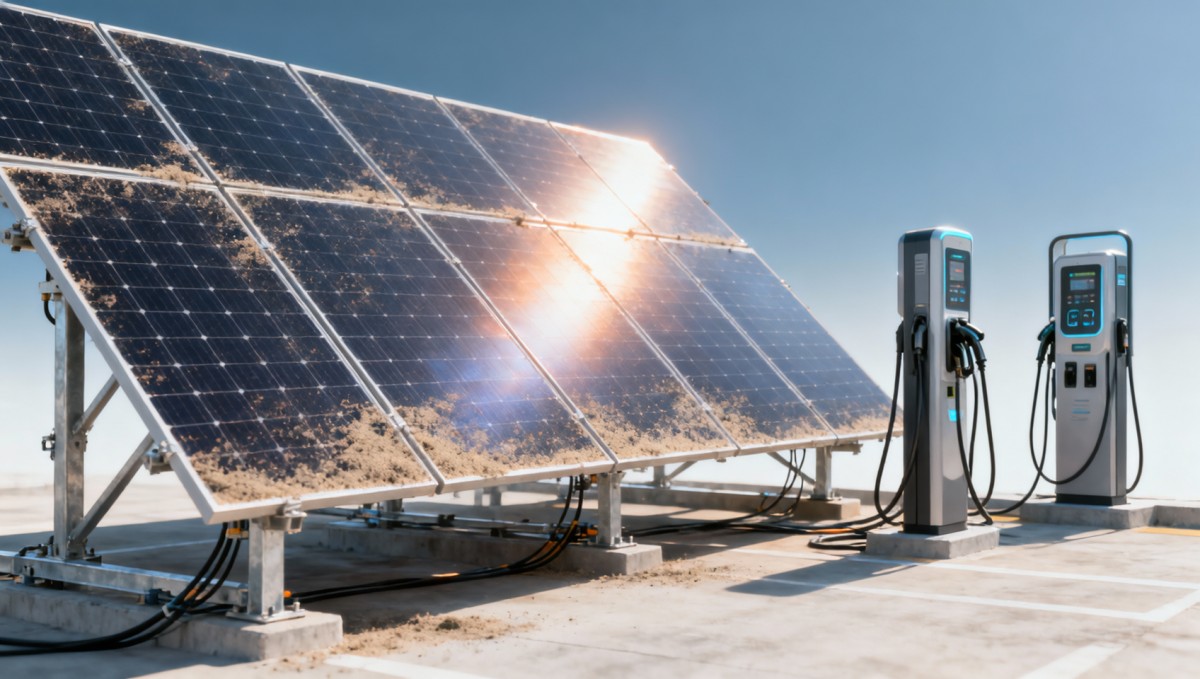
Dirt is often the first suspect because it is easy to see. Dust, industrial fallout, pollen, sea salt residue, agricultural particles, and bird droppings can block incoming sunlight and create uneven shading on individual cells. In many commercial sites, especially logistics parks, roadside warehouses, and light industrial facilities, soiling losses commonly range from 2% to 7% between cleaning cycles, but localized hotspots can cause more severe losses.
The financial importance of soiling depends on site type and energy usage. If the array supports daytime EV charging, refrigeration, or process equipment, even a 5% yield loss during peak tariff hours may materially affect the business case. For distributors and project developers, cleaning strategy should therefore be tied not only to appearance, but also to power value, local rainfall pattern, and labor access cost.
However, overdiagnosing dirt creates its own problem. Some operators clean panels repeatedly while the real issue is poor wiring, inverter clipping, or chronic thermal derating. A sensible method is to clean a representative section first, then compare 24-hour and 7-day production data with a nearby uncleaned section where possible. If recovery is minimal, contamination may be only a secondary factor.
Cleaning methods also affect risk. Abrasive tools, mineral-heavy water, and aggressive detergent use can damage glass coatings or leave residue. In B2B facilities with safety and compliance obligations, maintenance teams should align cleaning frequency with access protocols, fall protection rules, and weather windows rather than relying on ad hoc cleaning decisions.
Typical Soiling Conditions by Operating Environment
Different operating environments create different cleaning intervals and contamination risks. The table below summarizes practical field patterns often used in maintenance planning.
This comparison shows that cleaning frequency should be site-specific. A fixed 30-day schedule may be excessive in one region and insufficient in another. For procurement managers evaluating O&M contracts, service providers should be asked how they trigger cleaning decisions, what safety procedures they use, and how they document before-and-after performance recovery.
Field Checklist Before Ordering a Full Cleaning Cycle
- Confirm whether the performance loss affects the entire array or only one string, section, or inverter input.
- Review weather history over the last 2–6 weeks, including rain events, dust storms, and nearby construction activity.
- Inspect for stubborn contaminants such as bird droppings or oily residue, which may not be removed by rain alone.
- Check whether output rebounds after a small test clean before approving a site-wide service visit.
Heat Losses: Why High Temperature Can Reduce Real-World Solar Output
Solar panels need sunlight, but they do not perform best when they are excessively hot. Most modules are rated under Standard Test Conditions at a cell temperature of 25°C. In real operation, rooftop modules can reach 45°C to 70°C, especially in low-wind conditions, on dark roofs, or where rear ventilation is restricted. As temperature rises, voltage drops, and the system can produce less electricity even under strong sunshine.
For technical teams, the practical issue is not simply ambient air temperature. Module temperature is influenced by roof material, mounting distance from the roof, panel layout density, wind exposure, and local climate. Two arrays in the same city can show meaningfully different midday output if one has 100–150 mm of rear airflow clearance and the other is installed too close to a heat-absorbing surface.
Heat-related efficiency loss becomes especially important in hybrid sites that combine solar generation with EV charging stations. Charging demand often peaks during daylight hours, exactly when thermal derating can reduce solar contribution. That mismatch can increase grid draw, affect demand charges, and change the economics of on-site energy management.
From a procurement perspective, buyers should ask not only for module efficiency ratings, but also for temperature coefficient data, mounting recommendations, and expected energy yield under local climate conditions. A slightly lower nameplate efficiency panel with better heat behavior may produce better annual economics than a premium-rated module installed in a thermally poor design.
Heat-Related Design Questions to Ask Before and After Installation
Before treating heat loss as unavoidable, project teams should review whether design choices amplified it. These questions are especially relevant during technical due diligence and supplier comparison:
- What is the module temperature coefficient, and how does expected summer site temperature affect annual yield?
- Is there sufficient rear ventilation clearance for rooftop conditions, typically in the range recommended by the mounting supplier?
- Does the roof membrane, color, or structural layout trap heat and reduce airflow across multiple rows?
- Were inverter sizing and string voltage calculations reviewed against the local high-temperature operating profile?
If a system shows strong morning production and noticeable midday sag on hot days, heat is a credible contributor. Yet teams should still confirm there is no compounding issue such as inverter clipping, connector degradation, or poor DC layout. In practice, thermal loss and installation error can coexist, which is why integrated diagnosis is more reliable than assumption-based maintenance.
Installation Errors: The Costliest Cause Because They Are Often Hidden
Installation errors are often the most expensive cause of solar panel efficiency loss because they may remain undetected for months. Unlike dust, they are not always visible. Unlike heat, they do not necessarily follow weather patterns. Common issues include poor tilt and orientation, partial shading from nearby structures, string mismatch, connector faults, cable routing mistakes, loose terminations, and commissioning records that were never properly verified.
A system can look complete and still perform below target. For example, a poorly oriented roof zone may consistently lose yield across all seasons. A single connector with elevated resistance can create localized heating and chronic underperformance. A mismatched string layout may force good modules to operate below potential. In projects spanning 100 kW to several MW, even small design errors can translate into significant annual energy loss.
This matters for more than operations. Installation quality affects warranty discussions, supplier accountability, project acceptance, and future procurement decisions. Financial approvers and enterprise buyers should therefore treat commissioning documentation as part of asset value protection. If baseline production assumptions are wrong at handover, all later ROI analysis becomes less reliable.
For distributors and channel partners, installation quality also affects brand reputation. End users usually do not separate module quality from balance-of-system workmanship. If the array underperforms, the market often blames the product first. That is why technical support, installer training, and post-installation verification are commercially important, not just operationally helpful.
High-Risk Installation Mistakes That Commonly Reduce Yield
The table below outlines common installation-related causes of low solar efficiency and the business impact each one can create.
The major lesson is that installation error is often a documentation problem as much as a technical problem. If drawings, commissioning values, and acceptance benchmarks are missing, it becomes much harder to assign responsibility or approve corrective budgets. For B2B buyers, a strong procurement package should include technical scope, test requirements, and post-installation verification criteria from the start.
Practical Acceptance Points for Buyers and Quality Teams
- Require string-level commissioning data, not only inverter-level summary reports.
- Match installed orientation and layout against approved design drawings before final acceptance.
- Verify shading assumptions during actual site conditions, not only at design stage.
- Document thermal scans, connector checks, and protective grounding results within the first operating cycle.
A Practical Decision Framework for Maintenance, Procurement, and Corrective Action
When output falls, the best response is rarely to clean everything immediately or blame the module supplier. A structured decision process reduces wasted maintenance spending and prevents incorrect warranty escalation. In most commercial settings, the first 7 to 14 days after detecting underperformance should focus on evidence gathering: performance comparison, visual inspection, thermal review, and string-level analysis.
For operators, the core decision is whether the issue is recoverable through routine maintenance or whether it requires engineering intervention. For buyers and financial approvers, the question is whether the problem changes future sourcing strategy. If repeated sites in the same portfolio show heat concentration, contamination sensitivity, or installation inconsistency, the issue may point to vendor selection criteria rather than isolated field conditions.
This is also where digital monitoring becomes valuable. A portfolio with string-level visibility, maintenance logs, and consistent reporting can identify loss patterns faster than a site relying on monthly utility bill checks. In a multi-site B2B environment, better diagnostics often produce better procurement outcomes because technical findings can be translated into clearer specifications for future tenders.
For organizations evaluating solar alongside EV charging stations, storage systems, or facility electrification upgrades, the goal should not be just “fixing a low-performing array.” The larger goal is building a reliable site-energy architecture in which generation, load profile, maintenance planning, and supplier accountability are all aligned.
Recommended Response Path
- Establish a baseline using at least 30 days of normalized production data and current weather conditions.
- Perform a visual and thermal inspection to identify contamination, hotspots, shading, or airflow issues.
- Check string-level performance, connectors, and inverter inputs before assuming module degradation.
- Run targeted corrective action such as test cleaning, connector repair, or redesign review, then measure recovery over 3–7 operating days.
- Use findings to update maintenance schedules, supplier scorecards, and procurement requirements for future sites.
FAQ for Buyers, Engineers, and Site Managers
How often should commercial solar panels be cleaned?
There is no universal interval. Many sites inspect every 1 to 3 months and clean based on measured soiling impact rather than a fixed calendar. Dry industrial zones, agricultural regions, and coastal sites may require more frequent attention than rain-washed urban rooftops.
Can heat damage panels, or does it only lower efficiency temporarily?
In most cases, heat mainly lowers real-time efficiency rather than causing immediate damage. However, chronic overheating linked to poor ventilation, connector resistance, or hotspot formation can accelerate aging and increase reliability risk over time. That is why thermal inspection is useful even when output loss seems weather-related.
What is the clearest sign of an installation-related problem?
A persistent underperforming string, zone, or inverter input from early operation is a strong warning sign. If cleaning and seasonal changes do not materially improve results, teams should review commissioning records, string configuration, shading assumptions, and connector integrity before replacing modules.
What should procurement teams request from suppliers to reduce these risks?
At minimum, ask for site-specific yield assumptions, temperature behavior information, mounting and ventilation guidance, commissioning checklists, and acceptance documentation. For larger projects, require clear responsibility boundaries between module supply, balance-of-system components, and installation workmanship.
Solar panel efficiency drops are not always caused by one factor alone. Dirt may be the visible symptom, heat may be the daily amplifier, and installation error may be the hidden root cause. The most effective B2B response is structured diagnosis backed by performance data, field inspection, and accountable documentation.
For organizations managing renewable energy assets, EV charging integration, or broader electrification investments, better diagnosis leads directly to better maintenance planning, stronger supplier evaluation, and more reliable project returns. If you need deeper guidance on solar performance analysis, procurement criteria, or integrated clean-energy sourcing, contact TradeNexus Pro to explore tailored market intelligence and solution pathways.
Get weekly intelligence in your inbox.
No noise. No sponsored content. Pure intelligence.
 Apr 18, 2026TradeNexus Pro Launches Global Compliance RadarTradeNexus Pro Launches Global Compliance Radar
 Apr 18, 2026JIS T 2304:2026 Takes Effect June 1, 2026 for IVD SoftwareJIS T 2304:2026 Takes Effect June 1, 2026 for IVD Software
 Pathway for Rehab Devices with AI Modules") Apr 18, 2026FDA Updates 510(k) Pathway for Rehab Devices with AI ModulesFDA Updates 510(k) Pathway for Rehab Devices with AI Modules
Apr 18, 2026FDA Updates 510(k) Pathway for Rehab Devices with AI ModulesFDA Updates 510(k) Pathway for Rehab Devices with AI Modules Apr 18, 2026India BIS Approves 3 Chinese IoT Labs for IS 16444:2026 CertificationIndia BIS Approves 3 Chinese IoT Labs for IS 16444:2026 Certification
 Apr 18, 2026THE Alliance Launches Green Slot Priority for China PortsTHE Alliance Launches Green Slot Priority for China Ports
 Apr 18, 2026TÜV Rheinland Releases Dual-Standard ESS Certification Guide for ChinaTÜV Rheinland Releases Dual-Standard ESS Certification Guide for China
 Apr 18, 2026Vietnam Imposes AD Duties on Chinese Electronic ComponentsVietnam Imposes AD Duties on Chinese Electronic Components
 Apr 18, 2026SASO Launches PV Carbon Footprint Labeling from July 2026SASO Launches PV Carbon Footprint Labeling from July 2026
 Apr 18, 2026U.S. Adds 17 Smart Warehouse Robot Components to Export Control ListU.S. Adds 17 Smart Warehouse Robot Components to Export Control List
 Apr 18, 2026EU Enforces EN IEC 62443-4-2:2026 for Industrial Control Devices from 18 Apr 2026EU Enforces EN IEC 62443-4-2:2026 for Industrial Control Devices from 18 Apr 2026
 Apr 17, 2026Temperature data loggers drift unpredictably inside lithium-ion battery storage enclosuresTemperature data loggers drift unpredictably inside lithium-ion battery storage enclosures
 Apr 17, 2026Are solar microinverters really worth the extra cost?Are solar microinverters really worth the extra cost?
 Apr 17, 2026Bifacial solar panels: How much more energy can they generate?Bifacial solar panels: How much more energy can they generate?
 Apr 17, 2026Gear manufacturing: How to optimize production for high precision?Gear manufacturing: How to optimize production for high precision?
 Apr 17, 2026Why power transmission components fail earlier than expectedWhy power transmission components fail earlier than expected
 Apr 17, 2026Linear motion systems: belt drive or ball screw for speed?Linear motion systems: belt drive or ball screw for speed?
 Apr 17, 2026Industrial bearing suppliers: what signals reliable quality?Industrial bearing suppliers: what signals reliable quality?
 Apr 17, 2026When pneumatic valves wholesale gets expensive laterWhen pneumatic valves wholesale gets expensive later
 Apr 17, 2026Hydraulic cylinder fabrication mistakes that cause oil leaksHydraulic cylinder fabrication mistakes that cause oil leaks
 Apr 17, 2026Heavy equipment manufacturing delays often start hereHeavy equipment manufacturing delays often start here
 Apr 17, 2026Custom heatsinks: when a larger size solves nothingCustom heatsinks: when a larger size solves nothing
 Apr 17, 2026Electronic enclosure fabrication: steel or aluminum?Electronic enclosure fabrication: steel or aluminum?
 Apr 17, 2026Automotive parts machining tolerances that drive up scrapAutomotive parts machining tolerances that drive up scrap
 Apr 17, 2026Medical device manufacturing changes under tighter traceabilityMedical device manufacturing changes under tighter traceability
 Apr 17, 2026How to Choose Solid State Batteries in 2026How to Choose Solid State Batteries in 2026
 Apr 17, 2026Are Solid State Batteries Worth the Cost Yet?Are Solid State Batteries Worth the Cost Yet?
 Apr 17, 2026Commercial Energy Storage Sizing: What Matters Most?Commercial Energy Storage Sizing: What Matters Most?