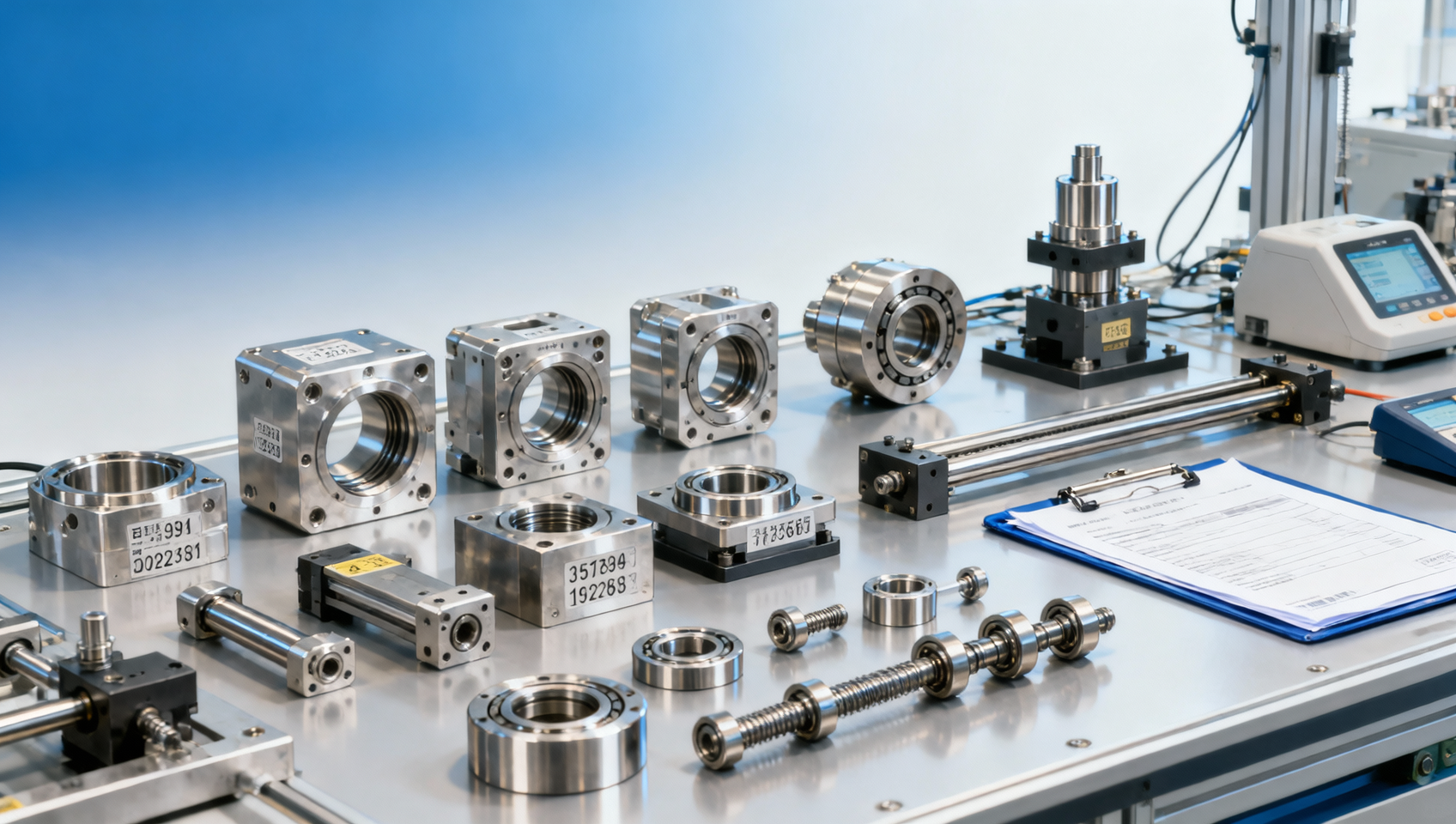
Urethane casting is ideal for prototypes, until tolerance becomes critical
Urethane casting remains a go-to solution for prototypes, low volume manufacturing, and rapid tooling thanks to its speed, flexibility, and lower upfront cost. But when tolerance requirements become critical, buyers and engineers must reassess process limits alongside surface finishing services, anodizing services, powder coating, and downstream production options to avoid quality, fit, and scalability risks.
For procurement teams, technical evaluators, quality managers, and project owners, the real question is not whether urethane casting works. It is where the process stops being the best fit. In sectors such as advanced manufacturing, smart electronics, healthcare technology, and industrial supply chains, a prototype that looks correct but misses a tight dimensional target by 0.2 mm can trigger assembly failures, delayed validation, and cost overruns in the next production stage.
This article examines where urethane casting performs well, where tolerance risk increases, and how to compare it with CNC machining, injection molding, and finishing routes. The goal is to help decision-makers balance lead time, tooling cost, dimensional repeatability, and scale-up readiness before committing budget or approving a supplier.
Where urethane casting delivers the most value
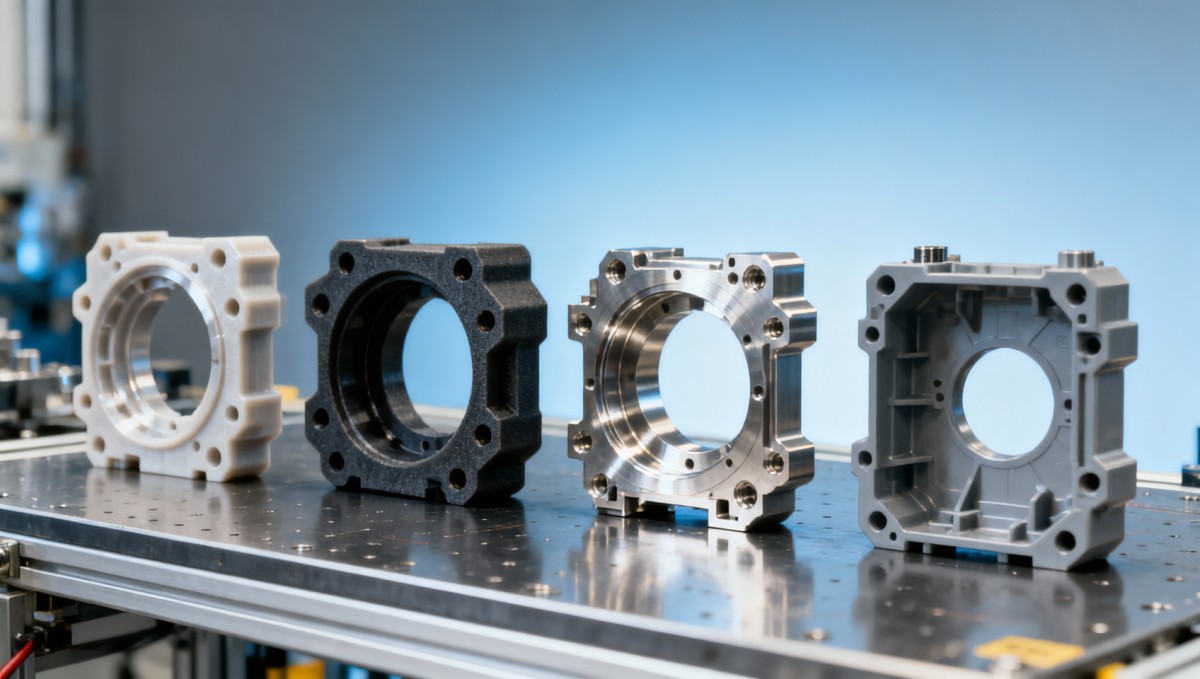
Urethane casting is widely used for bridge production, appearance models, functional prototypes, and low-volume parts where demand typically ranges from 10 to 100 units per batch. It is especially useful when a company needs production-like materials without the upfront expense and lead time of steel tooling. A silicone mold can often be prepared in 3 to 10 days, making the process attractive for development cycles that move quickly.
In practical B2B sourcing, this process is favored when stakeholders need to validate ergonomics, housing fit, connector access, or market samples before freezing a final design. Teams in healthcare devices, industrial enclosures, and smart electronics often rely on urethane casting because visual quality can be high, material options are broad, and modifications remain less expensive than tool rework in injection molding.
However, performance depends on geometry, mold life, resin behavior, and post-processing control. A typical silicone mold may yield around 15 to 25 high-quality parts before dimensional variation becomes more noticeable. For simple housings and cosmetic parts, that may be acceptable. For assemblies requiring repeatable fit across multiple subcomponents, even small shifts in shrinkage or warpage can become a production issue.
The commercial appeal is clear: lower initial tooling, shorter launch cycles, and easier design changes. Yet the hidden risk appears when teams treat urethane casting as a near-equivalent to hard-tool injection molding. It is not. The process is highly capable for pre-production and low-volume programs, but its limits must be understood early, especially when tolerance stacks matter across several mating parts.
Typical use cases across industrial sectors
- Advanced manufacturing: pilot runs, fixture covers, machine interface housings, and operator test components.
- Smart electronics: device shells, sensor enclosures, charging dock housings, and demo units for channel partners.
- Healthcare technology: non-implantable housings, fit-check models, and user evaluation components for regulated product development.
- Supply chain programs: spare part validation, short-run replacements, and regional launch support where MOQ pressure is high.
The table below shows where urethane casting is usually strong and where buyers should start asking tougher questions about dimensional control, finishing, and transition planning.
The key conclusion is that urethane casting creates excellent commercial value when the program is still learning. Once repeatable precision becomes central to function, quality, or compliance, the process should be evaluated as a temporary solution rather than a final answer.
Why tolerance becomes the turning point
Tolerance is where many sourcing plans fail quietly. A supplier may quote a general tolerance such as ±0.3 mm or ±0.5 mm depending on part size and geometry, but those numbers do not fully capture what happens in real assemblies. Flatness, hole position, wall thickness variation, and local shrink behavior can combine into a stack-up problem that becomes visible only after parts reach testing or field trials.
For technical evaluators, the critical question is not the nominal tolerance stated on a quote sheet. It is whether the specific features that matter most can hold stable across the full batch. A cosmetic shell may tolerate slight deviation. A sealing surface, latch interface, optical mount, or threaded insert location may not. When 3 or 4 dimensions interact in one assembly, a small shift on each feature can exceed the total acceptable range.
Material behavior also matters. Urethane resins can simulate ABS, PP-like flexibility, or elastomeric performance, but they do not behave identically to production thermoplastics under heat, moisture, or prolonged load. If a part will be tested at 40°C to 70°C, exposed to repeated fastening cycles, or checked against sealing compression targets, dimensional stability becomes more important than initial appearance quality.
This is why quality managers often separate dimensions into two groups: critical-to-function and non-critical cosmetic or handling features. Not every feature needs the same level of control. By identifying the 5 to 10 dimensions that truly govern fit or safety, teams can judge whether urethane casting remains acceptable or whether CNC machining, aluminum tooling, or a redesign is more responsible.
Common tolerance risk factors
- Large part size, often above 300 mm, increases the chance of warpage and accumulated dimensional deviation.
- Thin walls below 1.5 mm may be harder to fill consistently, especially on complex geometry.
- Deep ribs, undercuts, or uneven wall sections can change local shrink behavior and surface finish.
- Repeated mold usage beyond its stable life can reduce consistency from part to part.
- Secondary operations such as drilling, trimming, or insert fitting can add variation if fixtures are weak.
A practical engineering threshold
In many industrial projects, urethane casting is still viable when tolerances are relatively forgiving and final fit can be adjusted. Once repeated features need to hold within narrow bands such as ±0.1 mm to ±0.15 mm, teams should assume a higher qualification burden. That does not automatically rule out the process, but it means more measurement, more sample approval, and often more scrap risk.
For enterprise decision-makers, this turning point matters financially. A process that saves 30% to 60% in initial tooling cost can lose that advantage if rework cycles, delayed validation, or failed pilot builds add two extra weeks and consume engineering hours across procurement, QA, and production planning.
How finishing and secondary services affect dimensional outcomes
Surface finishing is often discussed as a cosmetic topic, but in B2B manufacturing it also influences fit, wear, and downstream acceptance. Painting, texturing, polishing, insert installation, and edge trimming can all shift dimensions or mask dimensional issues. Buyers comparing suppliers should ask how much stock is expected to change during finishing and whether inspection happens before or after secondary work.
The same caution applies when teams compare urethane casting to metal parts that may later require anodizing services or powder coating. These finishing routes are common in mixed-material assemblies, especially for brackets, frames, and heat-dissipating structures paired with cast urethane housings. An anodized aluminum feature may retain tighter geometry than a cast polymer mating part, which means the tolerance burden is no longer shared equally across the assembly.
Powder coating can add a layer that commonly falls in the range of roughly 60 to 120 microns, while anodizing thickness varies by process intent and substrate. Those values may sound small, but on snap fits, locating bosses, sealing grooves, and screw-clearance areas, coating build can materially affect assembly. If one component is coated and the urethane part is manually trimmed, the system-level fit can drift faster than expected.
This is why robust sourcing teams review finishing as part of dimensional planning, not as an afterthought. The right question is not only “Can you paint or texture the part?” but also “What dimensions are inspected after finishing, what masking strategy is used, and what variation should we expect across 20, 50, or 100 units?”
Finishing considerations by process type
The table below helps compare how common post-processing routes interact with dimensional control and procurement planning in prototype and pre-production programs.
The main takeaway is that finishing services cannot be separated from dimensional review. If a supplier offers casting, trimming, paint, coating coordination, and final inspection under one workflow, the buyer gains better control than if each step is sourced independently without a unified tolerance plan.
What QA teams should verify
- Inspection points before and after finishing for all critical-to-function dimensions.
- Defined acceptance criteria for visual defects, flash, gate marks, and coating edges.
- Fixture-based trimming or drilling when hole location and edge geometry are important.
- Clear revision control so design updates do not mix with older molds or outdated work instructions.
Choosing between urethane casting, CNC, and injection molding
When tolerance becomes critical, decision-makers should move from process preference to process fit. Urethane casting is usually not competing against one alternative alone. In many projects, the realistic choice is between three routes: urethane casting for speed and moderate cost, CNC machining for precision and quick iteration on hard materials, or injection molding for repeatability once volume justifies tooling investment.
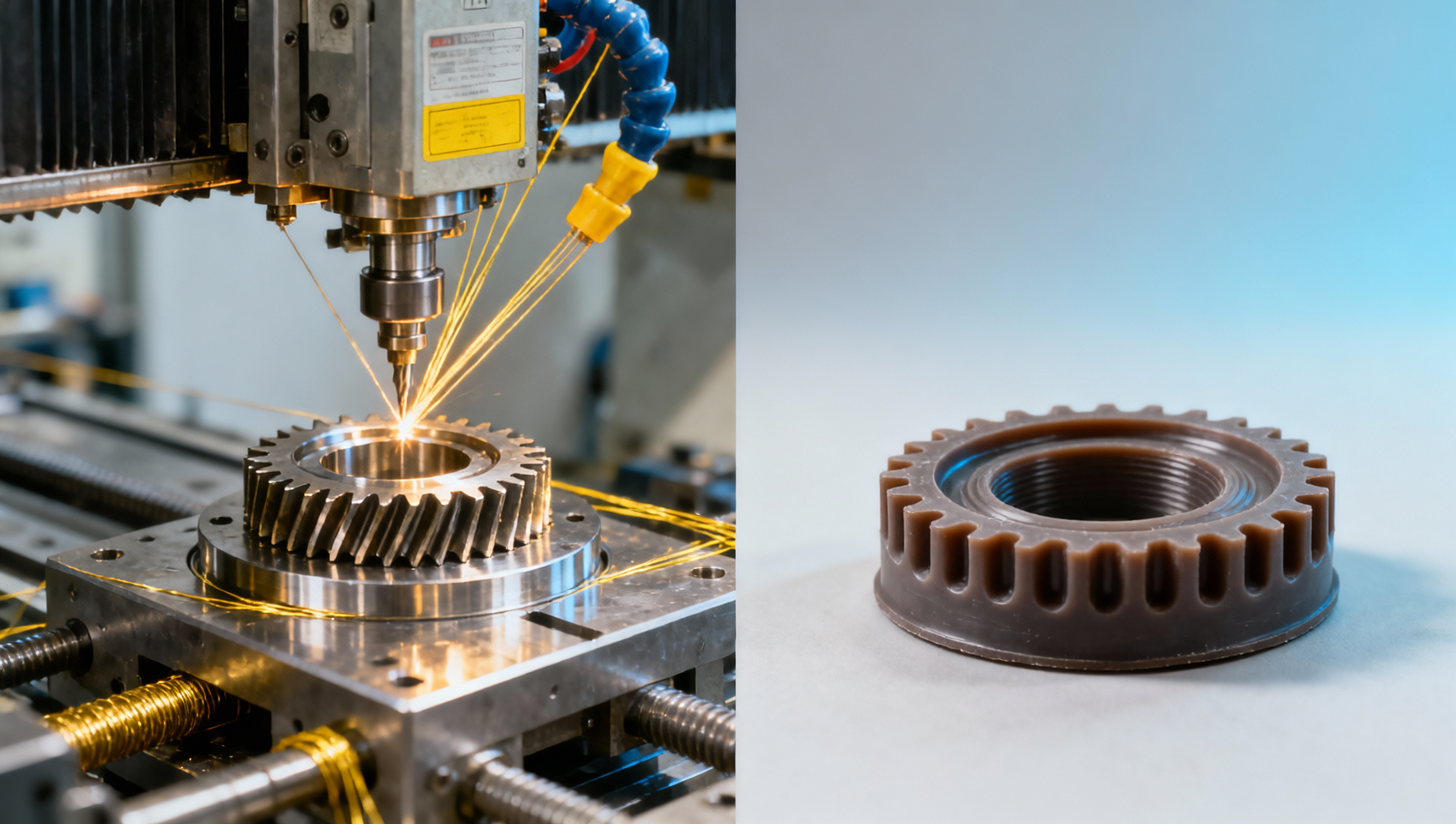
CNC machining is often selected when dimensions such as slot widths, hole centers, datum relationships, or sealing faces need tighter control. It can be more expensive per unit, especially on complex geometry, but for 5 to 20 parts requiring stable precision, the total project cost may still be lower than repeated cast iterations. CNC is also useful for master patterns used to generate molds with better starting accuracy.
Injection molding becomes more attractive when annual demand rises, often beyond a few hundred or a few thousand units depending on part complexity and margin strategy. The upfront tooling cost is higher, and lead time may reach 4 to 8 weeks or more for hardened tools, but dimensional consistency and production economics generally improve. For programs heading toward regulated production or channel expansion, this transition planning should happen before pilot demand spikes.
Financial approvers should also account for hidden switching costs. If urethane casting is used too long, the team may spend on repeated mold refreshes, additional inspections, hand corrections, and field sample variability. A slightly earlier move to CNC or production tooling can reduce long-run risk even if the first quote appears higher.
Process comparison for buyer evaluation
The comparison below is designed for procurement reviews where cost, lead time, tolerance, and scalability must be judged together rather than in isolation.
A disciplined sourcing strategy often combines these processes rather than treating them as mutually exclusive. For example, a team may use CNC for critical inserts and datums, urethane casting for outer housings, and then shift to injection molding when demand and design stability reach a predictable threshold.
A practical sourcing framework for buyers, QA, and project teams
A good procurement decision should reduce both unit cost uncertainty and project risk. That means the RFQ process needs more than a CAD file and quantity target. Buyers should define application conditions, critical tolerances, expected finishing steps, and likely scale-up path before requesting final pricing. Without that context, quotations from different suppliers may look comparable while actually assuming very different quality levels.
For cross-functional teams, it helps to divide the evaluation into 4 areas: dimensional capability, cosmetic quality, production flexibility, and downstream readiness. A supplier may be fast and price-competitive but weak on inspection discipline. Another may have better engineering support but outsource finishing, creating timeline risk. The best partner is usually the one that can explain limitations clearly and propose an escalation path when tolerances tighten.
Project managers should also plan gates. A typical low-risk approach uses three stages: first article approval, pilot batch verification, and transition review for future volume. At each stage, the team should confirm whether the current process still fits the product’s tolerance, material, and commercial needs. This prevents the common mistake of extending a prototype process into a production requirement it was never meant to support.
Distributors, channel partners, and even end customers benefit from this discipline because it improves consistency in demo units, launch samples, and early shipments. In B2B markets, credibility often depends on whether the first 20 units behave like the next 200. That consistency starts with process selection, not only with final inspection.
Six procurement checks before approval
- List the 5–10 dimensions that are critical to function, sealing, fastening, or alignment.
- Confirm general tolerance and any tighter local tolerance requirements in writing.
- Ask how many parts per mold can be produced before quality drift becomes more likely.
- Review all secondary steps, including trimming, coating, insert fitting, and packaging.
- Request an inspection plan with first article measurements and sampling frequency.
- Clarify the transition option to CNC, aluminum tooling, or injection molding if demand increases.
FAQ: common buyer questions
How many urethane cast parts can one mold usually support?
A common working range is around 15 to 25 parts per silicone mold, although geometry, resin, and surface finish expectations can shift that number. Buyers should not assume stable output beyond that range without supplier evidence and repeatability data.
Is urethane casting suitable for end-use parts?
It can be, especially for low-volume industrial products, service parts, and non-safety-critical applications. The decision depends on environment, load, tolerance, and batch consistency requirements. If the part faces elevated heat, repetitive assembly stress, or strict regulatory review, alternative processes may be safer.
When should a project move away from urethane casting?
A transition should be considered when critical tolerances become narrow, batch size grows above roughly 100 to 200 units, rework is increasing, or the commercial team needs predictable scaling. Those signals usually indicate that CNC machining, aluminum tooling, or injection molding deserves a cost-benefit review.
Urethane casting remains one of the most effective tools for fast prototypes and low-volume production, but its advantages are strongest when speed, flexibility, and moderate cost matter more than strict repeatability. Once tolerance becomes critical, buyers must evaluate the full manufacturing chain, including finishing services, anodizing services, powder coating, inspection discipline, and the likely transition to CNC or injection molding.
For organizations operating across advanced manufacturing, green energy, smart electronics, healthcare technology, and supply chain programs, the best results come from choosing the right process at the right project stage. If you need a clearer sourcing path, a tolerance-based process comparison, or a customized low-volume manufacturing strategy, contact TradeNexus Pro to explore tailored solutions and supplier insights for your next program.
Get weekly intelligence in your inbox.
No noise. No sponsored content. Pure intelligence.
 Apr 18, 2026TradeNexus Pro Launches Global Compliance RadarTradeNexus Pro Launches Global Compliance Radar
 Apr 18, 2026JIS T 2304:2026 Takes Effect June 1, 2026 for IVD SoftwareJIS T 2304:2026 Takes Effect June 1, 2026 for IVD Software
 Pathway for Rehab Devices with AI Modules") Apr 18, 2026FDA Updates 510(k) Pathway for Rehab Devices with AI ModulesFDA Updates 510(k) Pathway for Rehab Devices with AI Modules
Apr 18, 2026FDA Updates 510(k) Pathway for Rehab Devices with AI ModulesFDA Updates 510(k) Pathway for Rehab Devices with AI Modules Apr 18, 2026India BIS Approves 3 Chinese IoT Labs for IS 16444:2026 CertificationIndia BIS Approves 3 Chinese IoT Labs for IS 16444:2026 Certification
 Apr 18, 2026THE Alliance Launches Green Slot Priority for China PortsTHE Alliance Launches Green Slot Priority for China Ports
 Apr 18, 2026TÜV Rheinland Releases Dual-Standard ESS Certification Guide for ChinaTÜV Rheinland Releases Dual-Standard ESS Certification Guide for China
 Apr 18, 2026Vietnam Imposes AD Duties on Chinese Electronic ComponentsVietnam Imposes AD Duties on Chinese Electronic Components
 Apr 18, 2026SASO Launches PV Carbon Footprint Labeling from July 2026SASO Launches PV Carbon Footprint Labeling from July 2026
 Apr 18, 2026U.S. Adds 17 Smart Warehouse Robot Components to Export Control ListU.S. Adds 17 Smart Warehouse Robot Components to Export Control List
 Apr 18, 2026EU Enforces EN IEC 62443-4-2:2026 for Industrial Control Devices from 18 Apr 2026EU Enforces EN IEC 62443-4-2:2026 for Industrial Control Devices from 18 Apr 2026
 Apr 17, 2026Temperature data loggers drift unpredictably inside lithium-ion battery storage enclosuresTemperature data loggers drift unpredictably inside lithium-ion battery storage enclosures
 Apr 17, 2026Are solar microinverters really worth the extra cost?Are solar microinverters really worth the extra cost?
 Apr 17, 2026Bifacial solar panels: How much more energy can they generate?Bifacial solar panels: How much more energy can they generate?
 Apr 17, 2026Gear manufacturing: How to optimize production for high precision?Gear manufacturing: How to optimize production for high precision?
 Apr 17, 2026Why power transmission components fail earlier than expectedWhy power transmission components fail earlier than expected
 Apr 17, 2026Linear motion systems: belt drive or ball screw for speed?Linear motion systems: belt drive or ball screw for speed?
 Apr 17, 2026Industrial bearing suppliers: what signals reliable quality?Industrial bearing suppliers: what signals reliable quality?
 Apr 17, 2026When pneumatic valves wholesale gets expensive laterWhen pneumatic valves wholesale gets expensive later
 Apr 17, 2026Hydraulic cylinder fabrication mistakes that cause oil leaksHydraulic cylinder fabrication mistakes that cause oil leaks
 Apr 17, 2026Heavy equipment manufacturing delays often start hereHeavy equipment manufacturing delays often start here
 Apr 17, 2026Custom heatsinks: when a larger size solves nothingCustom heatsinks: when a larger size solves nothing
 Apr 17, 2026Electronic enclosure fabrication: steel or aluminum?Electronic enclosure fabrication: steel or aluminum?
 Apr 17, 2026Automotive parts machining tolerances that drive up scrapAutomotive parts machining tolerances that drive up scrap
 Apr 17, 2026Medical device manufacturing changes under tighter traceabilityMedical device manufacturing changes under tighter traceability
 Apr 17, 2026How to Choose Solid State Batteries in 2026How to Choose Solid State Batteries in 2026
 Apr 17, 2026Are Solid State Batteries Worth the Cost Yet?Are Solid State Batteries Worth the Cost Yet?
 Apr 17, 2026Commercial Energy Storage Sizing: What Matters Most?Commercial Energy Storage Sizing: What Matters Most?