Rapid Prototyping or CNC Machining: Which Fits Low-Volume Parts?
For low-volume parts, the choice between rapid prototyping and CNC machining can shape cost, speed, quality, and scalability. From housings for bluetooth speakers and mechanical keyboards to components used in EV charging stations, solar panel systems, smart rings, jump starters, and returnable transport packaging, manufacturers need a process that matches both technical demands and business goals. This guide compares rapid prototyping and CNC machining to help teams make smarter sourcing and production decisions.
For sourcing teams, engineers, quality managers, and budget approvers, the decision is rarely just about making one part. It often affects tooling strategy, lead time, inspection effort, design iteration speed, and the path from sample approval to repeatable production. In cross-border B2B trade, low-volume can mean anything from 5 to 500 pieces, and the best process depends on geometry, tolerance, material, finish, and downstream business risk.
In sectors such as advanced manufacturing, green energy, smart electronics, healthcare technology, and supply chain equipment, low-volume parts are common during pilot launches, replacement-part supply, market validation, and regional customization. Choosing correctly can reduce rework cycles by 1–3 rounds, shorten launch timing by 7–20 days, and improve cost visibility before larger commitments are made.
Understanding the Core Difference Between Rapid Prototyping and CNC Machining
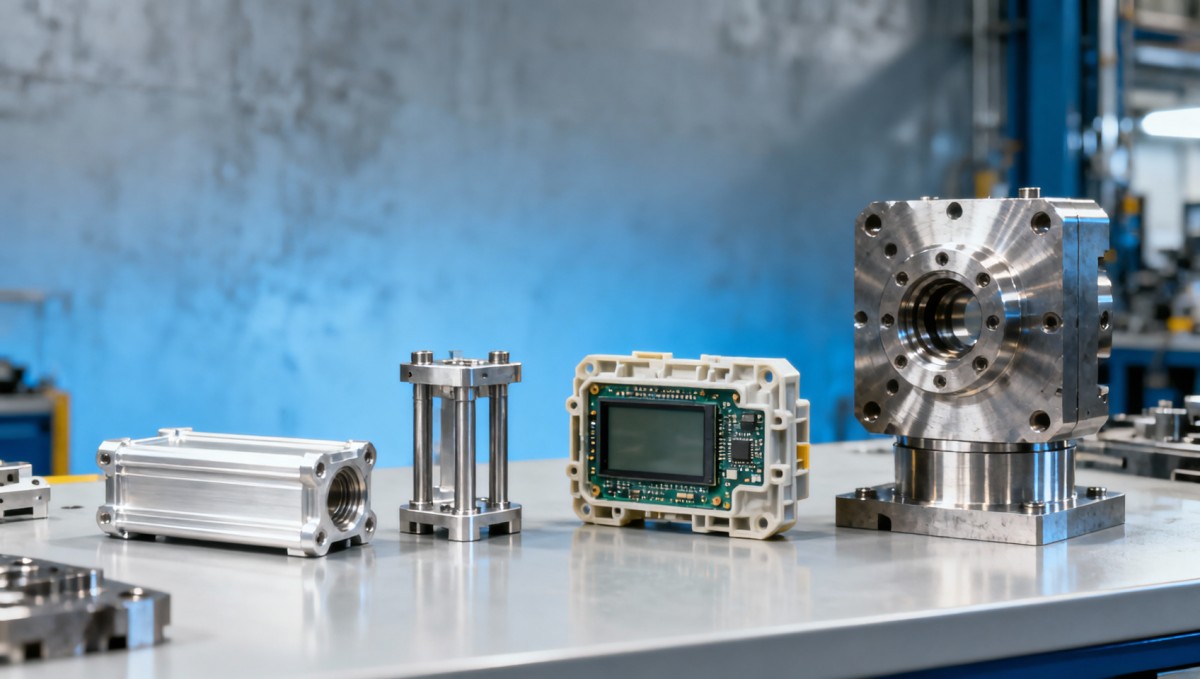
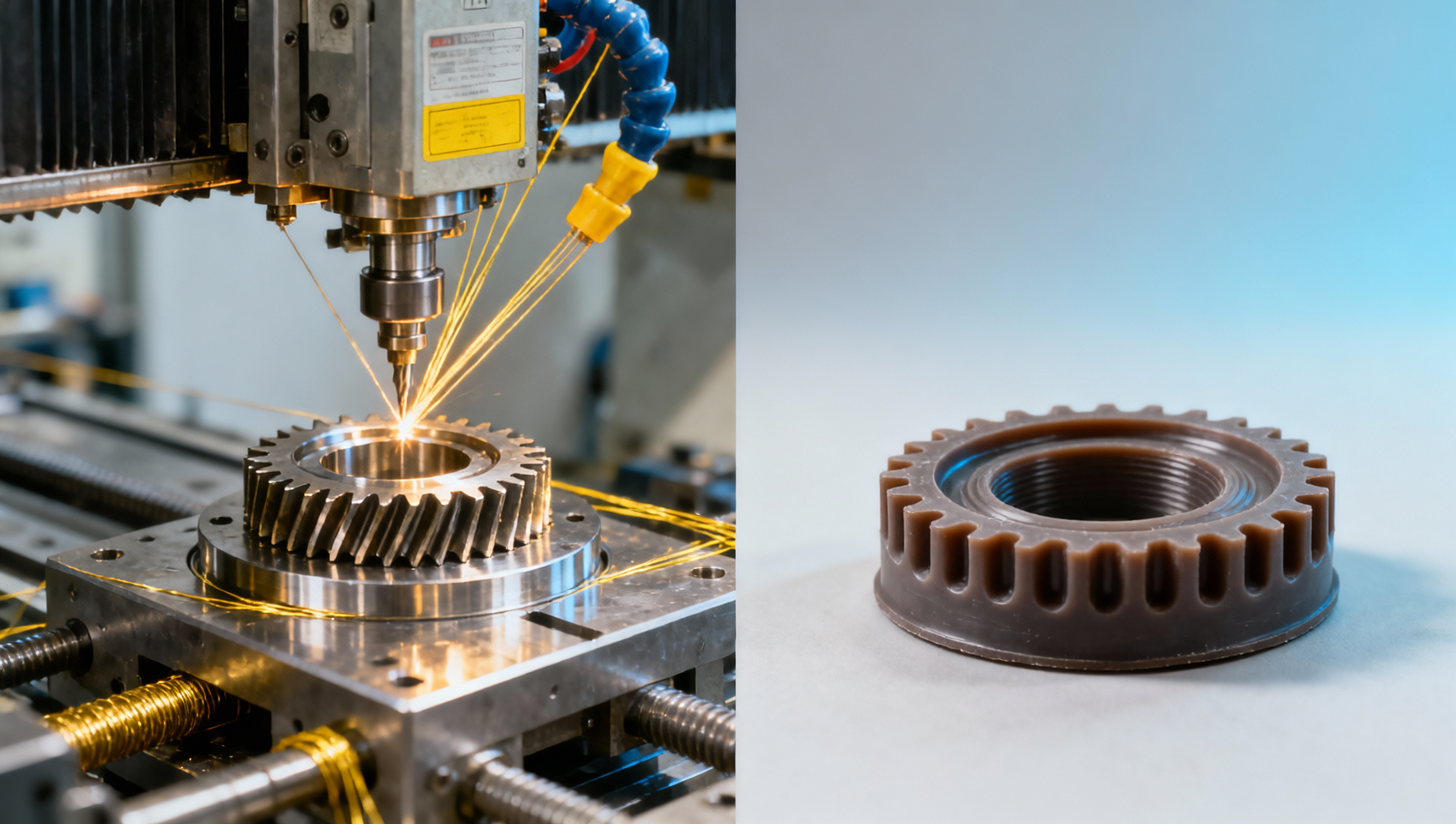
Rapid prototyping is a broad term that usually covers additive manufacturing, urethane casting, vacuum casting, and other fast-turn sample-making methods used to validate design intent. CNC machining, by contrast, is a subtractive process that removes material from metal or plastic stock using 3-axis, 4-axis, or 5-axis equipment. Both can support low-volume parts, but they solve different problems at different points in the product lifecycle.
If a team needs 1–10 pieces in 24–72 hours to check form, fit, or ergonomic usability, rapid prototyping often delivers faster. If the target is 20–200 pieces with tight tolerances such as ±0.02 mm to ±0.10 mm, stable material performance, and repeatable inspection data, CNC machining becomes more attractive. The distinction matters because prototype appearance and production-grade function are not always the same requirement.
For example, a bluetooth speaker enclosure may only need visual confirmation in the first round, while an EV charging station bracket may require threaded features, structural rigidity, and weather-resistant material from the start. Likewise, a smart ring housing may need fine cosmetic detail and dimensional consistency that some prototype methods cannot maintain across 30 or 50 units.
How buyers should frame the comparison
A practical comparison should not ask which process is “better” in general. It should ask which method fits the part purpose, quantity band, and risk profile. A design-validation sample, a pilot batch, and a spare-parts program are three different procurement situations, even if the part drawing looks similar.
The table below outlines common differences that matter for technical review and commercial approval. These are typical industry ranges rather than fixed rules, because material choice, machine availability, and finishing requirements can shift outcomes.
The key takeaway is that rapid prototyping favors speed and iteration, while CNC machining favors dimensional control, production realism, and repeatability. For low-volume parts, the “right” answer can also be sequential: prototype first, machine later. That hybrid path is often the lowest-risk option when a part will move from concept to market launch within 4–12 weeks.
When Rapid Prototyping Makes More Sense for Low-Volume Parts
Rapid prototyping is usually the stronger choice when design uncertainty is still high. If the CAD model may change after user testing, assembly checking, or internal review, fast samples reduce the cost of learning. In smart electronics, teams often revise wall thickness, connector access, latch positions, and logo treatment within the first 2–3 iterations. Paying for precision machining too early can waste budget on geometry that is not yet frozen.
This approach is also useful when the key question is visual or ergonomic rather than mechanical. A mechanical keyboard top case, a wearable charging dock cover, or a handheld jump starter shell can often be assessed first through rapid prototyping to confirm hand feel, assembly clearance, and industrial design direction. In those cases, a 48-hour sample can provide enough insight to avoid a larger redesign one week later.
Another advantage is complexity. Additive methods can produce internal channels, lattice features, and organic forms that may be difficult or costly to machine from solid stock. For healthcare technology housings or custom operator fixtures, the ability to test complex geometry before committing to a more production-focused route is valuable, especially when the annual demand is uncertain.
Best-fit scenarios
- Concept validation for 1–5 units before design freeze.
- Marketing or investor samples needed within 2–4 days.
- Assembly fit checks where tolerance demand is moderate rather than critical.
- Custom low-volume enclosures with frequent geometry changes across regions or channels.
- Bridge quantities where functional realism matters less than launch speed.
Common limitations that teams overlook
The main risk is assuming a prototype behaves like a production part. Surface finish can differ, threads may be weaker, and thermal or chemical resistance may not fully match the final material. For a solar component mount exposed to UV, moisture, and outdoor cycles, a visually acceptable prototype may still fail field expectations after 3–6 months if the material is only a substitute.
Quality teams should also confirm what dimensional inspection is realistic. A prototype made for appearance may not justify full CMM reporting, while a functional pilot part might require documented checks on 5–10 critical dimensions. Clarifying this early avoids disputes over acceptance criteria and prevents unnecessary delay in sample approval.
In procurement terms, rapid prototyping works best when speed-to-decision matters more than unit economics at scale. It is a tool for reducing uncertainty, not just a cheap substitute for machining.
When CNC Machining Is the Better Option for Functional Low-Volume Production
CNC machining becomes the preferred route when the part must perform like the final product from day one. This is common in aluminum heat sinks, stainless steel brackets, battery contact components, sensor mounts, and structural housings where material integrity and dimensional repeatability matter. For low-volume production lots of 20, 50, or 200 pieces, CNC often provides a more reliable basis for functional testing, compliance checks, and controlled field deployment.
For enterprise buyers, one of the biggest benefits is consistency. Once the setup is proven, parts can be reproduced with stable tolerances, documented inspection plans, and known finishing steps such as anodizing, bead blasting, passivation, or powder coating. This matters for components used in EV charging stations and supply chain equipment, where mating interfaces, flatness, and hole location may affect installation time and service life.
CNC machining also supports more realistic cost forecasting for future scaling. Even if the initial run is only 30 units, the production team can see actual cycle time, fixture needs, scrap risk, and post-processing load. That information helps finance and operations teams compare whether the part should remain machined at 100–500 units per year or move to casting or tooling later.
Operational advantages for B2B sourcing
Unlike many prototype routes, CNC uses the same material family that may be used in regular supply: 6061 aluminum, 7075 aluminum, POM, ABS, PC, stainless steel, brass, or engineering nylon. For buyers evaluating supplier readiness, that reduces the gap between “sample approved” and “production accepted.” It also makes test data more meaningful in tensile performance, conductivity, wear resistance, and thermal stability.
The following table shows where CNC machining usually delivers stronger value in low-volume commercial use.
The downside is that CNC machining may cost more per piece at very low quantities, especially when multiple setups, custom fixtures, or deep pockets are involved. However, for low-volume parts tied to function, safety, or warranty exposure, the higher upfront machining cost can prevent much larger downstream losses from fit failures or inconsistent field performance.
A useful rule of thumb is this: if the part must survive torque, heat, vibration, or repeated installation cycles, CNC machining should be evaluated first. If it only needs to validate design direction, rapid prototyping often remains the faster and more economical starting point.
A Practical Selection Framework for Engineering, Quality, and Finance Teams
Cross-functional alignment is where many low-volume projects succeed or fail. Engineering may prioritize geometry freedom, procurement may focus on lead time and supplier responsiveness, quality may require measurable tolerances, and finance may want a clear path to unit cost control. A good selection framework should balance all four areas rather than treating the process decision as a purely technical question.
Start by scoring the part across five factors: quantity, tolerance, material criticality, cosmetic requirement, and design maturity. For example, a score of 1–5 for each factor creates a simple 25-point model. Parts scoring above 18 are often better suited to CNC machining, while parts below 12 usually fit rapid prototyping. Mid-range scores often justify a hybrid plan.
This approach helps buyers compare very different parts on a consistent basis. A solar panel junction-box bracket and a retail electronics housing may both be low-volume, but their process priorities are not the same. One may need outdoor durability and torque stability; the other may need a fast visual sample for channel approval.
Five questions to ask before issuing an RFQ
- Is the design frozen, or are 1–2 more revision loops expected within the next 7 days?
- What are the true critical dimensions, and what tolerance band is required for each?
- Must the part use final material, or is a functional equivalent acceptable for this stage?
- Will the batch be used for internal validation, customer trial, or commercial shipment?
- What is the acceptable delivery window: 48 hours, 7 days, or 2–3 weeks?
Decision matrix for low-volume sourcing
The matrix below gives a practical way to align technical fit with commercial expectations.
Used correctly, this framework reduces approval friction. It helps technical evaluators justify process choice, gives finance a clearer cost rationale, and supports quality teams in defining inspection level before the supplier begins work.
Risk Control, Supplier Communication, and Delivery Planning
The process choice alone does not guarantee success. Many delays in low-volume parts come from unclear drawings, incomplete finish instructions, missing inspection definitions, or unrealistic delivery assumptions. Whether using rapid prototyping or CNC machining, buyers should define the part purpose, quantity, finish standard, and acceptance checkpoints at the RFQ stage.
A disciplined low-volume sourcing process usually has 4 stages: technical review, manufacturability feedback, sample or first-article approval, and controlled release. For urgent projects, these 4 stages may happen within 5–10 working days. For complex assemblies with multiple components and finishing steps, 2–4 weeks is more realistic. Compressing the timeline without clarifying requirements often increases hidden cost through rework or expedited freight.
Quality managers should specify which dimensions are critical-to-function and which are visual only. A part with 20 dimensions on the drawing may only have 4 that truly control assembly performance. If every dimension is treated as equally critical, cost rises and supplier response slows. If too few are defined, field issues may appear after installation.
Key communication points to include in every low-volume RFQ
- Part quantity by phase, such as 3 samples, 20 pilot units, and 100 follow-up units.
- Required material or approved alternatives, especially for thermal, electrical, or outdoor use.
- Critical dimensions with tolerance bands and thread specifications.
- Surface finish expectations, including cosmetic side, color, and post-processing needs.
- Inspection format, such as dimensional report, first-article check, or photo-based approval.
- Packing and labeling requirements for export, resale, or line-side deployment.
Common mistakes in low-volume part sourcing
One common mistake is selecting rapid prototyping for parts that will immediately face load, heat, or repeated fastening cycles. Another is choosing CNC machining for highly unstable designs where revision 2 and revision 3 are likely within days. A third mistake is ignoring finish lead time; anodizing, painting, or passivation can add 2–7 days, which can be significant in tight launch schedules.
Distributors and channel partners should also evaluate reorder practicality. If a service part may need replenishment every quarter in batches of 20–80 units, CNC machining may offer better continuity than a prototype-led method with variable availability or material substitution risk.
In strategic terms, the best suppliers are not the ones who simply quote fast. They are the ones who identify risk early, recommend the right process for the stage, and communicate tradeoffs clearly enough for procurement and engineering to make confident decisions.
FAQ: Choosing the Right Process for Low-Volume Parts
The questions below reflect common search intent from technical evaluators, sourcing teams, and commercial decision-makers working across electronics, energy systems, industrial hardware, and healthcare-related devices.
How many parts count as low-volume production?
In many B2B manufacturing contexts, low-volume means anywhere from 5 to 500 pieces, but the practical threshold depends on complexity and material. For a simple aluminum bracket, 200 units may still be low-volume. For a multi-surface cosmetic housing with several secondary operations, even 30 units can require production-style planning.
Can rapid prototyping be used for functional testing?
Yes, but only when the chosen process and material are suitable for the actual test condition. It can work for fit checks, light-duty handling, airflow concepts, and some assembly verification. It is less reliable for long-term stress, high torque, high heat, or weather exposure unless the method and material are specifically matched to those demands.
When should a team switch from prototyping to CNC machining?
A switch is usually justified when the design is at least 80% frozen, the part must be tested in final material, or the first commercial or pilot batch is approaching. If the next step requires stable tolerance, traceable inspection, or customer-facing deployment, CNC machining often becomes the safer choice.
What should finance teams focus on besides unit price?
They should consider the total cost of decision error: revision delays, rework, expedited logistics, failed fit tests, scrap, and the cost of approving the wrong material path. A process that is 15% more expensive per unit may still be cheaper overall if it removes one failed validation cycle or prevents a delayed launch.
How can buyers reduce lead time without increasing risk?
Provide complete 2D and 3D files, highlight 3–5 critical dimensions, define the cosmetic side, and separate urgent must-have requirements from optional preferences. That allows suppliers to review manufacturability faster and recommend whether rapid prototyping, CNC machining, or a staged combination will meet the target timeline.
For low-volume parts, rapid prototyping is strongest when speed, iteration, and early validation matter most. CNC machining is stronger when final material performance, tight tolerances, repeatability, and functional use are required. In many real-world B2B projects, the most effective path is not choosing one method forever, but using each at the right stage to reduce risk and improve decision quality.
Teams working in advanced manufacturing, green energy, smart electronics, healthcare technology, and supply chain systems should evaluate process choice through the lens of quantity, design maturity, quality requirements, and commercial impact. If you are comparing suppliers, planning a pilot batch, or deciding how to source low-volume parts with better cost and delivery control, now is the right time to review your part strategy in detail.
Contact us to discuss your low-volume part requirements, get a tailored sourcing recommendation, or explore more manufacturing solutions aligned with your technical and business goals.
Get weekly intelligence in your inbox.
No noise. No sponsored content. Pure intelligence.
 Apr 18, 2026TradeNexus Pro Launches Global Compliance RadarTradeNexus Pro Launches Global Compliance Radar
 Apr 18, 2026JIS T 2304:2026 Takes Effect June 1, 2026 for IVD SoftwareJIS T 2304:2026 Takes Effect June 1, 2026 for IVD Software
 Pathway for Rehab Devices with AI Modules") Apr 18, 2026FDA Updates 510(k) Pathway for Rehab Devices with AI ModulesFDA Updates 510(k) Pathway for Rehab Devices with AI Modules
Apr 18, 2026FDA Updates 510(k) Pathway for Rehab Devices with AI ModulesFDA Updates 510(k) Pathway for Rehab Devices with AI Modules Apr 18, 2026India BIS Approves 3 Chinese IoT Labs for IS 16444:2026 CertificationIndia BIS Approves 3 Chinese IoT Labs for IS 16444:2026 Certification
 Apr 18, 2026THE Alliance Launches Green Slot Priority for China PortsTHE Alliance Launches Green Slot Priority for China Ports
 Apr 18, 2026TÜV Rheinland Releases Dual-Standard ESS Certification Guide for ChinaTÜV Rheinland Releases Dual-Standard ESS Certification Guide for China
 Apr 18, 2026Vietnam Imposes AD Duties on Chinese Electronic ComponentsVietnam Imposes AD Duties on Chinese Electronic Components
 Apr 18, 2026SASO Launches PV Carbon Footprint Labeling from July 2026SASO Launches PV Carbon Footprint Labeling from July 2026
 Apr 18, 2026U.S. Adds 17 Smart Warehouse Robot Components to Export Control ListU.S. Adds 17 Smart Warehouse Robot Components to Export Control List
 Apr 18, 2026EU Enforces EN IEC 62443-4-2:2026 for Industrial Control Devices from 18 Apr 2026EU Enforces EN IEC 62443-4-2:2026 for Industrial Control Devices from 18 Apr 2026
 Apr 17, 2026Temperature data loggers drift unpredictably inside lithium-ion battery storage enclosuresTemperature data loggers drift unpredictably inside lithium-ion battery storage enclosures
 Apr 17, 2026Are solar microinverters really worth the extra cost?Are solar microinverters really worth the extra cost?
 Apr 17, 2026Bifacial solar panels: How much more energy can they generate?Bifacial solar panels: How much more energy can they generate?
 Apr 17, 2026Gear manufacturing: How to optimize production for high precision?Gear manufacturing: How to optimize production for high precision?
 Apr 17, 2026Why power transmission components fail earlier than expectedWhy power transmission components fail earlier than expected
 Apr 17, 2026Linear motion systems: belt drive or ball screw for speed?Linear motion systems: belt drive or ball screw for speed?
 Apr 17, 2026Industrial bearing suppliers: what signals reliable quality?Industrial bearing suppliers: what signals reliable quality?
 Apr 17, 2026When pneumatic valves wholesale gets expensive laterWhen pneumatic valves wholesale gets expensive later
 Apr 17, 2026Hydraulic cylinder fabrication mistakes that cause oil leaksHydraulic cylinder fabrication mistakes that cause oil leaks
 Apr 17, 2026Heavy equipment manufacturing delays often start hereHeavy equipment manufacturing delays often start here
 Apr 17, 2026Custom heatsinks: when a larger size solves nothingCustom heatsinks: when a larger size solves nothing
 Apr 17, 2026Electronic enclosure fabrication: steel or aluminum?Electronic enclosure fabrication: steel or aluminum?
 Apr 17, 2026Automotive parts machining tolerances that drive up scrapAutomotive parts machining tolerances that drive up scrap
 Apr 17, 2026Medical device manufacturing changes under tighter traceabilityMedical device manufacturing changes under tighter traceability
 Apr 17, 2026How to Choose Solid State Batteries in 2026How to Choose Solid State Batteries in 2026
 Apr 17, 2026Are Solid State Batteries Worth the Cost Yet?Are Solid State Batteries Worth the Cost Yet?
 Apr 17, 2026Commercial Energy Storage Sizing: What Matters Most?Commercial Energy Storage Sizing: What Matters Most?