Wire EDM services make sense when tight corners really matter
When precision, repeatability, and intricate geometry define project success, wire edm services become a practical advantage for buyers, engineers, and quality teams alike. From gear manufacturing and custom molded rubber tooling to components supporting smart electronics, healthcare technology, and commercial energy storage systems, selecting the right process affects cost, lead time, and performance. This article explains why tight corners, fine tolerances, and material demands make wire EDM a strategic choice.
In B2B sourcing, the machining decision is rarely just about cutting metal. It affects downstream assembly yield, inspection burden, tooling life, and the ability to scale from prototype to repeat orders. For procurement teams and technical evaluators, wire EDM often enters the conversation when conventional milling, broaching, or grinding starts to struggle with inside radii, hard materials, or distortion-sensitive parts.
For sectors followed closely by TradeNexus Pro, including advanced manufacturing, smart electronics, healthcare technology, green energy, and supply chain SaaS-enabled operations, the value of wire EDM lies in its predictability. It is especially relevant when part geometry is difficult, tolerance windows are narrow, and supplier selection must balance cost, quality, and delivery reliability across global sourcing networks.
Why Wire EDM Becomes the Right Choice for Tight Corners
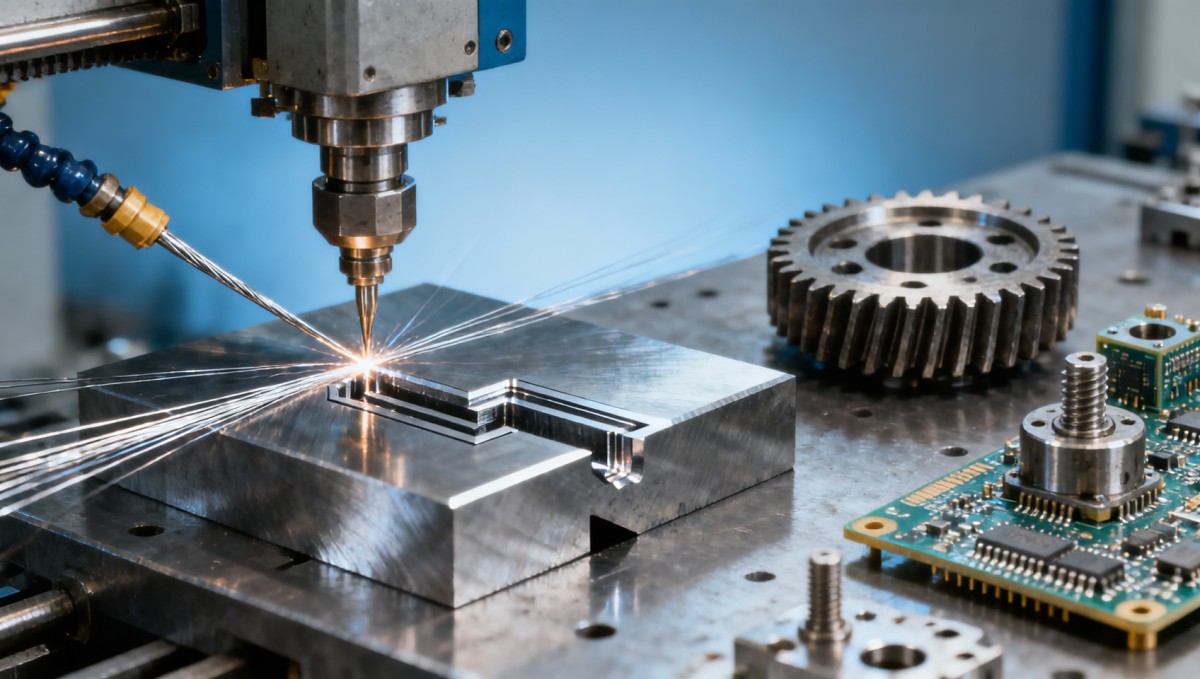
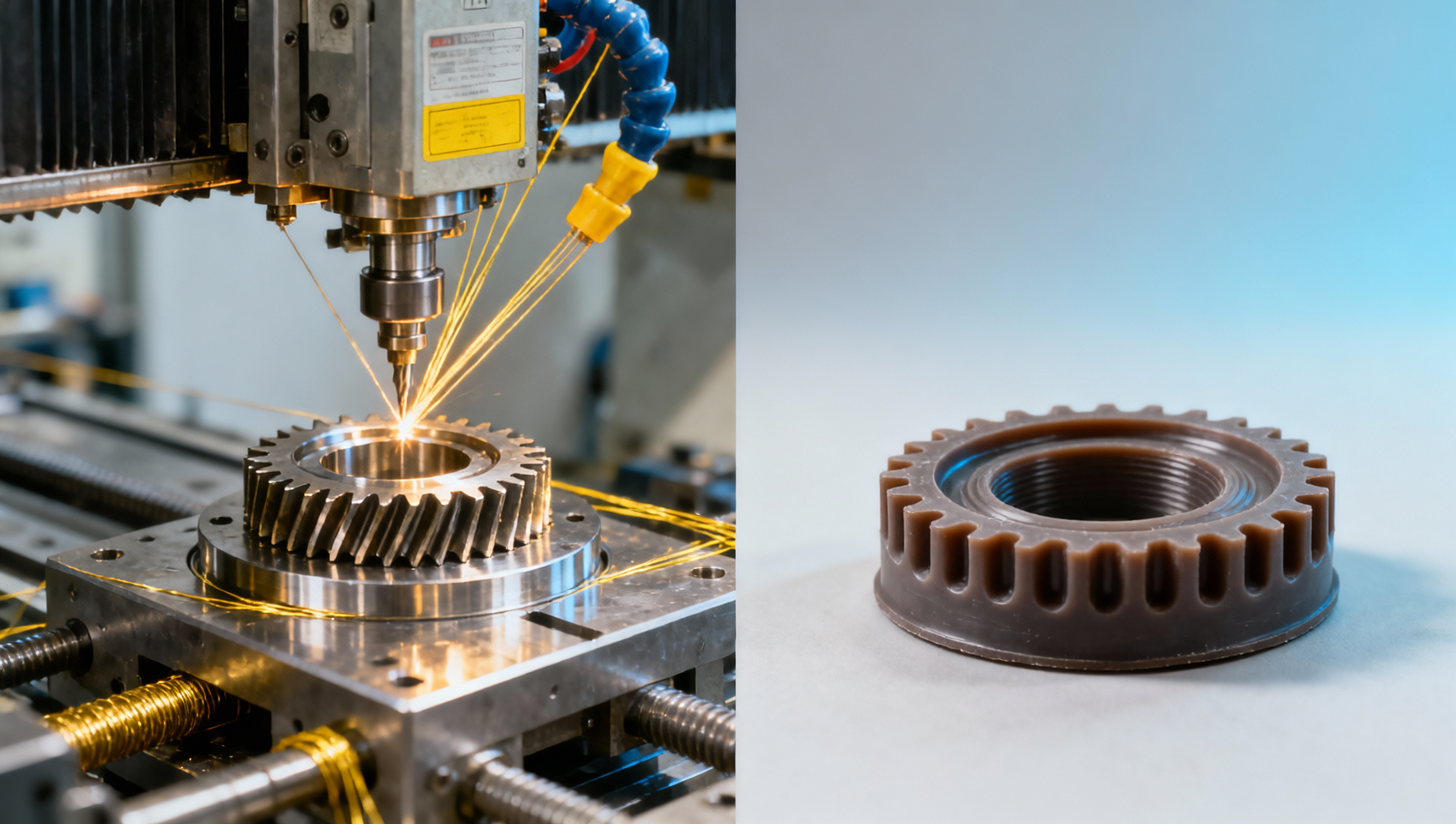
Wire EDM, or wire electrical discharge machining, removes material through controlled electrical discharges rather than direct cutting force. A thin wire, often in the 0.10 mm to 0.30 mm range, follows a programmed path through conductive material while dielectric fluid stabilizes the process. Because there is no mechanical cutting pressure, the process is well suited to delicate profiles and tight internal corners that would challenge rotating tools.
The phrase “tight corners” matters in practical purchasing terms. In many machined parts, a standard end mill leaves an inside radius equal to half the cutter diameter. If a design requires a much smaller radius, such as 0.15 mm to 0.25 mm, conventional machining may require extra operations, redesigned geometry, or compromise on fit. Wire EDM can produce sharper internal features with higher consistency, reducing secondary handwork and inspection rejections.
This matters across industries. In gear manufacturing, sharp profile transitions and tooling inserts often demand edge definition beyond what typical milling can hold economically. In custom molded rubber tooling, vent details, cavity edges, and precise mold components influence flash control and part release. In healthcare technology and smart electronics, miniature conductive components may require narrow slots, fine openings, or complex contours with tolerances commonly held within ±0.005 mm to ±0.02 mm depending on geometry and supplier capability.
Another reason buyers specify wire EDM is material hardness. Hardened steels, carbide-compatible tooling scenarios, titanium alloys, and nickel-based materials can drive tool wear and variability in conventional cutting. Wire EDM handles conductive hardened materials without the same mechanical load, which can simplify process planning when hardness reaches 50 HRC, 58 HRC, or higher after heat treatment.
Where Corner Accuracy Changes Commercial Outcomes
Tight-corner capability is not just a geometric advantage. It influences 4 commercial variables that matter to decision-makers: assembly fit, defect rate, lead-time stability, and tooling replacement frequency. A corner that is 0.10 mm too large may seem minor on paper, but in stacked tolerances it can affect sealing, alignment, electrical clearance, or wear behavior.
- Assembly-critical features: small inside corners can improve fit in mating components and reduce manual adjustment.
- Tooling precision: sharper cavity transitions support cleaner molded edges and more repeatable part geometry.
- Inspection efficiency: repeatable EDM output can reduce rework loops and lower CMM review time over 3 to 5 production batches.
- Lifecycle economics: better initial accuracy may reduce the need for corrective finishing and scrap from tolerance drift.
For project managers and finance approvers, this is where process choice connects to cost control. Wire EDM may carry a higher hourly rate than simple milling, yet total job cost can be lower when one process eliminates 2 or 3 extra operations, reduces scrap in first article approval, or shortens tool qualification cycles by several days.
Applications Across Manufacturing, Energy, Electronics, and Medical Supply Chains
Wire EDM services are most valuable when the geometry is difficult, the material is conductive, and dimensional repeatability is a contractual requirement rather than a preference. Across integrated supply chains, these conditions appear more often than many buyers expect. The process is widely used for precision tooling, fixture plates, prototype metal parts, fine-cut openings, and hardened wear components that must remain stable over repeat runs.
In advanced manufacturing, wire EDM is often specified for dies, punches, gear-related tooling, and custom fixtures. For green energy applications, battery module hardware, busbar-related tooling, and enclosures with narrow conductive profiles may benefit from the process. In smart electronics, miniature connector components, shielding details, and precision slots are common examples. In healthcare technology, surgical device tooling, stainless steel fixture parts, and traceable low-volume production components often require both tight tolerance and clean edge control.
Commercial energy storage systems also create opportunities for EDM-based tooling. Mold components, thermal management plate features, and conductive assembly aids may require stable corner definition and repeatability over medium production volumes. Here, a tolerance shift of even 0.02 mm to 0.05 mm can influence alignment, insulation clearance, or sealing performance in assembled systems.
The table below outlines where wire EDM commonly adds value compared with standard cutting routes in cross-industry sourcing environments.
The key takeaway is that wire EDM is not limited to one vertical market. It is a cross-functional manufacturing service that becomes more valuable as product miniaturization, hardened materials, and tighter validation requirements increase. For distributors and sourcing intermediaries, that makes EDM capability an important supplier-screening criterion rather than a niche add-on.
When It Is Less Suitable
Wire EDM is not the best fit for every job. It only works on electrically conductive materials, and it is not always the lowest-cost option for simple open profiles or loose-tolerance parts. If a part tolerance is above ±0.10 mm and internal radii are not critical, laser cutting, waterjet, or CNC milling may be more economical, especially at higher volumes with simple geometry.
That distinction is important for procurement. The value comes from matching the process to the tolerance, geometry, and inspection requirement, not assuming EDM is automatically the premium answer in every RFQ.
How Buyers and Engineers Should Evaluate a Wire EDM Supplier
Supplier evaluation should go beyond “Can you do wire EDM?” A stronger question is whether the supplier can repeatedly deliver the required geometry, material condition, and inspection output within your timeline. For most B2B projects, there are at least 5 checkpoints: machine capability, material experience, tolerance control, documentation discipline, and lead-time realism.
Machine capability affects both feature size and throughput. Buyers should ask about typical wire diameters, achievable corner radii, workpiece thickness range, and whether the supplier performs skim cuts for improved surface finish. On precision jobs, 1 rough cut plus 1 to 3 skim passes may be used to improve accuracy and reduce recast layer effects. That directly affects both cycle time and quality outcomes.
Material experience also matters. A supplier comfortable with tool steel may not be equally experienced with titanium, stainless steel, copper alloys, or thin conductive laminations. If the project serves medical devices or electronic assemblies, the supplier should be able to discuss burr control, feature edge quality, and inspection methods in practical terms rather than sales language alone.
The following procurement table helps structure supplier comparison in a way that technical and commercial teams can both use during vendor selection.
A strong supplier should also explain design-for-manufacture limits. If a requested corner is below practical wire capability, or if flushing conditions make a deep narrow slot risky, the supplier should propose options early. That kind of technical honesty saves more time than an aggressive quote followed by process changes after PO release.
A 5-Step RFQ Checklist
- Define the critical features, not just the overall dimensions. Highlight corners, slots, and datums that affect assembly or sealing.
- State the material grade and condition, including whether the part is pre-hardened or post-heat-treated.
- Specify tolerance by feature. Avoid applying an unnecessarily tight blanket tolerance to the whole drawing.
- Request inspection expectations upfront, such as FAI, CMM data, or in-process measurement checkpoints.
- Clarify delivery stages, including prototype quantity, pilot lot volume, and repeat-order forecast over 3 to 6 months.
This approach gives sourcing teams a more accurate quote comparison and reduces the risk of hidden cost later in the project cycle.
Lead Time, Cost Drivers, and Quality Control in Wire EDM Projects
Cost in wire EDM services is shaped by more than machine hours. Geometry complexity, material thickness, number of starts, corner detail, surface finish target, and inspection requirements all influence final pricing. For example, a simple 2D contour in 10 mm steel may be processed quickly, while a thicker hardened part with multiple small openings and 2 skim cuts can take significantly longer even if the external size is similar.
Lead time typically falls into 3 bands. Prototype jobs may ship in 3 to 7 business days when stock material is available and documentation is simple. Production tooling or validated medical-related components may require 2 to 4 weeks because inspection, revision review, and packaging controls add time. Large or highly detailed workpieces can extend beyond that, especially if raw material sourcing or downstream finishing is included.
Quality control should focus on the features that make EDM necessary in the first place: corner geometry, profile accuracy, taper control if applicable, and surface condition. Buyers should confirm whether the supplier inspects only overall size or also checks critical internal corners, slot widths, and parallelism. In higher-risk applications, first article approval should be tied to 3 acceptance layers: dimensional conformity, material confirmation, and visual edge review.
A practical misunderstanding is to compare EDM prices only against a basic milling quote. If milling requires custom micro-tools, multiple setups, polishing, and rework to approximate the same profile, the apparent savings can disappear. Total cost should be evaluated across the full workflow, not just the first machining step.
Common Cost and Risk Factors
- Very small radii or narrow slots can increase machine time and inspection effort.
- Part thickness above 50 mm to 100 mm may reduce cutting speed and complicate flushing stability.
- Additional skim passes improve finish and accuracy but add cycle time.
- High documentation requirements can add 1 to 3 days to the release process.
- Loose drawing control or late revision changes often create the biggest avoidable delays.
What Quality Teams Should Verify Before Approval
Quality and safety managers should verify that measurement methods match the actual critical features. If a feature is called out at ±0.01 mm, manual calipers are rarely sufficient. Depending on the feature, optical measurement, CMM inspection, pin gauges, or surface roughness checks may be more appropriate. This is especially relevant in healthcare technology components, electronics tooling, and precision fixtures where acceptance depends on traceable verification, not visual confidence alone.
For enterprise decision-makers, the goal is simple: purchase the process that delivers stable conformity with fewer corrections. A slightly higher upfront machining cost can protect schedule, quality, and downstream labor efficiency over the life of the program.
Implementation Tips, Misconceptions, and FAQ for Smarter Sourcing
The best results from wire EDM services come when engineering, procurement, and quality share the same priorities before supplier engagement. Many sourcing delays begin with incomplete drawings, unclear tolerances, or assumptions that the supplier will infer what matters. A more disciplined handoff reduces quotation ambiguity and improves first-pass approval rates.
One common misconception is that wire EDM automatically guarantees the sharpest possible corner. In reality, achievable geometry depends on wire diameter, flushing conditions, part thickness, and machine strategy. Another misconception is that EDM is too slow for commercial use. While it is not ideal for every high-volume part, it is highly competitive for complex, high-value, low-to-medium volume work where rework costs are significant.
For distributors, agents, and project leads managing multi-country supply chains, the practical advantage is predictability. A capable EDM supplier can support prototypes, bridge production, and specialized tooling with better process consistency, making it easier to align inventory, qualification milestones, and customer delivery windows.
FAQ: Questions Buyers Commonly Ask
How tight can wire EDM tolerances typically be?
For many precision jobs, suppliers commonly quote capabilities in the ±0.005 mm to ±0.02 mm range, but actual results depend on part size, thickness, material, and inspection method. Buyers should ask what range the supplier holds routinely in production rather than only in ideal sample conditions.
What parts are best suited to wire EDM services?
The strongest candidates are conductive parts or tooling components with tight internal corners, narrow slots, hardened materials, or distortion-sensitive profiles. Examples include mold tooling, die sections, fixture plates, electronics tooling, and precise components used in medical and energy-related assemblies.
How long does a typical job take?
Simple prototypes may be completed in 3 to 7 business days. Production lots, validated tooling, or projects requiring full inspection records may take 2 to 4 weeks. Rush schedules are possible in some cases, but they should not replace a realistic planning process.
What information should an RFQ include?
At minimum, include drawing revision, material grade, thickness, critical tolerances, quantity, required inspection, and target delivery date. If corner sharpness or surface finish is critical, state that directly. Ambiguity in just 1 or 2 features can create quote variation that distorts supplier comparison.
When tight corners truly matter, wire EDM services make sense because they reduce compromise. They help manufacturers and buyers achieve difficult geometry, maintain repeatability, and manage quality risk in applications where conventional cutting may create extra steps or inconsistent results. For teams operating across advanced manufacturing, healthcare technology, smart electronics, green energy, and complex supply chains, that makes EDM a strategic sourcing tool rather than a specialty afterthought.
If your next project involves hardened materials, fine tolerances, or precision internal features, now is the right time to evaluate whether wire EDM is the better route. Connect with TradeNexus Pro to explore qualified suppliers, compare production approaches, and get a sourcing strategy tailored to your technical and commercial requirements.
Get weekly intelligence in your inbox.
No noise. No sponsored content. Pure intelligence.
 Apr 18, 2026TradeNexus Pro Launches Global Compliance RadarTradeNexus Pro Launches Global Compliance Radar
 Apr 18, 2026JIS T 2304:2026 Takes Effect June 1, 2026 for IVD SoftwareJIS T 2304:2026 Takes Effect June 1, 2026 for IVD Software
 Pathway for Rehab Devices with AI Modules") Apr 18, 2026FDA Updates 510(k) Pathway for Rehab Devices with AI ModulesFDA Updates 510(k) Pathway for Rehab Devices with AI Modules
Apr 18, 2026FDA Updates 510(k) Pathway for Rehab Devices with AI ModulesFDA Updates 510(k) Pathway for Rehab Devices with AI Modules Apr 18, 2026India BIS Approves 3 Chinese IoT Labs for IS 16444:2026 CertificationIndia BIS Approves 3 Chinese IoT Labs for IS 16444:2026 Certification
 Apr 18, 2026THE Alliance Launches Green Slot Priority for China PortsTHE Alliance Launches Green Slot Priority for China Ports
 Apr 18, 2026TÜV Rheinland Releases Dual-Standard ESS Certification Guide for ChinaTÜV Rheinland Releases Dual-Standard ESS Certification Guide for China
 Apr 18, 2026Vietnam Imposes AD Duties on Chinese Electronic ComponentsVietnam Imposes AD Duties on Chinese Electronic Components
 Apr 18, 2026SASO Launches PV Carbon Footprint Labeling from July 2026SASO Launches PV Carbon Footprint Labeling from July 2026
 Apr 18, 2026U.S. Adds 17 Smart Warehouse Robot Components to Export Control ListU.S. Adds 17 Smart Warehouse Robot Components to Export Control List
 Apr 18, 2026EU Enforces EN IEC 62443-4-2:2026 for Industrial Control Devices from 18 Apr 2026EU Enforces EN IEC 62443-4-2:2026 for Industrial Control Devices from 18 Apr 2026
 Apr 17, 2026Temperature data loggers drift unpredictably inside lithium-ion battery storage enclosuresTemperature data loggers drift unpredictably inside lithium-ion battery storage enclosures
 Apr 17, 2026Are solar microinverters really worth the extra cost?Are solar microinverters really worth the extra cost?
 Apr 17, 2026Bifacial solar panels: How much more energy can they generate?Bifacial solar panels: How much more energy can they generate?
 Apr 17, 2026Gear manufacturing: How to optimize production for high precision?Gear manufacturing: How to optimize production for high precision?
 Apr 17, 2026Why power transmission components fail earlier than expectedWhy power transmission components fail earlier than expected
 Apr 17, 2026Linear motion systems: belt drive or ball screw for speed?Linear motion systems: belt drive or ball screw for speed?
 Apr 17, 2026Industrial bearing suppliers: what signals reliable quality?Industrial bearing suppliers: what signals reliable quality?
 Apr 17, 2026When pneumatic valves wholesale gets expensive laterWhen pneumatic valves wholesale gets expensive later
 Apr 17, 2026Hydraulic cylinder fabrication mistakes that cause oil leaksHydraulic cylinder fabrication mistakes that cause oil leaks
 Apr 17, 2026Heavy equipment manufacturing delays often start hereHeavy equipment manufacturing delays often start here
 Apr 17, 2026Custom heatsinks: when a larger size solves nothingCustom heatsinks: when a larger size solves nothing
 Apr 17, 2026Electronic enclosure fabrication: steel or aluminum?Electronic enclosure fabrication: steel or aluminum?
 Apr 17, 2026Automotive parts machining tolerances that drive up scrapAutomotive parts machining tolerances that drive up scrap
 Apr 17, 2026Medical device manufacturing changes under tighter traceabilityMedical device manufacturing changes under tighter traceability
 Apr 17, 2026How to Choose Solid State Batteries in 2026How to Choose Solid State Batteries in 2026
 Apr 17, 2026Are Solid State Batteries Worth the Cost Yet?Are Solid State Batteries Worth the Cost Yet?
 Apr 17, 2026Commercial Energy Storage Sizing: What Matters Most?Commercial Energy Storage Sizing: What Matters Most?