Why Some EV Charging Stations Cost More to Operate Than Expected
Why do some EV charging stations cost far more to operate than early projections suggest? Beyond electricity rates, factors such as peak-demand fees, maintenance cycles, software integration, and links to renewable energy systems like a solar panel setup can reshape total cost. For buyers, operators, and decision-makers evaluating long-term infrastructure value, understanding these hidden cost drivers is essential before scaling deployment.
In practice, the operating cost of an EV charging station is shaped by a chain of technical, commercial, and site-specific variables. A charger that appears competitive on purchase price alone can become expensive within 12 to 24 months if utilization patterns, grid tariffs, uptime requirements, and software subscriptions were underestimated at the planning stage.
This matters across multiple B2B roles. Operators need predictable uptime, technical evaluators need clarity on load behavior and integration, finance teams need reliable total cost of ownership models, and procurement leaders need a defensible framework for comparing AC and DC charging deployments across different sites.
For industrial parks, logistics depots, retail forecourts, fleet yards, and mixed-use commercial properties, the gap between projected and actual operating cost often comes down to hidden cost drivers rather than a single large expense. The sections below break down where those costs emerge and how to manage them before expansion.
The Most Overlooked Operating Cost Drivers in EV Charging Infrastructure

Electricity price is only the visible layer of EV charging economics. Many site owners build early budgets around a simple cost-per-kWh assumption, but actual operating expense often includes demand charges, connection fees, payment processing, remote monitoring, firmware support, warranty exclusions, and field service dispatches. These items can materially change profitability when charger usage becomes uneven.
A common example is a 150kW DC fast charger installed at a location with only moderate daily throughput. If just 3 to 5 high-power sessions cluster within the same billing interval, the site may trigger a peak-demand fee that raises monthly utility cost far beyond the expected energy bill. In some markets, one short peak can influence the entire billing cycle for 30 days.
Maintenance is another underestimated area. Connectors, cooling systems, payment terminals, screens, cable management parts, and communication modules do not age at the same pace. A charger with strong theoretical uptime may still require preventive inspection every 3 to 6 months and reactive service visits within 24 to 72 hours when faults interrupt revenue.
Software and compliance also add recurring cost. Network management platforms typically include user authentication, tariff rules, diagnostics, session records, and integration APIs, but these functions may be billed per port, per charger, or per transaction. Over a 5-year operating period, software fees can become a meaningful share of operating cost, especially across distributed multi-site fleets.
Hidden costs that frequently distort early business cases
- Peak-demand penalties linked to short bursts of high-power charging rather than total monthly energy consumption.
- Communication failures between chargers, backend systems, and payment gateways that increase support tickets and lost transactions.
- Environmental wear from heat, dust, humidity, or vandalism, which raises service frequency and replacement parts usage.
- Grid upgrade obligations, switchgear adaptation, and transformer sizing that were not included in the original equipment quote.
The table below summarizes how common operating cost elements behave over time in a typical commercial deployment. Exact values vary by country, utility structure, and charger type, but the ranges reflect practical planning considerations used in B2B evaluation.
The key takeaway is that operating cost does not rise in a straight line with energy delivered. It rises when utilization is mismatched to tariff design, when hardware is placed in harsh or high-touch environments, and when the software stack is more fragmented than the original budget assumed.
Why Site Design, Load Profile, and Charger Mix Matter More Than Many Buyers Expect
A charging station is not just a piece of power equipment. It is a site-level energy system that interacts with local grid capacity, vehicle dwell time, user behavior, cable routing, parking turnover, and sometimes on-site renewable generation. Two sites with the same number of chargers can have very different operating costs if their load profile and traffic pattern differ.
For example, four 22kW AC chargers in a workplace parking area may produce a more stable and manageable load than one 180kW DC charger at a fleet yard with compressed evening charging windows. The AC site may generate lower revenue per session, but it can also avoid expensive demand spikes and reduce thermal stress on power components.
Charger mix is therefore a strategic decision. If a site over-specifies fast charging where vehicles typically dwell for 2 to 6 hours, capital efficiency and operating efficiency both suffer. Conversely, under-specifying charging speed in a high-turnover retail environment can reduce utilization, frustrate users, and lengthen queue times during peak periods.
Layout and civil design also influence long-term cost. Poor cable reach, inadequate drainage, weak bollard protection, constrained service access, and lack of shade or enclosure can increase accidental damage and service complexity. These are not cosmetic issues. They affect mean time to repair, technician safety, and parts replacement frequency.
Typical operating patterns by site type
The table below compares common site environments and the operating-cost implications that buyers should model before procurement. This is especially useful for distributors, integrators, and enterprise teams evaluating multi-location rollouts.
The comparison shows why a one-size-fits-all charger strategy rarely performs well. A proper operating model starts with traffic flow, dwell time, and simultaneous demand. Only then should teams decide how much AC, how much DC, and what level of software orchestration is justified.
Four planning checks before deployment
- Measure expected simultaneous charging events, not just daily session totals.
- Map dwell time bands such as under 30 minutes, 30 to 90 minutes, and over 3 hours.
- Review utility tariff terms for peak windows, reactive power rules, and contracted capacity thresholds.
- Test charger-to-backend interoperability before purchasing at scale across 10 or more sites.
How Software, Connectivity, and Renewable Energy Integration Change the Cost Model
As charging networks become more digital, software is no longer an optional layer. Access control, billing logic, roaming compatibility, remote diagnostics, energy balancing, and data reporting all depend on reliable backend services. If the software contract is weak or fragmented, the charging station may experience failed sessions, poor tariff enforcement, and slower troubleshooting, all of which increase operating cost indirectly.
Connectivity is a practical risk area. Chargers in underground structures, remote depots, or steel-heavy industrial zones may suffer signal instability. If the station relies on real-time payment authorization or cloud-based diagnostics, even brief communication outages can disrupt revenue collection and service quality. A site may then need upgraded networking hardware, a secondary SIM, or local failover capability.
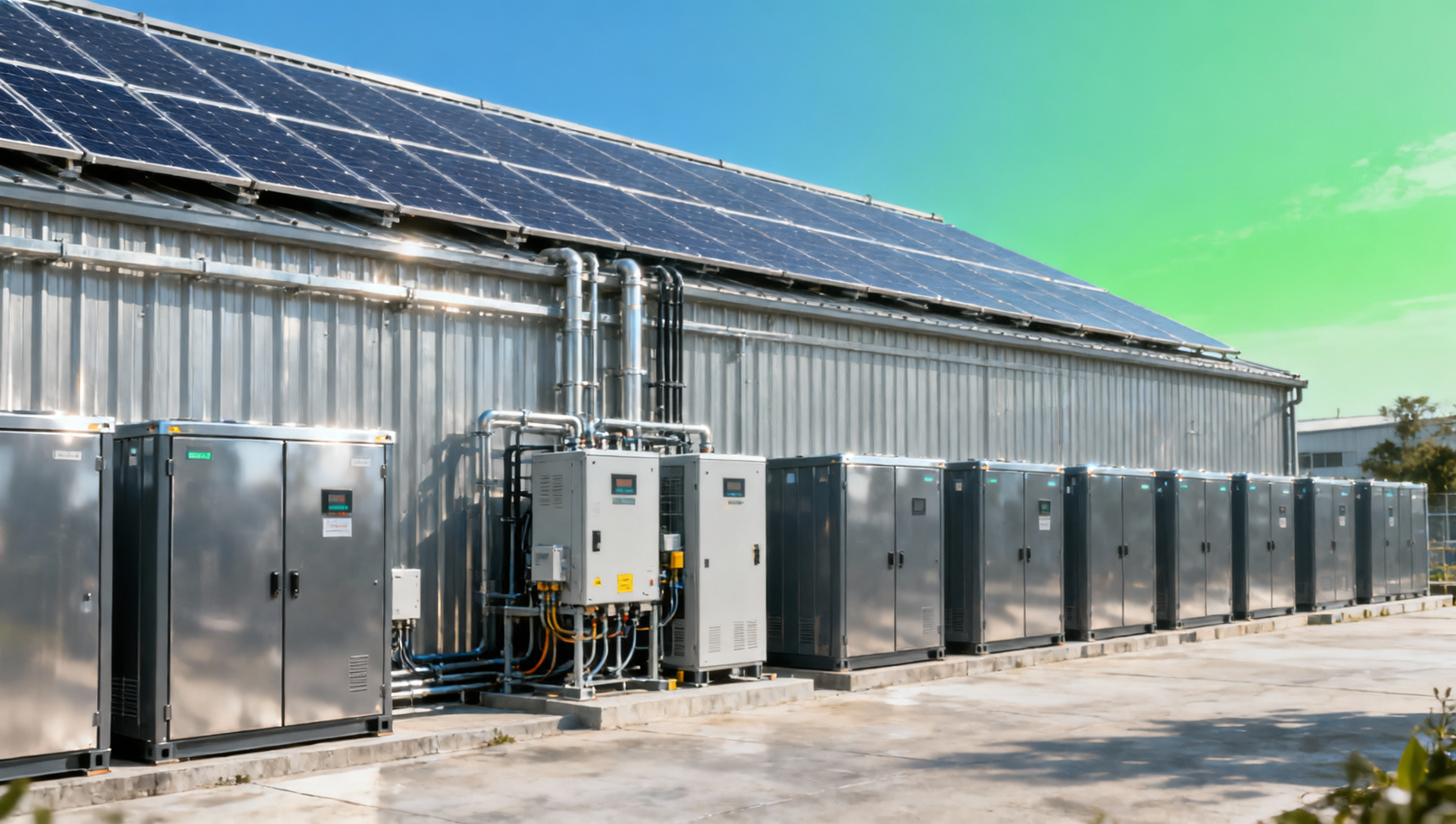
Renewable energy integration can reduce long-term grid dependence, but it does not automatically lower operational cost. A solar panel setup, for example, only improves economics when charging demand overlaps with solar generation or when energy storage and load management are designed correctly. Without that coordination, solar output may help overall site consumption while doing little to reduce the specific peaks that drive charging-related fees.
Battery storage can improve this picture by shaving peak load, but storage adds its own lifecycle considerations. Procurement teams need to assess cycle life, thermal management, inverter compatibility, and maintenance obligations over a 5- to 10-year horizon. In many commercial projects, the wrong storage size can be almost as inefficient as having no storage strategy at all.
Where digital and energy integration costs usually appear
- License and platform fees that scale with each charger, connector, or transaction volume.
- API or middleware work needed to connect chargers with ERP, payment, fleet, or building energy systems.
- Site communications upgrades, including routers, external antennas, and fallback network paths.
- Control logic needed to synchronize EV charging with solar generation, battery dispatch, or building load limits.
For finance approvers and technical teams, the main lesson is that software and renewable integration should be modeled as an operating system, not as accessories. A charging station with 8 to 20 ports, dynamic load balancing, and solar coupling may deliver strong lifecycle value, but only if interoperability and service responsibilities are clearly defined in advance.
Procurement and Operational Strategies to Keep EV Charging Costs Under Control
The most effective way to reduce surprise operating cost is to shift procurement from equipment buying to total-system buying. Instead of comparing chargers only by rated power or unit price, buyers should compare operating scenarios, service obligations, software dependency, and site compatibility. This is especially important when rollout plans span 6, 12, or 24 locations over multiple phases.
A practical procurement model starts with three cost layers: fixed operating cost, variable operating cost, and event-driven cost. Fixed cost includes software subscriptions and routine inspection. Variable cost includes electricity, payment fees, and transaction processing. Event-driven cost includes fault response, cable replacement, vandalism repair, and emergency technician visits. If any of these categories are omitted, the budget is incomplete.
Service-level definitions are equally important. A 98% uptime target sounds reasonable, but teams must clarify what counts as downtime, whether remote resets are included, and how quickly on-site support arrives. For revenue-sensitive sites, the difference between 24-hour and 72-hour field response can change annual income and customer satisfaction materially.
Operators should also invest in utilization discipline. Load balancing, scheduled fleet charging, user pricing rules, and preventive maintenance windows can reduce both utility peaks and service failures. In many cases, improving the charging schedule delivers more savings than negotiating a lower hardware price.
Procurement checklist for B2B charging projects
The table below provides a decision framework that can be used by enterprise buyers, technical evaluators, distributors, and site operators during vendor comparison and approval workflows.
This checklist is most valuable when applied before tender finalization. Once a project is installed, many cost drivers become harder to correct without additional civil work, software replacement, or contract renegotiation.
Operational controls that often deliver fast payback
- Set charging schedules to avoid overlapping 2 to 3 known demand peaks each day.
- Use dynamic load management to limit simultaneous output when total site load nears threshold.
- Review connector wear, cable handling, and fault logs monthly instead of waiting for quarterly failures.
- Audit software invoices, roaming fees, and transaction deductions at least every 90 days.
Common Questions Buyers and Operators Should Ask Before Scaling Deployment
Teams often discover cost overruns only after the first 3 to 6 months of operation, when real charging behavior replaces planning assumptions. Asking better questions earlier helps avoid expensive redesigns and weak rollout economics.
How should we compare AC and DC charging for lifecycle cost?
Start with user dwell time, target throughput, and local tariff rules. AC charging generally has lower maintenance complexity and smoother load behavior, while DC charging supports faster turnover but creates higher exposure to demand charges, thermal stress, and component wear. For sites with average dwell times above 2 hours, a higher share of AC may lower operating cost significantly.
Is a solar panel setup enough to make charging cheaper?
Not by itself. Solar helps most when charging demand aligns with daytime generation or when paired with smart controls and, in some cases, storage. If a site’s charging peak happens in the evening or overnight, solar alone may reduce general site consumption but do less to lower EV charging demand charges.
What maintenance assumptions are realistic for commercial chargers?
A practical planning range is preventive inspection every 3 to 6 months, with faster attention for high-touch public chargers and harsh outdoor sites. Buyers should also budget for connector wear, payment module issues, communication faults, and occasional cable replacement over a multi-year period rather than treating maintenance as a rare event.
What should finance teams require before approval?
At minimum, request a 3- to 5-year total cost model that separates energy, demand charges, maintenance, software, networking, and downtime risk. Finance reviewers should also ask whether the operating model assumes 20%, 50%, and 80% utilization scenarios, since charger economics often shift sharply across these levels.
EV charging stations cost more to operate than expected when decisions are based on equipment price alone instead of site behavior, tariff exposure, service design, and digital integration. The most resilient charging projects combine realistic load analysis, disciplined procurement, clear maintenance scope, and smart coordination between chargers, software, and on-site energy resources.
For procurement leaders, technical evaluators, operators, and financial decision-makers, the priority is not simply installing more chargers. It is building a charging system that remains efficient, serviceable, and commercially predictable over the long term. To explore tailored EV charging infrastructure insights, supplier evaluation support, or strategic market intelligence across green energy and adjacent sectors, contact TradeNexus Pro to get a customized solution and discuss the next stage of deployment.
Get weekly intelligence in your inbox.
No noise. No sponsored content. Pure intelligence.
 Apr 18, 2026TradeNexus Pro Launches Global Compliance RadarTradeNexus Pro Launches Global Compliance Radar
 Apr 18, 2026JIS T 2304:2026 Takes Effect June 1, 2026 for IVD SoftwareJIS T 2304:2026 Takes Effect June 1, 2026 for IVD Software
 Pathway for Rehab Devices with AI Modules") Apr 18, 2026FDA Updates 510(k) Pathway for Rehab Devices with AI ModulesFDA Updates 510(k) Pathway for Rehab Devices with AI Modules
Apr 18, 2026FDA Updates 510(k) Pathway for Rehab Devices with AI ModulesFDA Updates 510(k) Pathway for Rehab Devices with AI Modules Apr 18, 2026India BIS Approves 3 Chinese IoT Labs for IS 16444:2026 CertificationIndia BIS Approves 3 Chinese IoT Labs for IS 16444:2026 Certification
 Apr 18, 2026THE Alliance Launches Green Slot Priority for China PortsTHE Alliance Launches Green Slot Priority for China Ports
 Apr 18, 2026TÜV Rheinland Releases Dual-Standard ESS Certification Guide for ChinaTÜV Rheinland Releases Dual-Standard ESS Certification Guide for China
 Apr 18, 2026Vietnam Imposes AD Duties on Chinese Electronic ComponentsVietnam Imposes AD Duties on Chinese Electronic Components
 Apr 18, 2026SASO Launches PV Carbon Footprint Labeling from July 2026SASO Launches PV Carbon Footprint Labeling from July 2026
 Apr 18, 2026U.S. Adds 17 Smart Warehouse Robot Components to Export Control ListU.S. Adds 17 Smart Warehouse Robot Components to Export Control List
 Apr 18, 2026EU Enforces EN IEC 62443-4-2:2026 for Industrial Control Devices from 18 Apr 2026EU Enforces EN IEC 62443-4-2:2026 for Industrial Control Devices from 18 Apr 2026
 Apr 17, 2026Temperature data loggers drift unpredictably inside lithium-ion battery storage enclosuresTemperature data loggers drift unpredictably inside lithium-ion battery storage enclosures
 Apr 17, 2026Are solar microinverters really worth the extra cost?Are solar microinverters really worth the extra cost?
 Apr 17, 2026Bifacial solar panels: How much more energy can they generate?Bifacial solar panels: How much more energy can they generate?
 Apr 17, 2026Gear manufacturing: How to optimize production for high precision?Gear manufacturing: How to optimize production for high precision?
 Apr 17, 2026Why power transmission components fail earlier than expectedWhy power transmission components fail earlier than expected
 Apr 17, 2026Linear motion systems: belt drive or ball screw for speed?Linear motion systems: belt drive or ball screw for speed?
 Apr 17, 2026Industrial bearing suppliers: what signals reliable quality?Industrial bearing suppliers: what signals reliable quality?
 Apr 17, 2026When pneumatic valves wholesale gets expensive laterWhen pneumatic valves wholesale gets expensive later
 Apr 17, 2026Hydraulic cylinder fabrication mistakes that cause oil leaksHydraulic cylinder fabrication mistakes that cause oil leaks
 Apr 17, 2026Heavy equipment manufacturing delays often start hereHeavy equipment manufacturing delays often start here
 Apr 17, 2026Custom heatsinks: when a larger size solves nothingCustom heatsinks: when a larger size solves nothing
 Apr 17, 2026Electronic enclosure fabrication: steel or aluminum?Electronic enclosure fabrication: steel or aluminum?
 Apr 17, 2026Automotive parts machining tolerances that drive up scrapAutomotive parts machining tolerances that drive up scrap
 Apr 17, 2026Medical device manufacturing changes under tighter traceabilityMedical device manufacturing changes under tighter traceability
 Apr 17, 2026How to Choose Solid State Batteries in 2026How to Choose Solid State Batteries in 2026
 Apr 17, 2026Are Solid State Batteries Worth the Cost Yet?Are Solid State Batteries Worth the Cost Yet?
 Apr 17, 2026Commercial Energy Storage Sizing: What Matters Most?Commercial Energy Storage Sizing: What Matters Most?