Powder coating defects that often trace back to pretreatment
Many powder coating defects—such as poor adhesion, blistering, pinholes, and uneven coverage—often originate long before the powder is applied, in the pretreatment stage. For teams evaluating powder coating, anodizing services, or broader surface finishing services, understanding these hidden causes is critical to quality, cost control, and production reliability across advanced manufacturing and low volume manufacturing environments.
In B2B production, pretreatment is not a minor preparation step. It is the foundation that determines whether a coating line delivers stable output across 500 parts per shift or struggles with costly rework, scrap, and customer complaints. Operators care about consistency, quality managers care about defect reduction, project leaders care about timelines, and procurement teams care about total process cost rather than only the quoted coating price.
For metal fabricators, OEM suppliers, distributors, and enterprise buyers comparing powder coating, anodizing services, or other surface finishing services, the key question is simple: when defects appear, are they really application issues, or did the problem start earlier in cleaning, rinsing, etching, or conversion coating? The answer often changes supplier selection, inspection criteria, and long-term process reliability.
Why Pretreatment Has an Outsized Impact on Powder Coating Quality
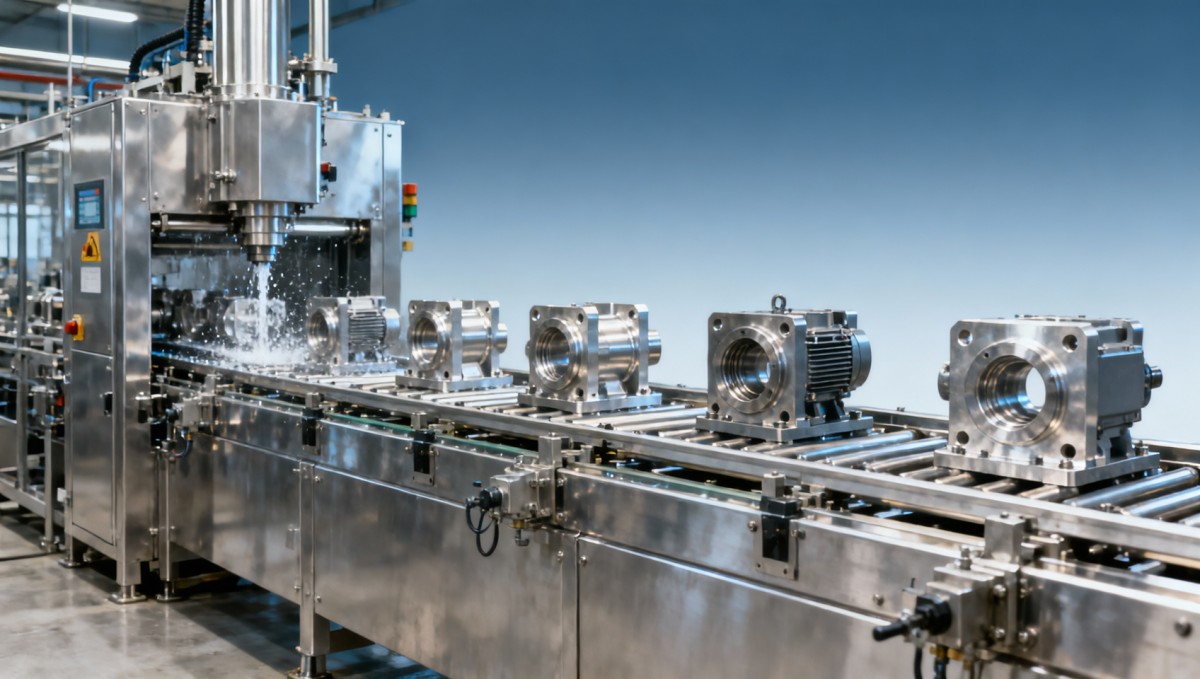
Pretreatment prepares the substrate so that powder coating can bond uniformly and perform over time. On steel, aluminum, and mixed-metal assemblies, even a thin film of oil, oxide, coolant residue, or stamping lubricant can interfere with adhesion. A coating may look acceptable on day 1, but fail after 48 to 240 hours of humidity exposure, salt spray testing, or transport vibration.
In practical manufacturing environments, pretreatment usually includes 3 to 7 stages: degreasing, rinsing, surface activation or etching, conversion coating, final rinse, and drying. Each stage has control points such as pH, temperature, conductivity, contact time, and water quality. Missing one control point by a small margin can create recurring defects that are wrongly blamed on powder chemistry or spray settings.
This is especially relevant in low volume manufacturing, where frequent changeovers increase contamination risk. A line processing carbon steel in the morning and aluminum housings in the afternoon may need different cleaner strength, dwell time, and conversion chemistry. Using a one-size-fits-all pretreatment sequence often leads to inconsistent film performance across part families.
For enterprise decision-makers, the business impact is measurable. A defect rate increase from 2% to 6% may appear small, but on a monthly run of 20,000 components, that means 800 extra parts needing rework. If each rework cycle adds 12 to 20 minutes of labor plus line interruption, pretreatment control quickly becomes a margin issue, not just a technical detail.
What Pretreatment Must Achieve
- Remove oils, particulate, oxide layers, and shop contaminants without damaging part geometry.
- Create a chemically stable surface that supports consistent powder coating adhesion and corrosion resistance.
- Provide repeatability across batches, especially where part mix, alloy, or incoming cleanliness varies by shift or supplier.
- Reduce downstream rejects, field failures, and warranty-related claims linked to hidden substrate issues.
Typical control variables
Common operating windows vary by chemistry, but many lines monitor cleaner temperatures around 45°C to 70°C, stage times of 2 to 10 minutes, and rinse quality based on conductivity thresholds. Drying is equally important, because residual moisture trapped in seams or cavities can later produce blistering or pinholes during curing.
Common Powder Coating Defects That Start in Pretreatment
Some coating failures are easy to see but difficult to diagnose correctly. Poor adhesion, blistering, pinholes, edge pull-back, and uneven coverage often look like application problems, yet the root cause may be contamination left behind before powder coating ever begins. Correct diagnosis requires linking the visible defect to the pretreatment stage that likely introduced it.
The table below outlines common defect patterns and the pretreatment conditions that frequently trigger them. This is useful for quality teams building incoming inspection standards, supplier audit checklists, or corrective action workflows across surface finishing services.
The key takeaway is that the same visible defect can have more than one cause, but pretreatment is often the first place to investigate. If a supplier only adjusts spray voltage, gun distance, or oven cure without checking cleaner chemistry and rinse quality, the defect may return within 1 or 2 production cycles.
Defects that are frequently misdiagnosed
Blistering on aluminum parts is commonly blamed on curing, yet alkaline attack, poor deoxidizing, or retained rinse water can be equally responsible. On fabricated steel assemblies, weld smoke and heat tint often survive weak pretreatment and later cause localized adhesion loss. For precision housings and enclosures, trapped solution in blind holes or folded seams can create outgassing-like symptoms even when the powder formula is stable.
A practical troubleshooting sequence
- Check whether the defect follows a specific substrate, supplier lot, or part geometry.
- Review pretreatment logs for the previous 24 to 72 hours, including bath concentration and rinse readings.
- Inspect drainage, drying, and carryover between stages.
- Only after that, adjust powder coating application parameters and curing profile.
Critical Pretreatment Stages Buyers and Engineers Should Audit
When evaluating a powder coating partner or broader surface finishing services provider, buyers should audit pretreatment in a structured way rather than relying on general claims. A well-run line does not simply state that parts are cleaned and prepped. It can explain chemistry selection, inspection frequency, water management, changeover control, and how parameters differ for steel, aluminum, and mixed assemblies.
For technical assessors and project managers, four areas deserve close attention: cleaning effectiveness, rinse integrity, conversion coating suitability, and drying control. In many plants, these four points account for the majority of recurring pretreatment-related coating failures. Even a 5% carryover between stages can destabilize downstream chemistry over time.
The table below can be used during supplier audits or internal process reviews. It translates pretreatment quality into visible checkpoints that non-operators, including finance approvers and sourcing teams, can understand and compare.
For procurement teams, the main conclusion is that pretreatment quality can be audited using observable criteria. A supplier that records pH, temperature, conductivity, and bath maintenance by shift is generally easier to trust than one that only offers visual approval after coating. Process visibility reduces purchasing risk.
Questions worth asking a supplier
- How many pretreatment stages are used for steel versus aluminum parts?
- How often are cleaner concentration and rinse quality checked: hourly, per shift, or daily?
- What happens when parts include welded seams, deep recesses, or blind holes?
- Can the supplier support both high-volume runs and low volume manufacturing with documented changeover controls?
Audit risk signals
Warning signs include unclear substrate-specific procedures, no documented rinse monitoring, infrequent bath maintenance, and no distinction between decorative and functional corrosion-resistance requirements. In industrial supply chains, vague process control often leads to hidden lifecycle costs within 3 to 12 months of product deployment.
How Pretreatment Choices Differ Across Materials and Production Scenarios
Not all parts need the same pretreatment path. Carbon steel brackets, laser-cut stainless components, aluminum electronic housings, and mixed-material assemblies each introduce different contamination profiles and oxide behavior. That is why comparing powder coating or anodizing services only by price per part can be misleading if the pretreatment route is not matched to material and use case.
For outdoor steel products, corrosion resistance may be the priority, which places greater emphasis on robust cleaning and a reliable conversion coating layer. For aluminum enclosures in smart electronics, appearance consistency and edge quality may matter more, requiring controlled etching and careful rinsing to avoid cosmetic variation. In healthcare technology and precision equipment, cleanliness thresholds may be tighter, with lower tolerance for residue or touch-up repairs.
Production volume also matters. High-volume lines benefit from stable chemistry and automated control, while low volume manufacturing often needs more disciplined changeover procedures, part-family segregation, and operator verification. A batch size of 50 units can fail just as expensively as a run of 5,000 if the finish is tied to regulatory, branding, or field-performance requirements.
Scenario-based selection guidance
- For fabricated steel used outdoors, ask about salt contamination control, weld-area cleaning, and post-rinse drying.
- For aluminum housings, ask whether the line uses aluminum-appropriate cleaners and controlled deoxidizing steps before powder coating.
- For precision parts with cavities or threaded features, verify drainage orientation and pre-bake or drying measures.
- For mixed-metal assemblies, confirm whether the supplier has a validated compromise process or recommends separate finishing routes.
Where anodizing services may be considered instead
Some buyers compare powder coating with anodizing services for aluminum parts. The comparison should include substrate appearance targets, wear requirements, conductivity expectations, and repair considerations. Powder coating offers color flexibility and edge coverage, while anodizing changes the surface itself and may suit certain aluminum applications better. However, both routes still depend on disciplined pretreatment and cleaning before the main finishing step.
A practical approach is to assess 4 factors together: substrate type, service environment, cosmetic standard, and annual volume. That framework helps engineering, quality, and finance teams avoid selecting a finish that looks cost-effective on paper but creates recurring rejection or field-performance risk later.
Implementation, Quality Control, and Cost Reduction Strategies
Once pretreatment-related defects are identified, the next step is not simply to add more inspection. Effective correction combines process discipline, supplier communication, and measurable checkpoints. In most facilities, a 3-part approach works best: stabilize the chemistry, standardize operator checks, and align acceptance criteria between the finishing supplier and the customer.
For operators and quality personnel, daily control matters more than occasional troubleshooting. Cleaner strength, rinse quality, and drying performance should be reviewed at defined intervals, often every shift or every 4 to 8 hours on busy lines. For project managers, part design should also be reviewed. Drain holes, seam orientation, and trapped-solution areas often determine whether powder coating results remain repeatable.
Financial approvers should look beyond quoted coating price and ask about total defect cost. If improved pretreatment reduces rework from 5% to 2%, cuts complaint handling time, and improves first-pass yield, the savings can outweigh a slightly higher service rate. In many B2B programs, the real cost driver is disruption, not chemistry spend.
A practical control plan
- Define substrate categories and required pretreatment route for each product family.
- Record key parameters such as pH, temperature, dwell time, and rinse conductivity every shift.
- Use cross-hatch adhesion tests, visual checks, and selected humidity or corrosion exposure tests for validation.
- Review nonconformities monthly to see whether defects cluster by material, geometry, or supplier lot.
- Update supplier scorecards to include pretreatment control, not just on-time delivery and price.
FAQ: what buyers and engineers often ask
How can we tell if adhesion failure comes from pretreatment or powder coating application? Start with substrate cleanliness, rinse records, and conversion coating consistency. If defects appear across multiple guns or cure settings but follow one part family or one metal source, pretreatment is a strong suspect.
What inspection frequency is reasonable? Many operations check core pretreatment variables once per shift at minimum, while higher-throughput lines may verify key readings every 2 to 4 hours. The right frequency depends on throughput, chemistry stability, and product criticality.
Can low volume manufacturing justify strict pretreatment controls? Yes. Smaller batches often have more material variation and more frequent changeovers. That raises defect risk, especially when parts are high value, customer visible, or engineered for demanding use environments.
What should distributors or sourcing teams ask for during qualification? Ask for a documented process flow, substrate-specific pretreatment logic, routine monitoring records, and examples of how the supplier handles difficult geometries such as cavities, weldments, and mixed-metal assemblies.
Powder coating performance is decided long before the powder reaches the part. When pretreatment is controlled with the same rigor as spraying and curing, teams see fewer defects, more predictable corrosion performance, and better first-pass yield across both advanced manufacturing and low volume manufacturing programs.
For buyers evaluating powder coating, anodizing services, or integrated surface finishing services, the strongest partners are those that can explain pretreatment in practical, measurable terms. That clarity supports technical validation, smoother project delivery, and smarter procurement decisions.
If your organization is comparing finishing options, qualifying suppliers, or troubleshooting recurring coating defects, now is the right time to review pretreatment assumptions in detail. Contact us to discuss your application, request a tailored evaluation framework, or learn more about solution paths that fit your material, volume, and quality targets.
Get weekly intelligence in your inbox.
No noise. No sponsored content. Pure intelligence.
 Apr 18, 2026TradeNexus Pro Launches Global Compliance RadarTradeNexus Pro Launches Global Compliance Radar
 Apr 18, 2026JIS T 2304:2026 Takes Effect June 1, 2026 for IVD SoftwareJIS T 2304:2026 Takes Effect June 1, 2026 for IVD Software
 Pathway for Rehab Devices with AI Modules") Apr 18, 2026FDA Updates 510(k) Pathway for Rehab Devices with AI ModulesFDA Updates 510(k) Pathway for Rehab Devices with AI Modules
Apr 18, 2026FDA Updates 510(k) Pathway for Rehab Devices with AI ModulesFDA Updates 510(k) Pathway for Rehab Devices with AI Modules Apr 18, 2026India BIS Approves 3 Chinese IoT Labs for IS 16444:2026 CertificationIndia BIS Approves 3 Chinese IoT Labs for IS 16444:2026 Certification
 Apr 18, 2026THE Alliance Launches Green Slot Priority for China PortsTHE Alliance Launches Green Slot Priority for China Ports
 Apr 18, 2026TÜV Rheinland Releases Dual-Standard ESS Certification Guide for ChinaTÜV Rheinland Releases Dual-Standard ESS Certification Guide for China
 Apr 18, 2026Vietnam Imposes AD Duties on Chinese Electronic ComponentsVietnam Imposes AD Duties on Chinese Electronic Components
 Apr 18, 2026SASO Launches PV Carbon Footprint Labeling from July 2026SASO Launches PV Carbon Footprint Labeling from July 2026
 Apr 18, 2026U.S. Adds 17 Smart Warehouse Robot Components to Export Control ListU.S. Adds 17 Smart Warehouse Robot Components to Export Control List
 Apr 18, 2026EU Enforces EN IEC 62443-4-2:2026 for Industrial Control Devices from 18 Apr 2026EU Enforces EN IEC 62443-4-2:2026 for Industrial Control Devices from 18 Apr 2026
 Apr 17, 2026Temperature data loggers drift unpredictably inside lithium-ion battery storage enclosuresTemperature data loggers drift unpredictably inside lithium-ion battery storage enclosures
 Apr 17, 2026Are solar microinverters really worth the extra cost?Are solar microinverters really worth the extra cost?
 Apr 17, 2026Bifacial solar panels: How much more energy can they generate?Bifacial solar panels: How much more energy can they generate?
 Apr 17, 2026Gear manufacturing: How to optimize production for high precision?Gear manufacturing: How to optimize production for high precision?
 Apr 17, 2026Why power transmission components fail earlier than expectedWhy power transmission components fail earlier than expected
 Apr 17, 2026Linear motion systems: belt drive or ball screw for speed?Linear motion systems: belt drive or ball screw for speed?
 Apr 17, 2026Industrial bearing suppliers: what signals reliable quality?Industrial bearing suppliers: what signals reliable quality?
 Apr 17, 2026When pneumatic valves wholesale gets expensive laterWhen pneumatic valves wholesale gets expensive later
 Apr 17, 2026Hydraulic cylinder fabrication mistakes that cause oil leaksHydraulic cylinder fabrication mistakes that cause oil leaks
 Apr 17, 2026Heavy equipment manufacturing delays often start hereHeavy equipment manufacturing delays often start here
 Apr 17, 2026Custom heatsinks: when a larger size solves nothingCustom heatsinks: when a larger size solves nothing
 Apr 17, 2026Electronic enclosure fabrication: steel or aluminum?Electronic enclosure fabrication: steel or aluminum?
 Apr 17, 2026Automotive parts machining tolerances that drive up scrapAutomotive parts machining tolerances that drive up scrap
 Apr 17, 2026Medical device manufacturing changes under tighter traceabilityMedical device manufacturing changes under tighter traceability
 Apr 17, 2026How to Choose Solid State Batteries in 2026How to Choose Solid State Batteries in 2026
 Apr 17, 2026Are Solid State Batteries Worth the Cost Yet?Are Solid State Batteries Worth the Cost Yet?
 Apr 17, 2026Commercial Energy Storage Sizing: What Matters Most?Commercial Energy Storage Sizing: What Matters Most?