Rapid tooling works fast, but what gets sacrificed first?
Rapid tooling accelerates development, but speed often shifts pressure onto tooling life, dimensional stability, and downstream surface finishing services. For buyers comparing low volume manufacturing options—from urethane casting and plastic extrusion to precision casting, metal stamping parts, powder coating, and anodizing services—understanding these trade-offs is critical. This article explores what gets compromised first, and how digital twin manufacturing helps teams balance cost, quality, and launch timing.
In B2B manufacturing, fast-turn tooling is rarely judged on speed alone. Procurement teams want predictable cost, engineering reviewers want tolerance control, quality managers look for repeatability, and finance approvers want to avoid hidden rework expenses after launch. That makes rapid tooling less of a shortcut and more of a controlled trade-off that must be managed across design, tooling, process capability, and finishing.
For decision-makers in advanced manufacturing, smart electronics, healthcare components, green energy assemblies, and supply chain technology ecosystems, the real question is not whether rapid tooling works fast. It does. The better question is what tends to give way first when lead time is compressed from 6–12 weeks to 7–20 days, and what controls can preserve product readiness without overengineering the project.
What rapid tooling delivers well—and where the first compromises usually appear
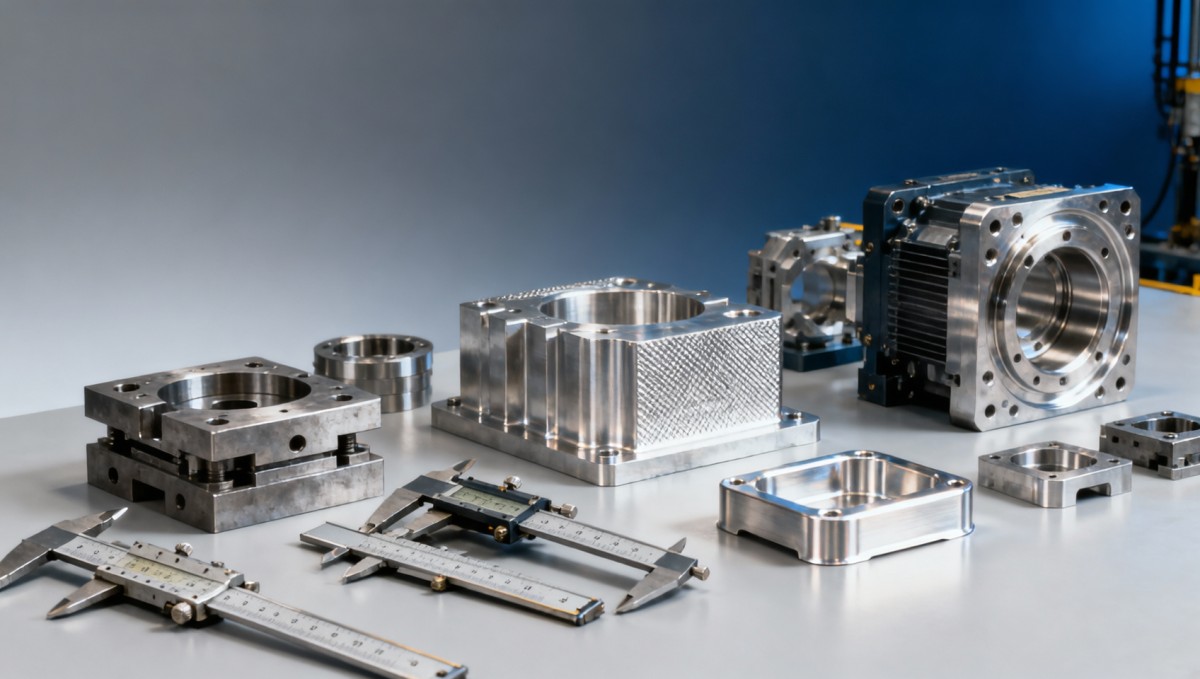
Rapid tooling is designed for accelerated validation, bridge production, and low volume manufacturing runs typically ranging from 50 to 10,000 units, depending on material, geometry, and process. It performs best when teams need parts quickly for pilot builds, customer samples, regulatory pre-validation, or limited market release before hard tooling is justified.
The first sacrifice is often tooling life. A rapid mold or soft tool may deliver acceptable output for a few hundred cycles or several thousand shots, but not the same wear resistance expected from hardened production tooling. Aluminum tools, hybrid inserts, and simplified gating systems speed fabrication, yet they usually face earlier edge wear, flash growth, or thermal distortion under sustained use.
The second common compromise is dimensional stability over time. Initial parts may meet tolerance targets such as ±0.10 mm to ±0.25 mm for selected features, but consistency can drift as tools heat up, materials shrink differently, or operators increase output pressure to meet a shipment window. This is especially relevant for metal stamping parts, tight-fit housings, and medical or electronics enclosures requiring repeatable assembly.
A third pressure point appears downstream in surface finishing. When core geometry is rushed, surface finishing services such as powder coating, anodizing services, polishing, or texture correction may absorb the burden. That adds lead time, masks minor tool marks, and can improve appearance, but it cannot always correct geometry, sink, parting line mismatch, or wall thickness imbalance introduced upstream.
Typical strengths of rapid tooling
- Development cycles can be shortened by 30%–60% when compared with full production tooling paths.
- Design teams can validate assembly, ergonomics, and field fit before committing to large capital expenditure.
- It supports multiple low volume manufacturing processes, including urethane casting, plastic extrusion support components, precision casting prototypes, and stamped metal brackets.
- It enables phased purchasing decisions, useful for distributors, OEM launch teams, and project managers handling uncertain demand.
What gets stressed first in compressed programs
When launch timing becomes the dominant KPI, teams often compress four steps at once: design freeze, tool build, first article validation, and finishing release. That overlap can work, but it reduces the margin for corrective iteration. In practical terms, the earlier the tool is cut, the more expensive it becomes to change a rib, draft angle, undercut, or sealing surface later.
The table below compares the most common trade-off areas buyers should review before approving a rapid tooling project.
The key takeaway is that rapid tooling usually does not fail on one dramatic issue. Instead, it transfers risk from calendar delay to process robustness. Buyers who understand that shift can set realistic inspection gates and avoid treating a pilot tool like a long-life production asset.
How trade-offs differ across low volume manufacturing processes
Not all low volume manufacturing routes sacrifice the same things first. Urethane casting, plastic extrusion support parts, precision casting, metal stamping parts, and surface finishing services each have distinct speed-quality-cost dynamics. Procurement teams should compare process fit by function, volume band, material behavior, and tolerance expectation instead of chasing the fastest quote in isolation.
For urethane casting, the main advantage is low tooling cost and rapid design iteration, often with master patterns prepared in a few days. However, silicone tooling has limited life, commonly around 15–30 casts depending on geometry and resin system. Color stability, thermal resistance, and long-run repeatability may also differ from final production plastics.
Plastic extrusion performs well for continuous profiles, tubing, seals, and channels, but it is less forgiving when buyers expect highly complex cross-sections without adequate calibration. Here, the first compromise is often profile consistency at the beginning of a run, especially where wall sections vary or material cooling is uneven over lengths greater than 1–2 meters.
In precision casting, buyers gain access to intricate metal geometry with fewer machining steps, yet surface roughness, gating marks, and post-cast finishing load can increase when deadlines are tight. Metal stamping parts can be extremely fast and economical once tooling is stabilized, but rapid dies may prioritize simple forms and shorter die life over high-volume durability or advanced progressive complexity.
Process comparison for fast-turn sourcing
The table below helps technical reviewers and sourcing teams align process selection with practical constraints rather than assumptions.
This comparison shows that “fast” means different things in different process families. A buyer approving a 2-week stamped bracket program is dealing with very different risks than one sourcing 25 urethane-cast enclosures or a short-run precision cast heat sink.
Where finishing services become critical
- Powder coating is often chosen for corrosion resistance and appearance on fabricated or cast metal parts, but coating thickness can affect hole diameter and thread fit if masking is not planned.
- Anodizing services improve wear and corrosion behavior for aluminum components, yet alloy variation and surface prep can produce visible color differences between lots.
- Secondary polishing or bead blasting may improve visual quality, but it can also alter edge detail on parts with thin walls or engraved marks.
For operators and quality personnel, the message is straightforward: finishing is not just cosmetic. In accelerated programs, it often becomes a functional risk-control step, and it should be specified with tolerance ownership, masking plans, and inspection criteria from the start.
Why dimensional stability, surface quality, and tool life are linked
Many teams assess tool wear, tolerance drift, and cosmetic defects as separate issues, but in fast-turn manufacturing they are tightly connected. A tool that heats unevenly, vents poorly, or lacks robust support features can create dimensional movement first, then cosmetic blemishes, and finally more frequent maintenance. That sequence is common in short-cycle launch environments where capacity pressure outruns process tuning.
Dimensional stability depends on more than the tool material. It is influenced by gate location, wall thickness balance, draft angles, cooling paths, clamp force, material shrinkage, and even fixture design during finishing. A part may pass first article inspection at room temperature yet fail assembly after powder coating or after 48–72 hours of stress relaxation if those factors were underestimated.
Surface quality is similarly misunderstood. Buyers often request a smooth finish expecting visual perfection, but if the substrate carries sink, knit lines, drag marks, or micro-porosity, finishing can only improve appearance to a point. In practical programs, a surface target should be linked to end use: showroom cosmetic, industrial utility, sealed medical housing, or internal structural part.
Tool life completes the triangle. If a rapid tool is pushed beyond its intended production window, maintenance intervals shorten and output capability drops. What looked economical at 800 parts can become expensive at 8,000 parts due to re-polishing, insert replacement, burr cleanup, or higher rejection rates.
A practical evaluation checklist
- Define critical-to-function dimensions separately from cosmetic dimensions. A tolerance stack for 5 key features is more useful than a blanket tight tolerance on every face.
- Match tool life expectation to planned volume band. A bridge tool for 1,500 units should not be priced or reviewed like a production tool for 150,000 units.
- Approve finishing specifications with measurable criteria such as coating range, masking areas, color delta agreement, and sample retention.
- Schedule at least 2 review points after first article: one after initial process stabilization and one after finishing validation.
Warning signs buyers should not ignore
If the supplier can promise a very short lead time but cannot define expected tool life, process Cp targets, or inspection frequency, the risk usually migrates to your receiving dock. Similar caution applies when quotes exclude secondary machining, deburring, masking, or coating thickness control. Those omissions often reappear later as change orders or delivery slips.
Cross-functional review matters here. Engineering, quality, procurement, and project management should agree on three things before release: acceptable scrap range, inspection sampling plan, and rework authority. Even a modest variance of 2%–5% can materially change unit economics in a low volume manufacturing program.
How digital twin manufacturing reduces risk in rapid tooling programs
Digital twin manufacturing helps teams simulate the consequences of speed before the tool is cut. Instead of relying only on nominal CAD geometry, a digital twin can combine design data, process assumptions, material behavior, and inspection feedback to model likely distortion zones, thermal loads, and production bottlenecks. This is especially useful when timing pressure limits the number of physical trial loops.
In practical sourcing terms, a digital twin does not eliminate every problem, but it shifts discovery earlier. Teams can test wall thickness adjustments, draft changes, venting strategy, fixture contact points, and even surface finishing sequences in a virtual environment. Catching one major issue before tool release can save 1–3 weeks and prevent expensive rework on inserts or post-process fixtures.
For enterprise buyers and project leaders, the value is not only technical. Digital twin workflows create better communication between sourcing, engineering, and suppliers across regions. When files, revisions, process assumptions, and quality outcomes are visible in one decision stream, approval cycles become clearer, and disputes about responsibility become easier to resolve.
This approach is increasingly relevant across the sectors followed by TradeNexus Pro, where product life cycles are shorter, supplier networks are broader, and launch mistakes carry downstream cost in inventory, field service, and channel reputation. In those environments, simulation-supported sourcing is becoming a governance tool, not just an engineering add-on.
Where digital twins add measurable value
The table below outlines high-value digital twin checkpoints for rapid tooling and low volume manufacturing decisions.
The strongest benefit is not perfect prediction. It is earlier visibility. That visibility supports better RFQs, better supplier conversations, and better launch control when the tool is intentionally built for speed rather than long-term production endurance.
A smarter sourcing framework for buyers, engineers, and financial approvers
A successful rapid tooling decision needs more than a quick quotation. It needs a sourcing framework that aligns product risk, expected volume, launch timing, and total cost. Too many teams compare only tool price and nominal lead time, then discover later that finishing complexity, quality containment, or tool maintenance shifts the true landed cost well above the initial estimate.
For procurement and finance, one practical rule is to review the project in three cost layers: tooling cost, unit cost at expected volume, and risk cost if output quality falls below target. Risk cost includes expedited freight, sorting, assembly delay, supplier engineering time, and channel impact. In fast programs, that hidden third layer can exceed 15%–25% of the original tool budget.
For quality managers and technical evaluators, the review should focus on control points rather than generic promises. Ask how many first article samples will be measured, what features are checked 100%, what is sampled every lot, and what triggers corrective action. These details matter far more than broad claims about precision.
For project managers, the best protection is stage-gated release. Instead of treating the program as one continuous rush, divide it into design lock, tooling release, pilot verification, finishing validation, and limited production approval. Even a 5-step framework can reduce rework loops and help cross-functional teams approve decisions faster because responsibilities are visible.
Buyer checklist before approving a rapid tooling supplier
- Confirm the intended volume band and tool life expectation in writing, such as 500, 2,000, or 10,000 parts.
- Request tolerance ownership by feature category, not just one blanket tolerance statement.
- Clarify which secondary operations are included: machining, deburring, powder coating, anodizing services, inspection reports, and packaging.
- Ask how digital simulations or process data are used to reduce first-pass risk.
- Define rework response time, for example within 24–72 hours after nonconformance confirmation.
Common sourcing mistakes
A frequent mistake is choosing a process because it has the lowest entry cost, even when expected demand is likely to double within one quarter. Another is approving cosmetic finishing before critical dimensions are stabilized. A third is assuming that a pilot-ready part is automatically channel-ready, even though packaging, traceability, labeling, and compliance documentation may still be incomplete.
For distributors, agents, and end-market brands, this matters because first shipments shape customer confidence. If rapid tooling is used to enter the market quickly, the supply plan should already define when to move from bridge tooling to production tooling and what performance thresholds trigger that transition.
FAQ
How long does rapid tooling usually take?
Simple tools may be completed in 7–15 days, while more complex programs with inserts, validation samples, and finishing steps often take 2–4 weeks. Total timeline depends on geometry, material, inspection requirements, and whether downstream coating or anodizing is included.
Is rapid tooling suitable for production parts?
Yes, for bridge production and low volume manufacturing. It is suitable when expected demand is moderate, design changes are still possible, or time-to-market outweighs the economics of full production tooling. It is less suitable when annual volumes are high and dimensional consistency must be maintained over long runs without frequent maintenance.
What should buyers watch in finishing services?
Focus on coating thickness, masking plans, adhesion expectations, lot-to-lot color consistency, and how finishing affects fit-critical dimensions. Even a thin coating layer can matter on mating surfaces, threaded areas, or sealing features.
Rapid tooling is fast because it compresses the path between design intent and physical output. What gets sacrificed first is usually not the whole part, but the margin of safety around tool life, dimensional stability, and finishing flexibility. Teams that recognize those trade-offs early can choose the right process, define realistic controls, and avoid paying for speed with unstable quality later.
For B2B buyers navigating advanced manufacturing, electronics, healthcare components, green energy hardware, or supply chain-led sourcing programs, the strongest results come from disciplined selection rather than blanket acceleration. If you need clearer comparisons across low volume manufacturing routes, supplier risk factors, or digital twin-supported launch planning, contact TradeNexus Pro to get tailored insight, evaluate sourcing options, and explore the right next-step solution for your project.
Get weekly intelligence in your inbox.
No noise. No sponsored content. Pure intelligence.
 Apr 18, 2026TradeNexus Pro Launches Global Compliance RadarTradeNexus Pro Launches Global Compliance Radar
 Apr 18, 2026JIS T 2304:2026 Takes Effect June 1, 2026 for IVD SoftwareJIS T 2304:2026 Takes Effect June 1, 2026 for IVD Software
 Pathway for Rehab Devices with AI Modules") Apr 18, 2026FDA Updates 510(k) Pathway for Rehab Devices with AI ModulesFDA Updates 510(k) Pathway for Rehab Devices with AI Modules
Apr 18, 2026FDA Updates 510(k) Pathway for Rehab Devices with AI ModulesFDA Updates 510(k) Pathway for Rehab Devices with AI Modules Apr 18, 2026India BIS Approves 3 Chinese IoT Labs for IS 16444:2026 CertificationIndia BIS Approves 3 Chinese IoT Labs for IS 16444:2026 Certification
 Apr 18, 2026THE Alliance Launches Green Slot Priority for China PortsTHE Alliance Launches Green Slot Priority for China Ports
 Apr 18, 2026TÜV Rheinland Releases Dual-Standard ESS Certification Guide for ChinaTÜV Rheinland Releases Dual-Standard ESS Certification Guide for China
 Apr 18, 2026Vietnam Imposes AD Duties on Chinese Electronic ComponentsVietnam Imposes AD Duties on Chinese Electronic Components
 Apr 18, 2026SASO Launches PV Carbon Footprint Labeling from July 2026SASO Launches PV Carbon Footprint Labeling from July 2026
 Apr 18, 2026U.S. Adds 17 Smart Warehouse Robot Components to Export Control ListU.S. Adds 17 Smart Warehouse Robot Components to Export Control List
 Apr 18, 2026EU Enforces EN IEC 62443-4-2:2026 for Industrial Control Devices from 18 Apr 2026EU Enforces EN IEC 62443-4-2:2026 for Industrial Control Devices from 18 Apr 2026
 Apr 17, 2026Temperature data loggers drift unpredictably inside lithium-ion battery storage enclosuresTemperature data loggers drift unpredictably inside lithium-ion battery storage enclosures
 Apr 17, 2026Are solar microinverters really worth the extra cost?Are solar microinverters really worth the extra cost?
 Apr 17, 2026Bifacial solar panels: How much more energy can they generate?Bifacial solar panels: How much more energy can they generate?
 Apr 17, 2026Gear manufacturing: How to optimize production for high precision?Gear manufacturing: How to optimize production for high precision?
 Apr 17, 2026Why power transmission components fail earlier than expectedWhy power transmission components fail earlier than expected
 Apr 17, 2026Linear motion systems: belt drive or ball screw for speed?Linear motion systems: belt drive or ball screw for speed?
 Apr 17, 2026Industrial bearing suppliers: what signals reliable quality?Industrial bearing suppliers: what signals reliable quality?
 Apr 17, 2026When pneumatic valves wholesale gets expensive laterWhen pneumatic valves wholesale gets expensive later
 Apr 17, 2026Hydraulic cylinder fabrication mistakes that cause oil leaksHydraulic cylinder fabrication mistakes that cause oil leaks
 Apr 17, 2026Heavy equipment manufacturing delays often start hereHeavy equipment manufacturing delays often start here
 Apr 17, 2026Custom heatsinks: when a larger size solves nothingCustom heatsinks: when a larger size solves nothing
 Apr 17, 2026Electronic enclosure fabrication: steel or aluminum?Electronic enclosure fabrication: steel or aluminum?
 Apr 17, 2026Automotive parts machining tolerances that drive up scrapAutomotive parts machining tolerances that drive up scrap
 Apr 17, 2026Medical device manufacturing changes under tighter traceabilityMedical device manufacturing changes under tighter traceability
 Apr 17, 2026How to Choose Solid State Batteries in 2026How to Choose Solid State Batteries in 2026
 Apr 17, 2026Are Solid State Batteries Worth the Cost Yet?Are Solid State Batteries Worth the Cost Yet?
 Apr 17, 2026Commercial Energy Storage Sizing: What Matters Most?Commercial Energy Storage Sizing: What Matters Most?