Plastic extrusion problems that usually appear after shipment
After shipment, plastic extrusion issues such as warping, cracking, surface marks, and dimensional drift can quickly turn into costly quality claims. For buyers and engineers comparing plastic extrusion with powder coating, anodizing services, surface finishing services, or low volume manufacturing options, understanding these post-delivery failures is essential to reducing risk, protecting margins, and improving supplier decisions.
In global B2B supply chains, many extrusion defects do not become visible at the factory gate. They appear after 3–30 days in transit, after unpacking, or during downstream assembly. This creates a difficult situation for operators, quality teams, sourcing managers, project leaders, distributors, and finance reviewers who must determine whether the root cause came from tooling, material selection, packing, storage, or handling.
For sectors such as advanced manufacturing, smart electronics, healthcare technology, and logistics-related equipment, post-shipment extrusion failure can affect fit, appearance, sealing performance, insulation stability, and overall product acceptance. A small dimensional shift of ±0.8 mm may be tolerable in one application but trigger full batch rejection in another.
This guide explains the plastic extrusion problems that usually appear after shipment, why they occur, how to inspect them, and what procurement and engineering teams should ask suppliers before approving production or repeat orders.
Why plastic extrusion defects often show up after delivery
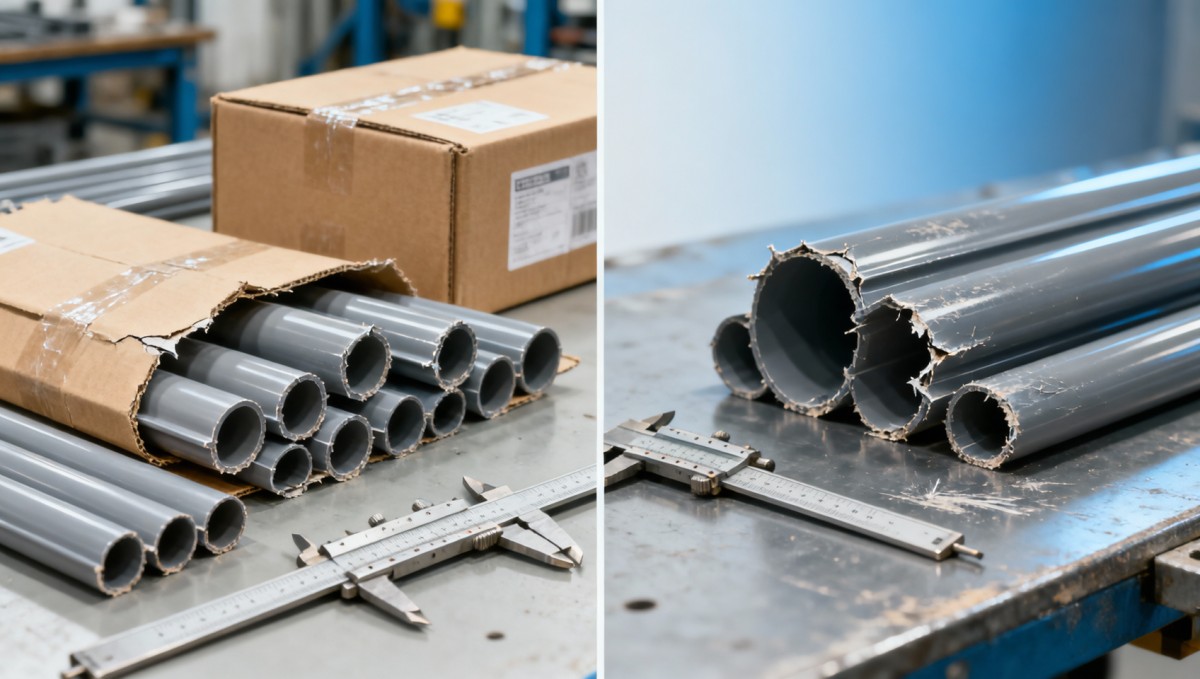
Plastic extrusions may leave the production line looking acceptable, yet still carry hidden stress, incomplete cooling history, or moisture-related instability. During transport, cartons can experience temperature swings from 5°C to 45°C, vibration over hundreds or thousands of kilometers, and stacking loads that deform unsupported profiles.
The first reason is residual stress. If the cooling rate is uneven or line speed is too high, internal stress remains trapped in the profile. Once shipped and exposed to warehouse heat or container pressure, the part can warp, twist, or shrink. Profiles with thin walls below 1.5 mm and long unsupported lengths above 1.2 m are especially sensitive.
The second reason is material behavior after processing. PVC, ABS, PP, PE, TPE, and engineering plastics each react differently to humidity, temperature, and time. Some compounds continue relaxing for 24–72 hours after extrusion. Others may become brittle in cold-chain or winter delivery environments, especially when impact modifiers are not properly balanced.
A third factor is packaging design. Good extrusion quality can still fail if the packing method allows point loading, rubbing, or over-bundling. Surface marks, gloss differences, edge dents, and end cracks often result from shipment compression rather than from the die itself. This is a common blind spot when buyers focus only on in-process inspection and ignore transit validation.
Typical transit conditions that accelerate failure
The practical shipping environment is harsher than many first article reports assume. A profile can move through 4–6 handling points before it reaches final assembly. Each touchpoint adds risk if the extrusion is long, thin, decorative, or dimensionally critical.
- Container or truck temperatures cycling by 15–25°C within 24 hours.
- Stacking pressure from pallets or secondary packaging over 48–72 hours.
- Vibration and flexing during long-distance road or sea transport.
- Humidity exposure causing condensation, label transfer, or carton softening.
- Uncontrolled unloading practices that bend profiles longer than 2 m.
For procurement teams, this means a passed factory inspection is not enough. A shipment-ready validation plan should include dimensional re-check after packing, drop-risk assessment, and storage simulation for at least 24 hours under typical logistics conditions.
The most common post-shipment plastic extrusion problems
The failure pattern usually depends on resin family, profile geometry, wall thickness, cooling profile, and package support. Some issues are cosmetic and affect only appearance-based acceptance. Others directly interrupt installation, sealing, electrical insulation, or mechanical performance.
For quality inspectors and technical reviewers, it helps to classify defects into dimensional, structural, surface, and assembly-related categories. That makes root-cause analysis faster and helps separate supplier process problems from logistics-induced damage.
The table below summarizes the most frequent defects that appear after shipment, when they are usually detected, and what they commonly indicate in commercial terms.
The key conclusion is that visible defects are only part of the issue. Dimensional instability and latent brittleness often create the highest downstream cost because they interrupt assembly after other value has already been added.
Warping and dimensional drift
Warping is one of the most frequent post-shipment complaints in long profiles used for trims, housings, guides, protective channels, and sealing carriers. It often appears when the profile is placed on a flat surface and shows a bow above the allowed tolerance, for example 2–3 mm over 1 m where only 1 mm is permitted.
Dimensional drift is slightly different. The part may remain visually straight, but slot width, wall thickness, outer height, or mating geometry shifts enough to affect fit. This can happen when the profile absorbs heat during storage or relaxes after extrusion because it was packed too soon.
Cracking and brittleness
Cracks are often reported at the ends of cut lengths, around notches, or near sharp corners. In many cases, the actual problem is not transport impact alone but low-temperature embrittlement, poor formulation balance, excessive regrind ratio, or insufficient conditioning time before packing.
For technical buyers, any repeated cracking claim should trigger a review of resin grade, additive package, cut quality, edge radii, and impact expectations during transport. A profile intended for export routes with winter exposure may need a different material window than one used domestically.
Surface marks and appearance-related claims
Surface marks include abrasion, pressure shine, transfer stains, dust adhesion, roller lines that become more visible later, and rub marks between bundled profiles. Decorative extrusions for consumer-facing or medical-adjacent products face stricter visual acceptance, often with inspection distances of 300–500 mm under controlled lighting.
These issues become especially important when buyers are comparing extrusion with powder coating, anodizing services, or other surface finishing services. Extrusion may be cost-effective, but if post-shipment cosmetic yield drops by 5%–8%, the apparent savings can disappear quickly.
Root causes buyers should verify before placing or repeating an order
When a shipment problem appears, teams often debate whether the issue came from production or logistics. In reality, it is usually an interaction between both. A technically weak profile becomes more vulnerable under transport stress, while poor packaging can damage even a well-extruded part.
The most useful sourcing approach is to review root causes in five layers: material, die and profile design, extrusion process, secondary handling, and logistics packaging. This method gives project managers and finance approvers a clearer basis for corrective action versus supplier replacement.
The table below can be used during supplier audits, claim reviews, or technical RFQ comparisons to identify where the highest risk usually sits.
The strongest practical insight is that packaging must be engineered to the profile, not added as an afterthought. A 2.4 m decorative extrusion and a 300 mm industrial insert should not share the same packing logic.
Material and formulation mistakes
Buyers should ask whether the compound is optimized for appearance, impact, UV resistance, flame behavior, or low-temperature handling. One formulation rarely excels in all five. If a supplier uses a high regrind share to reduce cost, the short-term quotation may improve while post-shipment risk rises.
Questions worth asking in RFQ review
- What hardness range or mechanical target is expected, and what tolerance is acceptable?
- Is the profile intended for indoor use, outdoor use, or mixed-temperature logistics routes?
- How long after extrusion is the part conditioned before packing: 4 hours, 12 hours, or 24 hours?
- Is regrind used, and if yes, within what controlled percentage range?
Packaging design errors
Many shipment claims are tied to over-tight bundling, inadequate separators, unsupported profile overhang, or carton deformation in humid storage. Export buyers should request packaging photos, stack tests, and if the profile is critical, a transit simulation or pilot shipment before full release.
A low-cost packaging change of 2%–4% per shipment can sometimes prevent claims worth 10 times more in sorting labor, line stoppage, and replacement freight.
Inspection methods and acceptance criteria after shipment
Incoming inspection should not rely on a single visual check. For plastic extrusion, a robust post-shipment protocol usually includes dimensional verification, straightness check, surface evaluation, crack detection, and packaging condition review. The right method depends on whether the profile is functional, cosmetic, or both.
For high-volume buyers, it is useful to define inspection in 3 layers: quick receiving check, technical sampling, and assembly-fit confirmation. This reduces overinspection while still catching the most expensive failure modes before production downtime begins.
The following process is practical for operators, quality personnel, and project teams receiving mixed extrusion lots from domestic or international suppliers.
A 5-step incoming inspection workflow
- Check outer packaging for compression, water exposure, broken straps, or visible pallet lean.
- Allow profiles to stabilize for 4–12 hours if they arrived from a significantly different temperature zone.
- Measure key dimensions on a defined sample size, such as 5 pieces per lot or according to internal AQL rules.
- Test straightness, twist, and fit against fixture or mating parts, especially for lengths above 1 m.
- Record photos, defect location, and lot traceability before any cutting or downstream processing.
Stabilization time matters. Measuring immediately after unloading from a cold truck or hot container may create false failures or hide real ones. Even 6 hours at 20–25°C can improve the accuracy of dimensional assessment.
Recommended acceptance focus by application type
Not every project should use the same pass/fail logic. A cable duct, medical cart trim, EV component protector, and retail display rail will each have different risk priorities. The inspection plan should reflect function first, then appearance, then convenience features.
This matrix helps align QC and procurement. It prevents teams from overpaying for cosmetic perfection on hidden parts while also avoiding under-control on profiles that directly affect assembly or safety performance.
How to reduce claims through better supplier selection and specification control
Most post-shipment extrusion problems can be reduced before production starts. The earlier the specification is clarified, the lower the cost of prevention. This matters for enterprise decision-makers and finance approvers because prevention at RFQ stage is usually far cheaper than replacement after shipment.
A strong supplier evaluation process should go beyond unit price and tooling lead time. It should also test whether the supplier can control material consistency, line discipline, cut quality, and transit packaging for the specific geometry involved. A supplier that performs well on simple solid strips may not be equally reliable on thin-wall co-extrusions or appearance-grade profiles.
When buyers compare plastic extrusion with low volume manufacturing or metal finishing alternatives such as anodizing services or powder coating, the correct comparison is not only process cost. It is total delivered performance: fit rate, cosmetic yield, replacement frequency, and logistics resilience over 6–12 months.
Procurement checklist for lower-risk extrusion sourcing
- Define critical-to-quality dimensions and label them separately from reference dimensions.
- Specify acceptable straightness, twist, and appearance limits per unit length, such as per 1 m or per finished cut piece.
- Request a packaging specification with bundle count, separator type, carton method, and pallet orientation.
- Require retention samples or golden samples for visual and fit comparison on repeat orders.
- Ask for a pilot run or pre-shipment validation lot when new tooling, new resin, or export transit is involved.
These five controls are simple, but they often close the gap between “acceptable at shipment” and “usable at arrival.” They also make claim discussions more objective because expectations were documented before production began.
Common buyer mistakes
Mistake 1: Approving samples without packaging review
Bench samples may look excellent, but shipment behavior depends heavily on how parts are cut, bundled, wrapped, and stacked. Always evaluate packed samples for export or long-distance delivery projects.
Mistake 2: Using overly broad tolerances
If tolerances are too loose in the drawing but actual assembly needs are tighter, the supplier may technically comply while the customer still experiences installation failure. Functional tolerance should be written where it matters most.
Mistake 3: Ignoring storage conditions at destination
Even a well-made extrusion can distort if stored upright without support, exposed to direct sun, or left in hot containers too long. Destination handling instructions should be part of the delivery package, especially for distributors and regional warehouses.
FAQ: practical questions from buyers, engineers, and quality teams
The questions below reflect common search intent and real sourcing discussions around plastic extrusion problems that show up after shipment. They are especially relevant when teams are deciding between extrusion and alternative manufacturing or finishing routes.
How long after shipment do extrusion defects usually appear?
Some defects appear immediately upon unpacking, especially dents, abrasion, or obvious bowing. Others show up within 24–72 hours as the profile stabilizes at room temperature. Stress-related warpage or dimensional drift can also emerge after 7–14 days if the material was packed too early or exposed to heat during storage.
Which plastic extrusions are most vulnerable during transport?
Long profiles above 1.5 m, thin-wall sections below 1.5 mm, decorative high-gloss profiles, co-extrusions with soft and rigid layers, and tight-tolerance assembly parts are usually more vulnerable. Hollow shapes and asymmetrical sections also tend to distort more easily than compact solid strips.
Should buyers choose plastic extrusion or another process for better shipment reliability?
It depends on geometry, volume, surface expectations, and functional requirements. Plastic extrusion is highly efficient for continuous profiles and recurring volumes, but if the application needs premium cosmetic finishing, rigid flatness, or very low volume customization, alternatives such as low volume manufacturing or post-finished metal parts may sometimes offer lower total risk.
What is the best way to reduce shipment-related extrusion claims?
The best approach combines 4 actions: validate the material for the logistics environment, control the extrusion and cooling process, design packaging for the actual profile length and surface sensitivity, and inspect incoming goods after temperature stabilization. If only one of these four is missing, claim risk remains high.
Plastic extrusion problems that usually appear after shipment are rarely random. They are the result of choices made in design, material selection, processing, packaging, and receiving control. For B2B buyers, the real objective is not only to solve visible defects but to build a sourcing system that protects fit, appearance, delivery reliability, and total cost.
For teams evaluating extrusion alongside powder coating, anodizing services, surface finishing services, or low volume manufacturing, the smartest decision comes from comparing delivered performance, not just quoted price. A supplier that can document process discipline, packaging logic, and post-shipment stability will usually create better long-term value.
If you need help assessing supplier risk, refining specifications, or comparing manufacturing options for your next project, contact TradeNexus Pro to get a more informed sourcing strategy, technical review framework, and tailored solution path for your application.
Get weekly intelligence in your inbox.
No noise. No sponsored content. Pure intelligence.
 Apr 18, 2026TradeNexus Pro Launches Global Compliance RadarTradeNexus Pro Launches Global Compliance Radar
 Apr 18, 2026JIS T 2304:2026 Takes Effect June 1, 2026 for IVD SoftwareJIS T 2304:2026 Takes Effect June 1, 2026 for IVD Software
 Pathway for Rehab Devices with AI Modules") Apr 18, 2026FDA Updates 510(k) Pathway for Rehab Devices with AI ModulesFDA Updates 510(k) Pathway for Rehab Devices with AI Modules
Apr 18, 2026FDA Updates 510(k) Pathway for Rehab Devices with AI ModulesFDA Updates 510(k) Pathway for Rehab Devices with AI Modules Apr 18, 2026India BIS Approves 3 Chinese IoT Labs for IS 16444:2026 CertificationIndia BIS Approves 3 Chinese IoT Labs for IS 16444:2026 Certification
 Apr 18, 2026THE Alliance Launches Green Slot Priority for China PortsTHE Alliance Launches Green Slot Priority for China Ports
 Apr 18, 2026TÜV Rheinland Releases Dual-Standard ESS Certification Guide for ChinaTÜV Rheinland Releases Dual-Standard ESS Certification Guide for China
 Apr 18, 2026Vietnam Imposes AD Duties on Chinese Electronic ComponentsVietnam Imposes AD Duties on Chinese Electronic Components
 Apr 18, 2026SASO Launches PV Carbon Footprint Labeling from July 2026SASO Launches PV Carbon Footprint Labeling from July 2026
 Apr 18, 2026U.S. Adds 17 Smart Warehouse Robot Components to Export Control ListU.S. Adds 17 Smart Warehouse Robot Components to Export Control List
 Apr 18, 2026EU Enforces EN IEC 62443-4-2:2026 for Industrial Control Devices from 18 Apr 2026EU Enforces EN IEC 62443-4-2:2026 for Industrial Control Devices from 18 Apr 2026
 Apr 17, 2026Temperature data loggers drift unpredictably inside lithium-ion battery storage enclosuresTemperature data loggers drift unpredictably inside lithium-ion battery storage enclosures
 Apr 17, 2026Are solar microinverters really worth the extra cost?Are solar microinverters really worth the extra cost?
 Apr 17, 2026Bifacial solar panels: How much more energy can they generate?Bifacial solar panels: How much more energy can they generate?
 Apr 17, 2026Gear manufacturing: How to optimize production for high precision?Gear manufacturing: How to optimize production for high precision?
 Apr 17, 2026Why power transmission components fail earlier than expectedWhy power transmission components fail earlier than expected
 Apr 17, 2026Linear motion systems: belt drive or ball screw for speed?Linear motion systems: belt drive or ball screw for speed?
 Apr 17, 2026Industrial bearing suppliers: what signals reliable quality?Industrial bearing suppliers: what signals reliable quality?
 Apr 17, 2026When pneumatic valves wholesale gets expensive laterWhen pneumatic valves wholesale gets expensive later
 Apr 17, 2026Hydraulic cylinder fabrication mistakes that cause oil leaksHydraulic cylinder fabrication mistakes that cause oil leaks
 Apr 17, 2026Heavy equipment manufacturing delays often start hereHeavy equipment manufacturing delays often start here
 Apr 17, 2026Custom heatsinks: when a larger size solves nothingCustom heatsinks: when a larger size solves nothing
 Apr 17, 2026Electronic enclosure fabrication: steel or aluminum?Electronic enclosure fabrication: steel or aluminum?
 Apr 17, 2026Automotive parts machining tolerances that drive up scrapAutomotive parts machining tolerances that drive up scrap
 Apr 17, 2026Medical device manufacturing changes under tighter traceabilityMedical device manufacturing changes under tighter traceability
 Apr 17, 2026How to Choose Solid State Batteries in 2026How to Choose Solid State Batteries in 2026
 Apr 17, 2026Are Solid State Batteries Worth the Cost Yet?Are Solid State Batteries Worth the Cost Yet?
 Apr 17, 2026Commercial Energy Storage Sizing: What Matters Most?Commercial Energy Storage Sizing: What Matters Most?