Metal stamping parts look simple until tooling wear starts to show
Metal stamping parts may seem straightforward, but once tooling wear appears, cost, tolerance, and surface quality can shift fast. For buyers and engineers comparing low volume manufacturing, rapid tooling, precision casting, powder coating, anodizing services, and other surface finishing services, understanding these early warning signs is essential to protecting quality, delivery, and long-term production value.
In global B2B sourcing, tooling wear is rarely a minor shop-floor issue. It can change dimensional stability within a few thousand strokes, increase burr height beyond acceptable limits, and trigger rework across downstream coating, assembly, and packaging stages. For procurement teams, quality managers, project leaders, and financial approvers, the key question is not whether wear will happen, but how early it is detected and how well it is managed.
This matters even more when stamped parts compete with alternative routes such as precision casting for complex geometries, low volume manufacturing for pilot runs, or anodizing and powder coating for appearance-critical products. A part that looked cost-effective at quotation stage can become expensive once tool degradation starts driving scrap from 1% to 4%, extending lead times from 2 weeks to 5 weeks, or pushing tolerances outside a ±0.05 mm requirement.
For readers evaluating suppliers through a platform such as TradeNexus Pro, the practical goal is to connect part quality, process capability, total cost, and supplier transparency. The sections below break down what tooling wear looks like, why it affects multiple finishing and manufacturing choices, and how to build better sourcing decisions around measurable control points.
Why tooling wear becomes a strategic issue, not just a maintenance issue
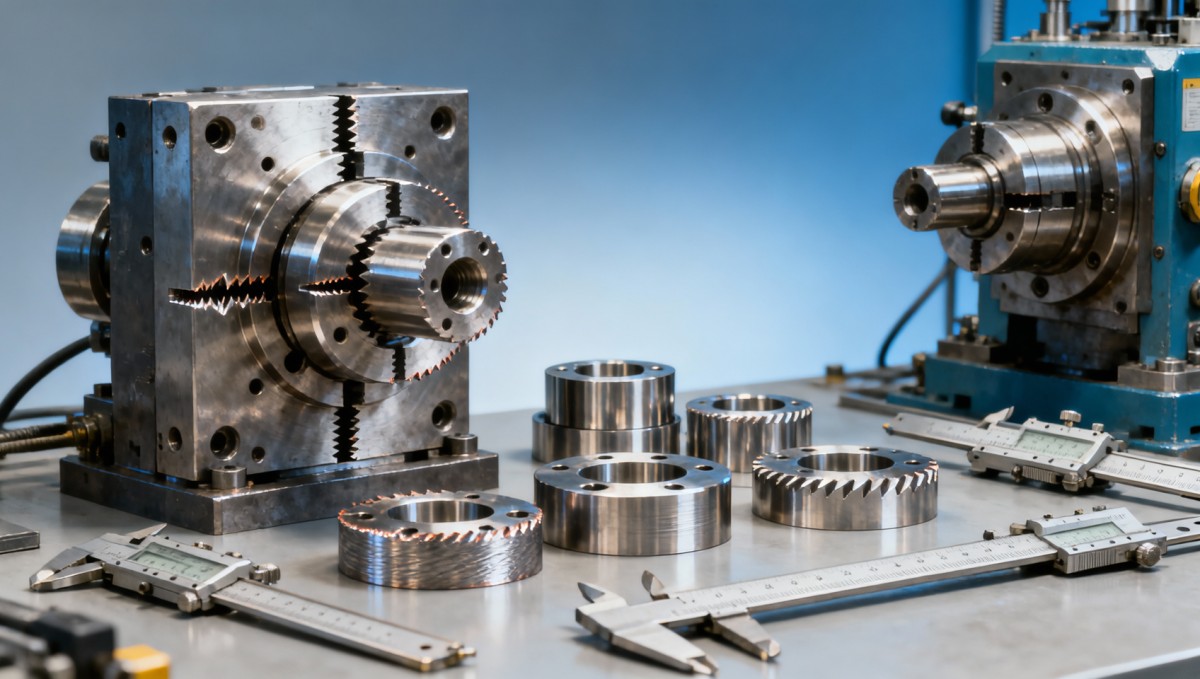
Metal stamping relies on repeatability. In early production, a die set may hold flatness, hole position, and edge condition within specification. As punches, dies, guides, and cutting edges wear, that repeatability begins to narrow. The first signals are often subtle: a slightly higher press force, more frequent edge rollover, or cosmetic marks that only become obvious after powder coating or anodizing.
For operators, this shows up as process drift. For technical evaluators, it appears in inspection data such as burr height rising from 0.03 mm to 0.08 mm, hole diameter trending toward the upper limit, or springback becoming less predictable. For quality and safety teams, wear may increase the risk of sharp edges, unstable assembly fits, or coating nonconformities that affect field performance.
The financial impact is broader than replacement tooling cost. A worn tool can reduce material utilization, increase sorting labor, and create hidden delays in surface finishing services because poor edge definition, waviness, or micro-cracks often become visible only after finishing. On a 10,000-piece order, even a 3% scrap increase can materially change landed cost, especially when parts require secondary machining, powder coating, or packaging for export.
In low volume manufacturing, buyers sometimes assume tooling wear is less relevant because run sizes are smaller. That is only partly true. Rapid tooling may shorten lead time to 7–15 days, but it can also reduce tool life compared with hardened production tooling. If the part is expected to move from pilot run to 20,000-piece annual demand, wear planning should be discussed before the first samples are approved.
Typical early warning signs across sourcing and production
- Dimensional drift in critical features such as slots, holes, and formed bends after the first 3,000–10,000 hits.
- Visible burr growth that affects handling safety, coating adhesion, or downstream assembly.
- Surface scoring, drag marks, or edge tearing that becomes more visible after anodizing services.
- Unexpected increases in press tonnage, lubrication use, or die maintenance frequency.
- Inconsistent part nesting, stacking, or carton yield caused by geometry variation.
These signs should be treated as commercial indicators as much as engineering indicators. A supplier that can explain wear progression, maintenance intervals, and capability limits is usually more reliable than one that offers the lowest piece price but no structured tool management plan.
How tooling wear changes tolerance, surface finishing, and total production value
Tooling wear does not stay confined to the stamping press. It affects the full production chain. When a stamped edge becomes rougher or less consistent, powder coating thickness may build unevenly on corners, and anodizing results on aluminum stampings may highlight scratches or deformation more clearly than raw parts do. In precision assemblies, even a small shift in hole-to-edge distance can compromise fit-up in riveted, welded, or screwed subassemblies.
This is why sourcing teams should compare stamping not only against its quoted unit price, but against lifecycle process stability. For parts with tight cosmetic requirements, an initially cheap stamping program may become less attractive than precision casting or hybrid fabrication if the tool wears quickly and forces sorting, polishing, or extra finishing steps every 2–3 weeks.
The table below shows how wear can influence adjacent production choices. It is especially useful for buyers reviewing whether a stamped part remains the best option through pilot, scale-up, and repeat orders.
The key takeaway is that tooling wear changes the economics of the entire route, not only the stamping cell. A sourcing decision should include expected maintenance intervals, finish sensitivity, and the cost of secondary operations over at least one annual demand cycle.
Where buyers often underestimate the impact
Many RFQs focus on material grade, annual volume, and finish type, but leave out wear-related acceptance criteria. That creates ambiguity. If a drawing allows burrs “as formed” without a numeric limit, supplier A may ship parts with 0.05 mm burr height while supplier B ships 0.12 mm, and both may claim compliance until final assembly says otherwise.
A practical approach is to define 4 categories at quotation stage: critical dimensions, cosmetic zones, edge condition, and maintenance disclosure. This reduces disagreement later and helps distributors, project managers, and end users align expectations before volume ramps up.
How to evaluate suppliers when wear control matters
Supplier selection should go beyond whether a factory owns stamping presses. The more relevant question is whether the supplier can control wear in a measurable, documented way. That includes tooling material choice, preventive maintenance intervals, in-process inspection frequency, spare insert strategy, and the ability to link wear patterns to downstream defects in finishing or assembly.
For technical assessment teams, a good review framework usually includes 5 checkpoints: tool design suitability, maintenance discipline, process capability on critical features, inspection method, and contingency planning. If the part requires ±0.10 mm on non-critical features but ±0.03 mm around locating holes, the supplier should not treat all dimensions equally in its control plan.
Financial approvers also need a structured view. A lower tool cost may look attractive, but if the supplier expects refurbishment every 15,000 hits instead of every 60,000 hits, the real annual cost profile changes. This is especially relevant when the same part family may later need powder coating, anodizing services, or export-grade packaging with low defect tolerance.
The table below can be used during supplier comparison meetings. It translates wear control into sourcing criteria that are easier for cross-functional teams to approve.
A supplier does not need to have the largest factory to be the right fit. What matters is whether it can explain how it prevents wear from turning into unstable quality, missed delivery, and unexpected finishing defects.
A practical approval checklist
- Confirm the target annual volume and expected lot size, such as 500, 5,000, or 50,000 pieces.
- Define numeric tolerances for critical holes, bends, and burr height instead of using only visual wording.
- Ask for the expected tool life range and maintenance schedule in writing.
- Review whether the selected finish, such as powder coating or anodizing, will magnify wear defects.
- Align on response time for nonconformance, ideally within 24–72 hours for active production programs.
When to stay with stamping and when to consider alternative routes
Metal stamping remains highly efficient for flat or moderately formed geometries, especially when annual demand is stable and per-part cycle time needs to stay low. For brackets, shields, clips, covers, and light enclosures, stamping often delivers the best cost profile once tooling is mature. However, the process becomes less favorable when tool wear rapidly affects visible surfaces, tight tolerances, or complex features that require too many secondary operations.
Low volume manufacturing is often a strong bridge option when the design is still changing. If a project is in the first 1–3 prototype cycles, rapid tooling or CNC-based routes may avoid repeated die modifications. This is useful for project managers trying to meet a launch window of 4–8 weeks without locking into a hardened tool too early.
Precision casting can be worth reviewing when the part has thicker sections, more complex 3D geometry, or features that would require multiple stamping and welding stages. It will not replace stamping for every part, but it can lower the total number of operations in certain designs. The right choice depends on geometry, finish expectations, mechanical function, and annual volume.
Surface finishing services also influence route selection. If the final part needs highly visible decorative anodizing or a textured powder-coated appearance, the upstream process must protect cosmetic quality from the start. A process that creates recurring scratches or edge inconsistency may erase any savings achieved in forming.
Decision points for route selection
Choose stamping when
- The part geometry is mostly 2D or shallow formed, and annual demand exceeds roughly 10,000–20,000 pieces.
- Critical tolerances can be maintained through a realistic preventive maintenance plan.
- Secondary deburring and finishing steps remain limited and predictable.
Review alternatives when
- The design changes frequently during the first 2–3 launch phases.
- Tool wear quickly drives cosmetic fallout in coated or anodized parts.
- The part requires complex features that force multiple tools, fixtures, or post-processing steps.
The best sourcing strategy is often phased rather than fixed. Teams may start with low volume manufacturing or rapid tooling, validate function and finish, then migrate to production stamping once demand, tolerances, and acceptance standards are stable enough to justify longer-life tooling.
Implementation, inspection, and risk control for long-term production
Once a process route is selected, execution discipline determines whether tooling wear stays manageable. A strong launch plan normally covers 3 stages: pre-production validation, controlled pilot run, and full-release production. At each stage, the team should review dimensional stability, finish compatibility, packaging protection, and maintenance frequency rather than looking only at pass or fail sample results.
For quality teams, inspection strategy matters. Measuring one part per lot may be enough for low-risk geometry, but critical features often require a tighter sampling plan, such as first-off approval, in-process checks every 1–2 hours, and final audit by lot. If the part proceeds to powder coating or anodizing services, incoming surface checks should verify scratches, edge condition, and any marks likely to become visible after finishing.
For procurement and finance, the practical goal is predictable cost. That means documenting who owns tool refurbishment, how spare inserts are priced, and what happens if wear causes delivery slippage. In many contracts, these details are left vague. That can create disputes once the program reaches repeat demand or seasonal peaks.
Platforms serving advanced manufacturing and supply chain decision-makers increasingly reward suppliers that provide transparent process data, not just attractive quotations. Clear maintenance records, deviation reporting, and route comparison logic make it easier for enterprises to justify approval and reduce sourcing risk over 6-, 12-, or 24-month planning horizons.
Risk control actions that create measurable value
- Set a burr height limit and inspection frequency before the first shipment, especially for safety-sensitive parts.
- Link tooling maintenance triggers to piece count, press performance, and actual dimensional data.
- Validate finish compatibility using pre-production parts, not only raw metal samples.
- Keep an approved sample library showing acceptable edge, appearance, and coating outcomes.
- Review route alternatives every time annual demand changes by more than 20% or the drawing is revised.
FAQ for sourcing and engineering teams
How long should tooling last in a stamping program?
There is no single number. Life depends on material type, part geometry, die material, lubrication, and tolerance demand. In practice, maintenance may be needed every few thousand hits for demanding features, while more stable tools may run tens of thousands of strokes between major interventions.
Can surface finishing hide wear-related defects?
Usually not. Powder coating can mask minor variation, but it also makes edge buildup and waviness more visible in some geometries. Anodizing often highlights scratches and handling damage. Finishing should be treated as a quality amplifier, not a repair method.
What should buyers ask before approving rapid tooling?
Ask about expected tool life, modification flexibility, critical tolerance limits, and the migration path to production tooling. If the pilot demand may exceed 5,000–10,000 pieces, these answers can significantly change total cost and delivery reliability.
When is precision casting a better option than stamping?
It becomes worth serious review when the part has complex 3D geometry, requires multiple post-stamping operations, or suffers repeated quality loss due to wear-sensitive edges and cosmetic criteria. The decision should be based on total process count, yield, and finish outcome, not unit price alone.
Metal stamping parts only look simple when the tool is new and the process window is wide. Once tooling wear starts to show, quality drift, finishing fallout, and cost escalation can move faster than many sourcing plans assume. The most resilient procurement decisions connect wear control with tolerance strategy, surface finishing needs, supplier transparency, and long-term demand planning.
For buyers, engineers, quality teams, and decision-makers evaluating advanced manufacturing options, the right next step is to compare process routes with real maintenance, inspection, and finishing implications in mind. If you want to assess stamping against low volume manufacturing, rapid tooling, precision casting, powder coating, anodizing services, or broader surface finishing services, connect with TradeNexus Pro to get a more informed sourcing framework, tailored supplier insight, and a solution path aligned with your production goals.
Get weekly intelligence in your inbox.
No noise. No sponsored content. Pure intelligence.
 Apr 18, 2026TradeNexus Pro Launches Global Compliance RadarTradeNexus Pro Launches Global Compliance Radar
 Apr 18, 2026JIS T 2304:2026 Takes Effect June 1, 2026 for IVD SoftwareJIS T 2304:2026 Takes Effect June 1, 2026 for IVD Software
 Pathway for Rehab Devices with AI Modules") Apr 18, 2026FDA Updates 510(k) Pathway for Rehab Devices with AI ModulesFDA Updates 510(k) Pathway for Rehab Devices with AI Modules
Apr 18, 2026FDA Updates 510(k) Pathway for Rehab Devices with AI ModulesFDA Updates 510(k) Pathway for Rehab Devices with AI Modules Apr 18, 2026India BIS Approves 3 Chinese IoT Labs for IS 16444:2026 CertificationIndia BIS Approves 3 Chinese IoT Labs for IS 16444:2026 Certification
 Apr 18, 2026THE Alliance Launches Green Slot Priority for China PortsTHE Alliance Launches Green Slot Priority for China Ports
 Apr 18, 2026TÜV Rheinland Releases Dual-Standard ESS Certification Guide for ChinaTÜV Rheinland Releases Dual-Standard ESS Certification Guide for China
 Apr 18, 2026Vietnam Imposes AD Duties on Chinese Electronic ComponentsVietnam Imposes AD Duties on Chinese Electronic Components
 Apr 18, 2026SASO Launches PV Carbon Footprint Labeling from July 2026SASO Launches PV Carbon Footprint Labeling from July 2026
 Apr 18, 2026U.S. Adds 17 Smart Warehouse Robot Components to Export Control ListU.S. Adds 17 Smart Warehouse Robot Components to Export Control List
 Apr 18, 2026EU Enforces EN IEC 62443-4-2:2026 for Industrial Control Devices from 18 Apr 2026EU Enforces EN IEC 62443-4-2:2026 for Industrial Control Devices from 18 Apr 2026
 Apr 17, 2026Temperature data loggers drift unpredictably inside lithium-ion battery storage enclosuresTemperature data loggers drift unpredictably inside lithium-ion battery storage enclosures
 Apr 17, 2026Are solar microinverters really worth the extra cost?Are solar microinverters really worth the extra cost?
 Apr 17, 2026Bifacial solar panels: How much more energy can they generate?Bifacial solar panels: How much more energy can they generate?
 Apr 17, 2026Gear manufacturing: How to optimize production for high precision?Gear manufacturing: How to optimize production for high precision?
 Apr 17, 2026Why power transmission components fail earlier than expectedWhy power transmission components fail earlier than expected
 Apr 17, 2026Linear motion systems: belt drive or ball screw for speed?Linear motion systems: belt drive or ball screw for speed?
 Apr 17, 2026Industrial bearing suppliers: what signals reliable quality?Industrial bearing suppliers: what signals reliable quality?
 Apr 17, 2026When pneumatic valves wholesale gets expensive laterWhen pneumatic valves wholesale gets expensive later
 Apr 17, 2026Hydraulic cylinder fabrication mistakes that cause oil leaksHydraulic cylinder fabrication mistakes that cause oil leaks
 Apr 17, 2026Heavy equipment manufacturing delays often start hereHeavy equipment manufacturing delays often start here
 Apr 17, 2026Custom heatsinks: when a larger size solves nothingCustom heatsinks: when a larger size solves nothing
 Apr 17, 2026Electronic enclosure fabrication: steel or aluminum?Electronic enclosure fabrication: steel or aluminum?
 Apr 17, 2026Automotive parts machining tolerances that drive up scrapAutomotive parts machining tolerances that drive up scrap
 Apr 17, 2026Medical device manufacturing changes under tighter traceabilityMedical device manufacturing changes under tighter traceability
 Apr 17, 2026How to Choose Solid State Batteries in 2026How to Choose Solid State Batteries in 2026
 Apr 17, 2026Are Solid State Batteries Worth the Cost Yet?Are Solid State Batteries Worth the Cost Yet?
 Apr 17, 2026Commercial Energy Storage Sizing: What Matters Most?Commercial Energy Storage Sizing: What Matters Most?