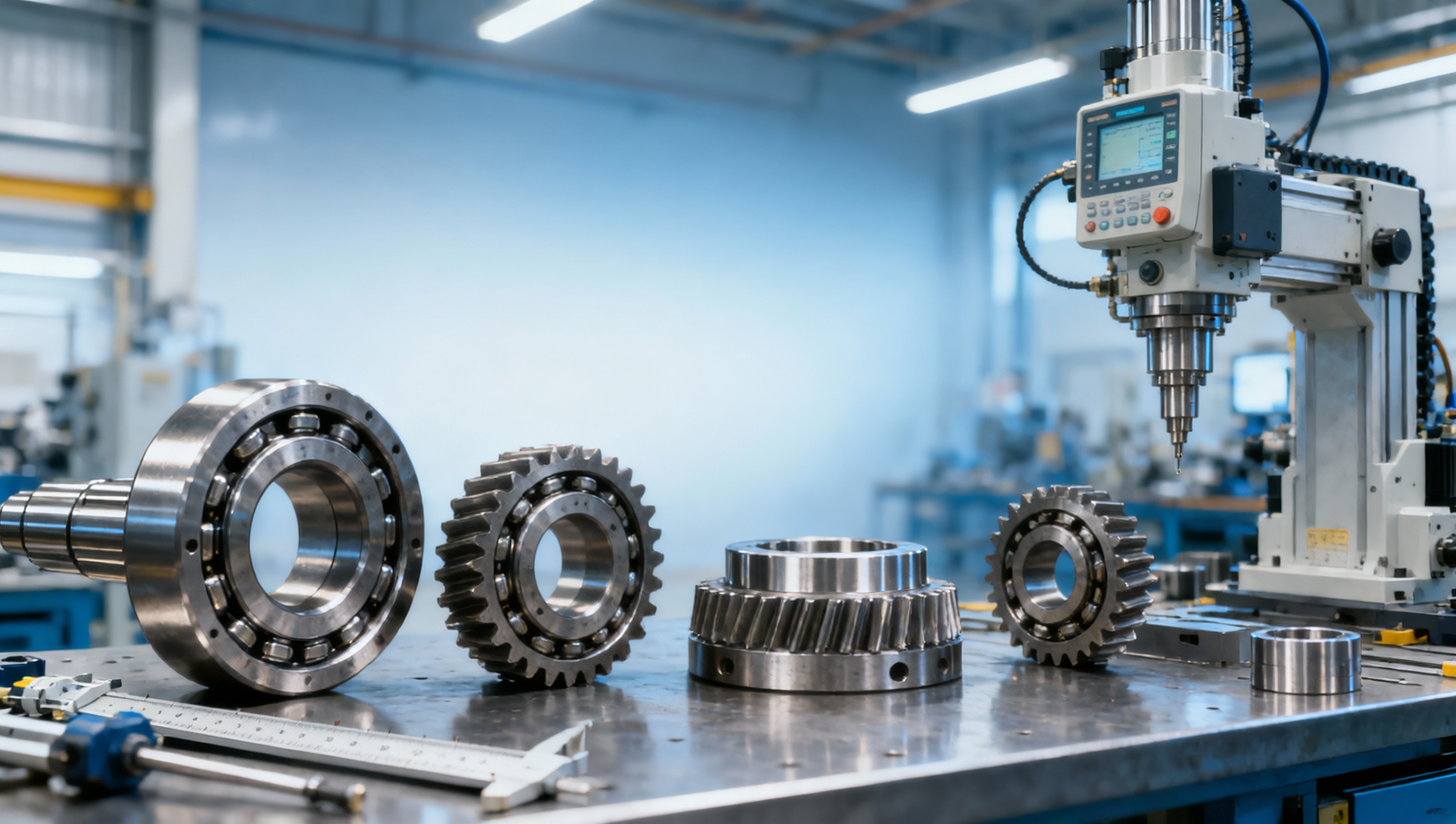
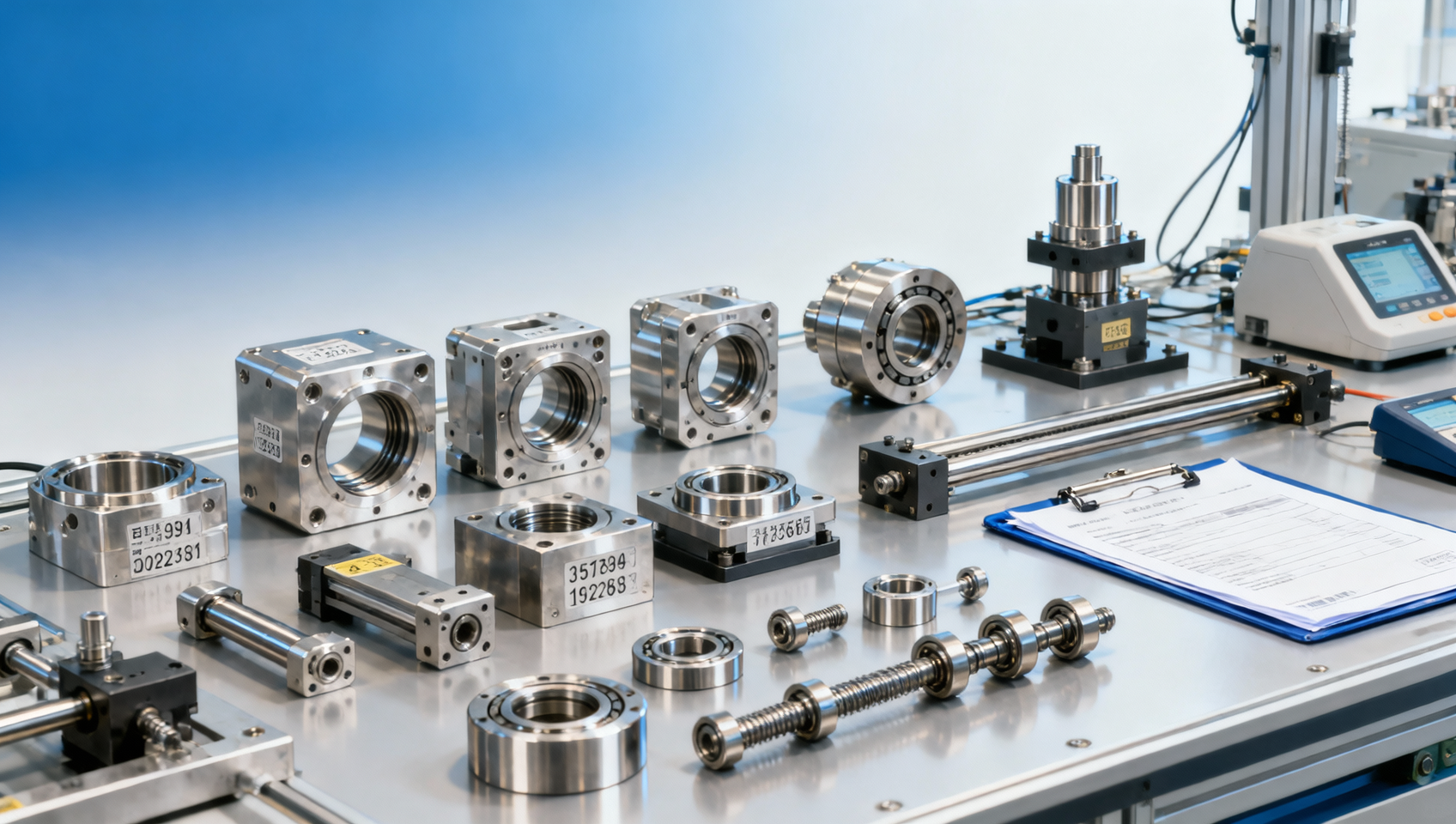
Precision casting vs machining for complex parts with tight specs
When engineers compare precision casting and machining for complex parts with tight tolerances, the decision affects cost, lead time, consistency, and downstream surface finishing services. For buyers evaluating low volume manufacturing, rapid tooling, anodizing services, powder coating, or even related processes like metal stamping parts, urethane casting, and plastic extrusion, understanding the trade-offs is essential to selecting the most scalable and quality-driven production path.
In industrial sourcing, this is rarely a simple “process A versus process B” question. The right route depends on geometry, tolerance stack-up, alloy behavior, annual demand, inspection burden, finishing requirements, and the financial threshold for tooling investment. For procurement teams, project managers, quality leaders, and technical evaluators, the decision can influence not only unit price but also assembly yield, supplier risk, and total landed cost over 6–24 months.
This guide breaks down how precision casting and machining perform when parts are complex, specifications are narrow, and production plans may range from prototypes to repeat batches. It also highlights where hybrid strategies make sense, especially for organizations balancing engineering performance, budget approval, and supply chain resilience.
Understanding the Core Difference Between Precision Casting and Machining
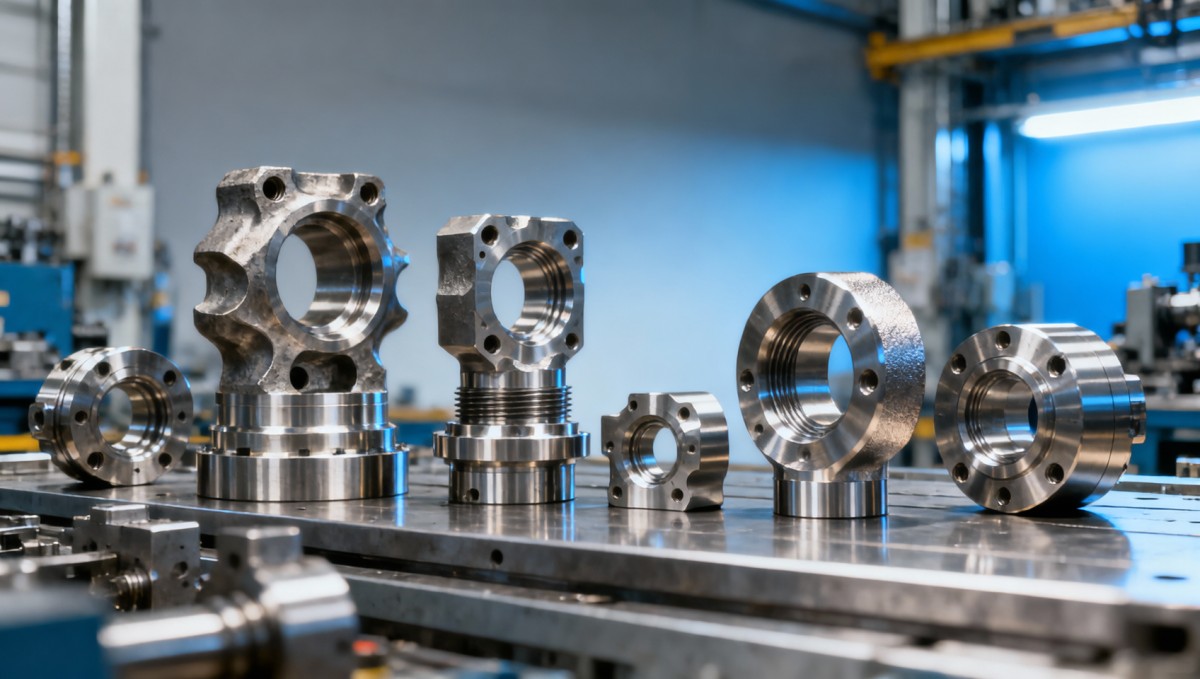
Precision casting creates a near-net-shape component by forming molten metal in a prepared mold, often through investment casting or similar controlled methods. Machining, by contrast, removes material from billet, bar, plate, or forged stock through CNC milling, turning, drilling, and finishing operations. Both can deliver complex parts, but they do so through very different cost structures, dimensional behaviors, and production workflows.
For complex geometries, precision casting often reduces the number of machining steps because internal channels, curved surfaces, bosses, and contour-rich features can be created closer to final form. This becomes valuable when a part would otherwise require 4-axis or 5-axis machining, multiple setups, or custom fixtures. In many cases, a cast part may reduce raw material waste from 40%–70% down to a much lower level than fully machined stock.
Machining is usually stronger when specifications are extremely tight on a limited number of critical features, especially if the part starts from stable material with known properties. A CNC process can routinely hold tolerances such as ±0.01 mm to ±0.05 mm on selected dimensions, depending on machine capability, material, and part size. Precision casting can achieve excellent repeatability, but many cast parts still require post-machining on datum surfaces, holes, sealing faces, or bearing locations.
Another major distinction is process scalability. Precision casting often becomes more competitive after tooling is amortized across repeat orders, while machining can be more attractive for prototypes, engineering validation runs, and low-volume batches of 10–200 pieces. For finance approvers, this means the break-even point is not only about piece price but also about tooling cost, engineering changes, scrap exposure, and expected order frequency.
How buyers should frame the comparison
A practical evaluation should focus on the part’s most demanding requirements rather than the supplier’s preferred process. Teams should identify which dimensions are critical to function, which surfaces need cosmetic or corrosion-resistant finishing, and which features can tolerate as-cast variation before secondary machining. This prevents overengineering and helps separate “must hold” features from “nice to hold” features.
- Geometry complexity: undercuts, thin walls, internal cavities, and curved profiles.
- Tolerance map: global tolerance versus 3–5 critical dimensions requiring tighter control.
- Volume profile: prototype, pilot run, or annual demand above 1,000 pieces.
- Material economics: expensive alloys may favor near-net-shape processes.
- Finishing path: anodizing, powder coating, plating, polishing, or passivation.
The table below outlines the operational difference between the two processes for B2B sourcing teams that need a clear first-pass filter before RFQ release.
The main takeaway is that precision casting excels at shape efficiency, while machining excels at feature-specific precision. In many industrial programs, the optimal answer is a combined route: cast the base geometry, then machine the 20% of features that drive 80% of functional performance.
Tolerance, Surface Finish, and Quality Control for Tight Specifications
When tight specifications are involved, buyers should avoid treating tolerance as a single number. A part drawing may include general tolerances, geometric dimensioning and tolerancing requirements, flatness limits, hole position tolerances, surface roughness targets, and coating thickness constraints. The manufacturing route should be chosen according to the most demanding 3–7 features, not the average feature.
Precision casting can deliver very good dimensional consistency when tooling, wax control, shell building, and thermal process parameters are stable. However, shrinkage variation, part orientation, section thickness changes, and alloy behavior all influence the outcome. For this reason, buyers commonly specify machining allowances on functional faces, threads, and critical bores. A cast-only strategy may be risky if flatness needs to stay within 0.05 mm over a sealing surface.
Machining offers clearer dimensional control, but it also has its own risks. Thin-wall sections may distort after clamping or after stress is released during material removal. Long-cycle machining on hard alloys can increase tool wear and create dimensional drift across larger batches. In practical sourcing, quality consistency depends not just on the process but on inspection planning, fixture strategy, and statistical process control over repeated runs.
Surface finish is another critical layer in the comparison. As-cast surfaces may be suitable for non-cosmetic or non-sealing applications, but many technical components still require post-processing such as polishing, bead blasting, anodizing services, passivation, plating, or powder coating. Machined surfaces are usually more predictable for appearance and contact performance, yet they may still need deburring, edge conditioning, or coating prep before assembly.
Quality checkpoints that reduce failure risk
For project owners and quality managers, the most reliable approach is to establish inspection gates before production starts. This is especially important if the part is used in healthcare technology devices, advanced manufacturing equipment, or smart electronics housings where fit and finish directly affect downstream performance.
- Confirm critical-to-function dimensions and assign measurable limits.
- Define sampling plan for first article, pilot batch, and steady-state production.
- Align on surface roughness, coating thickness, and cosmetic acceptance standards.
- Review whether 100% inspection is needed for high-risk features such as sealing bores or threaded interfaces.
- Require process capability evidence if batch-to-batch repeatability is essential.
The matrix below helps teams align manufacturing choice with common specification categories.
For tight specifications, the safest sourcing model is not to demand excessive precision everywhere. Instead, define critical zones, allow process-appropriate tolerances elsewhere, and combine inspection, post-machining, and finishing controls where they add measurable value.
Cost, Lead Time, and Volume Break-Even Analysis
From a purchasing perspective, the most common mistake is comparing only the quoted unit price. Precision casting may appear more expensive at the prototype stage due to tooling, sample approval, and process setup. Machining may appear cheaper for an initial batch of 20 pieces, yet become less competitive when annual demand rises to 2,000 or 5,000 pieces and cycle time remains high. The real question is total cost across the expected product life cycle.
Lead time also varies by process phase. A machined prototype can often move from CAD approval to parts in 7–15 days, depending on complexity and material availability. Precision casting may take 3–6 weeks for tooling, process setup, and first article validation, although repeat orders usually improve after the initial launch. For project managers, this means the “fastest process” can differ between NPI and steady production.
Material cost plays a major role in the economics. If the component uses stainless steel, nickel alloy, bronze, or specialty aluminum, machining from solid stock can create significant chip loss. In those cases, near-net-shape precision casting may generate substantial savings over 12 months, especially if the part is heavy, contoured, or requires deep pocketing. The savings can become more visible when multiple machining setups would otherwise be required.
Decision-makers should also include secondary costs: quality inspection hours, fixture fabrication, coating preparation, rework probability, inbound logistics, and the cost of engineering changes. A low initial quote can become expensive if the process lacks repeatability and forces frequent correction loops. Finance teams usually benefit from modeling cost over at least 3 scenarios: pilot batch, first year demand, and scaled demand.
A practical break-even framework
The exact crossover point differs by design and alloy, but buyers can use a disciplined framework to identify where precision casting begins to outperform machining economically.
- If annual demand is below 50–100 pieces, machining is often easier to justify.
- If geometry causes more than 3 setups or extensive 5-axis time, casting becomes more attractive.
- If raw material removal exceeds roughly 50% of starting stock, near-net-shape options deserve review.
- If the part requires only 2–4 critical machined interfaces after forming, a cast-plus-machine route often lowers total cost.
The table below summarizes how cost and lead time typically shift across sourcing scenarios.
The procurement lesson is clear: machining usually wins on agility, while precision casting often wins on repeat economics. The correct sourcing strategy depends on whether the program is still changing or has reached design stability.
How to Choose the Right Route for Complex Parts Across Industries
Advanced manufacturing, green energy, healthcare technology, smart electronics, and supply chain equipment all create different decision pressures. A robotic arm bracket, pump housing, sensor enclosure, valve body, medical device support, or power conversion component may all be “complex parts,” but not all complexity is the same. Some are geometry-heavy. Others are tolerance-heavy. Others are driven by coating, cleanliness, or weight reduction.
For users and operators, reliability and fit in the field matter most. For technical evaluators, the focus is usually dimensional capability, material suitability, and process repeatability. For enterprise decision-makers and finance approvers, the key metrics are total cost, supply stability, and scalability. A strong sourcing decision aligns all four perspectives rather than optimizing only engineering or only price.
In many industrial programs, hybrid manufacturing is the most balanced path. A component may start as a precision casting to capture complex geometry, then move through CNC operations on bearing seats, threaded ports, or flat interfaces, followed by anodizing, powder coating, or other surface finishing services. This reduces material waste while preserving control where functional performance depends on it.
Buyers should also benchmark the part against adjacent process options. For example, some lightweight or lower-load applications may shift toward metal stamping parts, urethane casting, or plastic extrusion when geometry, strength, and volume conditions allow. The purpose is not to replace the casting-versus-machining comparison, but to confirm whether the part has been categorized correctly before committing capital and supplier resources.
Selection checklist for RFQ and supplier review
Technical and commercial questions to ask
- Which 3–5 dimensions are truly critical, and which can remain process-standard?
- What is the expected annual volume over the next 12–24 months?
- Will the design change more than once after prototype approval?
- Does the part need decorative or protective finishing with strict cosmetic criteria?
- Can the supplier provide first article inspection, process flow, and control plan before mass production?
- Is there a backup path if tooling delays, capacity constraints, or quality escapes occur?
This checklist helps distributors, sourcing teams, and project owners compare suppliers on execution discipline rather than headline pricing. In cross-border procurement, strong documentation and process transparency often reduce risk more than a 3%–5% difference in unit cost.
Common Mistakes, Implementation Risks, and FAQ for Buyers
One frequent mistake is assigning ultra-tight tolerances to the full part because a few features are critical. This drives unnecessary cost in both precision casting and machining. Another common error is approving a supplier without reviewing how finishing steps will affect dimensions. Coatings, blasting, polishing, and heat treatment can all shift the final outcome, especially when wall sections are thin or hole sizes are already near the lower limit.
A second risk is evaluating lead time without separating tooling lead time, sample approval lead time, and repeat production lead time. Teams often underestimate how long it takes to validate a new cast tool or overestimate how easily a machined part can scale from 20 pieces to 2,000 pieces. Clear implementation planning should map the first 3 stages: quotation, pilot validation, and stable production release.
Quality teams should also watch for hidden variation in raw material, tool wear, and process control. For precision casting, this may include shrinkage behavior and surface defects. For machining, it may include chatter, burr formation, and deformation after clamping. A disciplined PPAP-like review, even in non-automotive sectors, can improve launch confidence and reduce expensive corrective action cycles.
Below are common buyer questions that often shape the final sourcing choice.
How do I choose for low volume manufacturing?
If demand is under roughly 50–200 units and the design is still changing, machining is usually the lower-risk option. If the part has high material waste, complex geometry, and a likely ramp-up after validation, rapid tooling plus precision casting can be worth evaluating early so the production path is not delayed later.
Can precision casting meet tight tolerances without machining?
For some non-critical features, yes. For highly critical bores, flat sealing areas, precise threads, or geometric controls, secondary machining is commonly required. The best commercial result often comes from machining only the features that directly affect function, assembly, or safety.
What if cosmetic finish is important?
Then the process review must include finishing compatibility from the start. Surface preparation for anodizing services or powder coating can expose defects, edges, or texture variation. Ask suppliers to define pretreatment steps, inspection criteria, and acceptable visual standards before sample approval.
Which process is safer for enterprise-scale procurement?
The safer process is the one matched to the part’s true demand profile, tolerance map, and supply chain plan. For many enterprise programs, the most resilient solution is dual-stage sourcing: prototype with machining, then validate a cast-plus-machine production route once design stability and annual demand justify tooling.
For organizations comparing precision casting vs machining for complex parts with tight specs, the strongest decision comes from cross-functional review rather than isolated quoting. Engineering should define critical features, procurement should model lifecycle cost, quality should set control gates, and project teams should align the launch timeline with production reality. If you need a more precise sourcing framework for complex metal parts, finishing services, or scalable low-volume-to-production planning, contact TradeNexus Pro to get a tailored solution assessment and explore the right manufacturing pathway for your program.
Get weekly intelligence in your inbox.
No noise. No sponsored content. Pure intelligence.
 Apr 18, 2026TradeNexus Pro Launches Global Compliance RadarTradeNexus Pro Launches Global Compliance Radar
 Apr 18, 2026JIS T 2304:2026 Takes Effect June 1, 2026 for IVD SoftwareJIS T 2304:2026 Takes Effect June 1, 2026 for IVD Software
 Pathway for Rehab Devices with AI Modules") Apr 18, 2026FDA Updates 510(k) Pathway for Rehab Devices with AI ModulesFDA Updates 510(k) Pathway for Rehab Devices with AI Modules
Apr 18, 2026FDA Updates 510(k) Pathway for Rehab Devices with AI ModulesFDA Updates 510(k) Pathway for Rehab Devices with AI Modules Apr 18, 2026India BIS Approves 3 Chinese IoT Labs for IS 16444:2026 CertificationIndia BIS Approves 3 Chinese IoT Labs for IS 16444:2026 Certification
 Apr 18, 2026THE Alliance Launches Green Slot Priority for China PortsTHE Alliance Launches Green Slot Priority for China Ports
 Apr 18, 2026TÜV Rheinland Releases Dual-Standard ESS Certification Guide for ChinaTÜV Rheinland Releases Dual-Standard ESS Certification Guide for China
 Apr 18, 2026Vietnam Imposes AD Duties on Chinese Electronic ComponentsVietnam Imposes AD Duties on Chinese Electronic Components
 Apr 18, 2026SASO Launches PV Carbon Footprint Labeling from July 2026SASO Launches PV Carbon Footprint Labeling from July 2026
 Apr 18, 2026U.S. Adds 17 Smart Warehouse Robot Components to Export Control ListU.S. Adds 17 Smart Warehouse Robot Components to Export Control List
 Apr 18, 2026EU Enforces EN IEC 62443-4-2:2026 for Industrial Control Devices from 18 Apr 2026EU Enforces EN IEC 62443-4-2:2026 for Industrial Control Devices from 18 Apr 2026
 Apr 17, 2026Temperature data loggers drift unpredictably inside lithium-ion battery storage enclosuresTemperature data loggers drift unpredictably inside lithium-ion battery storage enclosures
 Apr 17, 2026Are solar microinverters really worth the extra cost?Are solar microinverters really worth the extra cost?
 Apr 17, 2026Bifacial solar panels: How much more energy can they generate?Bifacial solar panels: How much more energy can they generate?
 Apr 17, 2026Gear manufacturing: How to optimize production for high precision?Gear manufacturing: How to optimize production for high precision?
 Apr 17, 2026Why power transmission components fail earlier than expectedWhy power transmission components fail earlier than expected
 Apr 17, 2026Linear motion systems: belt drive or ball screw for speed?Linear motion systems: belt drive or ball screw for speed?
 Apr 17, 2026Industrial bearing suppliers: what signals reliable quality?Industrial bearing suppliers: what signals reliable quality?
 Apr 17, 2026When pneumatic valves wholesale gets expensive laterWhen pneumatic valves wholesale gets expensive later
 Apr 17, 2026Hydraulic cylinder fabrication mistakes that cause oil leaksHydraulic cylinder fabrication mistakes that cause oil leaks
 Apr 17, 2026Heavy equipment manufacturing delays often start hereHeavy equipment manufacturing delays often start here
 Apr 17, 2026Custom heatsinks: when a larger size solves nothingCustom heatsinks: when a larger size solves nothing
 Apr 17, 2026Electronic enclosure fabrication: steel or aluminum?Electronic enclosure fabrication: steel or aluminum?
 Apr 17, 2026Automotive parts machining tolerances that drive up scrapAutomotive parts machining tolerances that drive up scrap
 Apr 17, 2026Medical device manufacturing changes under tighter traceabilityMedical device manufacturing changes under tighter traceability
 Apr 17, 2026How to Choose Solid State Batteries in 2026How to Choose Solid State Batteries in 2026
 Apr 17, 2026Are Solid State Batteries Worth the Cost Yet?Are Solid State Batteries Worth the Cost Yet?
 Apr 17, 2026Commercial Energy Storage Sizing: What Matters Most?Commercial Energy Storage Sizing: What Matters Most?