Maine Bans New >20MW Data Centers — AI Hardware Delivery Impacted
On April 14, 2026, Maine became the first U.S. state to enact a statewide pause on new data center construction exceeding 20 MW of power draw — a move with direct implications for AI infrastructure suppliers, factory automation vendors, and warehouse robotics manufacturers serving the North American market.
Event Overview
On April 14, 2026, the State of Maine passed legislation prohibiting the construction of new data centers with electricity demand exceeding 20 megawatts (MW), effective immediately and scheduled to remain in place until November 2027. The law applies statewide and does not include exemptions for specific technologies or energy sources.
Industries Affected by Segment
AI Hardware Exporters (U.S.-bound)
These companies supply AI accelerators, inference servers, and high-density compute racks to U.S. customers. The ban restricts large-scale deployment sites in Maine, reducing near-term demand for rack-scale AI infrastructure in that jurisdiction — potentially delaying order fulfillment and requiring re-evaluation of regional delivery timelines and logistics routing.
Factory Automation Equipment Manufacturers
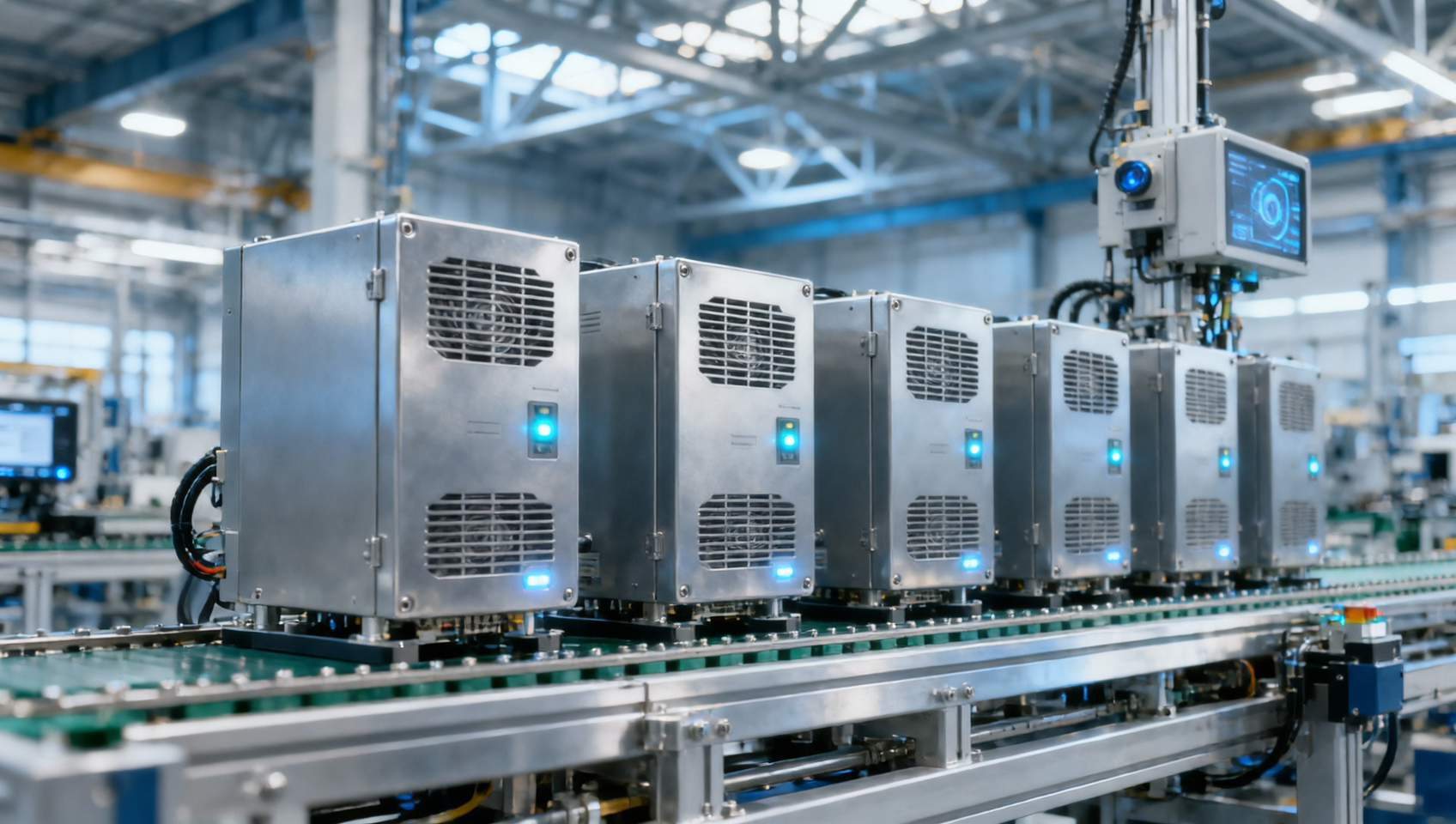
Manufacturers supplying programmable logic controllers (PLCs), edge servers, and industrial control cabinets face indirect impact: their end customers (e.g., system integrators deploying smart manufacturing lines) may shift project locations away from Maine to states with stable grid capacity and renewable energy access — altering installation schedules and local service response windows.
Warehouse Robotics Providers
Vendors of autonomous mobile robots (AMRs), warehouse management software (WMS) hardware interfaces, and intelligent conveyor control systems rely on co-located compute infrastructure. With Maine’s ban limiting scalable edge-AI hosting options, clients may defer or relocate fulfillment center automation projects — affecting hardware shipment planning and integration support timelines.
North America–Focused System Integrators
Integrators coordinating turnkey deployments across hardware, networking, and software layers must now reassess site feasibility assessments. Maine’s restriction adds a new layer of jurisdictional risk in infrastructure planning — particularly for clients targeting hybrid cloud–edge AI architectures requiring low-latency compute near manufacturing or logistics hubs.
What Enterprises and Practitioners Should Monitor and Do Now
Track official guidance on enforcement scope and potential exemptions
The current law specifies a 20 MW threshold but does not clarify whether it applies per facility, per campus, or per utility interconnection point. Companies should monitor updates from the Maine Public Utilities Commission and state energy office for interpretive guidance.
Reassess delivery lead times for edge servers and intelligent control cabinets destined for Northeast U.S. projects
Orders previously scoped for Maine-based facilities may require rerouting to alternative sites in Texas, Ohio, or Iowa — where grid capacity and green power procurement are more mature. Logistics teams should coordinate early with freight forwarders and local partners to validate revised transit windows.
Distinguish policy signal from immediate operational impact
Maine hosts relatively few large-scale data center developments to date. While the ban sets a precedent, its near-term effect on total U.S. AI hardware demand is limited. However, its symbolic weight may influence similar proposals in other states — making proactive scenario planning advisable.
Engage early with North American system integrators to map revised site eligibility criteria
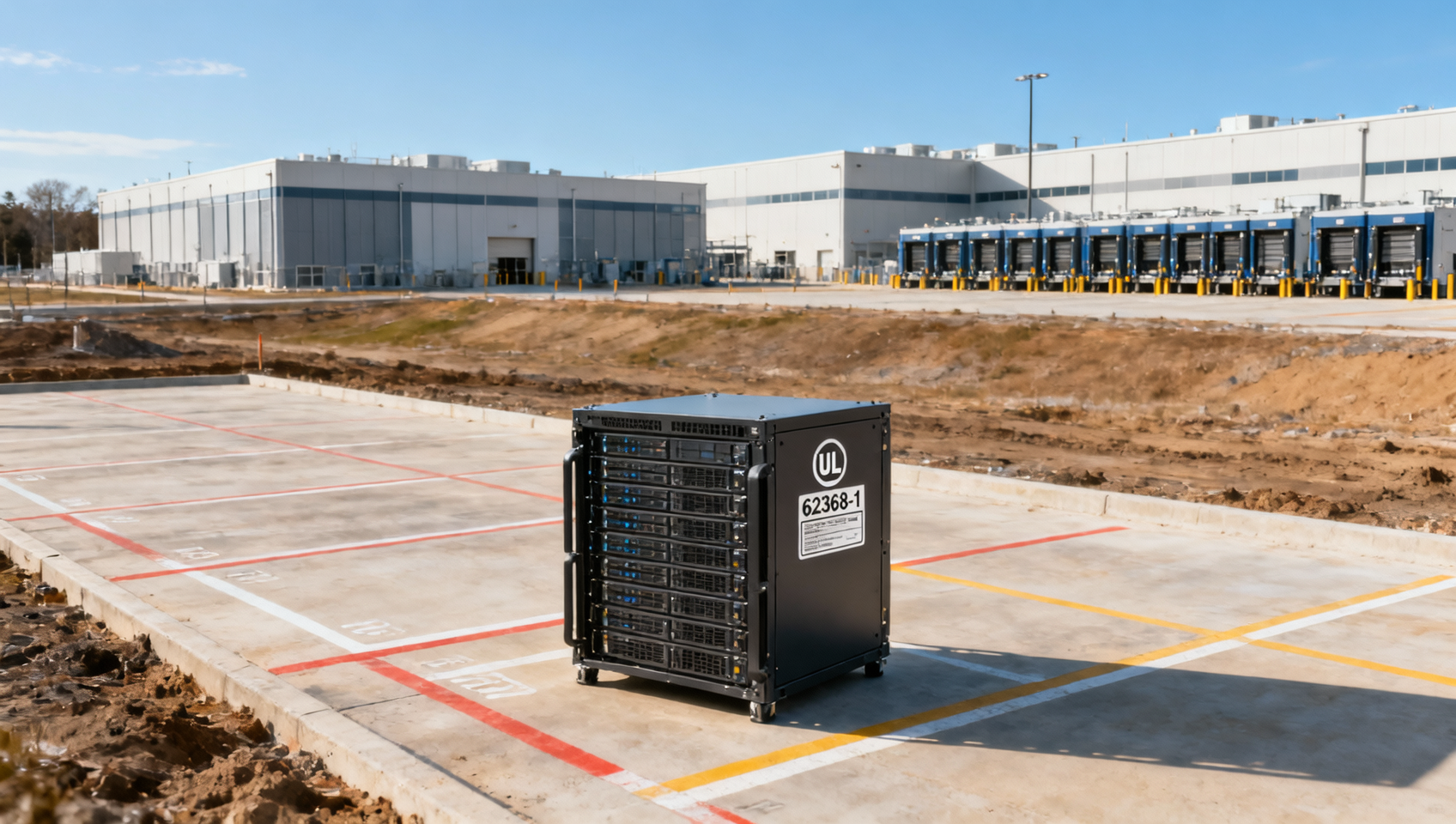
Integrators are now adjusting pre-deployment checklists to exclude Maine for >20 MW workloads. Suppliers should align technical documentation, compliance certifications (e.g., UL 62368-1, NEC Article 645), and local service SLAs with this updated geographic constraint.
Editorial Perspective / Industry Observation
Observably, Maine’s action is less an immediate market disruption and more a regulatory signal — one that highlights growing tension between AI’s surging power demand and regional grid readiness. Analysis shows this is the first state-level cap tied explicitly to AI-adjacent infrastructure, not general commercial development. It reflects accelerating scrutiny of energy-intensive digital infrastructure at subnational levels — a trend likely to gain traction in jurisdictions facing generation shortfalls or transmission bottlenecks. From an industry perspective, this signals a structural shift toward geographic rationalization of AI compute: away from politically sensitive or grid-constrained regions, and toward locations with verifiable baseload resilience and clean energy procurement pathways. Continuous monitoring is warranted — not just for replication in other states, but for how federal energy and infrastructure policies respond.
This development underscores that AI hardware deployment is no longer solely a question of chip performance or software stack compatibility — it is increasingly contingent on physical infrastructure policy, utility interconnection rules, and regional energy governance. For export-oriented technology suppliers, understanding these layers is now part of core supply chain intelligence — not peripheral regulatory awareness.
Information Source: Official text of Maine LD 2527 (enacted April 14, 2026); Maine Public Utilities Commission press release dated April 14, 2026. Ongoing legislative review status: None confirmed beyond the stated sunset date of November 2027.
Get weekly intelligence in your inbox.
No noise. No sponsored content. Pure intelligence.
 Apr 29, 2026USITC Launches Section 337 Investigation into Chinese Wi-Fi 7 RF ModulesUSITC Launches Section 337 Investigation into Chinese Wi-Fi 7 RF Modules
 Apr 29, 2026Côte d'Ivoire Launches $500M Grid Storage Tender, Chinese BESS Fast-TrackedCôte d'Ivoire Launches $500M Grid Storage Tender, Chinese BESS Fast-Tracked
 Apr 29, 2026Morocco Enforces IEC 61427-2:2025 PV Mounting Certification from Q3 2026Morocco Enforces IEC 61427-2:2025 PV Mounting Certification from Q3 2026
 Apr 29, 2026UAE Becomes Global AI Hub: New CE-ADAS+ Path for Chinese Smart Industrial EquipmentUAE Becomes Global AI Hub: New CE-ADAS+ Path for Chinese Smart Industrial Equipment
 Apr 29, 2026Red Sea Crisis: Suez Canal Fees Up 12%, China-Europe Rail Premium at 35%Red Sea Crisis: Suez Canal Fees Up 12%, China-Europe Rail Premium at 35%
 Apr 29, 2026TÜV Rheinland Launches Fast-Track Certification for Chinese Warehouse RobotsTÜV Rheinland Launches Fast-Track Certification for Chinese Warehouse Robots
 Apr 29, 2026Vietnam's SMT Expansion Drives CNC Fixture Export DelaysVietnam's SMT Expansion Drives CNC Fixture Export Delays
![]() Apr 29, 2026NEOM Smart Infrastructure Phase II Opens Bidding: Chinese PV Mounting & BESS Pre-QualifiedNEOM Smart Infrastructure Phase II Opens Bidding: Chinese PV Mounting & BESS Pre-Qualified
Apr 29, 2026NEOM Smart Infrastructure Phase II Opens Bidding: Chinese PV Mounting & BESS Pre-QualifiedNEOM Smart Infrastructure Phase II Opens Bidding: Chinese PV Mounting & BESS Pre-Qualified Apr 29, 2026EU Enforces Battery Passport for Energy Storage Imports from July 2026EU Enforces Battery Passport for Energy Storage Imports from July 2026
 Apr 29, 2026Maine Bans New >20MW Data Centers — AI Hardware Delivery ImpactedMaine Bans New >20MW Data Centers — AI Hardware Delivery Impacted
 Apr 28, 2026Suez Canal Fee Hike & China-Europe Rail Premium: Q2 2026 ImpactSuez Canal Fee Hike & China-Europe Rail Premium: Q2 2026 Impact
 Apr 28, 2026TÜV Rheinland Launches Fast-Track Certification for Chinese Warehouse RobotsTÜV Rheinland Launches Fast-Track Certification for Chinese Warehouse Robots
 Apr 28, 2026EU Enforces Battery Passport Rule for Chinese ESS Exports from 2027EU Enforces Battery Passport Rule for Chinese ESS Exports from 2027
 Apr 28, 2026ADB Raises Vietnam GDP Forecast to 7.2%: SMT & Precision Fixture Demand RisesADB Raises Vietnam GDP Forecast to 7.2%: SMT & Precision Fixture Demand Rises
 Apr 28, 2026US ITC Launches Section 337 Investigation into Chinese Wi-Fi 7 RF FEMsUS ITC Launches Section 337 Investigation into Chinese Wi-Fi 7 RF FEMs
 Apr 28, 2026Côte d'Ivoire Opens $500M Power Tender: Chinese BESS Get Fast-Track AccessCôte d'Ivoire Opens $500M Power Tender: Chinese BESS Get Fast-Track Access
 Apr 28, 2026BP’s Algeria East Basin Permit Spurs Valve Demand, Lead Times Extend to 18 WeeksBP’s Algeria East Basin Permit Spurs Valve Demand, Lead Times Extend to 18 Weeks
") Apr 28, 2026Vietnam Mandates V-Trust for Smart Appliances Export (July 2026)Vietnam Mandates V-Trust for Smart Appliances Export (July 2026)
Apr 28, 2026Vietnam Mandates V-Trust for Smart Appliances Export (July 2026)Vietnam Mandates V-Trust for Smart Appliances Export (July 2026) Apr 28, 2026Morocco Enforces PV Mounting Structure Certification from Q3 2026Morocco Enforces PV Mounting Structure Certification from Q3 2026
 Apr 28, 2026UAE Establishes AI Hub Status, Opens CE-ADAS+ Pathway for Chinese Smart Industrial EquipmentUAE Establishes AI Hub Status, Opens CE-ADAS+ Pathway for Chinese Smart Industrial Equipment
 Apr 27, 2026Algeria’s Oil & Steel FDI Push Opens Valve, Corrosion-Resistant Material OrdersAlgeria’s Oil & Steel FDI Push Opens Valve, Corrosion-Resistant Material Orders
 Apr 27, 2026Azerbaijan’s New PV Mounting Standard Opens Path for Chinese SuppliersAzerbaijan’s New PV Mounting Standard Opens Path for Chinese Suppliers
 Apr 27, 2026Fitch Cuts East Africa Growth Forecasts, Raises Cross-Border Trade RisksFitch Cuts East Africa Growth Forecasts, Raises Cross-Border Trade Risks
 Apr 27, 2026ADB Raises Vietnam GDP Forecast to 7.2% on Electronics Export GrowthADB Raises Vietnam GDP Forecast to 7.2% on Electronics Export Growth
 Apr 27, 2026Maine Halts Large Data Centers: AI Server Export ImpactMaine Halts Large Data Centers: AI Server Export Impact
 Apr 27, 2026OFID $500M for Côte d'Ivoire: Boost to Factory Automation & Warehouse RoboticsOFID $500M for Côte d'Ivoire: Boost to Factory Automation & Warehouse Robotics
 Apr 27, 2026Morocco Ranks 4th in EU Energy Aid to AfricaMorocco Ranks 4th in EU Energy Aid to Africa