Vietnam's SMT Expansion Drives CNC Fixture Export Delays
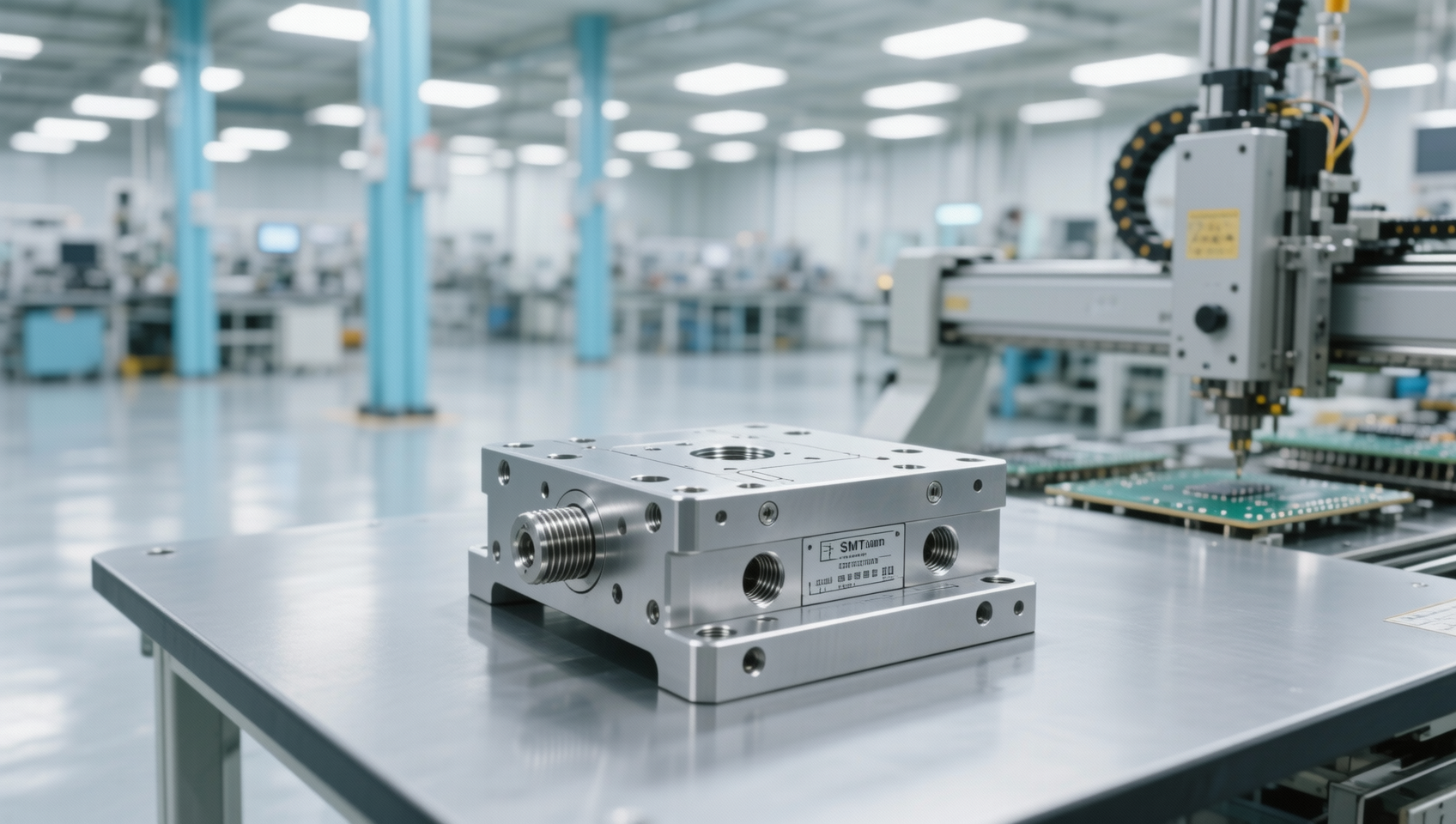
Asian Development Bank confirmed on April 24, 2024, an upward revision of Vietnam’s 2026 GDP growth forecast to 7.2%, driven primarily by rapid expansion in electronics assembly capacity. This surge is directly increasing demand for high-precision SMT pick-and-place machines—and, critically, for the CNC-machined precision fixtures used to calibrate and support them. Electronics manufacturing services (EMS), contract manufacturers, and fixture supply chain stakeholders should closely monitor implications for lead times, regional sourcing strategies, and inventory planning.
Event Overview
On April 24, 2024, the Asian Development Bank announced it had raised its GDP growth forecast for Vietnam in 2026 from a prior estimate to 7.2%. The revision was explicitly attributed to accelerated expansion of electronics assembly capacity in the country. As a result, demand for SMT production lines has risen sharply—driving a 65% year-on-year increase in imports of high-precision CNC-machined fixtures. In response to concentrated order volume, leading Chinese fixture manufacturers have extended standard delivery lead times from 8 weeks to 12 weeks. These suppliers are now prioritizing orders from clients with Vendor Managed Inventory (VMI) warehouse arrangements in Vietnam and other Southeast Asian markets.
Industries Affected
Direct Trade Enterprises (Exporters/Importers)
Companies engaged in cross-border trade of CNC-machined fixtures—particularly those exporting from China to Vietnam—are experiencing compressed planning windows and tighter capacity allocation. The extension of standard lead times to 12 weeks signals constrained near-term throughput, requiring earlier order placement and revised shipment scheduling.
Electronics Contract Manufacturers (EMS/CMs)
EMS providers establishing or scaling SMT lines in Vietnam face indirect but material delays: longer fixture procurement cycles can bottleneck line commissioning, calibration, and ramp-up timelines. Fixture availability now directly affects new line deployment schedules—and therefore impacts customer delivery commitments.
Fixture Manufacturing & Precision Machining Firms
Chinese CNC fixture makers are adjusting operational priorities—notably shifting capacity toward VMI-supported customers and de-prioritizing spot orders. This reflects both demand concentration and strategic emphasis on predictable, recurring fulfillment over transactional sales.
Supply Chain & Distribution Partners in Southeast Asia
Distributors and local service partners serving Vietnamese electronics factories are seeing increased pressure to provide localized technical support—including on-site fixture calibration and validation. The shift suggests growing demand for bundled logistics + calibration service packages, rather than standalone hardware supply.
What Stakeholders Should Monitor and Do Now
Secure Q3 2024 Capacity Early
Given the current 12-week standard lead time and priority given to VMI-aligned orders, channel partners and EMS firms planning SMT line expansions in Vietnam should finalize fixture purchase commitments by early June 2024 to ensure Q3 delivery and installation readiness.
Evaluate Localized Calibration Service Packages
Instead of relying solely on factory-shipped fixtures, stakeholders should assess whether local calibration, verification, and adjustment services—offered by distributors or third-party metrology providers in Vietnam—are available and validated for SMT process compliance (e.g., IPC-A-610, J-STD-001).
Review VMI Eligibility and Terms
Manufacturers and distributors should clarify with Chinese fixture suppliers whether their existing VMI arrangements meet the updated prioritization criteria—and if not, what minimum inventory commitment or forecasting discipline is required to qualify for preferential scheduling.
Track ADB and Vietnamese Government Updates on Electronics Incentives
The ADB’s GDP revision reflects policy momentum behind electronics manufacturing; subsequent announcements on tax incentives, import duty exemptions for capital equipment, or industrial park development may further influence fixture demand patterns and regional sourcing decisions.
Editorial Observation / Industry Insight
This development is best understood not as an isolated supply delay, but as an early-stage signal of structural tightening in a critical enabler segment for Southeast Asia’s electronics assembly growth. Analysis shows that fixture lead times are often a leading indicator of broader capacity strain across precision machining ecosystems—not just in China, but increasingly across ASEAN-based tooling hubs. Observably, the 65% YoY import growth in CNC fixtures correlates more closely with upstream capital expenditure (CapEx) cycles than with final product output, suggesting that the current bottleneck reflects investment acceleration—not just production volume. From an industry perspective, this moment highlights how infrastructure-enabling components—often overlooked in macro trade data—can become pacing items for regional manufacturing scale-up.
It is more accurate to interpret this as an emerging operational constraint rather than a fully formed market shift. While fixture lead times have extended, there is no public indication yet of sustained price increases, widespread substitution, or relocation of fixture production to Vietnam itself. Therefore, the situation remains one of near-term scheduling pressure—not systemic shortage.
Conclusion
This update underscores how localized manufacturing expansion—here, Vietnam’s electronics assembly growth—ripples through global precision component supply chains in measurable, time-sensitive ways. For stakeholders, the core implication is procedural: fixture procurement must now be integrated earlier into SMT line planning, with explicit attention to regional service capabilities and contractual terms governing capacity access. Rather than signaling a fundamental reshaping of the fixture supply chain, it reflects a temporary but consequential phase of demand compression—a condition best managed through disciplined forecasting, pre-emptive ordering, and localized technical enablement.
Information Sources
Primary source: Asian Development Bank (ADB), official announcement dated April 24, 2024. No additional sources, policy documents, or manufacturer statements beyond those cited in the original input were referenced. The extension of lead times to 12 weeks and the 65% YoY import growth figure are reported as confirmed operational developments by Chinese fixture manufacturers—though specific company names or aggregated trade data (e.g., customs codes, HS classifications) were not disclosed in the input and remain subject to independent verification.
Get weekly intelligence in your inbox.
No noise. No sponsored content. Pure intelligence.
 Apr 29, 2026USITC Launches Section 337 Investigation into Chinese Wi-Fi 7 RF ModulesUSITC Launches Section 337 Investigation into Chinese Wi-Fi 7 RF Modules
 Apr 29, 2026Côte d'Ivoire Launches $500M Grid Storage Tender, Chinese BESS Fast-TrackedCôte d'Ivoire Launches $500M Grid Storage Tender, Chinese BESS Fast-Tracked
 Apr 29, 2026Morocco Enforces IEC 61427-2:2025 PV Mounting Certification from Q3 2026Morocco Enforces IEC 61427-2:2025 PV Mounting Certification from Q3 2026
 Apr 29, 2026UAE Becomes Global AI Hub: New CE-ADAS+ Path for Chinese Smart Industrial EquipmentUAE Becomes Global AI Hub: New CE-ADAS+ Path for Chinese Smart Industrial Equipment
 Apr 29, 2026Red Sea Crisis: Suez Canal Fees Up 12%, China-Europe Rail Premium at 35%Red Sea Crisis: Suez Canal Fees Up 12%, China-Europe Rail Premium at 35%
 Apr 29, 2026TÜV Rheinland Launches Fast-Track Certification for Chinese Warehouse RobotsTÜV Rheinland Launches Fast-Track Certification for Chinese Warehouse Robots
 Apr 29, 2026Vietnam's SMT Expansion Drives CNC Fixture Export DelaysVietnam's SMT Expansion Drives CNC Fixture Export Delays
![]() Apr 29, 2026NEOM Smart Infrastructure Phase II Opens Bidding: Chinese PV Mounting & BESS Pre-QualifiedNEOM Smart Infrastructure Phase II Opens Bidding: Chinese PV Mounting & BESS Pre-Qualified
Apr 29, 2026NEOM Smart Infrastructure Phase II Opens Bidding: Chinese PV Mounting & BESS Pre-QualifiedNEOM Smart Infrastructure Phase II Opens Bidding: Chinese PV Mounting & BESS Pre-Qualified Apr 29, 2026EU Enforces Battery Passport for Energy Storage Imports from July 2026EU Enforces Battery Passport for Energy Storage Imports from July 2026
 Apr 29, 2026Maine Bans New >20MW Data Centers — AI Hardware Delivery ImpactedMaine Bans New >20MW Data Centers — AI Hardware Delivery Impacted
 Apr 28, 2026Suez Canal Fee Hike & China-Europe Rail Premium: Q2 2026 ImpactSuez Canal Fee Hike & China-Europe Rail Premium: Q2 2026 Impact
 Apr 28, 2026TÜV Rheinland Launches Fast-Track Certification for Chinese Warehouse RobotsTÜV Rheinland Launches Fast-Track Certification for Chinese Warehouse Robots
 Apr 28, 2026EU Enforces Battery Passport Rule for Chinese ESS Exports from 2027EU Enforces Battery Passport Rule for Chinese ESS Exports from 2027
 Apr 28, 2026ADB Raises Vietnam GDP Forecast to 7.2%: SMT & Precision Fixture Demand RisesADB Raises Vietnam GDP Forecast to 7.2%: SMT & Precision Fixture Demand Rises
 Apr 28, 2026US ITC Launches Section 337 Investigation into Chinese Wi-Fi 7 RF FEMsUS ITC Launches Section 337 Investigation into Chinese Wi-Fi 7 RF FEMs
 Apr 28, 2026Côte d'Ivoire Opens $500M Power Tender: Chinese BESS Get Fast-Track AccessCôte d'Ivoire Opens $500M Power Tender: Chinese BESS Get Fast-Track Access
 Apr 28, 2026BP’s Algeria East Basin Permit Spurs Valve Demand, Lead Times Extend to 18 WeeksBP’s Algeria East Basin Permit Spurs Valve Demand, Lead Times Extend to 18 Weeks
") Apr 28, 2026Vietnam Mandates V-Trust for Smart Appliances Export (July 2026)Vietnam Mandates V-Trust for Smart Appliances Export (July 2026)
Apr 28, 2026Vietnam Mandates V-Trust for Smart Appliances Export (July 2026)Vietnam Mandates V-Trust for Smart Appliances Export (July 2026) Apr 28, 2026Morocco Enforces PV Mounting Structure Certification from Q3 2026Morocco Enforces PV Mounting Structure Certification from Q3 2026
 Apr 28, 2026UAE Establishes AI Hub Status, Opens CE-ADAS+ Pathway for Chinese Smart Industrial EquipmentUAE Establishes AI Hub Status, Opens CE-ADAS+ Pathway for Chinese Smart Industrial Equipment
 Apr 27, 2026Algeria’s Oil & Steel FDI Push Opens Valve, Corrosion-Resistant Material OrdersAlgeria’s Oil & Steel FDI Push Opens Valve, Corrosion-Resistant Material Orders
 Apr 27, 2026Azerbaijan’s New PV Mounting Standard Opens Path for Chinese SuppliersAzerbaijan’s New PV Mounting Standard Opens Path for Chinese Suppliers
 Apr 27, 2026Fitch Cuts East Africa Growth Forecasts, Raises Cross-Border Trade RisksFitch Cuts East Africa Growth Forecasts, Raises Cross-Border Trade Risks
 Apr 27, 2026ADB Raises Vietnam GDP Forecast to 7.2% on Electronics Export GrowthADB Raises Vietnam GDP Forecast to 7.2% on Electronics Export Growth
 Apr 27, 2026Maine Halts Large Data Centers: AI Server Export ImpactMaine Halts Large Data Centers: AI Server Export Impact
 Apr 27, 2026OFID $500M for Côte d'Ivoire: Boost to Factory Automation & Warehouse RoboticsOFID $500M for Côte d'Ivoire: Boost to Factory Automation & Warehouse Robotics
 Apr 27, 2026Morocco Ranks 4th in EU Energy Aid to AfricaMorocco Ranks 4th in EU Energy Aid to Africa