Red Sea Crisis: Suez Canal Fees Up 12%, China-Europe Rail Premium at 35%
On April 26, 2026, the Suez Canal Authority (SCA) announced a 12% quarterly increase in transit fees, coinciding with sustained Red Sea disruptions. This development directly affects cross-border freight operators, logistics service providers, and export-oriented manufacturing enterprises engaged in Europe–Asia trade — particularly those managing time-sensitive or high-value shipments.
Event Overview
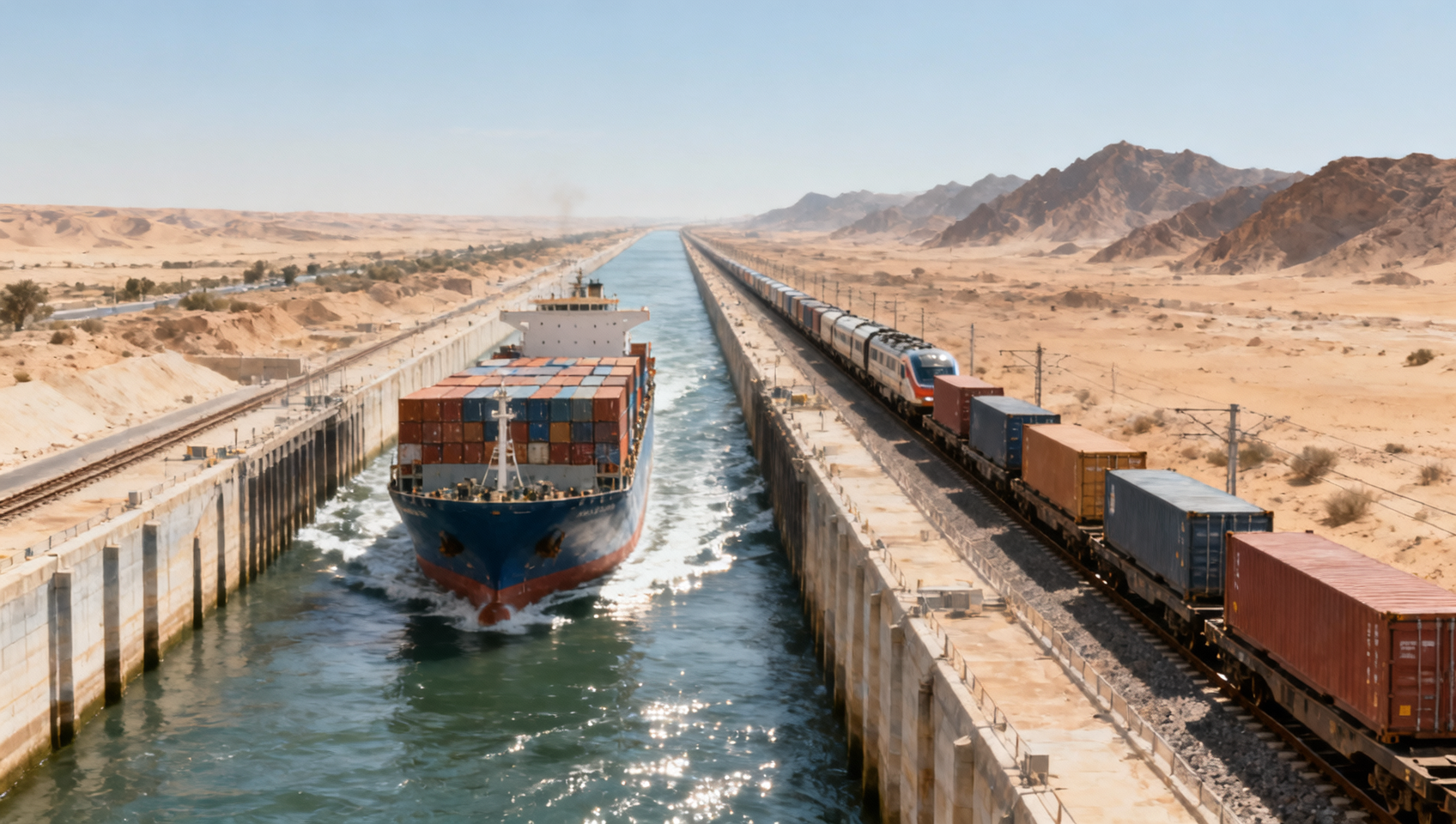
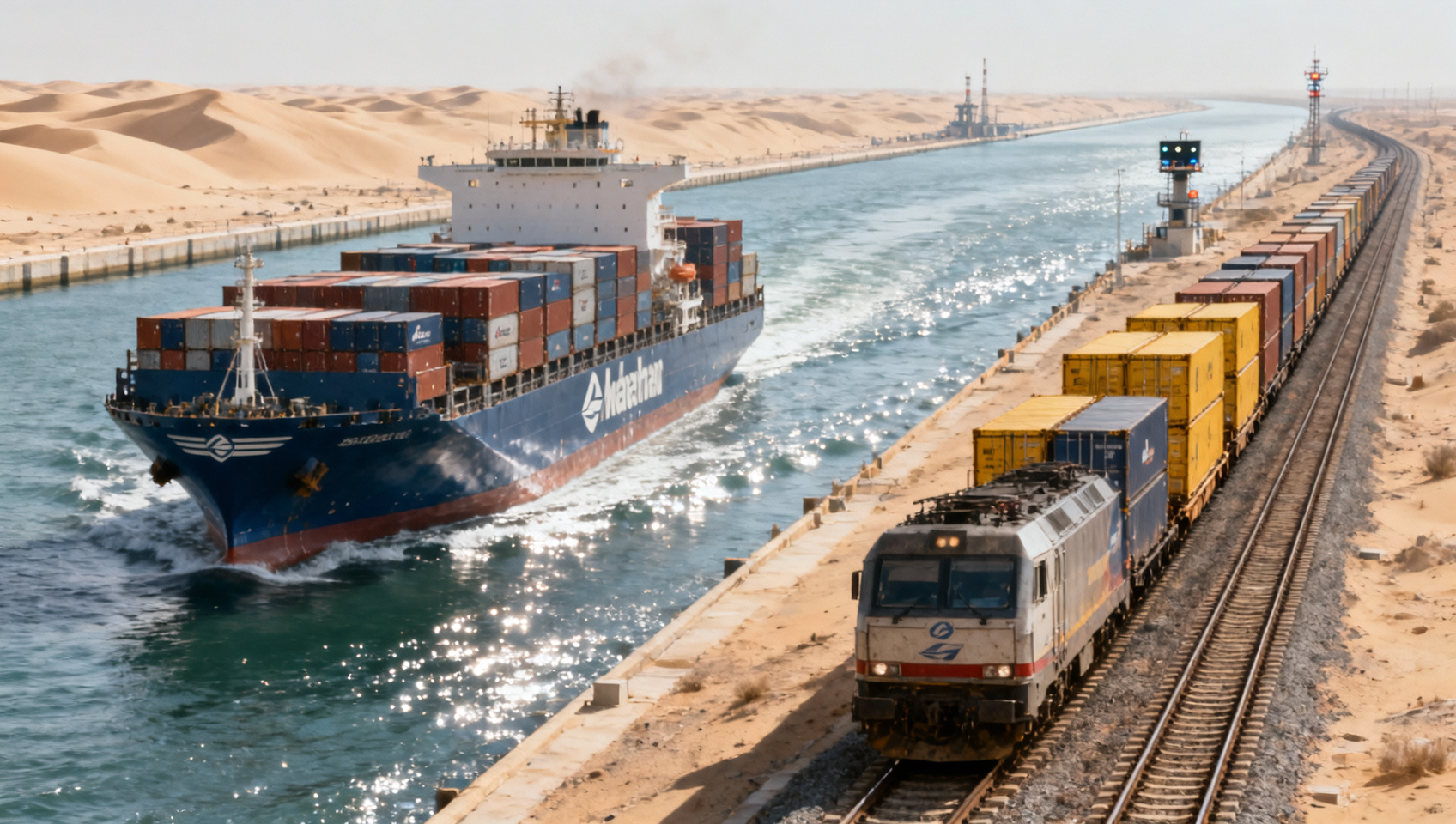
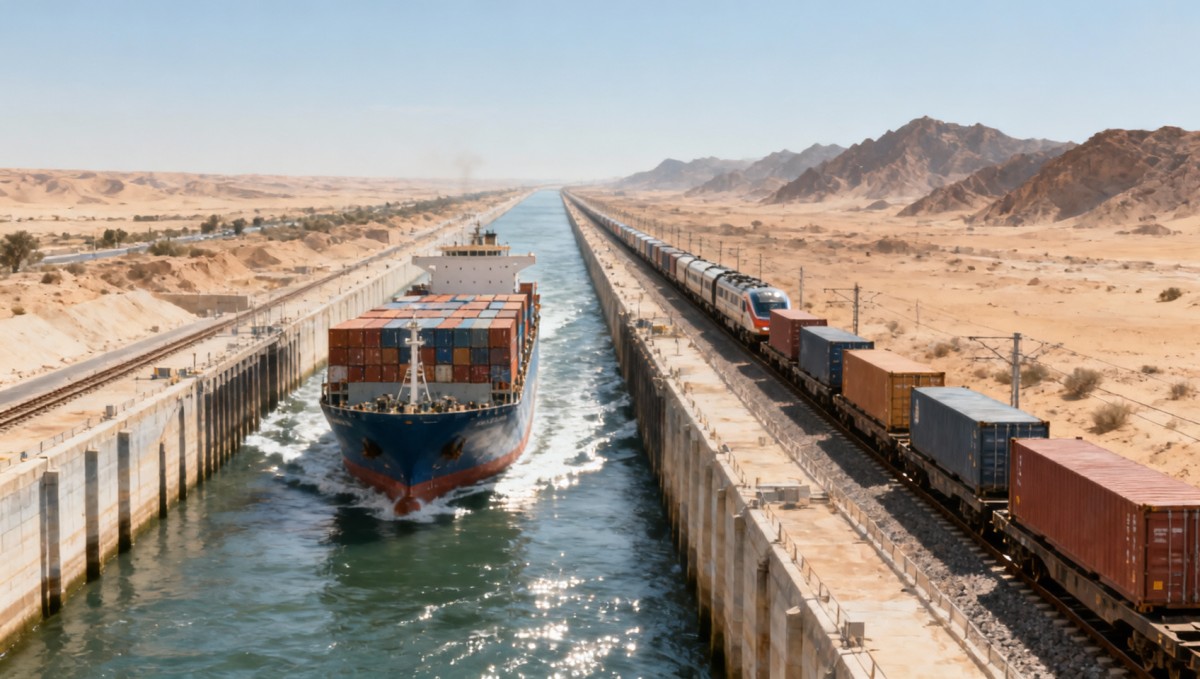
On April 26, 2026, the Suez Canal Authority (SCA) confirmed a 12% increase in vessel transit fees for Q2 2026. Concurrently, maritime rerouting via the Cape of Good Hope remains standard practice, adding 12–15 days to Asia–Europe voyage durations. Separately, China–Europe rail services reported a sustained 98% container utilization rate for three consecutive weeks, with spot market premium for available capacity holding at 35%. These figures were publicly disclosed by official and industry monitoring channels as of late April 2026.
Industries Affected by Segment
Direct Trading Enterprises
These include import/export companies executing end-to-end cross-border sales contracts. They face dual pressure: higher ocean freight surcharges due to SCA’s fee hike and longer transit windows from Cape routing, reducing delivery predictability. Meanwhile, rail-based alternatives are constrained by capacity scarcity and elevated pricing, compressing margin flexibility on fixed-price agreements.
Raw Material Procurement Enterprises
Firms sourcing components or commodities from Europe (e.g., specialty chemicals, precision parts) experience extended lead times and increased landed cost volatility. With maritime delays compounding inventory planning uncertainty, procurement cycles requiring strict just-in-time alignment are now at heightened risk of disruption.
Contract Manufacturing & Export-Oriented Factories
Manufacturers fulfilling OEM/ODM orders for European clients encounter tighter production–shipping coordination windows. The 12–15-day maritime extension challenges adherence to contractual delivery dates, while rail’s 35% premium limits cost-effective substitution — especially for lower-margin finished goods.
Supply Chain Service Providers
Freight forwarders, NVOCCs, and multimodal integrators must recalibrate rate cards and service commitments. LCL (Less-than-Container-Load) offerings show declining schedule reliability, per stated observation. Their operational planning now requires real-time tracking of both SCA policy updates and inland rail terminal capacity — notably at Khorgos, Kazakhstan.
What Relevant Enterprises or Practitioners Should Monitor and Do Now
Track official updates on SCA fee structures and potential Q3 adjustments
The Q2 fee increase is confirmed; however, SCA has not indicated whether this reflects a one-off adjustment or signals a revised baseline. Stakeholders should monitor SCA’s official communications for clarity on duration, applicability conditions (e.g., vessel type, cargo category), and any phased implementation.
Assess exposure by shipment profile — prioritize FCL rail for high-value, time-critical orders
Analysis shows that LCL reliability has declined under current congestion. For orders where cargo value exceeds USD 15,000 per container or delivery window is ≤25 days from order confirmation, locking in full-container-load (FCL) rail capacity — despite the 35% premium — delivers stronger predictability than ocean alternatives.
Monitor Khorgos (Kazakhstan) port capacity expansion progress
Observably, the newly expanded Khorgos Gateway rail terminal is cited as a near-term capacity lever. While no official throughput figures have been released, its operational ramp-up could influence spot pricing and booking lead times for China–Europe rail services in late Q2 and early Q3. Early engagement with terminal agents is advisable.
Review and adjust safety stock levels for Europe-bound SKUs
From an inventory management perspective, the combined effect of longer maritime legs and constrained rail availability implies a structural increase in average supply chain cycle time. Companies should reassess minimum reorder points and buffer stocks — particularly for fast-moving or seasonally sensitive items destined for EU markets.
Editorial Perspective / Industry Observation
This update is best understood not as an isolated tariff change, but as a reinforcing signal of prolonged infrastructure stress in the Europe–Asia corridor. Analysis shows the 12% SCA fee hike aligns with observed carrier surcharge pass-throughs, suggesting cost absorption capacity among shipping lines is nearing exhaustion. Meanwhile, the sustained 35% rail premium — unchanged for three weeks — indicates demand is outpacing near-term supply elasticity. It is more accurately interpreted as evidence of systemic constraint than temporary volatility. Continuous monitoring remains essential, as further adjustments in either modality could trigger cascading renegotiations across long-term logistics contracts.
Conclusion
For cross-border freight stakeholders, this development underscores a shift from short-term contingency planning to medium-term network reconfiguration. It does not yet constitute a permanent modal shift, but it does require disciplined prioritization: rail FCL for critical lanes, rigorous LCL exception handling, and proactive engagement with emerging inland capacity nodes. The situation remains fluid — and warrants structured, data-informed response rather than reactive adaptation.
Information Sources
Main source: Suez Canal Authority (SCA) official announcement dated April 26, 2026.
Additional context: Publicly reported China–Europe rail utilization metrics and Khorgos terminal status updates issued by international rail logistics monitoring platforms (as of April 2026).
Note: Khorgos terminal throughput data and SCA’s Q3 fee policy remain pending official release and are under active observation.
Get weekly intelligence in your inbox.
No noise. No sponsored content. Pure intelligence.
 Apr 29, 2026USITC Launches Section 337 Investigation into Chinese Wi-Fi 7 RF ModulesUSITC Launches Section 337 Investigation into Chinese Wi-Fi 7 RF Modules
 Apr 29, 2026Côte d'Ivoire Launches $500M Grid Storage Tender, Chinese BESS Fast-TrackedCôte d'Ivoire Launches $500M Grid Storage Tender, Chinese BESS Fast-Tracked
 Apr 29, 2026Morocco Enforces IEC 61427-2:2025 PV Mounting Certification from Q3 2026Morocco Enforces IEC 61427-2:2025 PV Mounting Certification from Q3 2026
 Apr 29, 2026UAE Becomes Global AI Hub: New CE-ADAS+ Path for Chinese Smart Industrial EquipmentUAE Becomes Global AI Hub: New CE-ADAS+ Path for Chinese Smart Industrial Equipment
 Apr 29, 2026Red Sea Crisis: Suez Canal Fees Up 12%, China-Europe Rail Premium at 35%Red Sea Crisis: Suez Canal Fees Up 12%, China-Europe Rail Premium at 35%
 Apr 29, 2026TÜV Rheinland Launches Fast-Track Certification for Chinese Warehouse RobotsTÜV Rheinland Launches Fast-Track Certification for Chinese Warehouse Robots
 Apr 29, 2026Vietnam's SMT Expansion Drives CNC Fixture Export DelaysVietnam's SMT Expansion Drives CNC Fixture Export Delays
![]() Apr 29, 2026NEOM Smart Infrastructure Phase II Opens Bidding: Chinese PV Mounting & BESS Pre-QualifiedNEOM Smart Infrastructure Phase II Opens Bidding: Chinese PV Mounting & BESS Pre-Qualified
Apr 29, 2026NEOM Smart Infrastructure Phase II Opens Bidding: Chinese PV Mounting & BESS Pre-QualifiedNEOM Smart Infrastructure Phase II Opens Bidding: Chinese PV Mounting & BESS Pre-Qualified Apr 29, 2026EU Enforces Battery Passport for Energy Storage Imports from July 2026EU Enforces Battery Passport for Energy Storage Imports from July 2026
 Apr 29, 2026Maine Bans New >20MW Data Centers — AI Hardware Delivery ImpactedMaine Bans New >20MW Data Centers — AI Hardware Delivery Impacted
 Apr 28, 2026Suez Canal Fee Hike & China-Europe Rail Premium: Q2 2026 ImpactSuez Canal Fee Hike & China-Europe Rail Premium: Q2 2026 Impact
 Apr 28, 2026TÜV Rheinland Launches Fast-Track Certification for Chinese Warehouse RobotsTÜV Rheinland Launches Fast-Track Certification for Chinese Warehouse Robots
 Apr 28, 2026EU Enforces Battery Passport Rule for Chinese ESS Exports from 2027EU Enforces Battery Passport Rule for Chinese ESS Exports from 2027
 Apr 28, 2026ADB Raises Vietnam GDP Forecast to 7.2%: SMT & Precision Fixture Demand RisesADB Raises Vietnam GDP Forecast to 7.2%: SMT & Precision Fixture Demand Rises
 Apr 28, 2026US ITC Launches Section 337 Investigation into Chinese Wi-Fi 7 RF FEMsUS ITC Launches Section 337 Investigation into Chinese Wi-Fi 7 RF FEMs
 Apr 28, 2026Côte d'Ivoire Opens $500M Power Tender: Chinese BESS Get Fast-Track AccessCôte d'Ivoire Opens $500M Power Tender: Chinese BESS Get Fast-Track Access
 Apr 28, 2026BP’s Algeria East Basin Permit Spurs Valve Demand, Lead Times Extend to 18 WeeksBP’s Algeria East Basin Permit Spurs Valve Demand, Lead Times Extend to 18 Weeks
") Apr 28, 2026Vietnam Mandates V-Trust for Smart Appliances Export (July 2026)Vietnam Mandates V-Trust for Smart Appliances Export (July 2026)
Apr 28, 2026Vietnam Mandates V-Trust for Smart Appliances Export (July 2026)Vietnam Mandates V-Trust for Smart Appliances Export (July 2026) Apr 28, 2026Morocco Enforces PV Mounting Structure Certification from Q3 2026Morocco Enforces PV Mounting Structure Certification from Q3 2026
 Apr 28, 2026UAE Establishes AI Hub Status, Opens CE-ADAS+ Pathway for Chinese Smart Industrial EquipmentUAE Establishes AI Hub Status, Opens CE-ADAS+ Pathway for Chinese Smart Industrial Equipment
 Apr 27, 2026Algeria’s Oil & Steel FDI Push Opens Valve, Corrosion-Resistant Material OrdersAlgeria’s Oil & Steel FDI Push Opens Valve, Corrosion-Resistant Material Orders
 Apr 27, 2026Azerbaijan’s New PV Mounting Standard Opens Path for Chinese SuppliersAzerbaijan’s New PV Mounting Standard Opens Path for Chinese Suppliers
 Apr 27, 2026Fitch Cuts East Africa Growth Forecasts, Raises Cross-Border Trade RisksFitch Cuts East Africa Growth Forecasts, Raises Cross-Border Trade Risks
 Apr 27, 2026ADB Raises Vietnam GDP Forecast to 7.2% on Electronics Export GrowthADB Raises Vietnam GDP Forecast to 7.2% on Electronics Export Growth
 Apr 27, 2026Maine Halts Large Data Centers: AI Server Export ImpactMaine Halts Large Data Centers: AI Server Export Impact
 Apr 27, 2026OFID $500M for Côte d'Ivoire: Boost to Factory Automation & Warehouse RoboticsOFID $500M for Côte d'Ivoire: Boost to Factory Automation & Warehouse Robotics
 Apr 27, 2026Morocco Ranks 4th in EU Energy Aid to AfricaMorocco Ranks 4th in EU Energy Aid to Africa