
How DALI Smart Street Lighting Improves Control, Maintenance, and Energy Savings
Outdoor lighting problems often look simple from a distance. A road seems too dark in one section, a parking area stays fully lit long after traffic drops, or maintenance teams keep receiving vague complaints like “lamp out near the gate” without knowing which fixture is actually failing. For the people coordinating these systems, the frustration usually comes from the gap between visible symptoms and usable control. The lights are on, but the network is hard to manage. The schedule exists, but it does not match real operating conditions. Faults happen, yet finding them still takes manual effort.
If you are responsible for a street, campus, logistics park, industrial road, or municipal upgrade, that gap can turn into repeated site visits, unclear maintenance priorities, and energy waste that is difficult to explain. In many projects, the issue is not only the luminaires themselves. It is the lack of a control structure that can address fixtures individually, report status in a usable way, and support gradual adjustment instead of all-or-nothing operation. This is where smart street lighting DALI becomes relevant: not as a buzzword, but as a practical method for improving control logic, maintenance visibility, and energy use across outdoor lighting assets.
Many teams first look at lighting upgrades through the fixture lens alone. They compare wattage, beam angle, housing protection, or driver type. Those details matter, but they do not solve the operational problem if the lighting system still behaves like a blind network. A common mistake is to assume that installing efficient LED luminaires automatically creates a smart system. In reality, an efficient fixture without granular control may still run longer than needed, stay brighter than necessary, and remain difficult to diagnose when something goes wrong.
Another frequent misunderstanding is that digital lighting control is only useful for very large smart city deployments. In practice, the value often becomes clear in ordinary project conditions: mixed-use roads with changing activity levels, facility perimeters where security lighting cannot simply be switched off, loading zones that need time-based dimming, or urban streets where maintenance teams need clearer fault reporting. In these cases, DALI is less about complexity and more about making a lighting system easier to operate with intent.
Where older control setups usually start to break down
Traditional outdoor lighting arrangements often rely on broad switching groups, photocells, time clocks, or central commands that treat many fixtures as one block. That works to a point, especially for basic on/off behavior, but problems emerge when conditions vary across the site.
One row of luminaires may serve a pedestrian edge, another may light a vehicle route, and another may cover an access point that needs different nighttime behavior. If all of them are tied to the same logic, teams end up choosing between over-lighting and under-managing. The result is familiar: lights that remain at full output during low-use hours because no one wants to risk dark spots, or ad hoc manual overrides that stay in place longer than intended.
Maintenance becomes equally awkward. When there is no fixture-level communication, a failure may only be discovered through a complaint, a patrol, or a visible outage. Even after the issue is noticed, teams may still need to confirm whether the problem is the luminaire, the driver, the control gear, the line, or a scheduling conflict. This is one reason some sites feel as if they are always “catching up” on lighting maintenance instead of actually managing it.
Why DALI changes the working method, not just the hardware list
DALI brings a digital communication layer to the lighting system, allowing individual addressing, grouping, status exchange, and more precise dimming behavior than basic switching methods. For outdoor applications, that matters because streets and open areas rarely operate under one fixed pattern for the entire night.
With a DALI-based structure, the system can be organized around actual use rather than wiring convenience alone. Fixtures can be grouped by road segment, access route, zone function, or operational schedule. If project requirements change later, the control logic can often be adjusted without redesigning the entire installation approach. That flexibility is especially useful when traffic patterns evolve, site occupancy changes, or a phased infrastructure rollout leaves different areas at different maturity levels.
The maintenance side is where many engineering teams start to appreciate the practical value. Instead of relying only on visual inspection, they can work from clearer device-level information. That does not eliminate field work, but it makes field work more targeted. It becomes easier to know where attention is needed, which luminaires are behaving abnormally, and whether a reported issue reflects a local fixture problem or a wider control condition.
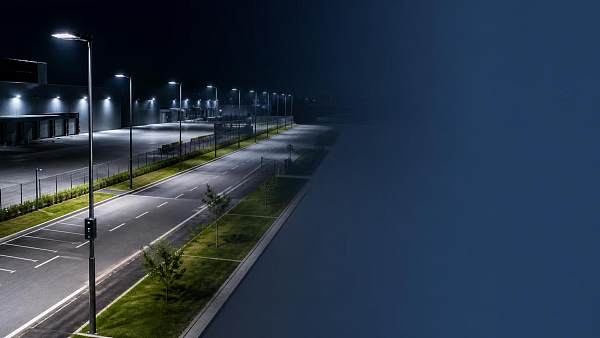
When smart street lighting DALI makes the most sense
Not every project needs the same level of control, and not every outdoor area benefits equally from fixture-level management. The strongest fit usually appears when at least two operational pressures are present at the same time.
One common situation is when the site has varied nighttime activity. A roadway may carry steady movement early in the evening, then drop sharply later. A logistics yard may need brighter light near active loading areas while peripheral roads can dim during quiet periods. A campus or industrial site may require security-oriented baseline lighting, but not maximum output everywhere all night. In these conditions, DALI helps translate operating reality into lighting behavior.
Another strong fit is when maintenance response is expensive or slow. If crews cover large areas, manage multiple facilities, or rely on contractor dispatch, even a modest reduction in unnecessary site visits can improve workflow. Better fault visibility does not replace maintenance planning, but it supports it with clearer information.
It also becomes useful when projects are expected to evolve. Many outdoor lighting systems are no longer static assets. They may later connect with monitoring platforms, occupancy logic in selected zones, or broader smart infrastructure plans. DALI does not solve every integration question by itself, but it creates a more structured lighting foundation than isolated fixtures with basic controls.
Sorting the real problems before specifying the system
Before selecting devices or writing control sequences, it helps to step back and identify the exact operational problem. A surprising number of lighting upgrades go off track because the project starts with technology preference rather than site diagnosis.
Start with three simple questions. First, where is control currently too coarse? This might be an entire street that switches together even though only part of it needs full output late at night. Second, where is maintenance information too weak? This often shows up in repeated night inspections, uncertain fault reports, or delays between failure and response. Third, where is energy use disconnected from real demand? That usually appears in areas that remain fully illuminated by default because teams lack confidence in more selective control.
Once those pain points are visible, the control strategy becomes easier to shape. Some projects mainly need better grouping and dimming schedules. Others need individual fixture addressing because fault localization is the main issue. Some need both, but only in priority zones. Thinking this way helps avoid overspecifying the entire network when only certain parts require advanced behavior.
Practical setup decisions that affect long-term usability
One of the most important decisions is how the lighting network will be logically organized. It is tempting to group fixtures based only on electrical routing, but operational grouping usually creates more value. A pedestrian edge, a roadway crossing, a perimeter lane, and a service entrance may sit on the same site but require different nighttime behavior. If they are grouped according to use, adjustments later become much easier.
Addressing discipline also matters more than people expect. A DALI network can provide fixture-level control, but that only helps if naming, mapping, and documentation are handled properly. If the commissioning records do not clearly link each address to a physical location, maintenance teams may still struggle when a device reports a fault. Good digital control can be undermined by poor labeling.
Dimming profiles should also be based on realistic site activity, not generic assumptions. Some locations benefit from stepped dimming at fixed times. Others need zone-specific schedules that reflect staggered operations. The best approach is usually the one that facility staff can understand and maintain without relying on constant specialist intervention.
Another point often missed during planning is nighttime recovery behavior. If there is a power interruption, override event, or maintenance reset, the lighting system should return to a clear and predictable state. That sounds minor during design review, but in live outdoor environments it can become a significant operating issue.
How control, maintenance, and energy savings connect in daily operation
These three benefits are often discussed separately, but in the field they are linked. Better control reduces the need for blanket full-output operation. Once teams trust that zones and fixtures can respond as intended, they are more comfortable using dimming schedules that reflect actual demand. That is where energy savings start to become practical rather than theoretical.
Maintenance improves because the system becomes easier to read. If a luminaire is not responding, the question is no longer limited to “is the light visibly on?” Teams can narrow the issue more quickly. In many projects, the real gain is not dramatic automation but reduced ambiguity. Less uncertainty means faster decisions about whether to monitor, dispatch, replace, or reconfigure.
Lighting quality also tends to stabilize when the control system supports finer adjustment. Instead of compensating for uncertainty by over-lighting the whole area, teams can tune different segments more deliberately. That can help maintain safer and more consistent visibility without treating every part of the site as if it has the same risk profile or traffic pattern.
Mistakes that create frustration even after a DALI upgrade
Some disappointing outcomes are not caused by the protocol but by the way the project is implemented. One common issue is specifying digital control without deciding who will actually manage schedules and changes after handover. If no one owns the logic, even a capable system can drift into a static setup that behaves little differently from old switching arrangements.
Another problem is trying to make every area equally intelligent from day one. In many outdoor projects, a phased approach is more workable. High-priority roads, access points, or maintenance-sensitive zones can justify fixture-level control first, while simpler areas keep more basic behavior. This avoids unnecessary complexity and gives the team room to build operating confidence.
There is also a tendency to focus heavily on central software while neglecting field documentation, commissioning records, and staff familiarity. Yet these practical details determine whether the system remains manageable six months later. If the platform can show a fault but the on-site team cannot quickly identify the actual fixture location, much of the maintenance advantage is lost.
Making the upgrade decision with fewer assumptions
If you are comparing options for an outdoor lighting project, it helps to judge smart street lighting DALI by workflow improvements rather than by feature lists alone. Ask whether your current setup lets you control zones in a way that matches real use, whether it helps you identify failures without unnecessary searching, and whether your energy profile is being shaped by operating need or by lack of confidence in the controls.
A DALI-based approach is usually easier to justify when the site has mixed lighting demands, ongoing maintenance pressure, or a clear need for fixture-level visibility. It may be less compelling where the application is very small, highly uniform, and unlikely to change. The point is not that every outdoor project needs the same architecture. The point is that many recurring lighting problems are really control problems in disguise.
For teams trying to reduce guesswork, that distinction matters. Once the lighting system can be addressed, grouped, adjusted, and monitored more precisely, the work shifts from reacting to complaints toward managing performance. That is often the real reason these systems are considered in the first place: not because digital control sounds advanced, but because basic operation has already shown its limits.
Get weekly intelligence in your inbox.
No noise. No sponsored content. Pure intelligence.
 Oct 08, 2026How Digital Health Improves Diagnostic Accuracy and Workflow in Clinical LabsHow Digital Health Improves Diagnostic Accuracy and Workflow in Clinical Labs
 Oct 07, 2026Selecting Voice Picking Systems for German Warehouses: Integration, Languages and ROISelecting Voice Picking Systems for German Warehouses: Integration, Languages and ROI
 Oct 06, 2026How to Choose Last Mile Dispatch Software for On-Time Delivery at ScaleHow to Choose Last Mile Dispatch Software for On-Time Delivery at Scale
 Oct 05, 2026Vietnam’s Consumer Electronics Market: Demand Shifts and Sourcing OpportunitiesVietnam’s Consumer Electronics Market: Demand Shifts and Sourcing Opportunities
 Oct 04, 2026Digital Health Investment Priorities for Providers: Improving Access, Outcomes, and EfficiencyDigital Health Investment Priorities for Providers: Improving Access, Outcomes, and Efficiency
 Oct 03, 2026How to Specify an FR4 Custom PCB Board for High-Voltage and High-Heat DesignsHow to Specify an FR4 Custom PCB Board for High-Voltage and High-Heat Designs
 Oct 02, 2026ERP Software Market Intelligence: Adoption, Pricing, and Vendor Signals to WatchERP Software Market Intelligence: Adoption, Pricing, and Vendor Signals to Watch
 Oct 01, 2026How to Select Calibrated Temperature Data Loggers for GMP Cold Storage MonitoringHow to Select Calibrated Temperature Data Loggers for GMP Cold Storage Monitoring
 Sep 30, 2026Custom Molded Rubber Pricing: What Drives Unit Cost and Tooling Fees?Custom Molded Rubber Pricing: What Drives Unit Cost and Tooling Fees?
 Sep 29, 2026How to Evaluate Energy Management Software Vendors for Multi-Site OperationsHow to Evaluate Energy Management Software Vendors for Multi-Site Operations
 Sep 28, 2026How to Select a DIN Rail Smart Meter for Multi-Circuit Energy MonitoringHow to Select a DIN Rail Smart Meter for Multi-Circuit Energy Monitoring
 Sep 27, 2026TWS Earbuds in Vietnam: Demand Drivers, Price Tiers, and Retail Channel OpportunitiesTWS Earbuds in Vietnam: Demand Drivers, Price Tiers, and Retail Channel Opportunities
 Sep 26, 2026How UAE Clinics Can Qualify a Smart Glucometer Supplier for Accuracy and ComplianceHow UAE Clinics Can Qualify a Smart Glucometer Supplier for Accuracy and Compliance
 Sep 25, 2026Buying Aesthetic Lasers in the USA: FDA Status, Wavelengths, and Service SupportBuying Aesthetic Lasers in the USA: FDA Status, Wavelengths, and Service Support
 Sep 24, 2026Laser Cutting Brass Sheet: How to Prevent Burrs and Heat Marks on Thin PartsLaser Cutting Brass Sheet: How to Prevent Burrs and Heat Marks on Thin Parts
 Sep 23, 2026How to Choose Lightweight ANC Headphones for Comfortable All-Day TravelHow to Choose Lightweight ANC Headphones for Comfortable All-Day Travel
 Sep 22, 2026IPX5 TWS Bluetooth Earbuds: What Protection Do They Offer for Workouts?IPX5 TWS Bluetooth Earbuds: What Protection Do They Offer for Workouts?
 Sep 21, 2026What to Look for in a Grid Integration Company for Utility-Scale Solar ProjectsWhat to Look for in a Grid Integration Company for Utility-Scale Solar Projects
 Sep 20, 2026Microgrid Controller Pricing: What Drives Cost in Commercial Energy Projects?Microgrid Controller Pricing: What Drives Cost in Commercial Energy Projects?
 Sep 19, 2026How to Choose a GaN Charger for Laptops Without Compromising Power or PortabilityHow to Choose a GaN Charger for Laptops Without Compromising Power or Portability
 Sep 18, 2026Floating Solar Farm Costs: CAPEX, OPEX, and the Site Factors That Shape ROIFloating Solar Farm Costs: CAPEX, OPEX, and the Site Factors That Shape ROI
 Sep 17, 2026Drone Delivery Solutions for Last-Mile Routes: Site, Payload, and Range PlanningDrone Delivery Solutions for Last-Mile Routes: Site, Payload, and Range Planning
 Sep 16, 2026When Low-Volume Electronics Manufacturing Makes More Sense Than Mass ProductionWhen Low-Volume Electronics Manufacturing Makes More Sense Than Mass Production
 Sep 15, 2026Wholesale WiFi Smart Switches: What Buyers Should Verify Before OrderingWholesale WiFi Smart Switches: What Buyers Should Verify Before Ordering
 Sep 14, 2026How to Select IoT Sensors for Reliable Monitoring in Harsh Industrial EnvironmentsHow to Select IoT Sensors for Reliable Monitoring in Harsh Industrial Environments
 Sep 13, 2026How Procurement Teams Can Improve Supplier Reliability With Supply Chain VisibilityHow Procurement Teams Can Improve Supplier Reliability With Supply Chain Visibility
 Sep 12, 2026Smart Manufacturing Trends 2026: What Leaders Should Prioritize for ROISmart Manufacturing Trends 2026: What Leaders Should Prioritize for ROI



























