
What Are Dual Channel TENS Units and When Are They Better Than Single Channel Models?
People searching for information on dual channel TENS units are usually not asking a narrow technical question. They are trying to decide whether the extra channel changes real-world usefulness enough to matter. In other words, does a dual channel model simply add features on paper, or does it meaningfully improve treatment flexibility, user adherence, and purchasing value compared with a single channel device?
That distinction matters because TENS devices sit at the intersection of home wellness, rehabilitation support, and healthcare technology. Buyers may include individual users, clinics, distributors, sourcing teams, or product researchers evaluating product tiers and user needs. For all of them, the practical question is the same: when does two-channel stimulation solve a real problem, and when is it unnecessary complexity?
What a dual channel TENS unit actually changes
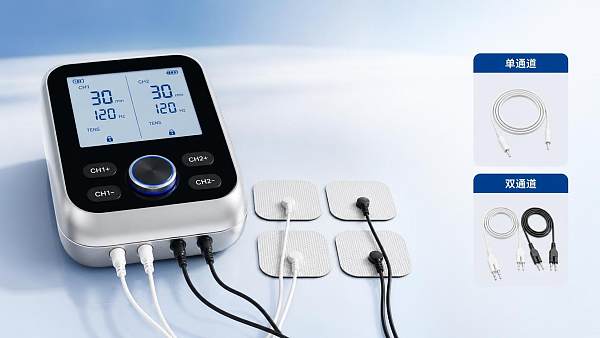
A TENS unit uses low-voltage electrical impulses delivered through electrode pads placed on the body. A single channel model controls one pair of outputs as one treatment path. A dual channel model controls two output paths, which typically means four electrodes can be used in two separate pairs. Depending on the device design, those two channels may be adjusted independently or partially independently for intensity and treatment pattern.
That sounds like a small engineering difference, but it changes how the device can be used. A dual channel model can support treatment on two areas at once, such as both shoulders, the lower back and hip, or two sides of the same muscle group. It can also help users shape a broader stimulation zone around one pain area, which is often more relevant than the basic “two places at once” explanation.
The point is not that dual channel devices are automatically better. It is that they offer more options in placement strategy, and for many users, electrode placement is where treatment usefulness is won or lost.
Why the single-versus-dual question matters more than it first appears
In market language, dual channel TENS units are often presented as the obvious upgrade path. That is only partly true. If a user consistently treats one small and localized pain point, a single channel device may be enough. The added controls of a dual channel model may not improve outcomes if the underlying use case is simple and stable.
But in actual usage, pain and muscle discomfort are often not perfectly localized. A person may have lower back pain that radiates across one side, post-exercise soreness in both legs, or a rehabilitation need involving adjacent muscle groups. In those situations, a single channel unit can become restrictive. Users may need to move pads repeatedly, run multiple sessions, or compromise on placement. That is where dual channel devices begin to show practical value.
For information researchers, this is the key framing: the extra channel is less about “more power” and more about treatment geometry, workflow efficiency, and fit to variable body conditions.
When dual channel models are clearly the better fit
There are several scenarios where a dual channel device usually makes more sense than a single channel model.
1. When pain or stimulation needs are bilateral
Many use cases involve both sides of the body rather than one isolated point. Neck and shoulder tension, knee discomfort, calf recovery, and forearm overuse can appear symmetrically or in paired muscle groups. A dual channel unit allows simultaneous treatment without forcing users to choose one side first.
2. When one pain area needs a wider electrode layout
Some users do not need two separate treatment regions; they need a more complete setup around one region. For example, lower back discomfort may benefit from a four-pad arrangement that frames the area more effectively than a two-pad arrangement. In these cases, the second channel is not “extra coverage” in a marketing sense. It is part of a more adaptable placement strategy.
3. When rehabilitation use is less predictable
In home rehab or therapy-adjacent environments, needs can shift over time. One week the focus may be quadriceps support, another week hamstring tension, and later both. Dual channel devices are often easier to keep useful across changing recovery stages because they do not lock the user into one simple setup.
4. When time efficiency matters
For users treating multiple areas regularly, sequential treatment can become a barrier. If a device requires two separate cycles every day, adherence may decline. A dual channel model can reduce session fragmentation. In a consumer or clinic context, convenience is not a minor issue; it often affects whether the device is used consistently enough to deliver any practical benefit at all.
5. When a product is positioned for broader market appeal
From a commercial standpoint, dual channel devices often fit better in mid-range or more versatile product lines. Manufacturers and distributors targeting a wider user base may prefer them because they address more scenarios without requiring customers to trade up later. That does not make them universally superior, but it can make them commercially easier to position.
When a single channel unit may still be the smarter choice
It is easy to assume that more channels equal better value. That is not always correct.
If the user profile is straightforward, such as occasional treatment of one small area, a single channel device may be easier to operate and fully sufficient. This is especially relevant for first-time users who may already feel uncertain about pad placement, program settings, or stimulation intensity. A simpler interface can reduce setup errors and lower abandonment risk.
Single channel models may also be suitable in entry-level sourcing strategies where affordability, portability, or a narrow retail price band matters more than flexibility. In some product categories, simplicity supports better sell-through than feature expansion.
So the decision should not be framed as basic versus advanced. It should be framed as narrow-fit versus flexible-fit.
Common assumptions that do not fully hold up
Several common claims around dual channel TENS units deserve a more careful reading.
“Dual channel means stronger treatment”
Not necessarily. Channel count and stimulation intensity are different variables. A dual channel device may offer more placement flexibility, but that does not automatically mean it delivers stronger or clinically better stimulation. Actual performance depends on waveform design, intensity range, program quality, pad placement, and user suitability.
“More channels always mean better outcomes”
Also not necessarily. A poorly understood device with too many options can create confusion. If users place pads incorrectly or use ineffective settings, added channels do not solve the underlying problem. Ease of use, instruction quality, and fit to the intended user still matter.
“Dual channel is only for professional settings”
This is outdated in many markets. Many home-use devices now include dual channel capability because consumer expectations have shifted toward greater versatility. The distinction today is less about professional versus home use and more about whether the interface, safety labeling, and intended-use design are appropriate for the target user.
What researchers and buyers should examine beyond channel count
If someone is comparing dual channel TENS units for sourcing, evaluation, or product research, the number of channels should be only one part of the assessment. Several other factors often have more impact on actual usefulness.
- Independent adjustability: Can each channel be controlled separately, or are they effectively linked?
- Electrode compatibility: What pad types, connector formats, and replacement supply options are supported?
- Program logic: Are treatment modes clear and purposeful, or just numerous?
- User interface: Can non-specialist users understand setup without repeated trial and error?
- Power source and runtime: Rechargeable convenience and battery stability may affect long-term satisfaction.
- Build quality: Lead wires, button durability, and pad adhesion consistency often matter more than headline features.
- Documentation and labeling: Instructions, contraindications, and intended-use statements should be clear and compliant.
For B2B buyers, this matters because return rates and support burden are often driven by user confusion, accessory replacement issues, and durability complaints rather than by the core stimulation function alone.
A practical comparison for decision-makers
How this fits into broader healthcare technology and consumer device trends
Dual channel TENS units are part of a wider shift in healthcare-adjacent devices toward more adaptable home-use functionality. Users increasingly expect devices to handle more than one scenario, especially when they are making out-of-pocket purchases. That pushes manufacturers toward designs that balance flexibility with simplicity.
At the same time, global device markets are becoming more sensitive to compliance, labeling clarity, and product credibility. In some jurisdictions, claims around pain management, rehabilitation support, or wellness positioning may trigger different regulatory expectations【待核实】. For companies evaluating product expansion, channel count is a minor technical feature compared with the larger questions of classification, instructions for use, safety communication, and post-sale support.
There is also a supply-side implication. Devices that appear similar at a glance can differ substantially in controller quality, waveform consistency, accessory ecosystem, and manufacturing discipline. For importers or private-label buyers, the visible specification sheet does not tell the full story. A dual channel device sourced from a weak supplier can create more downstream issues than a well-executed single channel model from a reliable one.
What to watch if you are evaluating this category now
For researchers, one useful way to think about dual channel TENS units is to separate the buying question into three layers.
- User reality: Is the actual use case single-point and stable, or multi-point and variable?
- Device design: Does the extra channel improve practical treatment options without making operation unnecessarily difficult?
- Commercial quality: Are documentation, accessories, durability, and supplier credibility strong enough to support the product beyond the first sale?
If the answer to the first question is simple and narrow, a single channel unit may remain the right fit. If the user profile is broader, more bilateral, or more changeable over time, dual channel models often justify their place. Not because they are inherently more advanced, but because they better match how many people actually use this type of device.
That is usually the most useful conclusion for an information-stage reader: dual channel TENS units are worth attention when flexibility, coverage, and repeat usability matter. They are less compelling when the need is highly specific and unlikely to change. The difference sounds small on a product page, but in practice it often defines whether the device feels limiting after a few weeks of use.
Get weekly intelligence in your inbox.
No noise. No sponsored content. Pure intelligence.
 Oct 08, 2026How Digital Health Improves Diagnostic Accuracy and Workflow in Clinical LabsHow Digital Health Improves Diagnostic Accuracy and Workflow in Clinical Labs
 Oct 07, 2026Selecting Voice Picking Systems for German Warehouses: Integration, Languages and ROISelecting Voice Picking Systems for German Warehouses: Integration, Languages and ROI
 Oct 06, 2026How to Choose Last Mile Dispatch Software for On-Time Delivery at ScaleHow to Choose Last Mile Dispatch Software for On-Time Delivery at Scale
 Oct 05, 2026Vietnam’s Consumer Electronics Market: Demand Shifts and Sourcing OpportunitiesVietnam’s Consumer Electronics Market: Demand Shifts and Sourcing Opportunities
 Oct 04, 2026Digital Health Investment Priorities for Providers: Improving Access, Outcomes, and EfficiencyDigital Health Investment Priorities for Providers: Improving Access, Outcomes, and Efficiency
 Oct 03, 2026How to Specify an FR4 Custom PCB Board for High-Voltage and High-Heat DesignsHow to Specify an FR4 Custom PCB Board for High-Voltage and High-Heat Designs
 Oct 02, 2026ERP Software Market Intelligence: Adoption, Pricing, and Vendor Signals to WatchERP Software Market Intelligence: Adoption, Pricing, and Vendor Signals to Watch
 Oct 01, 2026How to Select Calibrated Temperature Data Loggers for GMP Cold Storage MonitoringHow to Select Calibrated Temperature Data Loggers for GMP Cold Storage Monitoring
 Sep 30, 2026Custom Molded Rubber Pricing: What Drives Unit Cost and Tooling Fees?Custom Molded Rubber Pricing: What Drives Unit Cost and Tooling Fees?
 Sep 29, 2026How to Evaluate Energy Management Software Vendors for Multi-Site OperationsHow to Evaluate Energy Management Software Vendors for Multi-Site Operations
 Sep 28, 2026How to Select a DIN Rail Smart Meter for Multi-Circuit Energy MonitoringHow to Select a DIN Rail Smart Meter for Multi-Circuit Energy Monitoring
 Sep 27, 2026TWS Earbuds in Vietnam: Demand Drivers, Price Tiers, and Retail Channel OpportunitiesTWS Earbuds in Vietnam: Demand Drivers, Price Tiers, and Retail Channel Opportunities
 Sep 26, 2026How UAE Clinics Can Qualify a Smart Glucometer Supplier for Accuracy and ComplianceHow UAE Clinics Can Qualify a Smart Glucometer Supplier for Accuracy and Compliance
 Sep 25, 2026Buying Aesthetic Lasers in the USA: FDA Status, Wavelengths, and Service SupportBuying Aesthetic Lasers in the USA: FDA Status, Wavelengths, and Service Support
 Sep 24, 2026Laser Cutting Brass Sheet: How to Prevent Burrs and Heat Marks on Thin PartsLaser Cutting Brass Sheet: How to Prevent Burrs and Heat Marks on Thin Parts
 Sep 23, 2026How to Choose Lightweight ANC Headphones for Comfortable All-Day TravelHow to Choose Lightweight ANC Headphones for Comfortable All-Day Travel
 Sep 22, 2026IPX5 TWS Bluetooth Earbuds: What Protection Do They Offer for Workouts?IPX5 TWS Bluetooth Earbuds: What Protection Do They Offer for Workouts?
 Sep 21, 2026What to Look for in a Grid Integration Company for Utility-Scale Solar ProjectsWhat to Look for in a Grid Integration Company for Utility-Scale Solar Projects
 Sep 20, 2026Microgrid Controller Pricing: What Drives Cost in Commercial Energy Projects?Microgrid Controller Pricing: What Drives Cost in Commercial Energy Projects?
 Sep 19, 2026How to Choose a GaN Charger for Laptops Without Compromising Power or PortabilityHow to Choose a GaN Charger for Laptops Without Compromising Power or Portability
 Sep 18, 2026Floating Solar Farm Costs: CAPEX, OPEX, and the Site Factors That Shape ROIFloating Solar Farm Costs: CAPEX, OPEX, and the Site Factors That Shape ROI
 Sep 17, 2026Drone Delivery Solutions for Last-Mile Routes: Site, Payload, and Range PlanningDrone Delivery Solutions for Last-Mile Routes: Site, Payload, and Range Planning
 Sep 16, 2026When Low-Volume Electronics Manufacturing Makes More Sense Than Mass ProductionWhen Low-Volume Electronics Manufacturing Makes More Sense Than Mass Production
 Sep 15, 2026Wholesale WiFi Smart Switches: What Buyers Should Verify Before OrderingWholesale WiFi Smart Switches: What Buyers Should Verify Before Ordering
 Sep 14, 2026How to Select IoT Sensors for Reliable Monitoring in Harsh Industrial EnvironmentsHow to Select IoT Sensors for Reliable Monitoring in Harsh Industrial Environments
 Sep 13, 2026How Procurement Teams Can Improve Supplier Reliability With Supply Chain VisibilityHow Procurement Teams Can Improve Supplier Reliability With Supply Chain Visibility
 Sep 12, 2026Smart Manufacturing Trends 2026: What Leaders Should Prioritize for ROISmart Manufacturing Trends 2026: What Leaders Should Prioritize for ROI



























