Choosing a Portable Oxygen Cylinder Supplier: Refill and Delivery Checks
A portable oxygen cylinder supplier should be judged on its ability to keep usable cylinders available, not simply on the price of a filled unit. A low refill price offers little protection if the supplier cannot accept the cylinder type, return it within the required time, or deliver to every site that depends on it.
The strongest comparison starts with the complete service cycle: collection or return of empty cylinders, inspection, filling or exchange, delivery, and arrangements for interruptions. For medical oxygen, the assessment must also cover the applicable product quality, authorization, and traceability requirements in the destination jurisdiction.
Establish whether the supplier refills or exchanges cylinders
A refill service returns the buyer’s cylinder after processing. An exchange service replaces an empty cylinder with another filled cylinder from the supplier’s pool. Some suppliers offer both, but their prices, turnaround times, and eligibility conditions can differ substantially.
Exchange can reduce waiting time when filled stock is held locally. It also means the returned cylinder may not be the same one sent out. Check whether the replacement has the required capacity, valve connection, pressure rating, identification, and inspection status. If equipment is assigned to individual sites or covered by asset-control rules, establish how the supplier records the transfer.
With refill, the main question is how long each cylinder is unavailable. A quoted filling time is not the same as the elapsed time from collection to return. Transport to the filling facility, inspection, queueing, weekends, and delivery scheduling all affect the cycle. Ask for a normal turnaround and a separately defined maximum or escalation process, measured from an agreed collection or receipt point.
Ownership affects the commercial terms. Confirm whether cylinders are purchased, rented, leased, or supplied on deposit; whether a supplier will fill cylinders it does not own; and who pays if a cylinder fails inspection. A low-cost cylinder may be less useful if no qualified local filling provider will accept it.
Check refill capacity at the point of service
A supplier’s overall production capacity is less informative than its capacity to serve the required locations and cylinder specifications. Ask where filling takes place, whether the supplier operates the facility or subcontracts the work, and which facility will support each delivery area. A distributor can provide a reliable service through a third-party filler, but the responsibilities and escalation route should be clear.
Request evidence that the facility can handle the expected order volume alongside the required turnaround. A useful discussion covers routine demand, peak demand, minimum order quantities, and the effect of maintenance or transport disruption. Ask whether quoted capacity is reserved, contractually committed, or merely indicative. A stated daily filling capacity is not equivalent to guaranteed availability for a particular account.
For multiple sites, compare the route from each site to its filling or exchange point. A supplier with adequate aggregate stock can still leave a remote location exposed if it depends on infrequent collections. The operational question is not only “How much can you fill?” but also “How many compatible filled cylinders can reach this address when needed?”
Confirm cylinder and valve compatibility before ordering
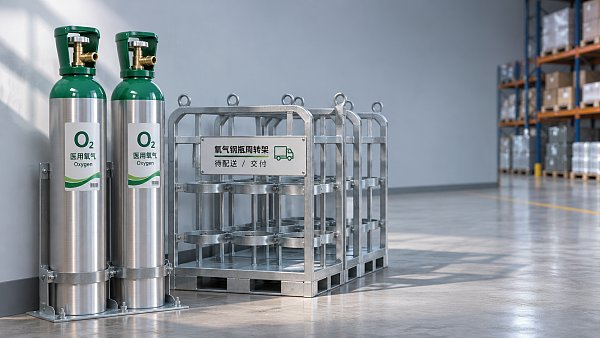
Portable oxygen cylinders are not interchangeable solely because they have similar external dimensions. Provide the supplier with the cylinder material, water capacity, working pressure, valve type and connection, and intended regulator or device. Ask for written confirmation that the proposed cylinder and valve assembly are compatible with the existing equipment and the supplier’s filling process.
Capacity descriptions also need a common basis. Physical cylinder size is not the same as usable oxygen volume, and nominal gas content depends on the cylinder and its filling conditions. When comparing quotes, ask suppliers to state the cylinder specification and nominal filled oxygen quantity using the same units and reference conditions. Otherwise, a lower price per cylinder may simply buy less gas.
Identify any accessories included in the offer. A cylinder price may exclude a regulator, flow-control device, protective cap, carry case, or replacement seals. Compatibility and suitability should be confirmed for the complete arrangement, not assumed from a cylinder listing. Do not treat adapters or changes to valves as a simple commercial workaround; any configuration must be appropriate for oxygen service and comply with local requirements.
If cylinders will cross borders, confirm that the cylinders, valves, filling arrangements, and transport documentation are acceptable in the destination market. A cylinder accepted for filling in one jurisdiction is not automatically accepted elsewhere. Resolve that point before purchasing a fleet, rather than after it arrives.
Review inspection records and acceptance rules
A supplier should be able to explain how it identifies cylinders, checks their condition, and determines whether they are eligible for filling. Ask what markings and records are used to verify ownership where relevant, cylinder specification, and the applicable periodic inspection or test status. Inspection intervals and marking requirements depend on cylinder type and jurisdiction; a generic certificate is not a substitute for checking the actual cylinders supplied.
Clarify the process for cylinders that cannot be filled. A supplier may reject a unit because its inspection is overdue, identification is unclear, the valve is damaged, or its condition raises safety concerns. The contract should state who is notified, whether a replacement is supplied, who authorizes inspection or repair, and how charges are calculated. It should also explain what happens to rejected or condemned cylinders.
For exchange stock, request a way to check the inspection status and identity of cylinders received. For owned stock, determine whether inspection time is included in the quoted turnaround. A service that looks fast for routine refills may leave a gap if testing or valve work sends a cylinder into a separate process with no replacement arrangement.
Separate medical oxygen requirements from general gas supply
The intended use must be explicit in the enquiry. Medical oxygen is not interchangeable with oxygen supplied for industrial or other non-medical uses simply because both contain oxygen. Requirements for the gas, filling operation, labeling, distribution, and records depend on the destination jurisdiction and the product’s regulatory classification.
Ask the supplier to identify the legal entity responsible for the medical oxygen and provide the authorizations and quality documentation applicable to the relevant market and activities. Where appropriate, request product specifications, batch or lot traceability, labeling examples, and a description of how cylinders are released after filling. Confirm whether these documents relate to the actual filling site and product being supplied, not merely to a parent company or an unrelated facility.
Documentation should support action as well as initial approval. Establish how the supplier would communicate a quality incident, identify affected deliveries, and arrange a recall or replacement. If a distributor is involved, check how information passes between the filling site, distributor, and receiving locations.
Test delivery promises against the actual operating pattern
“Nationwide coverage” does not establish that a portable cylinder can reach every address at the required frequency. Provide the proposed supplier with delivery postcodes or locations, access restrictions, operating hours, and expected order sizes. Ask it to confirm which deliveries are direct, which rely on a carrier or subcontractor, and whether the quoted schedule includes collection of empties.
Service commitments should define the clock. A next-day promise can mean the next working day after an order is accepted, not the day after it is placed. Confirm order cut-off times, delivery windows, weekend and holiday coverage, proof of delivery, and the procedure when nobody is available to receive an order. For urgent requests, ask whether service is guaranteed, subject to stock and driver availability, or handled on a best-efforts basis.
Delivery performance also depends on safe and lawful transport. The supplier should explain how it manages the applicable dangerous-goods transport requirements and handover responsibilities for the route and mode used. At the receiving end, agree on who checks quantities, visible condition, identification, and the match between the delivery note and the cylinders received.
For a site with variable consumption, compare the delivery interval with the stock held on site. A weekly route may be economical, but it requires enough compatible cylinders to cover normal use, demand variability, and a missed or delayed delivery. Stock planning should use the site’s own consumption and service requirements rather than a supplier’s standard reorder quantity.
Price the full cylinder cycle
Comparable quotations should use the same cylinder specification, oxygen quantity, delivery location, order frequency, and ownership model. Request a breakdown rather than a single unit price. Relevant charges can include:
- Initial cylinder purchase, rental, lease, or refundable deposit.
- Oxygen refill or filled-cylinder exchange, including any minimum quantity.
- Routine delivery, empty-cylinder collection, and remote-area charges.
- Urgent, out-of-hours, or failed-delivery fees.
- Periodic inspection, testing, valve work, and rejected-cylinder handling.
- Demurrage, rental beyond an agreed period, lost-cylinder, and damage charges.
- Regulators, carrying accessories, and other items not included in the cylinder price.
Model costs over a representative period using expected consumption and the number of cylinders needed to cover the refill cycle. For example, compare the cost of a lower-priced refill with a longer turnaround against a higher-priced exchange that requires fewer spare cylinders. Include rental or capital tied up in the extra stock, as well as delivery charges. The result will depend on actual demand and contract terms; a refill price alone cannot answer the question.
Pay particular attention to deposits and cylinder balances in exchange arrangements. Specify how empties are credited, how discrepancies are reconciled, and when deposits are refunded. A low exchange price can be offset by ongoing rental or disputed charges for cylinders that are difficult to trace across sites.
Make the interruption plan part of the contract
Ask each shortlisted supplier what happens if its filling site, transport route, or cylinder stock becomes unavailable. A credible answer identifies an alternative filling or distribution point, its ability to handle the same cylinder specifications, and the circumstances in which it would be used. Where a backup provider is named, confirm the arrangement and any limits rather than assuming that a general statement of contingency creates reserved capacity.
A second supplier can reduce dependence, but only if its cylinders, valves, documentation, and delivery arrangements work with the existing system. If the primary service uses a proprietary exchange pool, establish whether a separate reserve can be replenished independently. Keep emergency stock arrangements consistent with the applicable safety, storage, and service requirements.
Before committing, resolve the operational points in writing: which cylinders will be accepted, how turnaround is measured, which addresses are covered, what stock or capacity is committed, and who bears inspection and delivery exceptions. The better offer is the one that can support the required service at an understood total cost—not necessarily the one with the lowest price per filled cylinder.
Get weekly intelligence in your inbox.
No noise. No sponsored content. Pure intelligence.
 Nov 22, 2026Golmud's 60 MW Liquid Air Storage Project Uses Fully Domestic EquipmentGolmud's 60 MW Liquid Air Storage Project Uses Fully Domestic Equipment
 Nov 22, 2026Precision Engineering for Medical Devices: Tolerances and MaterialsPrecision Engineering for Medical Devices: Tolerances and Materials
 Nov 21, 2026EDF Acquires 1GWh Holloway Battery Storage Project in AustraliaEDF Acquires 1GWh Holloway Battery Storage Project in Australia
 Nov 21, 2026Choosing Carbon Steel Grades for OEM Machined Parts: Key FactorsChoosing Carbon Steel Grades for OEM Machined Parts: Key Factors
 Nov 20, 2026China’s First Virtual Power Plant Report Says Capacity Target Met EarlyChina’s First Virtual Power Plant Report Says Capacity Target Met Early
 Nov 20, 2026Choosing an OEM Heavy Equipment Manufacturer: Capabilities and Quality ChecksChoosing an OEM Heavy Equipment Manufacturer: Capabilities and Quality Checks
 Nov 19, 2026India Adds Record 8.4 GW of Open-Access Solar in First Nine Months of 2026India Adds Record 8.4 GW of Open-Access Solar in First Nine Months of 2026
 Nov 19, 2026B2B Intelligence for Green Energy: Finding New Market OpportunitiesB2B Intelligence for Green Energy: Finding New Market Opportunities
 Nov 18, 2026Global Solar Additions Hit Record in 2025, Forecast to Fall in 2026Global Solar Additions Hit Record in 2025, Forecast to Fall in 2026
 Nov 18, 2026Supply Chain Visibility for Supplier Management: How to Spot Delivery RisksSupply Chain Visibility for Supplier Management: How to Spot Delivery Risks
 Nov 17, 2026US Battery Storage Deployment Tops 200 GWh; 74 GWh Forecast for 2026US Battery Storage Deployment Tops 200 GWh; 74 GWh Forecast for 2026
 Nov 17, 2026Choosing a Solar Tracker for Ground-Mount PV: Site and Design FactorsChoosing a Solar Tracker for Ground-Mount PV: Site and Design Factors
 Nov 16, 2026US Polysilicon and Solar Product Tariffs and Import Price Floor Take Effect December 4US Polysilicon and Solar Product Tariffs and Import Price Floor Take Effect December 4
 Nov 16, 2026How Industrial Buyers Can Evaluate B2B Intelligence Reports on SuppliersHow Industrial Buyers Can Evaluate B2B Intelligence Reports on Suppliers
 Nov 15, 2026CATL Sets Tener Sodium Delivery Timeline, Targeting LFP on CostCATL Sets Tener Sodium Delivery Timeline, Targeting LFP on Cost
 Nov 15, 2026Electric Wheelchairs for Disabled Adults: Choosing the Right Fit and RangeElectric Wheelchairs for Disabled Adults: Choosing the Right Fit and Range
 Nov 14, 2026China Expects Clean Energy to Meet All New Electricity Demand by 2030China Expects Clean Energy to Meet All New Electricity Demand by 2030
 Nov 14, 2026Choosing a Digital X-Ray Detector Supplier: Compatibility and SupportChoosing a Digital X-Ray Detector Supplier: Compatibility and Support
 Nov 13, 2026Ecuador Sets Zero VAT and Currency Outflow Tax Rates for Solar and Storage EquipmentEcuador Sets Zero VAT and Currency Outflow Tax Rates for Solar and Storage Equipment
 Nov 13, 2026Choosing an OEM Machined Parts Manufacturer: Quality, Capacity and Lead TimesChoosing an OEM Machined Parts Manufacturer: Quality, Capacity and Lead Times
 Nov 12, 2026South Africa Registers 2 GW of New Solar PV Capacity in Q3 2026South Africa Registers 2 GW of New Solar PV Capacity in Q3 2026
 Nov 12, 2026Mexico Supply Chain Market Research: Nearshoring Opportunities and RisksMexico Supply Chain Market Research: Nearshoring Opportunities and Risks
 Nov 11, 2026US Senate Advances Bipartisan BAAJA Energy Permitting BillUS Senate Advances Bipartisan BAAJA Energy Permitting Bill
 Nov 11, 2026Inventory Management Decision Support: When and How Much to ReorderInventory Management Decision Support: When and How Much to Reorder
 Nov 10, 2026China's Trade Surplus Tops $1 Trillion Through October as Exports Rise 35.2%China's Trade Surplus Tops $1 Trillion Through October as Exports Rise 35.2%
 Nov 10, 2026Choosing Surgical PPE: Gowns, Gloves, Masks and Eye ProtectionChoosing Surgical PPE: Gowns, Gloves, Masks and Eye Protection
 Nov 09, 2026US Solar Imports Shift as Domestic Manufacturing Investment Reshapes Global TradeUS Solar Imports Shift as Domestic Manufacturing Investment Reshapes Global Trade