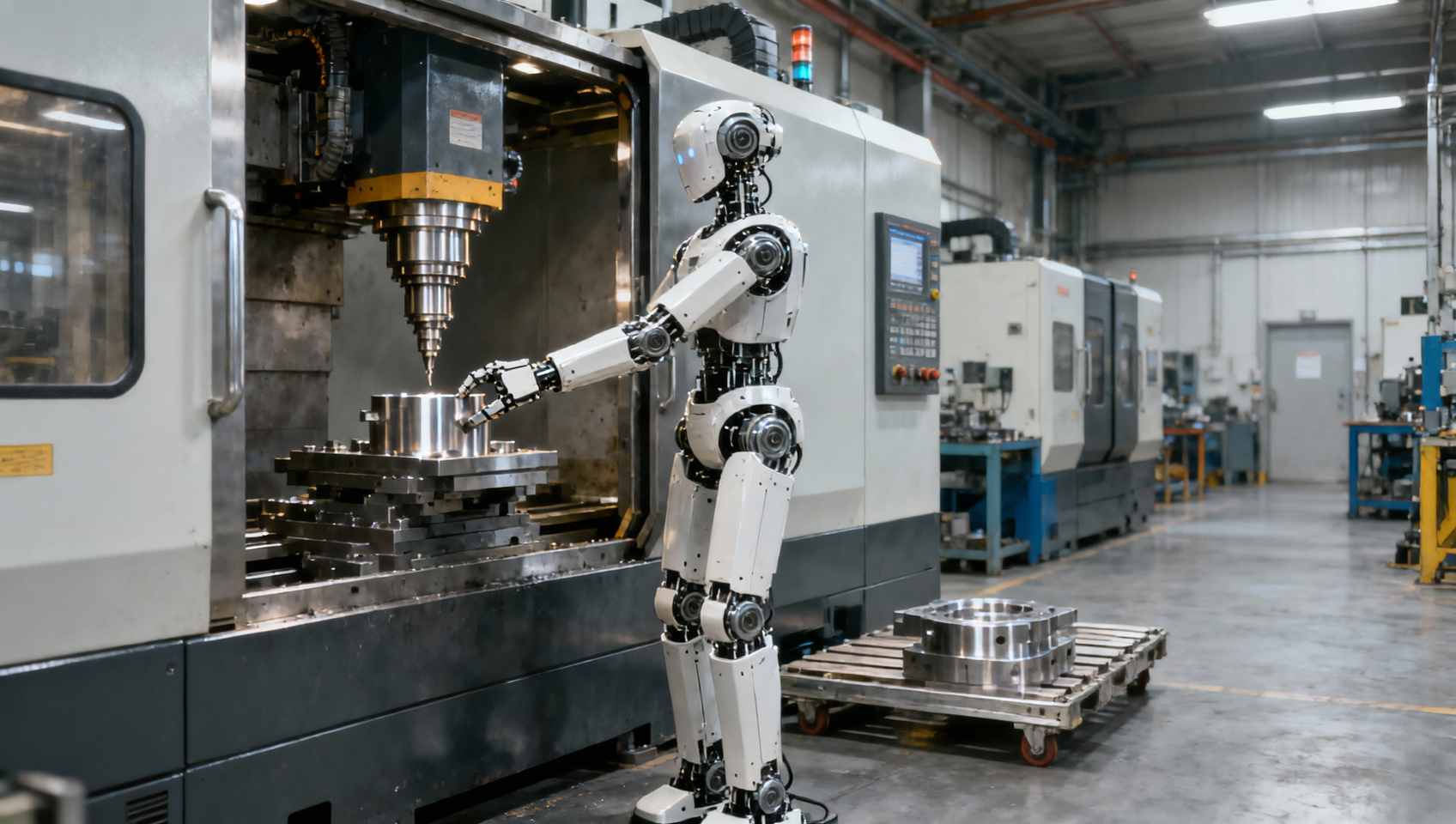
Collaborative robots are transforming delicate assembly by combining precision automation with responsive control. Through collaborative robots force sensing, project leaders can reduce damage risks, improve consistency, and enable safer human-robot workflows in tasks involving fragile components, tight tolerances, and variable materials.
For project leaders, the central question is not whether cobots can move parts accurately. It is whether they can detect contact, adapt safely, and protect high-value components.
The short answer is yes, when force sensing is matched to the application, tooling, process variation, and quality requirements. It is not a universal substitute for sound fixture design.
Force-aware automation is most valuable where visual positioning alone cannot guarantee a successful assembly outcome, particularly when insertion resistance, alignment uncertainty, or fragile surfaces create risk.
Why Delicate Assembly Requires More Than Positional Accuracy
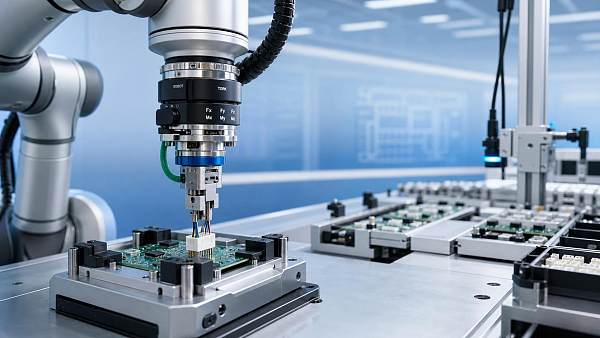
Traditional industrial robots follow programmed positions with high repeatability. However, repeatability does not guarantee successful assembly when incoming parts, fixtures, or material properties vary between production cycles.
A connector may appear correctly aligned but bind during insertion. A medical device housing may shift slightly in a fixture. A thin electronic substrate may crack under excessive force.
In these cases, force sensing gives the cobot information that cameras, encoders, and fixed motion paths cannot provide. It measures how the real assembly behaves.
Collaborative robots force sensing typically relies on a six-axis force-torque sensor, integrated joint torque sensing, or a combination of external sensors and control software.
These systems detect forces and torques along multiple directions. The robot can then slow down, stop, search for alignment, maintain controlled pressure, or retreat safely.
This changes the automation model from “move to a coordinate” to “move until a controlled physical condition is achieved.” That distinction matters in high-value assembly work.
For project managers, the practical benefit is reduced dependence on perfectly consistent inputs. The process can tolerate manageable variation without turning every exception into manual rework.
That does not mean force sensing solves poor upstream process control. It provides a useful control layer when normal manufacturing variation cannot be economically eliminated.
What Force Sensing Enables During Real Assembly Operations
Force sensing supports several assembly behaviors that are difficult to achieve reliably with position control alone. Each behavior should be evaluated against a defined production risk.
The most common use case is compliant insertion. The cobot approaches a hole, socket, clip, or mating feature while maintaining limited force rather than forcing a fixed path.
If the component encounters unexpected resistance, the robot can pause before damage occurs. It may perform a programmed spiral, linear, or rotational search to find alignment.
For press-fit processes, force feedback helps maintain a specified insertion load. This is important where insufficient force causes incomplete seating and excessive force damages components.
Controlled contact also improves screwdriving, dispensing, polishing, testing, and adhesive placement. The robot can confirm surface contact while avoiding inconsistent pressure caused by fixture tolerances.
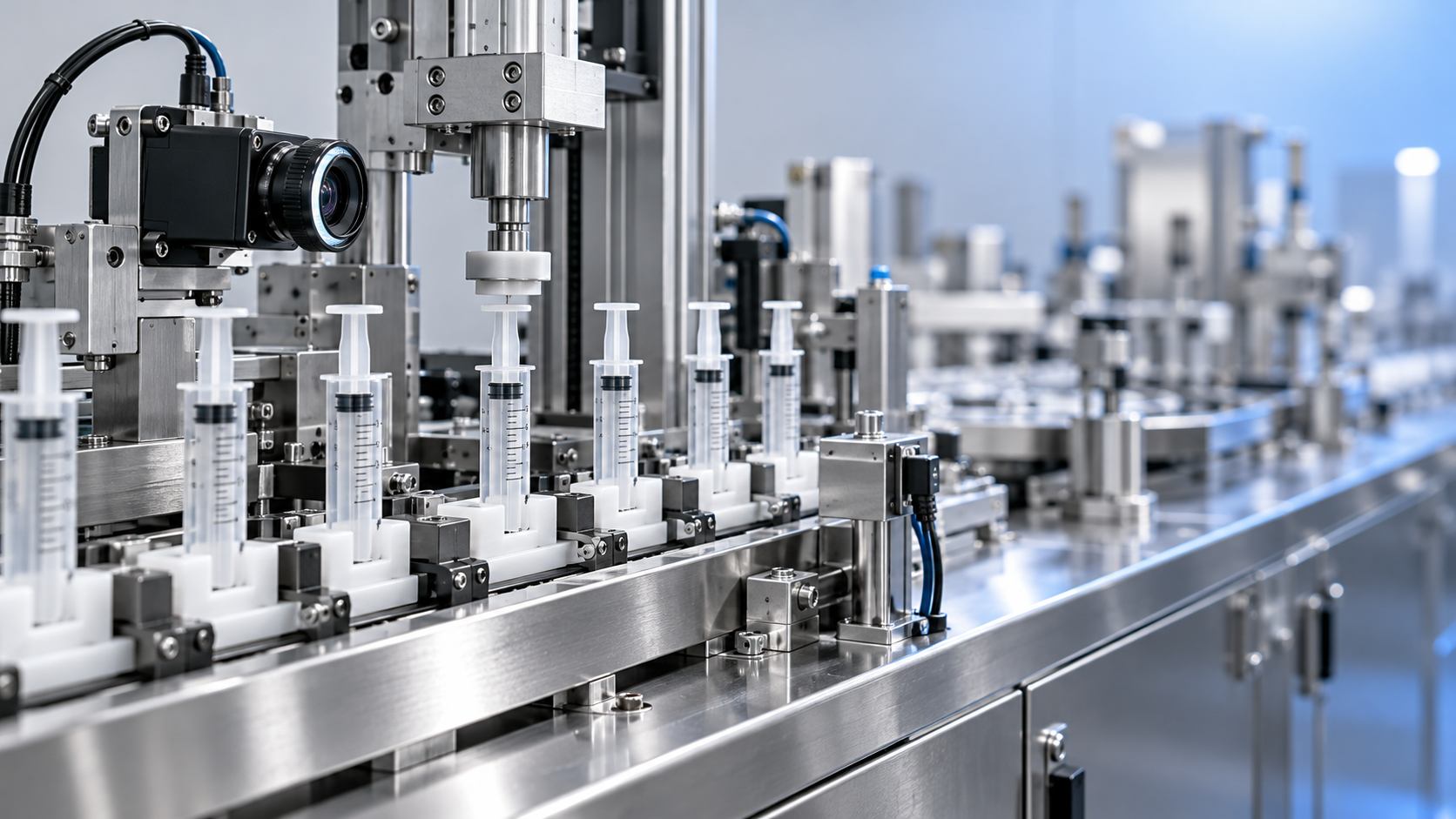
In electronics assembly, force sensing can help protect printed circuit boards, flex cables, optical components, and connectors. These parts often have low damage thresholds and expensive failure consequences.
In healthcare technology manufacturing, it can support placement of delicate housings, seals, sensors, and diagnostic assemblies where both cosmetic integrity and functional reliability are required.
Automotive, consumer electronics, battery production, and precision equipment assembly can also benefit when a process includes variable mechanical engagement or narrow tolerance stack-ups.
Where Collaborative Robots Force Sensing Delivers the Strongest Business Value
Force sensing should be justified by measurable operational outcomes, not by its novelty. The strongest business case usually appears where defects, rework, downtime, or skilled labor dependency are already significant.
First, evaluate the cost of component damage. High-value parts, constrained supply items, and assemblies with lengthy downstream processing create a stronger economic case for controlled contact.
Second, quantify manual inspection and rework. If operators repeatedly correct alignment, verify seating, or recover from jams, a force-guided robot may standardize those tasks.
Third, consider throughput stability rather than maximum cycle speed alone. A slightly slower automated insertion can be commercially preferable when it prevents stoppages and quality escapes.
Fourth, assess workforce exposure. Some delicate tasks require repetitive hand pressure, awkward posture, or sustained concentration. Collaborative automation can reduce strain while retaining human oversight.
Project teams should also include changeover requirements in their assessment. Cobots are often selected for flexibility, but force-control programs still require validation for each product variant.
The return on investment is usually clearer in mixed-model production than in simple, high-volume tasks with mature hard automation. Flexibility has value when product demand changes frequently.
A credible investment model should include integration costs, end-of-arm tooling, safety validation, programming, operator training, maintenance, quality verification, and expected scrap reduction.
How to Decide Whether an Assembly Task Is Suitable
Not every delicate operation requires force sensing. Project leaders should begin with a structured feasibility review that distinguishes genuine contact uncertainty from problems caused by weak process design.
Start by mapping the assembly sequence in detail. Identify every point where parts touch, slide, seat, snap, compress, or encounter resistance during normal production.
Measure variation across representative components, not only engineering samples. Supplier differences, lot variation, temperature changes, surface finish, and fixture wear can alter contact behavior substantially.
Next, define acceptable force limits for the component and process. These limits should come from design engineering, product testing, supplier data, and quality requirements.
Determine whether the task needs force detection, force limiting, constant-force control, guided search behavior, or force-displacement verification. These are related but different capabilities.
For example, a fragile component may only require overload detection and a safe stop. A press-fit assembly may require a tightly controlled force profile throughout insertion.
Review cycle-time constraints honestly. Searching for alignment can increase cycle time, although it may still improve total output by reducing jams, manual intervention, and rejected assemblies.
Finally, test the process with production-representative parts and fixtures. A successful demonstration should include intentional misalignment, dimensional variation, and realistic operating conditions.
Choosing Sensors, Tooling, and Control Architecture
Sensor selection should follow the process requirements. An external six-axis force-torque sensor generally offers detailed measurement, while joint-based sensing may be sufficient for simpler collision detection.
External sensors are commonly mounted between the cobot wrist and end effector. They measure forces and torques close to the tool, improving sensitivity for precision tasks.
However, external sensors add cost, payload considerations, cabling, calibration requirements, and mechanical complexity. Their precision is valuable only when the application can use it.
Integrated torque sensing can simplify deployment and improve collaborative safety functions. It may be suitable for contact detection, compliant movement, or basic insertion tasks with broader tolerances.
End-of-arm tooling is equally important. A high-quality force sensor cannot compensate for a gripper that distorts parts, slips under load, or introduces uncontrolled compliance.
Use tooling that supports repeatable part presentation, protects sensitive surfaces, and provides appropriate mechanical guidance. Passive compliance devices can complement sensor-driven control in demanding insertions.
Control software should allow teams to set force thresholds, approach speeds, search patterns, timeout conditions, recovery actions, and traceable pass-fail criteria for each operation.
Procurement teams should request evidence of integration support, software accessibility, calibration procedures, spare-part availability, and local technical service before selecting a supplier.
Quality Control: Turning Force Data Into Process Evidence
One of the most underused advantages of force sensing is its ability to generate quality data. A properly designed system can validate assembly, not merely perform it.
During a press-fit operation, the force-displacement curve can reveal whether a component entered correctly, seated fully, encountered obstruction, or exceeded a safe load limit.
For connector mating, the system can compare actual insertion behavior against approved process windows. Unusual resistance may signal bent pins, missing parts, or fixture misalignment.
These records can support traceability requirements in regulated manufacturing, especially where a final visual check cannot reliably confirm internal mechanical engagement or seal compression.
To use this data effectively, teams must define meaningful thresholds. Collecting sensor values without linking them to quality decisions creates complexity without operational value.
Initial validation should establish normal process signatures across representative materials, operators, shifts, and environmental conditions. Limits should account for expected variation without masking real defects.
Quality engineers should decide whether deviations trigger an automatic reject, a recovery attempt, a manual review, or a maintenance alert. The response logic needs ownership.
When force data is integrated with manufacturing execution systems, project teams gain stronger visibility into process drift, supplier-related variation, and recurring equipment issues.
Safety and Human-Robot Workflow Considerations
Collaborative robots are designed to work near people, but collaboration is not automatic. Every deployment requires a task-specific risk assessment and appropriate safeguards.
Force sensing can improve safety by identifying unexpected contact and limiting applied force. Yet sensor-based detection should not be treated as the only protective measure.
Risk assessments should consider tool geometry, sharp edges, pinch points, payload movement, workpiece ejection, unexpected restart conditions, and the speed of the complete robotic system.
In delicate assembly cells, workers may load parts, handle exceptions, replenish materials, and inspect quality. The workflow should clearly define when human access is permitted.
Effective implementations use simple status signals, understandable recovery procedures, and trained operators. Confusing fault recovery is a frequent source of lost productivity after deployment.
Project leaders should involve operators early in pilot design. Their knowledge of part handling, quality symptoms, and exception cases is essential for a robust automation sequence.
Collaboration also changes job design. The best results usually come when people manage judgment-intensive work while cobots perform repetitive, force-sensitive, and physically demanding motions consistently.
Safety documentation, validation records, and operator training should be treated as project deliverables. They are necessary for sustainable production, not administrative tasks after installation.
Implementation Risks Project Leaders Should Manage
The main implementation risk is assuming that a cobot can compensate for every upstream inconsistency. Force sensing improves adaptability, but it cannot correct fundamentally unstable component quality.
Poor fixture design is another common issue. If parts move unpredictably, the robot may spend excessive time searching, generate misleading force signals, or create inconsistent results.
Teams should avoid defining force thresholds from a small sample. Limited testing can produce settings that reject good parts later or allow marginal assemblies to pass.
Programming should include recovery behavior for failed insertions. A controlled retreat, retry limit, and escalation path are more reliable than repeatedly forcing the same movement.
Maintenance planning matters as well. Sensor calibration, tool wear, fixture alignment, and gripper condition can all affect measured force patterns over time.
Vendor demonstrations should be evaluated carefully. Ask suppliers to run actual parts, include variation, document cycle times, and explain how faults will be handled on the production floor.
For global sourcing projects, assess whether the integrator can support local commissioning, spare parts, software updates, remote diagnostics, and post-installation process optimization.
A phased rollout often reduces risk. Begin with one well-understood assembly task, establish performance baselines, then extend the approach to related stations after validation.
Conclusion: A Practical Decision Framework for Force-Aware Cobots
Collaborative robots force sensing is most valuable when delicate assembly depends on controlled physical interaction rather than simple movement between fixed positions.
For project leaders, the decision should begin with production evidence: damage rates, insertion failures, manual corrections, quality risks, component costs, and process variability.
The right solution combines suitable sensing, stable tooling, validated force limits, clear recovery logic, safety controls, and quality data that supports continuous improvement.
When deployed around a real business problem, force-aware cobots can protect fragile products, improve process consistency, and create flexible assembly capacity for changing manufacturing requirements.