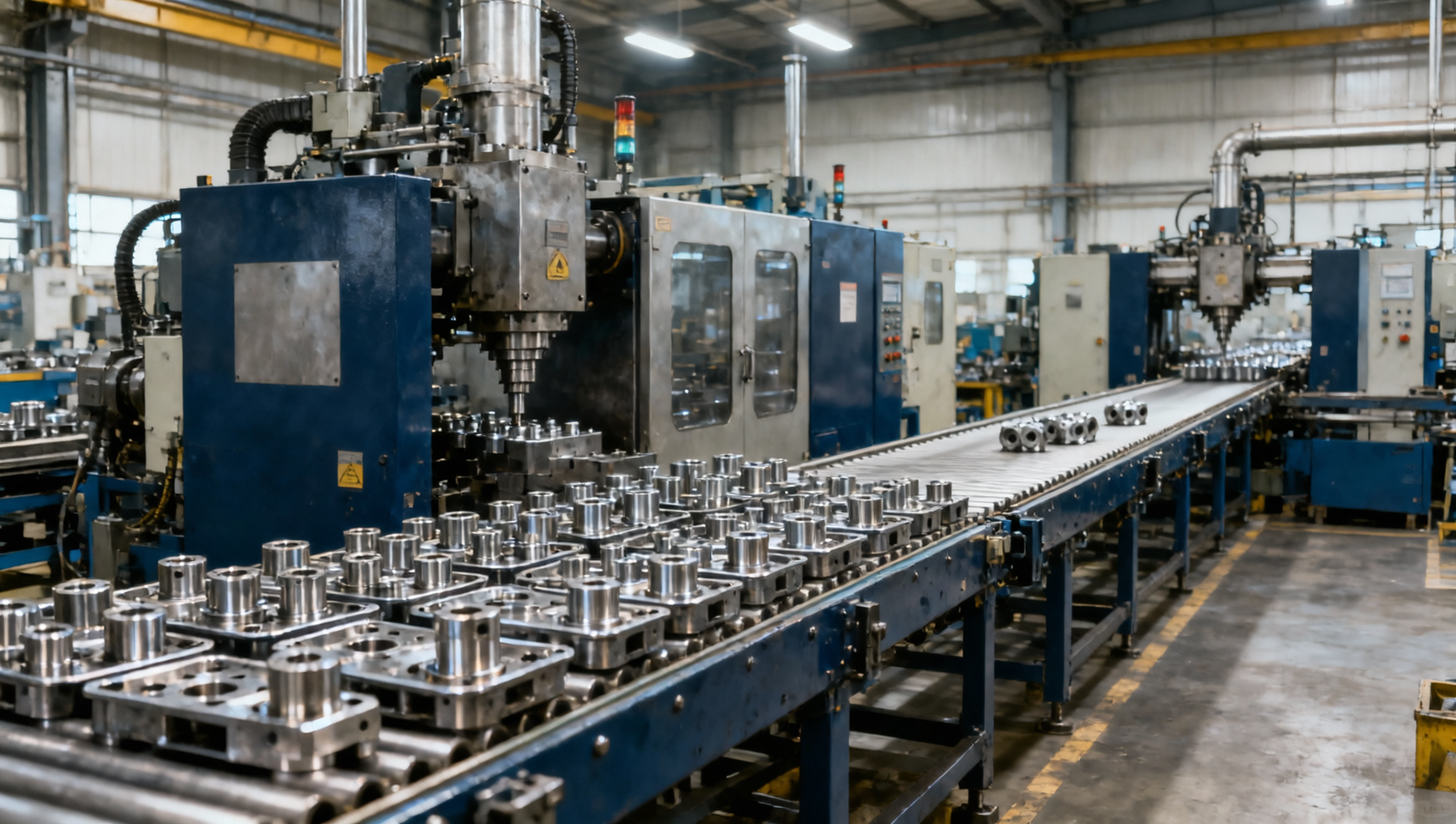
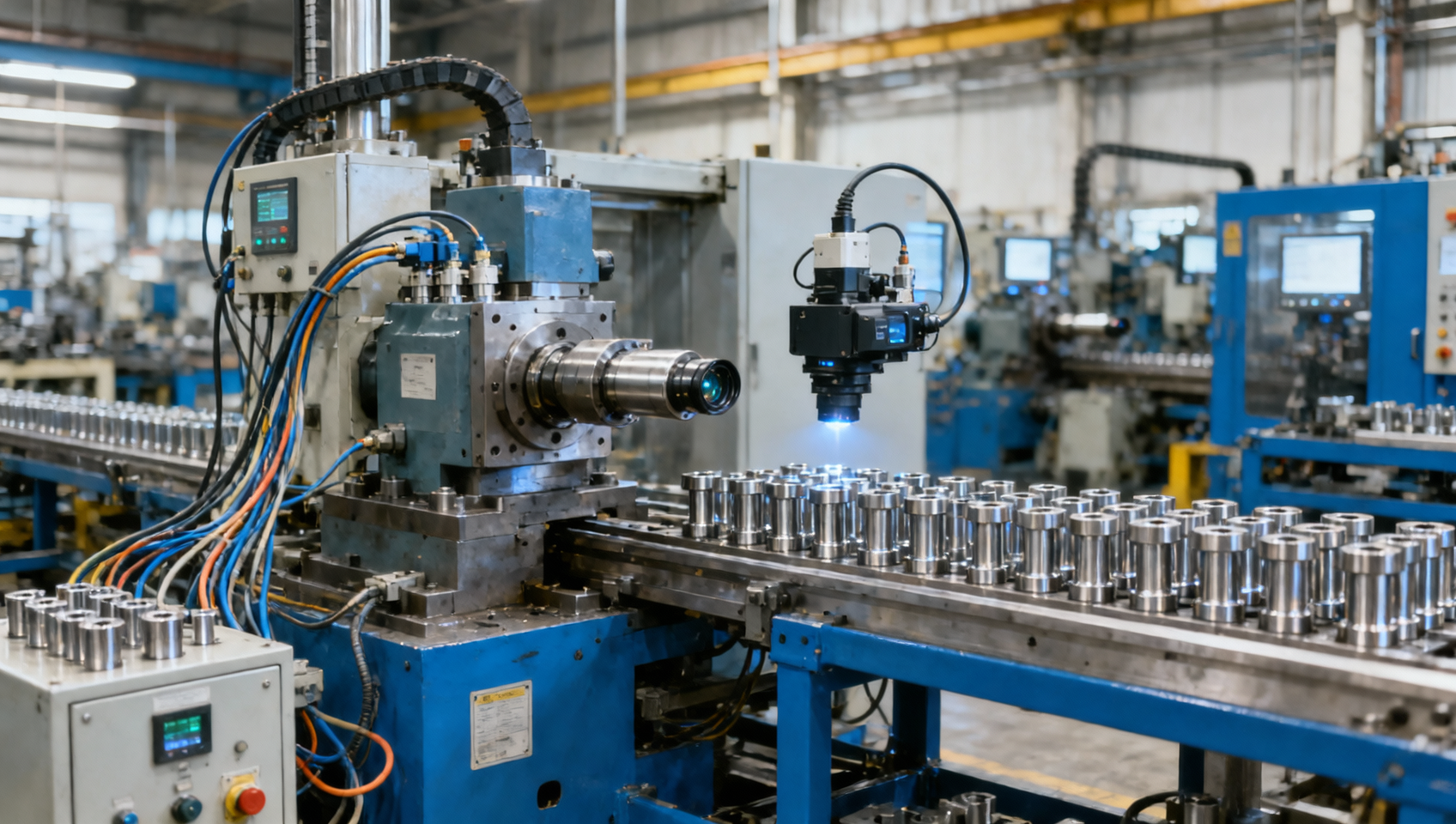
When Laser Welding Machines Reduce Rework and When They Do Not
For technical evaluators, laser welding machines can look like a direct path to lower rework rates—but results depend on far more than beam precision alone. Material variation, joint design, process control, operator expertise, and inspection standards all determine whether defects truly decline or simply shift downstream. This article examines when laser welding delivers measurable quality gains and when its limits can undermine expected performance.
Understanding What Laser Welding Machines Actually Improve
In many industrial settings, laser welding machines are evaluated primarily for speed, narrow heat input, and automation potential. Those are real advantages, but rework reduction does not come from the laser source alone. It comes from the ability to stabilize a full welding system: energy delivery, fixturing, material condition, seam accessibility, shielding gas behavior, and inspection repeatability. When these variables are controlled within a defined process window, laser welding often reduces variation more effectively than conventional methods.
For technical evaluators in advanced manufacturing, smart electronics, healthcare technology, and precision metal fabrication, the key question is not whether laser welding is “better” in general. The practical question is whether the process can reduce defect rates across a production run of 500 parts, 5,000 parts, or 50,000 parts without introducing hidden failure modes such as porosity, underfill, cracking, or cosmetic inconsistency. Rework should be assessed at the system level, not only at the weld bead level.
This matters because some forms of rework disappear visibly at the welding station while others move downstream into leak testing, electrical validation, dimensional inspection, or field reliability claims. A laser weld that looks clean can still fail due to inadequate penetration, poor metallurgical compatibility, or thermal distortion outside tolerance bands such as ±0.1 mm to ±0.3 mm, depending on part function.
Where the process creates real leverage
Laser welding machines are most effective when the production objective is tight repeatability in thin to medium-section assemblies, especially where low heat input helps preserve adjacent features. Typical thickness ranges may run from around 0.2 mm sheet components up to several millimeters, depending on laser type, joint geometry, and whether the process uses keyhole or conduction mode. In these cases, reduced thermal spread can lower post-weld straightening, grinding, and cosmetic touch-up.
They also perform well when integrated into digital manufacturing environments. Inline vision systems, seam tracking, power monitoring, and closed-loop parameter logging make it easier to identify drift before scrap accumulates. In a stable cell, a parameter shift can sometimes be detected within 10 to 30 parts rather than after a full shift of production, which changes the economics of quality control and rework containment.
However, these benefits only materialize when the product design is compatible with the process. Laser welding machines do not compensate for poor fit-up, contaminated surfaces, or unrealistic tolerance stacks. In short, they reduce rework best where consistency is already engineered into the upstream process.
Core evaluation points
- Joint gap control: many laser processes become sensitive when gaps exceed narrow limits, often below 0.1 mm to 0.2 mm in precision applications.
- Surface condition: oil, oxide, plating variation, and moisture can change absorptivity and increase spatter or porosity risk.
- Part-to-part variation: if incoming material varies across coils, lots, or suppliers, process capability may erode quickly.
- Inspection strategy: visual appearance alone is insufficient for safety, pressure, electrical, or medical components.
Why Rework Drops in Some Industries Faster Than Others
Industry context shapes whether laser welding machines produce immediate quality gains. In sectors like smart electronics or battery-related assembly, parts are often designed around precision joining from the start. Thin materials, compact seams, low distortion requirements, and high throughput make the process a natural fit. In contrast, general fabrication environments with mixed batches, inconsistent edge preparation, or heavy gauge variation may see only partial improvement.
For procurement directors and technical validation teams working through multi-site sourcing decisions, this distinction is important. A process that reduces cosmetic rework by 30% in one factory may show minimal gains in another if fixtures, cleanliness protocols, or pre-assembly control differ. The equipment category remains the same, but the process maturity level does not.
TradeNexus Pro often frames this issue as a convergence problem rather than a machine problem. Rework reduction depends on how manufacturing execution, supplier quality, and application engineering intersect. Evaluators should review not only machine specifications but also the readiness of the surrounding production ecosystem within a 3-stage lens: pre-weld preparation, in-process stability, and post-weld verification.
The following table summarizes where laser welding machines are more likely to reduce rework and where expectations should be moderated.
The table shows that the strongest gains from laser welding machines usually appear in controlled, repeatable production rather than in highly variable fabrication. For technical evaluators, this means the business case should be segmented by part family, not generalized across an entire plant. Even a 20% reduction in rework on a high-value product line may justify investment more clearly than broad but uncertain assumptions across all products.
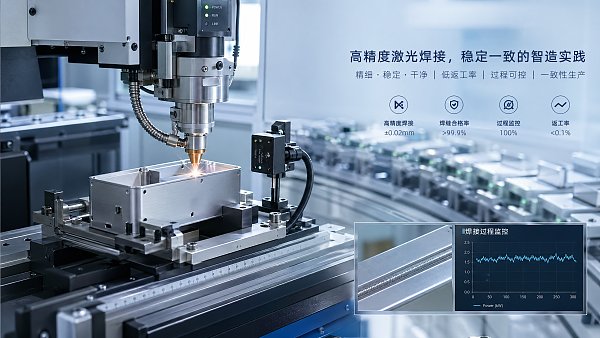
Why evaluators are watching this more closely now
Across global supply chains, tolerance compression and traceability requirements are increasing. Components are getting smaller in electronics, cleaner in healthcare technology, and more quality-sensitive in energy and industrial systems. At the same time, labor shortages make manual rework more expensive. If a process can prevent even 1 to 2 extra handling steps per part, the cumulative effect over quarterly volumes becomes material.
That is why laser welding machines attract attention not only as joining equipment but as part of a broader manufacturing quality architecture. The question is shifting from “Can the machine weld this part?” to “Can the process sustain first-pass yield under normal production drift?” That is the more relevant benchmark for technical evaluation.
When Laser Welding Machines Clearly Reduce Rework
The strongest performance case appears when the process addresses known rework drivers better than alternative joining methods. If rework today comes from excessive heat distortion, inconsistent bead placement, filler variability, or post-weld finishing labor, laser welding machines may create measurable improvement. This is especially true when seam length is predictable and the part fixture can be locked down with high repeatability over long production runs.
One common example is precision metal housings or sealed assemblies where thermal spread affects neighboring features. A narrower heat-affected zone can reduce warping, preserve hole position, and protect nearby coatings or electronics. In some applications, cycle time and quality gain reinforce each other: fewer thermal corrections mean fewer downstream interventions, and therefore fewer opportunities for human-introduced variation.
Another favorable case is automated production where weld paths can be programmed once and repeated with limited drift. If the process window is documented by power, speed, focus position, and shielding gas flow, then changes can be controlled as part of standard operating discipline. A well-developed process may require qualification over several shifts or multiple lots before release, but once validated, it usually performs best in repetitive environments.
Typical scenarios with strong quality payoff
- Thin-wall stainless steel or nickel alloy parts where low distortion is critical to final assembly.
- Battery tabs, sensor housings, and small enclosures where precise energy input protects surrounding features.
- Hermetic or semi-sealed products where consistent weld geometry supports leak test performance.
- High-volume cells where in-line monitoring can isolate parameter drift within a short production interval.
A practical evaluation framework
Technical teams should map current rework into categories before comparing technologies. If 60% of rework comes from geometry distortion, laser welding machines may solve a large share. If 60% comes from upstream stamping inconsistency or contamination, the machine may only reveal those issues more quickly. This distinction prevents over-crediting the equipment for quality losses that actually originate elsewhere.
Evaluators should also separate immediate defects from latent defects. Immediate defects include visible undercut, lack of fusion, or misalignment. Latent defects include microcracking, internal porosity, or fatigue-related failures that may surface after shipping, sterilization, pressure cycling, or thermal cycling. Rework reduction is meaningful only if both categories are considered during validation.
When They Do Not Reduce Rework—and May Shift Problems Downstream
Laser welding machines do not automatically improve outcomes in every production context. In fact, they can increase visible process discipline while leaving root causes unresolved. If part gaps are inconsistent, reflectivity is high, edges are poorly prepared, or operator setup discipline is weak, the process window may become too narrow for practical factory use. The result is not necessarily less rework; it may simply be rework discovered later in testing or customer use.
A common problem appears in organizations that upgrade equipment without redesigning joints. Some welded parts were originally designed for arc processes or mechanical fastening, with wider gaps and greater tolerance forgiveness. Applying laser welding to the same geometry can create incomplete penetration or unstable weld formation. On paper the machine is capable, but in production the joint is not laser-friendly.
Another risk is overreliance on visual acceptance. Because laser welds can appear neat and narrow, teams may assume quality has improved before verifying metallurgical and structural performance. For pressure-containing or safety-related applications, acceptance should involve more than appearance. Depending on the application, cross-section checks, leak tests, destructive trials, or non-destructive inspection may be needed at defined sampling intervals such as first article, setup change, and periodic lot validation.
The table below helps technical evaluators identify common conditions where laser welding machines underperform against rework expectations.
This pattern is why some facilities report impressive weld appearance improvements but limited reduction in total cost of poor quality. The machine can make the process cleaner, but if upstream and downstream controls remain weak, the organization still pays for rechecks, sorting, testing delays, and customer risk containment.
Signals that expectations may be unrealistic
Technical evaluators should be cautious when a project assumes laser welding machines will solve broad quality issues without concurrent changes in fixtures, tolerance control, or operator training. If product families change every few days, if raw material sources are unstable, or if the team cannot define measurable acceptance criteria, the process may not sustain a lower rework profile. A machine upgrade cannot replace manufacturing discipline.
This is especially relevant in contract manufacturing and multi-supplier environments. Different lots, coatings, and edge conditions can produce very different responses to the same laser settings. A process that works for one supplier’s material at 1.2 m/min may require another setting window for a second supplier, and if that variation is unmanaged, rework becomes a recurring operational burden.
How Technical Evaluators Should Assess Rework Impact Before Adoption
A sound evaluation starts with a baseline. Before reviewing laser welding machines, quantify current rework by defect type, station, and cost impact over at least one representative production cycle. That cycle may be 2 weeks for a high-volume line or several months for lower-volume industrial programs. Without that baseline, teams often overestimate quality gains and underestimate the work needed to maintain process capability.
Next, align the machine assessment with the actual product mix. For example, one family of thin stainless enclosures may be ideal for laser welding, while thicker mixed-material brackets are not. Technical evaluators should segment by material, thickness range, required penetration, cosmetic standard, and allowable distortion. This segmented approach produces a more realistic adoption roadmap than a single yes-or-no conclusion.
Validation should also include both process and business criteria. Process criteria include repeatability, defect modes, throughput consistency, and inspection compatibility. Business criteria include setup time, training demand, spare parts planning, service intervals, and yield stability over 3 to 6 months rather than just pilot samples. A short trial can show capability; sustained production shows whether rework truly falls.
Recommended pre-adoption checklist
- Document current rework drivers by part family and rank them by frequency and cost.
- Measure joint fit-up, flatness, and tolerance stack capability before any equipment trial.
- Confirm material consistency across suppliers, lot changes, and coatings or finishes.
- Define acceptance methods beyond appearance, including sectioning, leak tests, or functional checks where relevant.
- Run pilot validation under realistic production variation, not only ideal lab conditions.
Standards and control thinking
Where applicable, teams should anchor evaluation to recognized welding quality practices and internal validation protocols. The exact standards depend on the industry and product function, but the principle is consistent: parameter control, documented work instructions, traceable inspection, and defined acceptance thresholds are essential. Laser welding machines perform best when integrated into a disciplined quality system, not treated as stand-alone solutions.
For organizations sourcing internationally, this discipline also helps supplier comparison. A supplier with laser equipment but weak control plans may present higher risk than one with a simpler joining method and stronger process evidence. The evaluator’s job is to distinguish technological potential from operational reality.
A Practical Path Forward for Decision-Makers
The most balanced conclusion is that laser welding machines reduce rework when the application is precision-oriented, the joint is designed appropriately, process variation is measurable, and inspection matches the risk level of the product. They do not reduce rework reliably when organizations expect beam quality alone to compensate for weak upstream control or unsuitable design assumptions.
For technical evaluators, the decision should therefore be staged. First, identify the product families where thermal control and repeatability create clear value. Second, test whether actual factory conditions can maintain the required process window. Third, verify that reduced visible defects also translate into lower downstream nonconformance. This sequence protects investment decisions and improves sourcing clarity.
At TradeNexus Pro, we support this type of evaluation by focusing on application fit, supplier capability visibility, and practical manufacturing intelligence across advanced manufacturing, green energy, smart electronics, healthcare technology, and supply chain software ecosystems. That perspective helps decision-makers avoid overly broad assumptions and compare welding strategies in the context of actual production risk.
Why choose us
If you are assessing laser welding machines for rework reduction, contact us for support on parameter confirmation, application screening, supplier comparison, and process suitability review. We can help you frame evaluation criteria around material type, thickness range, joint design, inspection requirements, likely delivery timelines, and customization considerations.
You can also reach out for guidance on sample support strategy, qualification planning, production transfer risk, and quotation discussions tied to specific part families rather than generic equipment claims. For technical teams under pressure to improve first-pass yield without adding hidden downstream cost, a structured evaluation approach is often more valuable than a fast equipment decision.
Get weekly intelligence in your inbox.
No noise. No sponsored content. Pure intelligence.
 Oct 24, 2026Tesla Q3 2026 Storage Deployments Rank Second Highest as Revenue Falls 16%Tesla Q3 2026 Storage Deployments Rank Second Highest as Revenue Falls 16%
 Oct 24, 2026Freight Forwarding Services Pricing: Comparing Quotes Beyond Base RatesFreight Forwarding Services Pricing: Comparing Quotes Beyond Base Rates
 Oct 23, 2026IndexBox Issues Off-Grid Solar Outlook to 2035, Forecasting 8.2% CAGRIndexBox Issues Off-Grid Solar Outlook to 2035, Forecasting 8.2% CAGR
 Oct 23, 2026NSF/ANSI 49 Biosafety Cabinets: Product Certification vs. Field TestingNSF/ANSI 49 Biosafety Cabinets: Product Certification vs. Field Testing
 Oct 22, 2026Mitsubishi Electric Develops Industry-First Humanoid Robot–CNC Machining SystemMitsubishi Electric Develops Industry-First Humanoid Robot–CNC Machining System
 Oct 22, 2026Aerospace Aluminum Machining: How to Control Distortion in Thin-Wall PartsAerospace Aluminum Machining: How to Control Distortion in Thin-Wall Parts
 Oct 21, 2026Genesis Energy commissions 200 MWh battery storage system at HuntlyGenesis Energy commissions 200 MWh battery storage system at Huntly
 Oct 21, 2026Buying AMI Smart Meters Wholesale: Compatibility Checks and Total CostsBuying AMI Smart Meters Wholesale: Compatibility Checks and Total Costs
 Oct 20, 2026Werner Enterprises Issues Q3 Earnings Warning as Costs RiseWerner Enterprises Issues Q3 Earnings Warning as Costs Rise
 Oct 20, 2026Are Digital Twins Viable for SMEs? Costs, Use Cases, and Data RequirementsAre Digital Twins Viable for SMEs? Costs, Use Cases, and Data Requirements
 Oct 19, 2026Choosing a Wholesale Servo Motor Exporter: Traceability and Warranty ChecksChoosing a Wholesale Servo Motor Exporter: Traceability and Warranty Checks
 Oct 18, 2026Syringe Manufacturing Equipment: Evaluating Throughput and Assembly AccuracySyringe Manufacturing Equipment: Evaluating Throughput and Assembly Accuracy
 Oct 17, 2026Air Freight Forwarding Services: How to Compare Quotes for Urgent ShipmentsAir Freight Forwarding Services: How to Compare Quotes for Urgent Shipments
 Oct 16, 2026Wholesale Solar Panels: How to Compare Bulk Quotes by Total Landed CostWholesale Solar Panels: How to Compare Bulk Quotes by Total Landed Cost
 Oct 15, 2026Supply Chain Intelligence for Sourcing: How to Vet New SuppliersSupply Chain Intelligence for Sourcing: How to Vet New Suppliers
 Oct 14, 2026How energy costs shape smart manufacturing investment in EuropeHow energy costs shape smart manufacturing investment in Europe
 Oct 14, 2026How skills shortages slow smart manufacturing in Southeast AsiaHow skills shortages slow smart manufacturing in Southeast Asia
 Oct 14, 2026How CNC wire-cut machining maintains tight tolerances in thick partsHow CNC wire-cut machining maintains tight tolerances in thick parts
 Oct 14, 2026Can automated feeding stabilize metal forming in smart factories?Can automated feeding stabilize metal forming in smart factories?
 Oct 14, 2026Can CT inspection detect internal defects in metal additive parts?Can CT inspection detect internal defects in metal additive parts?
 Oct 14, 2026When does additive manufacturing reduce lead time for spare parts?When does additive manufacturing reduce lead time for spare parts?
 Oct 14, 2026How production volume affects ROI on an automated painting lineHow production volume affects ROI on an automated painting line
 Oct 14, 2026What data does manufacturing bottleneck analysis consulting need?What data does manufacturing bottleneck analysis consulting need?
 Oct 14, 2026When should you hire a consultant for manufacturing bottlenecks?When should you hire a consultant for manufacturing bottlenecks?
 Oct 14, 2026What Are Electronics Exporters' Top Supply Chain Resilience Gaps in 2026?What Are Electronics Exporters' Top Supply Chain Resilience Gaps in 2026?
 Oct 14, 2026How Do You Measure AI Adoption Maturity in a Traditional Factory?How Do You Measure AI Adoption Maturity in a Traditional Factory?
 Oct 14, 2026Are Chinese AI-Assisted Surgical Devices Gaining Global Trust?Are Chinese AI-Assisted Surgical Devices Gaining Global Trust?