Die Casting Parts Supplier China: Key Checks Before an OEM Order
Selecting a die casting parts supplier China can offer strong cost advantages, but an OEM order now requires deeper verification than a competitive quote.
Material control, tooling capability, tolerance management, finishing, and export compliance can determine whether production scales smoothly or creates costly delays.
The current sourcing environment rewards evidence-based decisions, transparent production data, and suppliers that can prove repeatability across batches.
Die Casting Parts Supplier China: Key Checks Before an OEM Order
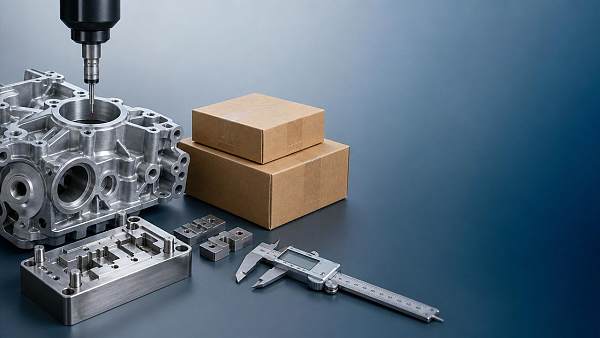
The market for precision die casting is shifting from simple cost sourcing toward validated manufacturing partnerships.
A die casting parts supplier China may serve automotive, electronics, industrial equipment, lighting, medical devices, and renewable energy applications.
That broad demand has raised expectations for process discipline, documentation, and engineering support before mass production begins.
OEM orders increasingly require early risk checks, not just final inspection after shipment.
Why the Sourcing Landscape Is Changing
Several trend signals are reshaping how a die casting parts supplier China is assessed before order confirmation.
Lead-time pressure remains high, while product lifecycles are shorter and tolerance requirements are tighter.
At the same time, global buyers expect traceable quality records and stable communication across engineering, production, and logistics.
This creates a clear change: suppliers must demonstrate control before the first purchase order is issued.
Material Control Is Becoming a First-Level Filter
A reliable die casting parts supplier China should control alloy selection, incoming inspection, melting, holding temperature, and traceability.
Aluminum, zinc, and magnesium die casting each require different process windows and defect prevention methods.
Material shortcuts may not appear during sampling, but they often emerge during fatigue, corrosion, or assembly testing.
Before approving a die casting parts supplier China, confirm whether alloy grades match international standards such as ADC12, A380, Zamak, or customer-specific specifications.
- Request raw material certificates for trial and production batches.
- Check whether recycled content is controlled and documented.
- Verify spectrometer testing frequency and retention records.
- Confirm heat treatment, aging, or impregnation capability if required.
Material transparency is a strong indicator of whether the supplier can support repeatable OEM production.
Tooling Capability Now Defines Cost, Speed, and Risk
Tooling is often the hidden risk behind a low quote from a die casting parts supplier China.
Poor mold design can create porosity, flash, dimensional drift, weak surfaces, and unstable cycle times.
The supplier should show experience with gate design, venting, cooling channels, ejector placement, and mold steel selection.
For complex parts, simulation reports help predict filling behavior, air entrapment, hot spots, and shrinkage zones.
Tooling checks before order release
- Ask for a design for manufacturability review.
- Confirm mold ownership, maintenance terms, and storage conditions.
- Review expected mold life and repair responsibility.
- Define sample approval stages before mass production.
- Require clear handling of engineering changes.
A technically mature die casting parts supplier China will discuss tooling risks before requesting production approval.
Tolerance Management Separates Sampling Success from Stable Production
A good sample does not always prove stable mass production.
A die casting parts supplier China should explain how tolerances will be controlled across cavities, machines, shifts, and production lots.
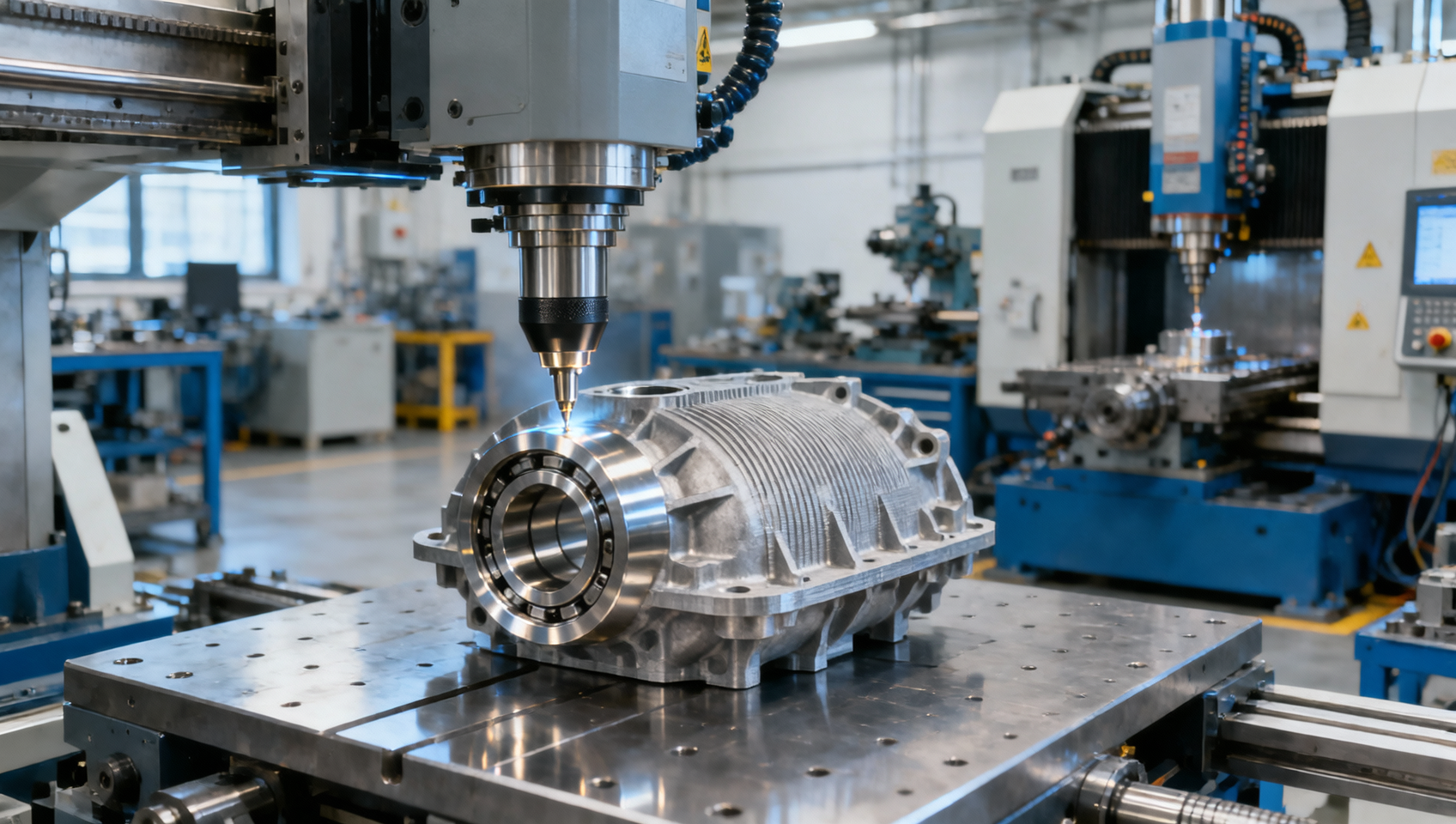
Critical dimensions may require CNC machining, reaming, tapping, grinding, or post-casting calibration.
For assembled parts, positional accuracy and flatness are often more important than a single nominal dimension.
A capable die casting parts supplier China will convert drawings into measurable process controls.
Surface Finishing Is Moving from Cosmetic Detail to Performance Requirement
Surface requirements now influence corrosion resistance, electrical conductivity, thermal performance, branding, and long-term durability.
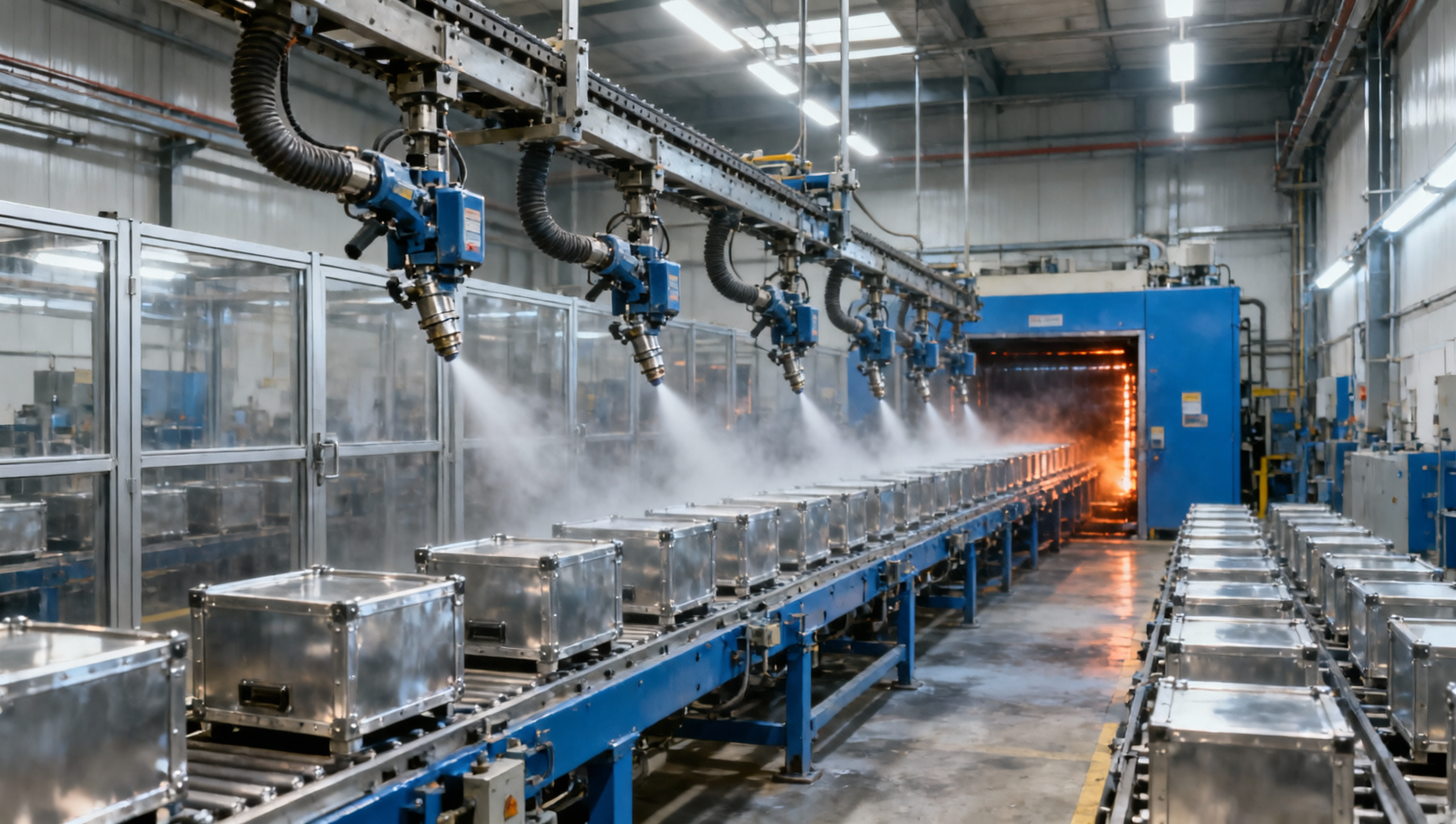
A die casting parts supplier China may offer shot blasting, polishing, powder coating, painting, anodizing, plating, passivation, or electrophoresis.
Each process has different preparation requirements and possible failure modes.
Porosity can cause blistering after coating, while poor cleaning may reduce adhesion or cause color variation.
- Define visual acceptance standards with photos or limit samples.
- Specify salt spray, adhesion, hardness, or thickness testing.
- Confirm masking requirements for threaded holes and contact surfaces.
- Check whether finishing is in-house or outsourced.
If finishing is outsourced, the die casting parts supplier China should still own final quality responsibility.
Quality Systems Should Be Verified Through Records, Not Claims
Certifications are useful, but they are only a starting point.
A die casting parts supplier China should demonstrate how ISO 9001, IATF 16949, or industry-specific controls work in daily production.
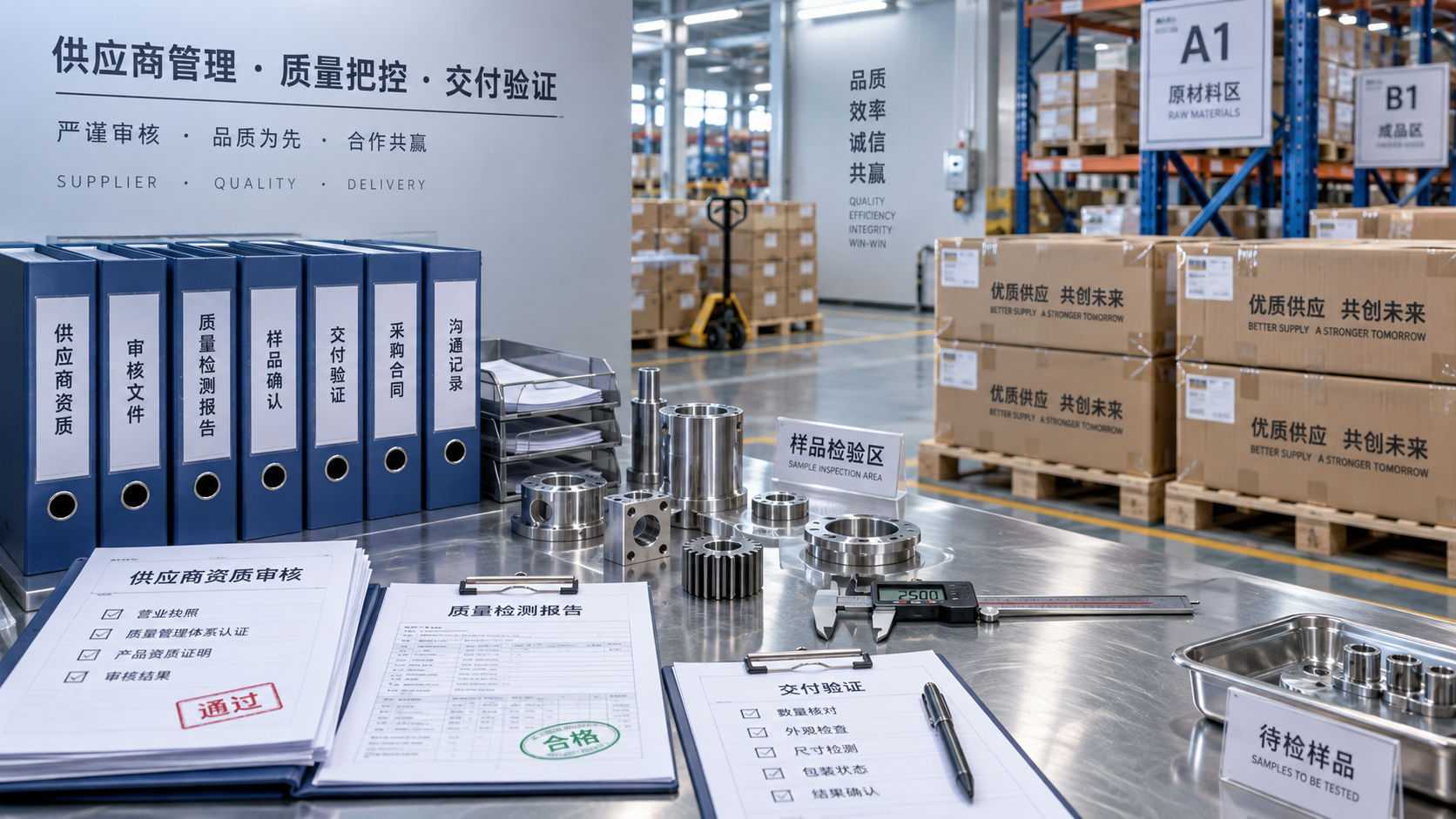
Useful evidence includes inspection plans, nonconformance reports, corrective actions, calibration logs, and operator training records.
The strongest suppliers show a closed-loop system between casting defects, root-cause analysis, and process improvement.
Quality evidence worth reviewing
- First article inspection reports.
- Process flow charts and control plans.
- PFMEA documents for critical parts.
- Gauge calibration certificates.
- Shipment inspection reports and defect history.
When a die casting parts supplier China shares structured records, production transparency becomes easier to evaluate.
Communication and Engineering Response Affect Launch Stability
OEM die casting projects often involve revisions, test feedback, and fast clarification cycles.
A die casting parts supplier China must respond with technical clarity, not vague assurances.
Slow responses can delay tooling decisions, sample approval, packaging design, and shipment booking.
Clear communication should include drawing reviews, risk logs, milestone updates, and issue escalation rules.
The best die casting parts supplier China behaves like an engineering partner during uncertainty.
Export Compliance and Packaging Are Now Strategic Checks
Export readiness can affect delivery reliability as much as casting quality.
A die casting parts supplier China should understand commercial invoices, packing lists, HS codes, certificates of origin, and destination requirements.
Packaging also deserves early validation, especially for machined surfaces, coated parts, thin walls, and high-value assemblies.
Poor packaging can cause scratches, deformation, corrosion, or mixed-lot confusion after a technically successful production run.
- Confirm Incoterms and responsibility boundaries.
- Define anti-rust, moisture, and impact protection.
- Require part labels, batch labels, and carton markings.
- Review pallet structure for sea, air, or rail freight.
How the Trend Affects Cost, Quality, and Supply Continuity
The shift toward verified sourcing changes how cost should be interpreted.
A lower unit price from a die casting parts supplier China may hide tooling weakness, unstable scrap rates, or finishing rework.
A slightly higher quote may be better if it includes stronger process control and fewer launch disruptions.
Business impact appears across design validation, inventory planning, warranty exposure, and customer delivery commitments.
- Engineering impact: fewer late drawing changes and faster root-cause decisions.
- Operational impact: lower inspection burden and more predictable replenishment.
- Financial impact: reduced scrap, rework, premium freight, and claims.
- Market impact: more stable product launches and stronger brand reliability.
Priority Checklist Before Confirming an OEM Order
Before selecting a die casting parts supplier China, the following checks help reduce sourcing uncertainty.
A Practical Response Strategy for the Next Order Cycle
A structured approval path is more effective than relying on quotation comparisons alone.
Start with technical screening, then validate samples, then audit production controls before scaling the order.
For a die casting parts supplier China, each phase should produce documented evidence.
- Send complete drawings, 3D files, specifications, and annual demand estimates.
- Request DFM feedback, risk notes, and alternative process suggestions.
- Approve tooling only after capability and ownership terms are clear.
- Validate samples using dimensional, functional, and finishing tests.
- Confirm packaging, inspection reports, and shipment documents before release.
This staged method turns supplier selection into a controlled risk-management process.
Final Outlook: Verified Capability Will Matter More Than the Lowest Quote
The die casting supply market is becoming more data-driven, more transparent, and more engineering-intensive.
A die casting parts supplier China can still deliver strong cost advantages and flexible capacity.
However, the winning choice is the supplier that proves repeatability, communicates risk early, and supports export-ready execution.
TradeNexus Pro tracks these manufacturing shifts across advanced manufacturing, smart electronics, green energy, healthcare technology, and supply chain systems.
Use the next RFQ to compare evidence, not promises.
Shortlist each die casting parts supplier China by material control, tooling depth, tolerance discipline, finishing reliability, and export readiness.
That approach creates a stronger foundation for scalable OEM production and long-term sourcing confidence.
Get weekly intelligence in your inbox.
No noise. No sponsored content. Pure intelligence.
 Oct 24, 2026Tesla Q3 2026 Storage Deployments Rank Second Highest as Revenue Falls 16%Tesla Q3 2026 Storage Deployments Rank Second Highest as Revenue Falls 16%
 Oct 24, 2026Freight Forwarding Services Pricing: Comparing Quotes Beyond Base RatesFreight Forwarding Services Pricing: Comparing Quotes Beyond Base Rates
 Oct 23, 2026IndexBox Issues Off-Grid Solar Outlook to 2035, Forecasting 8.2% CAGRIndexBox Issues Off-Grid Solar Outlook to 2035, Forecasting 8.2% CAGR
 Oct 23, 2026NSF/ANSI 49 Biosafety Cabinets: Product Certification vs. Field TestingNSF/ANSI 49 Biosafety Cabinets: Product Certification vs. Field Testing
 Oct 22, 2026Mitsubishi Electric Develops Industry-First Humanoid Robot–CNC Machining SystemMitsubishi Electric Develops Industry-First Humanoid Robot–CNC Machining System
 Oct 22, 2026Aerospace Aluminum Machining: How to Control Distortion in Thin-Wall PartsAerospace Aluminum Machining: How to Control Distortion in Thin-Wall Parts
 Oct 21, 2026Genesis Energy commissions 200 MWh battery storage system at HuntlyGenesis Energy commissions 200 MWh battery storage system at Huntly
 Oct 21, 2026Buying AMI Smart Meters Wholesale: Compatibility Checks and Total CostsBuying AMI Smart Meters Wholesale: Compatibility Checks and Total Costs
 Oct 20, 2026Werner Enterprises Issues Q3 Earnings Warning as Costs RiseWerner Enterprises Issues Q3 Earnings Warning as Costs Rise
 Oct 20, 2026Are Digital Twins Viable for SMEs? Costs, Use Cases, and Data RequirementsAre Digital Twins Viable for SMEs? Costs, Use Cases, and Data Requirements
 Oct 19, 2026Choosing a Wholesale Servo Motor Exporter: Traceability and Warranty ChecksChoosing a Wholesale Servo Motor Exporter: Traceability and Warranty Checks
 Oct 18, 2026Syringe Manufacturing Equipment: Evaluating Throughput and Assembly AccuracySyringe Manufacturing Equipment: Evaluating Throughput and Assembly Accuracy
 Oct 17, 2026Air Freight Forwarding Services: How to Compare Quotes for Urgent ShipmentsAir Freight Forwarding Services: How to Compare Quotes for Urgent Shipments
 Oct 16, 2026Wholesale Solar Panels: How to Compare Bulk Quotes by Total Landed CostWholesale Solar Panels: How to Compare Bulk Quotes by Total Landed Cost
 Oct 15, 2026Supply Chain Intelligence for Sourcing: How to Vet New SuppliersSupply Chain Intelligence for Sourcing: How to Vet New Suppliers
 Oct 14, 2026How energy costs shape smart manufacturing investment in EuropeHow energy costs shape smart manufacturing investment in Europe
 Oct 14, 2026How skills shortages slow smart manufacturing in Southeast AsiaHow skills shortages slow smart manufacturing in Southeast Asia
 Oct 14, 2026How CNC wire-cut machining maintains tight tolerances in thick partsHow CNC wire-cut machining maintains tight tolerances in thick parts
 Oct 14, 2026Can automated feeding stabilize metal forming in smart factories?Can automated feeding stabilize metal forming in smart factories?
 Oct 14, 2026Can CT inspection detect internal defects in metal additive parts?Can CT inspection detect internal defects in metal additive parts?
 Oct 14, 2026When does additive manufacturing reduce lead time for spare parts?When does additive manufacturing reduce lead time for spare parts?
 Oct 14, 2026How production volume affects ROI on an automated painting lineHow production volume affects ROI on an automated painting line
 Oct 14, 2026What data does manufacturing bottleneck analysis consulting need?What data does manufacturing bottleneck analysis consulting need?
 Oct 14, 2026When should you hire a consultant for manufacturing bottlenecks?When should you hire a consultant for manufacturing bottlenecks?
 Oct 14, 2026What Are Electronics Exporters' Top Supply Chain Resilience Gaps in 2026?What Are Electronics Exporters' Top Supply Chain Resilience Gaps in 2026?
 Oct 14, 2026How Do You Measure AI Adoption Maturity in a Traditional Factory?How Do You Measure AI Adoption Maturity in a Traditional Factory?
 Oct 14, 2026Are Chinese AI-Assisted Surgical Devices Gaining Global Trust?Are Chinese AI-Assisted Surgical Devices Gaining Global Trust?