Custom PCB Boards: Prototype or Mass Run?
Choosing custom PCB boards for a prototype is very different from planning a full production run. From SMT assembly services and flexible printed circuits to medical-use integrations such as portable ultrasound scanners, smart glucometers, digital blood pressure monitors, wearable ECG monitors, and remote patient monitoring systems, every decision affects cost, compliance, and scalability. This guide helps buyers, engineers, and project teams decide which path makes sense now, and what must be validated before moving forward.
For most teams, the short answer is simple: prototype custom PCB boards when your design, component selection, firmware, or regulatory path is still evolving; move to a mass run only when your bill of materials, test strategy, supplier stability, and quality targets are under control. The mistake is not choosing one or the other. The mistake is treating them as the same buying decision.
Prototype or mass run: what decision-makers actually need to evaluate
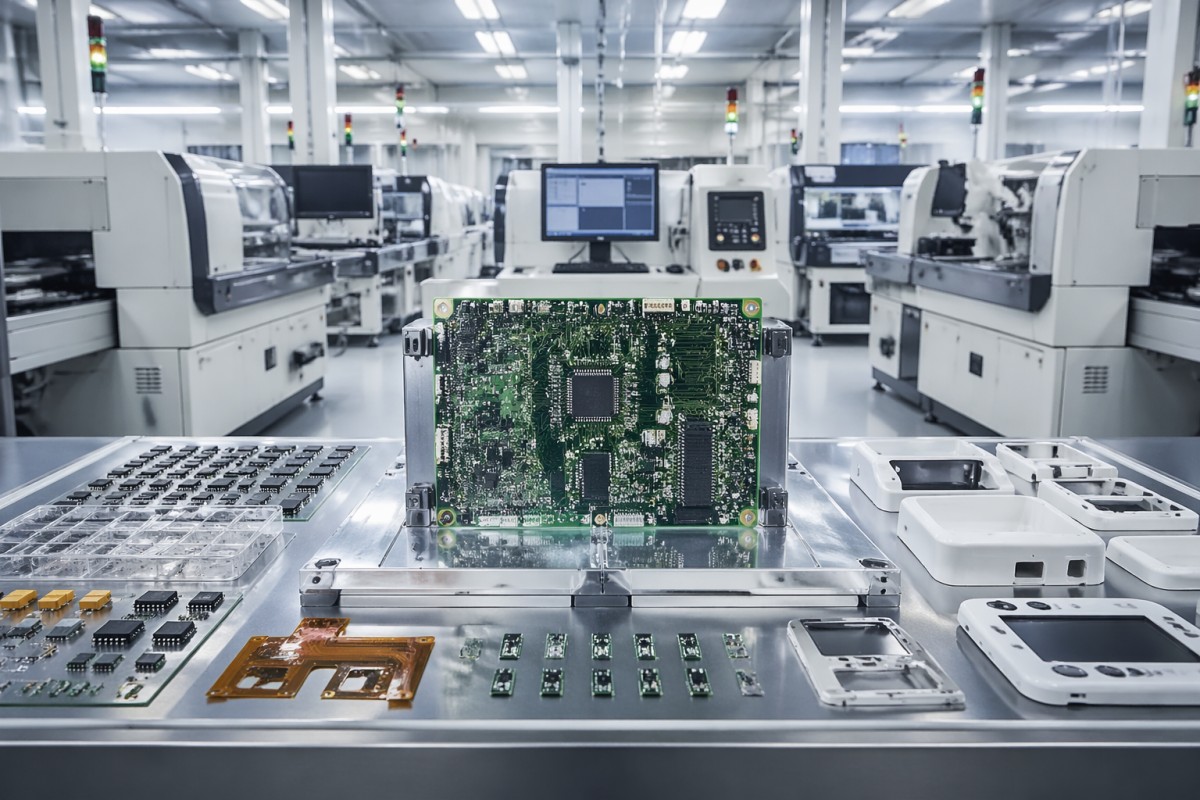
User intent behind this topic is usually practical, not theoretical. Buyers and project teams are trying to answer questions like: How many boards should we build first? What changes once we scale? How do we avoid expensive redesigns, quality failures, or procurement delays? And for higher-stakes sectors such as healthcare technology and smart electronics, they also need to know how compliance, traceability, and reliability requirements affect the decision.
If you are sourcing custom PCB boards, the right path depends on five factors:
- Design maturity: Is the schematic, layout, and firmware stable enough for repeatable production?
- Component risk: Are critical parts available, approved, and second-sourced where needed?
- Assembly complexity: Does the board involve fine-pitch components, BGA packages, mixed technologies, or flexible printed circuits?
- End-use requirements: Is the board going into a regulated, safety-sensitive, or mission-critical product?
- Commercial timing: Are you validating a concept, supporting a pilot launch, or fulfilling forecasted market demand?
For procurement leaders and enterprise decision-makers, this is not just an engineering question. It is a cost-control, risk-management, and time-to-market decision.
When a prototype run is the smarter choice
A prototype run is best when the product is still learning from reality. That includes design verification, electrical testing, fit checks, thermal behavior, software integration, and user feedback.
Prototype custom PCB boards are typically the right option when:
- The board may still need layout changes after testing
- You are validating component substitutions or supply chain alternatives
- You need fast-turn SMT assembly services for engineering review
- The product includes new sensor integrations, wireless modules, or compact high-density routing
- The application requires field trials before commercial approval
This is especially common in medical and connected-device development. For example, a wearable ECG monitor or remote patient monitoring system may require multiple iterations to optimize signal integrity, battery life, enclosure fit, and user comfort. A smart glucometer or digital blood pressure monitor may need repeated validation of measurement accuracy, communications performance, and low-power operation before scaling.
In this stage, flexibility matters more than unit cost. A good prototype supplier should support design-for-manufacturing feedback, quick engineering communication, and low-volume builds without forcing a production-style commitment too early.
When a mass production run becomes the better investment
A mass run makes sense only after uncertainty has dropped to an acceptable level. At that point, the focus shifts from “Does it work?” to “Can it be built consistently, affordably, and at scale?”
You are closer to mass production when:
- The design has passed functional and reliability validation
- The BOM is frozen or tightly controlled
- Test fixtures and inspection criteria are defined
- Yield expectations are understood
- Suppliers can support stable lead times and volume commitments
- Compliance documentation is complete or on track
At this stage, the advantages of a larger production run become clearer:
- Lower unit cost through better material pricing and process efficiency
- Improved planning for inventory, launches, and channel supply
- More stable quality control with standardized testing and repeatable assembly processes
- Better contract leverage with manufacturing and logistics partners
For example, if a portable ultrasound scanner has completed its technical validation and is entering hospital pilot deployment or distributor rollout, a controlled production run can help align supply with demand while preserving traceability and consistency.
Cost is not just prototype vs volume price
Many buyers compare only unit price and miss the bigger financial picture. Prototype boards are more expensive per unit, but they are often cheaper overall if they prevent mistakes. A mass run may reduce piece cost, but it can create major losses if the design is immature.
Real cost drivers include:
- NRE and tooling charges
- Setup costs for SMT assembly services
- Component sourcing volatility
- Scrap and rework risk
- Engineering change orders after release
- Delays caused by failed validation or compliance gaps
A practical way to evaluate cost is to ask two separate questions:
- What is the cost to build? This includes fabrication, assembly, testing, logistics, and support.
- What is the cost of being wrong? This includes redesign, field failures, launch delays, customer dissatisfaction, and procurement disruption.
For finance approvers and business evaluators, the second question is often more important than the first.
What changes in sourcing requirements from prototype to production
The supplier that is excellent for prototypes is not always the ideal partner for a mass run. The sourcing criteria shift significantly as volume increases.
For prototype sourcing, prioritize:
- Fast turnaround
- Engineering communication quality
- Willingness to support revisions
- Capability with complex builds such as flexible printed circuits or dense multilayer boards
- Debug support and early-stage manufacturability input
For production sourcing, prioritize:
- Process consistency and yield control
- Documented quality systems
- Scalable procurement and inventory planning
- Traceability and lot control
- Regulatory and industry documentation readiness
- Business continuity and secondary sourcing strategy
This matters even more in products tied to healthcare technology, where quality control personnel and safety managers need confidence that every production lot can meet the same standard as the approved sample.
Why regulated and high-reliability applications require extra caution
Not all PCB projects carry the same level of risk. If the board supports a product used in medical monitoring, diagnostics, industrial controls, or other reliability-sensitive environments, the threshold for moving into a mass run should be much higher.
In these cases, teams should validate:
- Material suitability and long-term reliability
- Assembly process stability
- Environmental and stress performance
- Inspection and test coverage
- Documentation for audits, quality review, and customer requirements
Consider applications such as portable ultrasound scanners, smart glucometers, or remote patient monitoring systems. These products may involve signal accuracy, patient data transmission, power management, and strict product expectations. In such scenarios, a rushed transition from prototype to volume production can create expensive quality events and approval setbacks.
A practical checklist before you commit to a production run
Before approving a mass run of custom PCB boards, ask your internal team and supplier the following:
- Has the design been tested in real operating conditions?
- Are all critical components available with acceptable lead times?
- Do we have approved alternatives for high-risk parts?
- Has design-for-manufacturing feedback been incorporated?
- Are test procedures defined for incoming, in-process, and final inspection?
- Do we know the expected yield and failure modes?
- Are firmware and hardware versions fully controlled?
- Is the product entering a regulated or quality-sensitive market?
- Can the supplier maintain consistency across batches?
- What is our exit plan if demand rises faster than forecast?
If several of these answers are still uncertain, another prototype or pilot batch is usually the wiser move.
How to choose the right path with confidence
The best decision is rarely based on quantity alone. It is based on readiness. Prototype runs are for reducing uncertainty. Mass runs are for executing a stable, repeatable process at commercial scale.
If your team is still proving performance, usability, sourcing stability, or compliance readiness, choose a prototype or pilot build. If your product has passed validation, your supply chain is under control, and your quality requirements are clearly defined, a production run can deliver stronger margins and more predictable supply.
For procurement teams, project managers, and technical leaders, the most effective approach is to align engineering maturity with sourcing strategy. That is how you reduce risk, protect budgets, and move from concept to scalable market delivery with fewer surprises.
In short, custom PCB boards for prototypes should optimize learning and flexibility, while boards for mass production should optimize consistency, cost efficiency, and supply resilience. Knowing the difference is what separates a smooth launch from a costly setback.
Get weekly intelligence in your inbox.
No noise. No sponsored content. Pure intelligence.
 Apr 29, 2026USITC Launches Section 337 Investigation into Chinese Wi-Fi 7 RF ModulesUSITC Launches Section 337 Investigation into Chinese Wi-Fi 7 RF Modules
 Apr 29, 2026Côte d'Ivoire Launches $500M Grid Storage Tender, Chinese BESS Fast-TrackedCôte d'Ivoire Launches $500M Grid Storage Tender, Chinese BESS Fast-Tracked
 Apr 29, 2026Morocco Enforces IEC 61427-2:2025 PV Mounting Certification from Q3 2026Morocco Enforces IEC 61427-2:2025 PV Mounting Certification from Q3 2026
 Apr 29, 2026UAE Becomes Global AI Hub: New CE-ADAS+ Path for Chinese Smart Industrial EquipmentUAE Becomes Global AI Hub: New CE-ADAS+ Path for Chinese Smart Industrial Equipment
 Apr 29, 2026Red Sea Crisis: Suez Canal Fees Up 12%, China-Europe Rail Premium at 35%Red Sea Crisis: Suez Canal Fees Up 12%, China-Europe Rail Premium at 35%
 Apr 29, 2026TÜV Rheinland Launches Fast-Track Certification for Chinese Warehouse RobotsTÜV Rheinland Launches Fast-Track Certification for Chinese Warehouse Robots
 Apr 29, 2026Vietnam's SMT Expansion Drives CNC Fixture Export DelaysVietnam's SMT Expansion Drives CNC Fixture Export Delays
![]() Apr 29, 2026NEOM Smart Infrastructure Phase II Opens Bidding: Chinese PV Mounting & BESS Pre-QualifiedNEOM Smart Infrastructure Phase II Opens Bidding: Chinese PV Mounting & BESS Pre-Qualified
Apr 29, 2026NEOM Smart Infrastructure Phase II Opens Bidding: Chinese PV Mounting & BESS Pre-QualifiedNEOM Smart Infrastructure Phase II Opens Bidding: Chinese PV Mounting & BESS Pre-Qualified Apr 29, 2026EU Enforces Battery Passport for Energy Storage Imports from July 2026EU Enforces Battery Passport for Energy Storage Imports from July 2026
 Apr 29, 2026Maine Bans New >20MW Data Centers — AI Hardware Delivery ImpactedMaine Bans New >20MW Data Centers — AI Hardware Delivery Impacted
 Apr 28, 2026Suez Canal Fee Hike & China-Europe Rail Premium: Q2 2026 ImpactSuez Canal Fee Hike & China-Europe Rail Premium: Q2 2026 Impact
 Apr 28, 2026TÜV Rheinland Launches Fast-Track Certification for Chinese Warehouse RobotsTÜV Rheinland Launches Fast-Track Certification for Chinese Warehouse Robots
 Apr 28, 2026EU Enforces Battery Passport Rule for Chinese ESS Exports from 2027EU Enforces Battery Passport Rule for Chinese ESS Exports from 2027
 Apr 28, 2026ADB Raises Vietnam GDP Forecast to 7.2%: SMT & Precision Fixture Demand RisesADB Raises Vietnam GDP Forecast to 7.2%: SMT & Precision Fixture Demand Rises
 Apr 28, 2026US ITC Launches Section 337 Investigation into Chinese Wi-Fi 7 RF FEMsUS ITC Launches Section 337 Investigation into Chinese Wi-Fi 7 RF FEMs
 Apr 28, 2026Côte d'Ivoire Opens $500M Power Tender: Chinese BESS Get Fast-Track AccessCôte d'Ivoire Opens $500M Power Tender: Chinese BESS Get Fast-Track Access
 Apr 28, 2026BP’s Algeria East Basin Permit Spurs Valve Demand, Lead Times Extend to 18 WeeksBP’s Algeria East Basin Permit Spurs Valve Demand, Lead Times Extend to 18 Weeks
") Apr 28, 2026Vietnam Mandates V-Trust for Smart Appliances Export (July 2026)Vietnam Mandates V-Trust for Smart Appliances Export (July 2026)
Apr 28, 2026Vietnam Mandates V-Trust for Smart Appliances Export (July 2026)Vietnam Mandates V-Trust for Smart Appliances Export (July 2026) Apr 28, 2026Morocco Enforces PV Mounting Structure Certification from Q3 2026Morocco Enforces PV Mounting Structure Certification from Q3 2026
 Apr 28, 2026UAE Establishes AI Hub Status, Opens CE-ADAS+ Pathway for Chinese Smart Industrial EquipmentUAE Establishes AI Hub Status, Opens CE-ADAS+ Pathway for Chinese Smart Industrial Equipment
 Apr 27, 2026Algeria’s Oil & Steel FDI Push Opens Valve, Corrosion-Resistant Material OrdersAlgeria’s Oil & Steel FDI Push Opens Valve, Corrosion-Resistant Material Orders
 Apr 27, 2026Azerbaijan’s New PV Mounting Standard Opens Path for Chinese SuppliersAzerbaijan’s New PV Mounting Standard Opens Path for Chinese Suppliers
 Apr 27, 2026Fitch Cuts East Africa Growth Forecasts, Raises Cross-Border Trade RisksFitch Cuts East Africa Growth Forecasts, Raises Cross-Border Trade Risks
 Apr 27, 2026ADB Raises Vietnam GDP Forecast to 7.2% on Electronics Export GrowthADB Raises Vietnam GDP Forecast to 7.2% on Electronics Export Growth
 Apr 27, 2026Maine Halts Large Data Centers: AI Server Export ImpactMaine Halts Large Data Centers: AI Server Export Impact
 Apr 27, 2026OFID $500M for Côte d'Ivoire: Boost to Factory Automation & Warehouse RoboticsOFID $500M for Côte d'Ivoire: Boost to Factory Automation & Warehouse Robotics
 Apr 27, 2026Morocco Ranks 4th in EU Energy Aid to AfricaMorocco Ranks 4th in EU Energy Aid to Africa