How to Choose Wireless Chargers That Actually Fit Daily Use
Choosing a wireless charger that actually fits daily use is less about buying the most stylish pad and more about matching charging behavior, device compatibility, heat management, and safety to the real environment where it will be used. For individual users, that means fewer interruptions and more consistent charging. For technical evaluators, procurement teams, and business decision-makers, it means assessing reliability, certification, lifespan, and total value rather than just headline wattage.
In practice, the best wireless chargers are the ones that charge predictably, align easily with devices, stay cool under repeated use, support the right standards, and fit the desk, bedside, retail, clinical, or shared-workstation scenario they are intended for. If you are comparing smart electronics across workplace or consumer-adjacent categories, the key is to evaluate real-use performance, not packaging claims.
What should you check first when choosing a wireless charger?
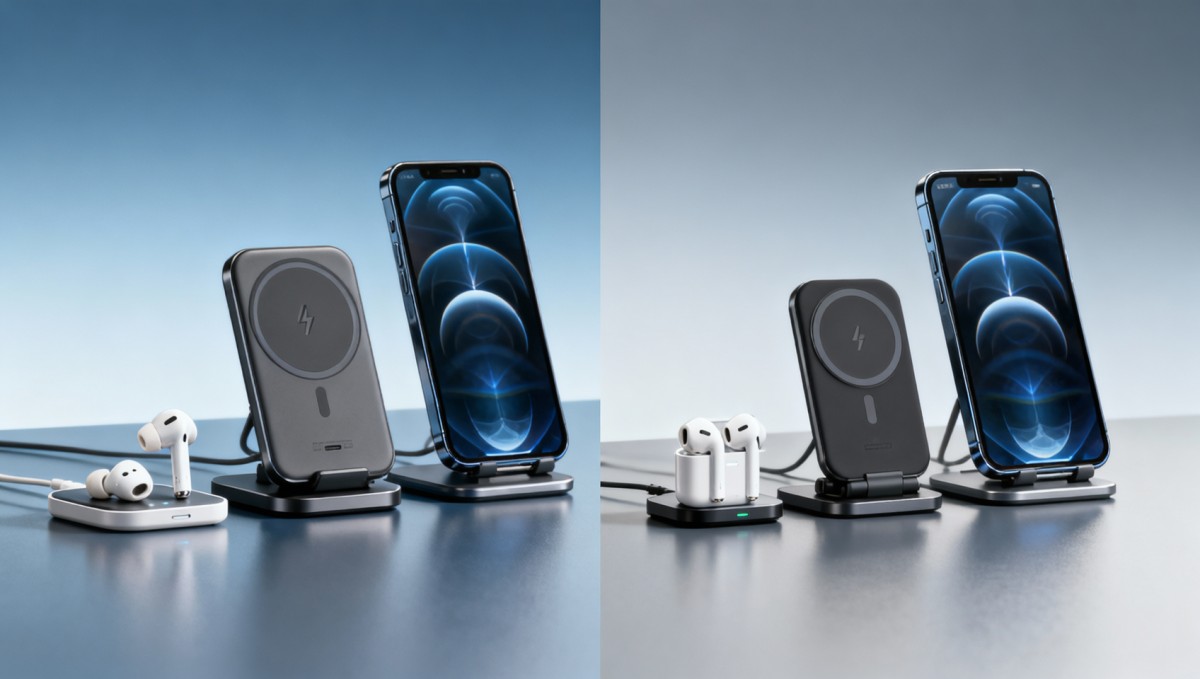
Start with the four factors that most directly affect daily usability:
- Compatibility: Does it support the charging standard your phone, earbuds, or wearable actually uses?
- Charging stability: Does charging continue reliably if the device shifts slightly during normal use?
- Heat control: Does it maintain safe operating temperatures during long charging sessions?
- Use-case fit: Is it designed for a nightstand, office desk, shared station, vehicle, reception area, or commercial deployment?
Many buyers focus first on maximum output such as 10W, 15W, or higher. That matters, but it is rarely the deciding factor in everyday satisfaction. A charger that is slightly slower but more consistent, safer, and easier to align often delivers better real-world value than a faster model that frequently disconnects or runs hot.
For B2B buyers or project teams, this first-stage filter is especially important. A wireless charger may look interchangeable on paper, but differences in coil design, firmware, foreign object detection, enclosure material, and certification quality can significantly affect user complaints, return rates, and replacement cycles.
Why do some wireless chargers feel inconvenient in daily use?
The biggest reason is that advertised performance is often measured under ideal lab conditions, while daily use is messy. Devices are placed off-center, protective cases vary in thickness, ambient temperatures change, and users expect charging to work without adjustment.
Common real-world frustrations include:
- Charging starts and stops due to poor alignment
- Slow charging caused by incompatible adapters or cables
- Excess heat during extended use
- Limited support for cases, camera bumps, or mixed device brands
- Status lights that are too bright for bedroom use or too unclear for workplace monitoring
This is why choosing wireless chargers for daily use should begin with user behavior, not just product specs. A bedside charger should allow easy drop-and-charge placement in low light. A desk charger should support frequent pick-up and put-down cycles. A shared office or hospitality charger should work with a wide range of devices and require minimal explanation.
How important are charging speed and power ratings really?
Charging speed matters, but only after compatibility and thermal performance are confirmed. In many purchase decisions, wattage is overemphasized. A charger rated for high output may not reach that level unless the phone, adapter, cable, and charging protocol all match.
For example, a 15W wireless charger may perform below expectations if:
- The power adapter does not provide the required input
- The phone brand limits wireless charging under certain conditions
- A thick or metal-containing case reduces efficiency
- Heat buildup causes power throttling
For daily use, what matters more is sustained effective charging. A charger that consistently delivers practical charging over time is preferable to one that peaks briefly and then slows due to heat or alignment issues.
For procurement or technical review teams, the better question is not “What is the maximum wattage?” but “What charging performance can users realistically expect over repeated daily cycles?”
What safety and quality standards should buyers pay attention to?
This is one of the most important evaluation areas, especially for enterprise buyers, facilities teams, and quality control personnel. A wireless charger is a power device, not just an accessory. Poorly designed units can create overheating risks, device stress, inconsistent performance, or early product failure.
Key things to look for include:
- Qi or relevant standard compliance: Confirms baseline interoperability
- Over-temperature protection: Helps reduce overheating during long sessions
- Foreign object detection: Important for identifying metal objects that could interfere or heat up
- Over-voltage and over-current protection: Supports safer operation
- Certified testing and traceable manufacturing quality: Important for commercial or scaled deployments
In business environments such as meeting rooms, healthcare support spaces, front desks, or employee workstations, safety and consistency matter more than premium cosmetic design. A charger that passes formal compliance review and performs predictably will usually create fewer operational issues than a cheaper, unverified alternative.
Which charger format fits which usage scenario?
The right format depends on where and how the charger will be used. This is often overlooked, but format directly affects user satisfaction.
- Flat charging pads: Simple and compact, best for nightstands, casual desk use, and low-cost deployments
- Charging stands: Better for office desks, video calls, and users who need to view the screen while charging
- Multi-device chargers: Useful for users carrying a phone, earbuds, and smartwatch, but should be checked carefully for heat and power distribution
- Integrated furniture or embedded chargers: Suitable for hospitality, conference rooms, and premium workspace design, but require stronger installation and maintenance planning
- Vehicle wireless chargers: Need stronger grip, anti-slip design, and vibration-resistant alignment
For enterprise buyers, selecting the wrong format often creates hidden costs. A sleek flat pad may look attractive in a conference room, but if guests repeatedly misalign their phones, the perceived user experience will be poor. A stand may take more space, but it can improve charging success and reduce user confusion.
How should businesses evaluate wireless chargers before bulk purchase?
Bulk selection should not rely on sample appearance or headline specs alone. A short evaluation framework can help procurement directors, project managers, and technical reviewers reduce risk.
Recommended assessment checklist:
- Define the device mix: List the main phone brands, earbud models, and wearables that users actually carry.
- Map the usage environment: Desk, bedside, reception, public area, fleet vehicle, or industrial support area.
- Test real accessories: Include actual cases, charging adapters, and common placement habits.
- Measure heat over time: Check performance during repeated or extended charging sessions.
- Review certification documents: Verify compliance claims instead of accepting them at face value.
- Estimate replacement and support costs: Include user complaints, downtime, and warranty handling.
This process is especially useful for companies sourcing smart electronics alongside related equipment categories such as portable monitors, lithium ion batteries, smart thermostats, or portable power stations. In all of these categories, the lowest visible product price rarely reflects the full operational cost.
What signals long-term value instead of short-term marketing appeal?
Long-term value comes from durability, stable charging behavior, and low-friction daily use. In other words, the best wireless charger is one users stop thinking about because it simply works.
Positive indicators include:
- Consistent charging across repeated daily placement
- Low heat generation under normal operating conditions
- Stable housing materials and non-slip surfaces
- Reliable support for major devices in the target environment
- Clear safety documentation and warranty terms
- Proven supplier responsiveness and quality control
For business buyers, long-term value also includes softer but important outcomes: fewer support tickets, better workspace convenience, lower replacement frequency, and improved confidence in the brand or facility providing the charging point.
How can buyers make a practical final decision?
A practical decision comes down to matching charger type and quality level to the actual use scenario.
Choose a wireless charger if you need:
- Convenient top-up charging during the day
- Cleaner desks or shared charging spaces
- User-friendly charging with less cable handling
Be more selective if you need:
- Fastest possible charging at all times
- Guaranteed compatibility across a highly mixed device fleet
- Operation in heat-sensitive or safety-critical environments
For many teams, the smartest choice is not the most premium wireless charger, but the one that reliably balances compatibility, thermal performance, certified safety, and format suitability. A short pilot test with actual users often reveals more than a feature sheet.
In summary, choosing wireless chargers that actually fit daily use means evaluating how they perform in real environments, not how they are marketed. Buyers should prioritize compatibility, placement tolerance, heat control, safety certification, and scenario fit before focusing on headline wattage or design. Whether the charger is for personal desks, hospitality settings, shared workspaces, or broader B2B sourcing, the best option is the one that delivers dependable charging, lower operational friction, and lasting value over time.
Get weekly intelligence in your inbox.
No noise. No sponsored content. Pure intelligence.
 Apr 29, 2026USITC Launches Section 337 Investigation into Chinese Wi-Fi 7 RF ModulesUSITC Launches Section 337 Investigation into Chinese Wi-Fi 7 RF Modules
 Apr 29, 2026Côte d'Ivoire Launches $500M Grid Storage Tender, Chinese BESS Fast-TrackedCôte d'Ivoire Launches $500M Grid Storage Tender, Chinese BESS Fast-Tracked
 Apr 29, 2026Morocco Enforces IEC 61427-2:2025 PV Mounting Certification from Q3 2026Morocco Enforces IEC 61427-2:2025 PV Mounting Certification from Q3 2026
 Apr 29, 2026UAE Becomes Global AI Hub: New CE-ADAS+ Path for Chinese Smart Industrial EquipmentUAE Becomes Global AI Hub: New CE-ADAS+ Path for Chinese Smart Industrial Equipment
 Apr 29, 2026Red Sea Crisis: Suez Canal Fees Up 12%, China-Europe Rail Premium at 35%Red Sea Crisis: Suez Canal Fees Up 12%, China-Europe Rail Premium at 35%
 Apr 29, 2026TÜV Rheinland Launches Fast-Track Certification for Chinese Warehouse RobotsTÜV Rheinland Launches Fast-Track Certification for Chinese Warehouse Robots
 Apr 29, 2026Vietnam's SMT Expansion Drives CNC Fixture Export DelaysVietnam's SMT Expansion Drives CNC Fixture Export Delays
![]() Apr 29, 2026NEOM Smart Infrastructure Phase II Opens Bidding: Chinese PV Mounting & BESS Pre-QualifiedNEOM Smart Infrastructure Phase II Opens Bidding: Chinese PV Mounting & BESS Pre-Qualified
Apr 29, 2026NEOM Smart Infrastructure Phase II Opens Bidding: Chinese PV Mounting & BESS Pre-QualifiedNEOM Smart Infrastructure Phase II Opens Bidding: Chinese PV Mounting & BESS Pre-Qualified Apr 29, 2026EU Enforces Battery Passport for Energy Storage Imports from July 2026EU Enforces Battery Passport for Energy Storage Imports from July 2026
 Apr 29, 2026Maine Bans New >20MW Data Centers — AI Hardware Delivery ImpactedMaine Bans New >20MW Data Centers — AI Hardware Delivery Impacted
 Apr 28, 2026Suez Canal Fee Hike & China-Europe Rail Premium: Q2 2026 ImpactSuez Canal Fee Hike & China-Europe Rail Premium: Q2 2026 Impact
 Apr 28, 2026TÜV Rheinland Launches Fast-Track Certification for Chinese Warehouse RobotsTÜV Rheinland Launches Fast-Track Certification for Chinese Warehouse Robots
 Apr 28, 2026EU Enforces Battery Passport Rule for Chinese ESS Exports from 2027EU Enforces Battery Passport Rule for Chinese ESS Exports from 2027
 Apr 28, 2026ADB Raises Vietnam GDP Forecast to 7.2%: SMT & Precision Fixture Demand RisesADB Raises Vietnam GDP Forecast to 7.2%: SMT & Precision Fixture Demand Rises
 Apr 28, 2026US ITC Launches Section 337 Investigation into Chinese Wi-Fi 7 RF FEMsUS ITC Launches Section 337 Investigation into Chinese Wi-Fi 7 RF FEMs
 Apr 28, 2026Côte d'Ivoire Opens $500M Power Tender: Chinese BESS Get Fast-Track AccessCôte d'Ivoire Opens $500M Power Tender: Chinese BESS Get Fast-Track Access
 Apr 28, 2026BP’s Algeria East Basin Permit Spurs Valve Demand, Lead Times Extend to 18 WeeksBP’s Algeria East Basin Permit Spurs Valve Demand, Lead Times Extend to 18 Weeks
") Apr 28, 2026Vietnam Mandates V-Trust for Smart Appliances Export (July 2026)Vietnam Mandates V-Trust for Smart Appliances Export (July 2026)
Apr 28, 2026Vietnam Mandates V-Trust for Smart Appliances Export (July 2026)Vietnam Mandates V-Trust for Smart Appliances Export (July 2026) Apr 28, 2026Morocco Enforces PV Mounting Structure Certification from Q3 2026Morocco Enforces PV Mounting Structure Certification from Q3 2026
 Apr 28, 2026UAE Establishes AI Hub Status, Opens CE-ADAS+ Pathway for Chinese Smart Industrial EquipmentUAE Establishes AI Hub Status, Opens CE-ADAS+ Pathway for Chinese Smart Industrial Equipment
 Apr 27, 2026Algeria’s Oil & Steel FDI Push Opens Valve, Corrosion-Resistant Material OrdersAlgeria’s Oil & Steel FDI Push Opens Valve, Corrosion-Resistant Material Orders
 Apr 27, 2026Azerbaijan’s New PV Mounting Standard Opens Path for Chinese SuppliersAzerbaijan’s New PV Mounting Standard Opens Path for Chinese Suppliers
 Apr 27, 2026Fitch Cuts East Africa Growth Forecasts, Raises Cross-Border Trade RisksFitch Cuts East Africa Growth Forecasts, Raises Cross-Border Trade Risks
 Apr 27, 2026ADB Raises Vietnam GDP Forecast to 7.2% on Electronics Export GrowthADB Raises Vietnam GDP Forecast to 7.2% on Electronics Export Growth
 Apr 27, 2026Maine Halts Large Data Centers: AI Server Export ImpactMaine Halts Large Data Centers: AI Server Export Impact
 Apr 27, 2026OFID $500M for Côte d'Ivoire: Boost to Factory Automation & Warehouse RoboticsOFID $500M for Côte d'Ivoire: Boost to Factory Automation & Warehouse Robotics
 Apr 27, 2026Morocco Ranks 4th in EU Energy Aid to AfricaMorocco Ranks 4th in EU Energy Aid to Africa