What Affects Flexible Printed Circuit Cost?
Flexible printed circuits can vary widely in price, and understanding what drives that cost is essential for buyers, engineers, and sourcing teams. From material selection and layer count to design complexity, volume, and SMT assembly services, each factor affects the final budget. For companies comparing custom PCB boards for smart electronics, remote patient monitoring, wearable ECG monitors, or portable ultrasound scanners, this guide explains the key cost variables and how to make more informed procurement decisions.
Which factors have the biggest impact on flexible printed circuit cost?
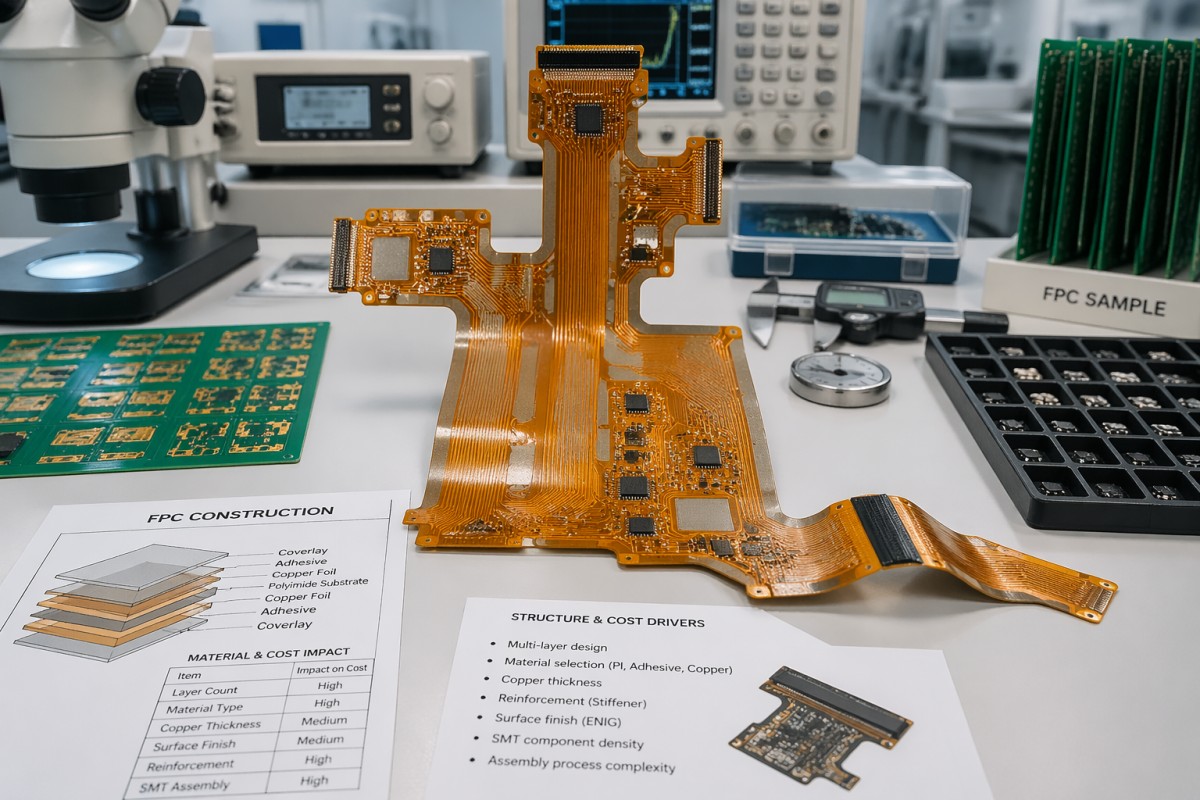
Flexible printed circuit cost is rarely determined by one variable alone. In most B2B sourcing projects, the final price is shaped by 5 core dimensions: base material, layer structure, circuit complexity, order volume, and downstream assembly or testing requirements. For procurement teams working across smart electronics, healthcare devices, and compact industrial systems, these variables influence not only piece price but also tooling expense, yield risk, and lead time.
Material choice is often the first cost driver. Standard polyimide is widely used because it balances flexibility, thermal stability, and electrical performance. However, adhesive-based and adhesiveless constructions can differ in cost and performance profile. Copper thickness also matters. A circuit using 0.5 oz copper will generally cost less than one requiring 1 oz or heavier copper, especially when tighter bend performance or current-carrying capacity is involved.
Layer count changes cost quickly. A single-sided flexible circuit may fit basic interconnect applications, while 2-layer and 4-layer designs support denser routing and signal management. Each additional layer introduces lamination, alignment, and inspection complexity. In practical sourcing terms, moving from 1 layer to 2 layers can produce a clear price step-up, while multilayer flex structures usually require closer engineering review before quotation.
Design complexity is another major factor. Fine traces, small vias, stiffeners, impedance control, dynamic bend zones, and mixed rigid-flex features all increase process difficulty. This is especially relevant for wearable ECG monitors, remote patient monitoring devices, and portable ultrasound scanners, where compact packaging and repeated flexing can tighten manufacturing tolerances. Even when the board outline looks simple, the internal fabrication demands may not be.
Key cost drivers buyers should review before requesting quotes
- Material stack-up: polyimide type, copper weight, coverlay, stiffener material, and surface finish all affect baseline cost.
- Manufacturing difficulty: line width/spacing, drilled feature size, bend radius, and dimensional tolerances can alter yield expectations.
- Production scale: prototype, low-volume, and medium-volume orders distribute tooling and setup charges differently.
- Assembly requirements: SMT, component sourcing, functional testing, and packaging can account for a significant share of total project cost.
For many sourcing teams, the most useful approach is not asking “What is the flexible printed circuit cost?” in isolation, but instead asking “What combination of design, volume, and reliability target fits the budget?” That framing helps avoid false comparisons between a basic custom PCB board and a medically oriented or high-density flex assembly built for a more demanding environment.
How do materials, structure, and technical specifications change pricing?
Technical specifications directly influence both manufacturing steps and scrap risk. In flex circuit production, cost tends to rise when designs require tighter process control across several variables at once. Typical quotation reviews focus on at least 6 specification areas: substrate type, copper thickness, layer count, surface finish, stiffener strategy, and bend-life requirements. If 3 or 4 of these factors are already demanding, suppliers usually need to price more conservatively.
Surface finish selection is a good example. ENIG is commonly chosen for fine-pitch SMT and stable solderability, but it generally costs more than simpler finishes used in less demanding applications. Stiffeners also add cost depending on material and location. FR4 stiffeners, polyimide stiffeners, or stainless-steel reinforcement may each be justified by assembly support, connector insertion strength, or mechanical stability, yet they increase processing and material inputs.
Dynamic and static flex conditions should be distinguished early. A flex board used once during installation may be suitable for a less demanding design than a circuit bent repeatedly in service. Repeated-motion applications often require more attention to copper layout, neutral bend area planning, and material selection. This does not automatically mean very high cost, but it often limits low-cost design shortcuts that might otherwise appear attractive during early budgeting.
Medical and portable electronics projects also add indirect cost through validation expectations. Even when the flex circuit itself is only one subsystem, buyers may require stronger lot traceability, more consistent process documentation, and extra incoming or outgoing inspection. That is especially relevant in healthcare technology programs where reliability, cleaning compatibility, and assembly consistency affect broader product qualification efforts.
Typical specification areas that influence flexible printed circuit cost
The table below summarizes how common design and process choices can shift the cost structure of custom PCB boards and flexible printed circuits. The exact impact varies by supplier capability and project scope, but these are practical evaluation points for purchasing and engineering teams.
This comparison helps buyers understand why two suppliers may quote very different numbers for what seems like the same flex board. If one quotation includes engineering checks, assembly handling support, and enhanced inspection while another covers only bare fabrication, the price gap can be substantial even before shipping and qualification costs are added.
What changes when volume, lead time, and SMT assembly are added?
Order quantity has a direct effect on flexible printed circuit cost because tooling, setup, and engineering charges must be distributed across the build. In a prototype run of 5 to 20 pieces, unit pricing is usually much higher than in a production run of 500 to 5,000 pieces. This does not mean every high-volume order is inexpensive, but volume often improves cost efficiency when the design is stable and yield is predictable.
Lead time also matters. Standard fabrication windows may fall in the 7 to 15 working day range for straightforward projects, while expedited builds compress planning and capacity allocation. Rush orders can increase cost through overtime scheduling, faster material procurement, or reduced panel optimization. For project managers under launch pressure, the real question is whether paying more for speed reduces a larger commercial risk such as delayed validation or missed market entry.
SMT assembly can equal or exceed bare board cost depending on component count, package type, and test coverage. Fine-pitch components, bottom-side assembly support, BGA handling, underfill processes, or controlled reflow profiles all add complexity. In medical-adjacent electronics, the assembly quotation may also include lot control, cleaning requirements, and functional verification. That makes early coordination between board design and assembly planning especially valuable.
Buyers should also evaluate hidden logistics costs. Moisture-sensitive components, ESD-safe packaging, reel or tray requirements, and separate shipment milestones for prototypes and pilot lots all affect total landed cost. A cheaper board price can become less attractive if the supplier cannot support the packaging, inspection records, or staged delivery model required by the program.
Volume and service combinations that typically alter total budget
The table below gives a practical planning view for purchasing teams comparing prototype, pilot, and production sourcing strategies for flexible printed circuits and associated SMT services.
For finance approvers and commercial evaluators, this stage-based view is useful because it separates short-term validation cost from long-term production economics. It also supports cleaner negotiations on NRE, tooling, and service scope rather than forcing all cost discussions into a single unit-price comparison.
How should procurement teams compare suppliers and avoid cost surprises?
A strong quotation process reduces risk more effectively than chasing the lowest visible number. In flexible printed circuit procurement, at least 4 checks should be completed before supplier comparison: design file completeness, stack-up confirmation, assembly scope alignment, and inspection requirement definition. When these are unclear, suppliers make different assumptions, and the resulting quotes become difficult to compare on an equal basis.
Procurement professionals should ask whether the quote includes bare board only or full support through SMT, testing, and packaging. They should also confirm whether yield-sensitive features were reviewed by engineering. A lower quote may reflect exclusions such as fixture cost, panel optimization limits, or restricted responsibility for bend-life performance. Those exclusions often appear later as ECO delays, rework, or supplier change costs.
Quality and safety teams typically focus on another set of questions. Is there incoming material traceability? Are inspection criteria defined for solderability, dimensional accuracy, and cosmetic acceptance? Are there specific handling rules for flex sections and stiffened areas? Even in general industrial sourcing, these controls can be important for avoiding field issues caused by cracks, delamination, or assembly stress during installation.
For distributors, agents, and sourcing intermediaries, supplier evaluation should also include communication quality. Fast response is helpful, but the more valuable signal is technical clarity. A supplier that can explain design trade-offs, lead time constraints, and cost impact in plain commercial language is easier to integrate into multi-party B2B projects where engineering, purchasing, and management teams all review the same data.
A practical 6-point quotation review checklist
- Confirm whether the quote covers bare flex fabrication, rigid-flex, or full SMT assembly with component sourcing.
- Check stack-up details, copper weight, coverlay, stiffeners, and surface finish against the released design package.
- Review quantity breaks such as prototype, 100-piece, and 1,000-piece pricing to understand cost movement.
- Ask for standard lead time and expedited lead time separately, including any surcharge assumptions.
- Clarify inspection, testing, packaging, and labeling scope so total landed cost is visible before approval.
- Identify NRE, tooling, stencil, fixture, and documentation charges instead of burying them in unit price.
When sourcing teams use a structured checklist like this, supplier comparison becomes more accurate and internal approval gets easier. Engineering sees technical fit, purchasing sees commercial transparency, and finance sees how one-time charges differ from repeat production cost. That alignment is often more valuable than a small per-piece price reduction.
FAQ: what do buyers most often ask about flexible printed circuit cost?
Is a flexible printed circuit always more expensive than a rigid PCB?
Not always. On a bare board basis, a flexible printed circuit often costs more because materials and fabrication steps are more specialized. However, system-level cost can be lower when flex replaces connectors, wire harnesses, or multiple rigid boards. In compact products, reducing assembly steps and saving installation space may offset a higher board price. The better comparison is total system cost over the full build, not board price alone.
What quantity should we use for initial quotation if demand is still uncertain?
A practical approach is to request at least 3 pricing tiers, such as prototype quantity, pilot quantity, and one projected production quantity. For example, teams often compare a small engineering batch, a 100–500 piece pilot range, and a larger production estimate. This gives procurement and finance a clearer view of unit-cost movement and helps management avoid decisions based only on prototype economics.
How much does SMT assembly usually change the total budget?
There is no universal percentage because it depends on component count, package type, test coverage, and whether materials are consigned or fully sourced. In some projects, SMT assembly is a moderate add-on to bare board cost. In others, especially when fine-pitch components, double-sided placement, or functional testing are required, assembly can become one of the largest budget lines. That is why bare board and assembly should be quoted separately and together.
What are the most common cost mistakes in custom PCB board sourcing?
The most common mistakes are incomplete design data, unrealistic lead time expectations, and comparing quotations with different assumptions. Another frequent issue is underestimating the cost impact of stiffeners, packaging, testing, or bend-life requirements. Buyers also sometimes approve prototype-ready designs that are not optimized for production yield, which can increase long-term cost even when the first order looked affordable.
Why work with TradeNexus Pro when evaluating flex circuit sourcing options?
TradeNexus Pro supports B2B buyers who need more than generic market content. For teams evaluating flexible printed circuit cost, the challenge is usually not a lack of information but a lack of decision-grade clarity. Procurement directors, supply chain managers, project owners, and commercial reviewers need to connect technical variables with budget, supplier capability, and delivery risk. That is where a focused intelligence platform adds practical value.
Because TNP concentrates on Advanced Manufacturing, Green Energy, Smart Electronics, Healthcare Technology, and Supply Chain SaaS, the analysis is aligned with real sourcing environments rather than broad, surface-level summaries. This is particularly useful when flexible circuits are being considered for compact electronics, connected health devices, or integrated assemblies where design choices can affect sourcing strategy across 2 to 3 adjacent supplier categories.
If your team is comparing custom PCB boards, reviewing SMT-ready flex designs, or planning a supplier shortlist, you can use TNP to clarify key decision points before formal RFQ release. Useful discussion areas include stack-up confirmation, cost driver review, quantity-break planning, lead time alignment, compliance expectations, sample support, and quotation structure. These topics help reduce rework between engineering review and financial approval.
Contact TradeNexus Pro if you need a more structured view of flexible printed circuit sourcing across technical, commercial, and supply-chain dimensions. You can start with parameter confirmation, supplier comparison logic, prototype-to-production cost planning, certification-related questions, or quote communication support. For organizations managing cross-border procurement or multi-stakeholder approvals, that preparation can shorten decision cycles and improve sourcing confidence.
Get weekly intelligence in your inbox.
No noise. No sponsored content. Pure intelligence.
 Apr 29, 2026USITC Launches Section 337 Investigation into Chinese Wi-Fi 7 RF ModulesUSITC Launches Section 337 Investigation into Chinese Wi-Fi 7 RF Modules
 Apr 29, 2026Côte d'Ivoire Launches $500M Grid Storage Tender, Chinese BESS Fast-TrackedCôte d'Ivoire Launches $500M Grid Storage Tender, Chinese BESS Fast-Tracked
 Apr 29, 2026Morocco Enforces IEC 61427-2:2025 PV Mounting Certification from Q3 2026Morocco Enforces IEC 61427-2:2025 PV Mounting Certification from Q3 2026
 Apr 29, 2026UAE Becomes Global AI Hub: New CE-ADAS+ Path for Chinese Smart Industrial EquipmentUAE Becomes Global AI Hub: New CE-ADAS+ Path for Chinese Smart Industrial Equipment
 Apr 29, 2026Red Sea Crisis: Suez Canal Fees Up 12%, China-Europe Rail Premium at 35%Red Sea Crisis: Suez Canal Fees Up 12%, China-Europe Rail Premium at 35%
 Apr 29, 2026TÜV Rheinland Launches Fast-Track Certification for Chinese Warehouse RobotsTÜV Rheinland Launches Fast-Track Certification for Chinese Warehouse Robots
 Apr 29, 2026Vietnam's SMT Expansion Drives CNC Fixture Export DelaysVietnam's SMT Expansion Drives CNC Fixture Export Delays
![]() Apr 29, 2026NEOM Smart Infrastructure Phase II Opens Bidding: Chinese PV Mounting & BESS Pre-QualifiedNEOM Smart Infrastructure Phase II Opens Bidding: Chinese PV Mounting & BESS Pre-Qualified
Apr 29, 2026NEOM Smart Infrastructure Phase II Opens Bidding: Chinese PV Mounting & BESS Pre-QualifiedNEOM Smart Infrastructure Phase II Opens Bidding: Chinese PV Mounting & BESS Pre-Qualified Apr 29, 2026EU Enforces Battery Passport for Energy Storage Imports from July 2026EU Enforces Battery Passport for Energy Storage Imports from July 2026
 Apr 29, 2026Maine Bans New >20MW Data Centers — AI Hardware Delivery ImpactedMaine Bans New >20MW Data Centers — AI Hardware Delivery Impacted
 Apr 28, 2026Suez Canal Fee Hike & China-Europe Rail Premium: Q2 2026 ImpactSuez Canal Fee Hike & China-Europe Rail Premium: Q2 2026 Impact
 Apr 28, 2026TÜV Rheinland Launches Fast-Track Certification for Chinese Warehouse RobotsTÜV Rheinland Launches Fast-Track Certification for Chinese Warehouse Robots
 Apr 28, 2026EU Enforces Battery Passport Rule for Chinese ESS Exports from 2027EU Enforces Battery Passport Rule for Chinese ESS Exports from 2027
 Apr 28, 2026ADB Raises Vietnam GDP Forecast to 7.2%: SMT & Precision Fixture Demand RisesADB Raises Vietnam GDP Forecast to 7.2%: SMT & Precision Fixture Demand Rises
 Apr 28, 2026US ITC Launches Section 337 Investigation into Chinese Wi-Fi 7 RF FEMsUS ITC Launches Section 337 Investigation into Chinese Wi-Fi 7 RF FEMs
 Apr 28, 2026Côte d'Ivoire Opens $500M Power Tender: Chinese BESS Get Fast-Track AccessCôte d'Ivoire Opens $500M Power Tender: Chinese BESS Get Fast-Track Access
 Apr 28, 2026BP’s Algeria East Basin Permit Spurs Valve Demand, Lead Times Extend to 18 WeeksBP’s Algeria East Basin Permit Spurs Valve Demand, Lead Times Extend to 18 Weeks
") Apr 28, 2026Vietnam Mandates V-Trust for Smart Appliances Export (July 2026)Vietnam Mandates V-Trust for Smart Appliances Export (July 2026)
Apr 28, 2026Vietnam Mandates V-Trust for Smart Appliances Export (July 2026)Vietnam Mandates V-Trust for Smart Appliances Export (July 2026) Apr 28, 2026Morocco Enforces PV Mounting Structure Certification from Q3 2026Morocco Enforces PV Mounting Structure Certification from Q3 2026
 Apr 28, 2026UAE Establishes AI Hub Status, Opens CE-ADAS+ Pathway for Chinese Smart Industrial EquipmentUAE Establishes AI Hub Status, Opens CE-ADAS+ Pathway for Chinese Smart Industrial Equipment
 Apr 27, 2026Algeria’s Oil & Steel FDI Push Opens Valve, Corrosion-Resistant Material OrdersAlgeria’s Oil & Steel FDI Push Opens Valve, Corrosion-Resistant Material Orders
 Apr 27, 2026Azerbaijan’s New PV Mounting Standard Opens Path for Chinese SuppliersAzerbaijan’s New PV Mounting Standard Opens Path for Chinese Suppliers
 Apr 27, 2026Fitch Cuts East Africa Growth Forecasts, Raises Cross-Border Trade RisksFitch Cuts East Africa Growth Forecasts, Raises Cross-Border Trade Risks
 Apr 27, 2026ADB Raises Vietnam GDP Forecast to 7.2% on Electronics Export GrowthADB Raises Vietnam GDP Forecast to 7.2% on Electronics Export Growth
 Apr 27, 2026Maine Halts Large Data Centers: AI Server Export ImpactMaine Halts Large Data Centers: AI Server Export Impact
 Apr 27, 2026OFID $500M for Côte d'Ivoire: Boost to Factory Automation & Warehouse RoboticsOFID $500M for Côte d'Ivoire: Boost to Factory Automation & Warehouse Robotics
 Apr 27, 2026Morocco Ranks 4th in EU Energy Aid to AfricaMorocco Ranks 4th in EU Energy Aid to Africa