Are 4K Dash Cameras Better at Night Recording
Are dash cameras 4k truly better for night recording, or do sensor quality, HDR, and lens design matter more? For buyers comparing rearview mirror cameras, action cameras wholesale options, and related smart electronics, this guide breaks down real low-light performance, plate readability, storage trade-offs, and cost efficiency to help technical evaluators, procurement teams, and decision-makers choose the right solution.
In B2B procurement, the question is rarely whether 4K sounds better on paper. The real issue is whether a higher-resolution dash camera delivers better evidence capture between dusk and dawn, across fleets, service vehicles, distribution operations, and safety-driven commercial deployments. Night recording performance affects accident review, insurance workflows, driver accountability, and quality control.
For sourcing teams and technical reviewers, low-light imaging should be assessed as a system, not a single headline specification. Resolution, sensor size, bit rate, HDR tuning, lens aperture, IR handling, heat management, and storage endurance all influence usable footage. A 4K model can outperform a 1080p unit at night, but just as often, a poorly tuned 4K camera records sharper noise rather than sharper evidence.
Why 4K Does Not Automatically Mean Better Night Vision
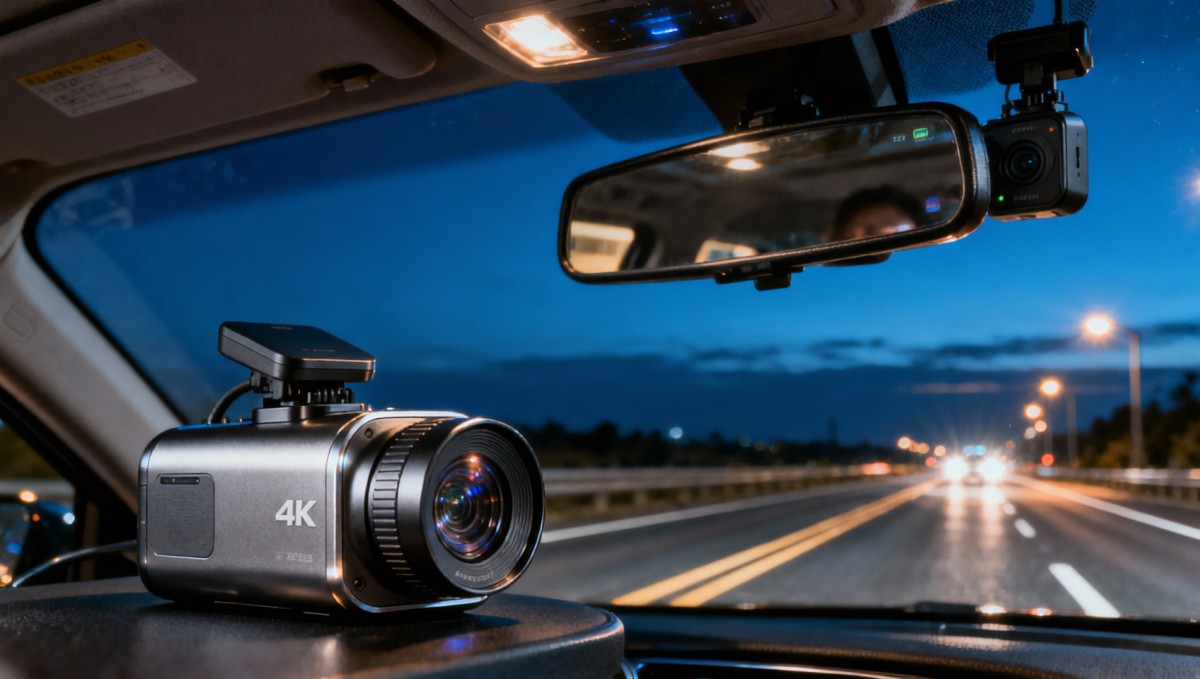
A 4K dash camera records roughly 3840 × 2160 pixels, which is about 4 times the pixel count of standard 1080p. In daylight, that extra detail can help with lane context, signage, and wider scene analysis. At night, however, image quality depends on how much light each pixel receives. If the sensor is small and pixel pitch is limited, a 4K image may look detailed in theory but become noisy, smeared, or overly processed in practice.
This is why procurement teams should separate “resolution” from “low-light sensitivity.” A camera with a larger sensor, balanced exposure control, and strong HDR may produce clearer plates and vehicle outlines in 1440p than a budget 4K unit with aggressive sharpening. In many field deployments, the goal is not cinema-like footage. It is reliable identification within 10–25 meters under streetlights, headlight flare, or intermittent darkness.
Night recording is especially challenging because dash cameras must handle moving subjects, vibration, changing light sources, and compression limits at the same time. A vehicle traveling at 40–60 km/h at night gives only a brief window to capture a readable plate. If the shutter is too slow, motion blur increases. If noise reduction is too heavy, fine characters disappear. If exposure favors highlights, the plate area may go dark.
For commercial buyers, the practical takeaway is clear: 4K helps only when the full imaging pipeline is matched to low-light use. That is why smart electronics sourcing should prioritize tested night performance over retail-style label claims.
Key Imaging Factors Behind Night Recording Quality
The table below outlines the main variables that influence night footage more than resolution alone. These are the factors technical evaluators should request during supplier review, pilot testing, or sample comparison.
The pattern is consistent: if a supplier cannot explain sensor, lens, HDR behavior, and encoding settings, a 4K label alone should not justify a higher unit cost. For procurement, usable evidence quality is the buying standard.
How to Judge Real Night Performance in Fleet and Commercial Use
For operators and safety managers, night performance should be judged by task success, not marketing screenshots. The most important questions are simple: Can the camera identify vehicles, road events, lane position, and license plates under realistic motion? Can it do so in 3 common conditions: urban lighting, suburban mixed lighting, and low-light roads with intermittent glare?
Technical teams should request at least 3 video scenarios from each shortlisted supplier: a moving vehicle at 30–50 km/h in city traffic, a highway scene at 70–90 km/h, and a parking or loading-zone recording with mixed shadows. This allows comparison of motion blur, highlight clipping, and shadow detail. A camera that looks strong in static samples may perform poorly when exposure changes every 2–3 seconds.
Plate readability is also misunderstood. A 4K camera may provide better frame detail, but plates are often lost because of reflective surfaces, angle, rain, dirty windshields, or compression artifacts. In many operations, readable plates are realistic only at limited distances. For front-facing night capture, 8–15 meters is a common evidence-focused range, while beyond 20 meters results become less consistent unless lighting is favorable.
Rearview mirror cameras and dual-channel systems add another layer. The rear channel may be lower resolution than the front, and that can be acceptable if its purpose is collision context rather than distant identification. Buyers should match recording roles to actual risk scenarios instead of over-specifying every channel.
Field Evaluation Checklist for Technical and Procurement Teams
- Test footage during at least 2 time windows: dusk and fully dark nighttime.
- Verify readability of plates, road signs, and lane markings at 3 distance bands: under 10 m, 10–20 m, and over 20 m.
- Check whether HDR causes ghosting, halo effects, or excessive smoothing around headlights.
- Confirm recording stability over 30–60 minutes to detect overheating or frame drops.
- Review compressed files on a desktop monitor, not only on a mobile preview app.
This process helps distributors, fleet operators, and project managers avoid a frequent sourcing mistake: selecting the highest resolution specification without validating operational evidence quality.
Typical Evidence Priorities by Use Case
Different commercial deployments require different night recording priorities. Courier fleets often need incident context and plate capture at intersections. Passenger transport may prioritize cabin-adjacent scene balance and reliable looping. Industrial or construction vehicles may need ruggedness, wide dynamic range, and better performance under dust, vibration, and low-speed maneuvering.
This means “best” depends on application. A wholesale buyer sourcing for retail channels may want multiple SKUs across entry, mid-range, and premium segments, while a direct enterprise buyer may prefer one standardized platform to reduce support complexity.
4K vs 1440p vs 1080p: Cost, Storage, and Operational Trade-Offs
A higher-resolution dash camera generally creates larger files, requires faster memory cards, and can increase hardware cost. That matters in B2B rollouts involving 50, 200, or 1,000 vehicles. If storage retention targets are strict, moving from 1080p to 4K can reduce recording duration on the same card by 40%–70%, depending on codec efficiency and bit rate settings.
For example, a 128 GB card may retain significantly fewer hours of continuous 4K footage than 1080p. If an operation requires 5–7 days of overwrite cycle before manual review, the storage plan must account for channel count, frame rate, and parking mode usage. Procurement teams should not budget the camera unit alone; they should include memory endurance, replacement cycles, and data extraction workflow.
The next table provides a practical comparison for business buyers evaluating common resolution tiers. Exact figures vary by supplier and codec, but the ranges below are useful for planning discussions and request-for-quotation reviews.
For many B2B buyers, 1440p is the practical midpoint. It often delivers a better balance of low-light clarity, recording retention, and total cost of ownership than entry-level 4K products. Premium 4K makes sense when evidentiary detail, premium channel positioning, or advanced telematics integration justifies the spend.
When 4K Is Worth the Premium
- When the front channel must support detailed post-event review on large desktop displays.
- When the camera uses a proven low-light sensor and stable high bit rate rather than compressed “spec-sheet 4K.”
- When vehicles operate on mixed urban routes where signage, lane positioning, and multi-vehicle context matter.
- When the deployment can support higher-endurance cards such as 128 GB or 256 GB and defined footage retrieval procedures.
In wholesale or distribution planning, the premium is easier to justify in upper-tier SKUs, managed fleet projects, or markets where insurance documentation standards are becoming stricter.
Buying Criteria for Rearview Mirror Cameras, Action Camera Variants, and Dash Cam Projects
Buyers comparing rearview mirror cameras with conventional dash cameras should not assume the same night behavior. Mirror-style units often prioritize integrated design, cabin aesthetics, and screen-based usability. That can be valuable in passenger vehicles and aftermarket channels, but the compact packaging may limit thermal management or optical flexibility in some designs. At night, display brightness, reflection control, and rear camera tuning become part of the evaluation.
Action camera wholesale alternatives are sometimes considered for mobile recording because of rugged housings and high advertised resolution. Yet they are not always optimized for continuous in-vehicle use, loop recording, parking surveillance, or power management. For enterprise decision-makers, the right category depends on whether the requirement is event documentation, mobile content capture, or continuous road evidence.
A disciplined sourcing framework should cover at least 6 dimensions: imaging performance, installation complexity, storage architecture, firmware stability, after-sales support, and lifecycle cost. Financial approvers usually focus on unit price, but project leaders should also assess failure rates, support burden, and replacement logistics over a 12–24 month period.
The table below summarizes key buying filters for common commercial procurement scenarios in smart electronics and vehicle recording projects.
The main conclusion is that night recording performance must be matched to deployment context. A product that works for retail consumer demand may not satisfy enterprise evidence requirements or distributor support expectations.
Practical Supplier Questions Before Issuing a Purchase Order
- Can the supplier provide unedited night footage from moving vehicles in at least 3 environments?
- What memory card grades are recommended for 24/7 loop recording and how often are replacements advised?
- Does the firmware support configurable HDR, exposure, and parking mode thresholds?
- What is the typical lead time for pilot samples, first order production, and replenishment orders?
- How are warranty claims handled across distributor, integrator, and end-user channels?
Implementation, Risk Control, and FAQs for Better Procurement Decisions
Even the right camera can underperform if implementation is weak. Installation angle, windshield cleanliness, power stability, and memory card quality all affect night footage. In project rollouts, quality control teams should define a 3-step acceptance process: hardware inspection, nighttime road test, and file verification on desktop playback. This reduces avoidable returns and deployment inconsistency.
Maintenance planning matters as well. High-endurance microSD cards used in continuous recording may require inspection every 3–6 months, especially in hot climates or high-mileage fleets. Firmware review should also be scheduled, because image tuning updates can improve HDR balance, boot reliability, or file integrity. For larger deployments, a quarterly audit of 5%–10% of installed units is a practical control measure.
For decision-makers, the best purchasing outcome usually comes from a pilot batch rather than a full immediate rollout. A 10–20 unit field test over 2–4 weeks can reveal night performance gaps, mounting issues, and support needs before capital is committed at scale. This is especially important when comparing 4K dash cameras against lower-resolution alternatives that may offer stronger value.
Below are common questions that arise in technical review and sourcing discussions.
Is 4K always the best choice for night recording?
No. A well-designed 1440p camera with a strong sensor, effective HDR, and higher usable bit rate can outperform a low-cost 4K model at night. The best choice depends on evidence needs, budget, and storage policy.
What should procurement teams prioritize first?
Prioritize 4 items first: night sample footage, sensor and lens quality, storage endurance, and supplier support responsiveness. Resolution should be evaluated after those fundamentals are confirmed.
How long is a typical sourcing and validation cycle?
For B2B projects, a realistic cycle is often 1–2 weeks for sample review, 2–4 weeks for pilot deployment, and another 1–3 weeks for final commercial evaluation, depending on channel complexity and order volume.
What is the most common buying mistake?
The most common mistake is selecting a 4K dash camera based on advertised sharpness while overlooking real night readability, card endurance, heat behavior, and after-sales support. In business use, total reliability is usually more important than peak specification.
For TradeNexus Pro readers evaluating smart electronics and vehicle recording solutions, the decision should be evidence-driven: choose the camera system that performs under actual nighttime conditions, fits operational retention needs, and aligns with procurement economics. If you are comparing rearview mirror cameras, wholesale action camera options, or enterprise-grade dash cam solutions, the right next step is a controlled sample review with clear technical criteria. Contact us to discuss product details, request a tailored sourcing framework, or explore broader smart electronics procurement insights.
Get weekly intelligence in your inbox.
No noise. No sponsored content. Pure intelligence.
 Apr 29, 2026USITC Launches Section 337 Investigation into Chinese Wi-Fi 7 RF ModulesUSITC Launches Section 337 Investigation into Chinese Wi-Fi 7 RF Modules
 Apr 29, 2026Côte d'Ivoire Launches $500M Grid Storage Tender, Chinese BESS Fast-TrackedCôte d'Ivoire Launches $500M Grid Storage Tender, Chinese BESS Fast-Tracked
 Apr 29, 2026Morocco Enforces IEC 61427-2:2025 PV Mounting Certification from Q3 2026Morocco Enforces IEC 61427-2:2025 PV Mounting Certification from Q3 2026
 Apr 29, 2026UAE Becomes Global AI Hub: New CE-ADAS+ Path for Chinese Smart Industrial EquipmentUAE Becomes Global AI Hub: New CE-ADAS+ Path for Chinese Smart Industrial Equipment
 Apr 29, 2026Red Sea Crisis: Suez Canal Fees Up 12%, China-Europe Rail Premium at 35%Red Sea Crisis: Suez Canal Fees Up 12%, China-Europe Rail Premium at 35%
 Apr 29, 2026TÜV Rheinland Launches Fast-Track Certification for Chinese Warehouse RobotsTÜV Rheinland Launches Fast-Track Certification for Chinese Warehouse Robots
 Apr 29, 2026Vietnam's SMT Expansion Drives CNC Fixture Export DelaysVietnam's SMT Expansion Drives CNC Fixture Export Delays
![]() Apr 29, 2026NEOM Smart Infrastructure Phase II Opens Bidding: Chinese PV Mounting & BESS Pre-QualifiedNEOM Smart Infrastructure Phase II Opens Bidding: Chinese PV Mounting & BESS Pre-Qualified
Apr 29, 2026NEOM Smart Infrastructure Phase II Opens Bidding: Chinese PV Mounting & BESS Pre-QualifiedNEOM Smart Infrastructure Phase II Opens Bidding: Chinese PV Mounting & BESS Pre-Qualified Apr 29, 2026EU Enforces Battery Passport for Energy Storage Imports from July 2026EU Enforces Battery Passport for Energy Storage Imports from July 2026
 Apr 29, 2026Maine Bans New >20MW Data Centers — AI Hardware Delivery ImpactedMaine Bans New >20MW Data Centers — AI Hardware Delivery Impacted
 Apr 28, 2026Suez Canal Fee Hike & China-Europe Rail Premium: Q2 2026 ImpactSuez Canal Fee Hike & China-Europe Rail Premium: Q2 2026 Impact
 Apr 28, 2026TÜV Rheinland Launches Fast-Track Certification for Chinese Warehouse RobotsTÜV Rheinland Launches Fast-Track Certification for Chinese Warehouse Robots
 Apr 28, 2026EU Enforces Battery Passport Rule for Chinese ESS Exports from 2027EU Enforces Battery Passport Rule for Chinese ESS Exports from 2027
 Apr 28, 2026ADB Raises Vietnam GDP Forecast to 7.2%: SMT & Precision Fixture Demand RisesADB Raises Vietnam GDP Forecast to 7.2%: SMT & Precision Fixture Demand Rises
 Apr 28, 2026US ITC Launches Section 337 Investigation into Chinese Wi-Fi 7 RF FEMsUS ITC Launches Section 337 Investigation into Chinese Wi-Fi 7 RF FEMs
 Apr 28, 2026Côte d'Ivoire Opens $500M Power Tender: Chinese BESS Get Fast-Track AccessCôte d'Ivoire Opens $500M Power Tender: Chinese BESS Get Fast-Track Access
 Apr 28, 2026BP’s Algeria East Basin Permit Spurs Valve Demand, Lead Times Extend to 18 WeeksBP’s Algeria East Basin Permit Spurs Valve Demand, Lead Times Extend to 18 Weeks
") Apr 28, 2026Vietnam Mandates V-Trust for Smart Appliances Export (July 2026)Vietnam Mandates V-Trust for Smart Appliances Export (July 2026)
Apr 28, 2026Vietnam Mandates V-Trust for Smart Appliances Export (July 2026)Vietnam Mandates V-Trust for Smart Appliances Export (July 2026) Apr 28, 2026Morocco Enforces PV Mounting Structure Certification from Q3 2026Morocco Enforces PV Mounting Structure Certification from Q3 2026
 Apr 28, 2026UAE Establishes AI Hub Status, Opens CE-ADAS+ Pathway for Chinese Smart Industrial EquipmentUAE Establishes AI Hub Status, Opens CE-ADAS+ Pathway for Chinese Smart Industrial Equipment
 Apr 27, 2026Algeria’s Oil & Steel FDI Push Opens Valve, Corrosion-Resistant Material OrdersAlgeria’s Oil & Steel FDI Push Opens Valve, Corrosion-Resistant Material Orders
 Apr 27, 2026Azerbaijan’s New PV Mounting Standard Opens Path for Chinese SuppliersAzerbaijan’s New PV Mounting Standard Opens Path for Chinese Suppliers
 Apr 27, 2026Fitch Cuts East Africa Growth Forecasts, Raises Cross-Border Trade RisksFitch Cuts East Africa Growth Forecasts, Raises Cross-Border Trade Risks
 Apr 27, 2026ADB Raises Vietnam GDP Forecast to 7.2% on Electronics Export GrowthADB Raises Vietnam GDP Forecast to 7.2% on Electronics Export Growth
 Apr 27, 2026Maine Halts Large Data Centers: AI Server Export ImpactMaine Halts Large Data Centers: AI Server Export Impact
 Apr 27, 2026OFID $500M for Côte d'Ivoire: Boost to Factory Automation & Warehouse RoboticsOFID $500M for Côte d'Ivoire: Boost to Factory Automation & Warehouse Robotics
 Apr 27, 2026Morocco Ranks 4th in EU Energy Aid to AfricaMorocco Ranks 4th in EU Energy Aid to Africa