Rearview Mirror Cameras What Buyers Often Overlook
Rearview mirror cameras promise safer driving and simpler installs, yet many buyers still overlook image latency, night visibility, storage reliability, and integration with dash cameras 4k systems. For sourcing teams and technical evaluators comparing rearview mirror cameras alongside products like jump starters, car air purifiers, and wireless charging pads, knowing what truly affects performance, compliance, and long-term value is essential before making a final purchase decision.
In B2B sourcing, rearview mirror cameras are often treated as a straightforward accessory category. That assumption creates avoidable risk. A unit that looks competitive on paper may underperform in fleet use, fail to meet local installation expectations, or generate high return rates because of poor display clarity, unstable recording, or difficult integration with existing in-vehicle electronics.
For procurement managers, technical reviewers, distributors, and project owners, the real task is not simply finding a low-cost mirror cam. It is selecting a product configuration that balances recording quality, installation time, operating reliability, after-sales support, and channel fit across multiple vehicle scenarios.
Why Rearview Mirror Cameras Are More Complex Than They First Appear
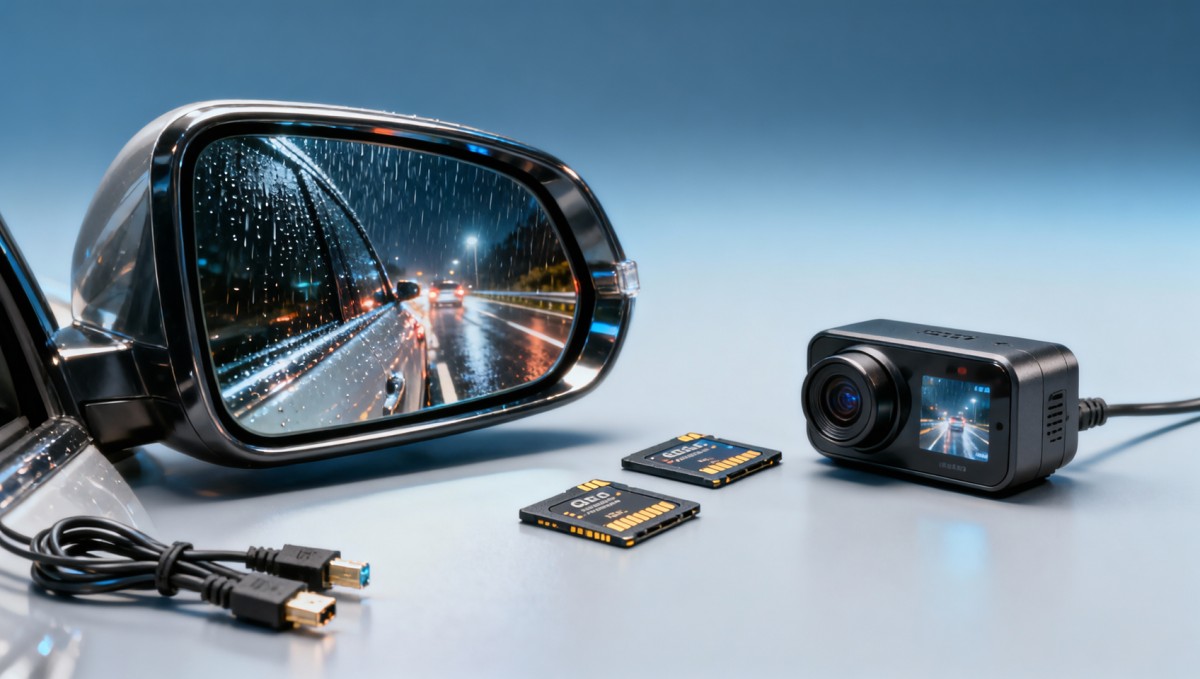
A rearview mirror camera combines several functions in one housing: mirror display, front recording, rear camera feed, storage management, and in some models parking monitoring, GPS logging, or ADAS alerts. On a retail listing, these features may look similar across products. In actual use, however, differences in sensor quality, processor capability, firmware tuning, and power management can change performance significantly.
One frequent buying mistake is focusing almost entirely on stated resolution. A 1080p, 2K, or 4K label does not guarantee usable footage. If image compression is too aggressive, frame rate drops below 25 fps, or the display suffers from 150–300 ms latency, drivers may experience a visible delay when reversing or changing lanes. That delay matters more than marketing language.
Another issue is fitment and workflow. Some mirror camera systems attach over an existing OEM mirror, while others replace it entirely. For distributors and installers, this affects installation time, compatibility rates, packaging complexity, and return handling. A product that saves 12–20 minutes per install can make a meaningful difference across 500 or 1,000 units.
Buyers in the automotive electronics channel also compare rearview mirror cameras with adjacent mobile accessories such as jump starters, wireless charging pads, and air purifiers. Unlike those categories, mirror cams interact directly with visibility and incident documentation. That raises the bar for image reliability, power stability, and operating safety.
Core Functional Layers Buyers Should Separate
A practical evaluation should split the product into 4 layers rather than reviewing it as a single SKU. This helps technical and commercial teams identify where real risk sits.
- Display layer: screen brightness, reflectivity control, touch responsiveness, and mirror usability in daytime conditions.
- Imaging layer: sensor performance, dynamic range, lens angle, low-light behavior, and rear camera clarity during rain or glare.
- Recording layer: codec stability, loop recording logic, file protection, card compatibility, and data overwrite behavior.
- Integration layer: power input, reverse trigger support, dash cameras 4k synchronization, GPS modules, and parking mode wiring.
If any one of these 4 layers is weak, the product may still ship, but field complaints usually follow within 30–90 days.
The Technical Criteria That Affect Real-World Performance
Technical assessment should move beyond brochure claims. For rearview mirror cameras, buyers should review latency, display readability, rear camera waterproofing, storage endurance, and temperature tolerance. These are the factors most likely to affect user satisfaction, especially in commercial fleets, aftermarket workshops, and regional distribution channels.
Latency is often overlooked because it is rarely highlighted in product sheets. Yet for a mirror camera used while reversing, a target delay below 120 ms is preferable, while 120–180 ms may still be acceptable depending on vehicle speed and driver expectation. Once delay rises above 200 ms, many users notice disconnect between movement and display response.
Night visibility is another decisive factor. Sensor size, aperture, WDR tuning, and rear lens contamination resistance all matter. A rear camera may claim IP67 or IP68 protection, but if the lens coating easily holds water droplets or light flare, nighttime readability declines sharply. For distributors selling into humid or rainy regions, this becomes a major return driver.
Storage reliability matters just as much as image quality. Mirror cams often use microSD cards in 32 GB, 64 GB, 128 GB, or 256 GB capacities. In continuous loop recording, lower-grade cards can fail early, create file corruption, or stop recording without clear warning. For commercial buyers, storage validation should include endurance-grade card compatibility and overwrite stability over 72–120 hours of repeated operation.
Key Parameters Worth Verifying During Sample Evaluation
The table below summarizes practical checkpoints that matter more than generic marketing terms when selecting rearview mirror cameras for resale, integration, or procurement programs.
The key takeaway is that the best rearview mirror camera is not always the highest advertised resolution model. For many buyers, a stable 2K or well-optimized dual-channel configuration outperforms a poorly tuned 4K setup with heat issues or storage instability.
Integration with Dash Cameras 4K Systems
When a buyer already carries dash cameras 4k products, compatibility becomes a commercial and technical issue. Some channel partners prefer mirror cams as a bundled system; others want them to coexist with a separate front recorder. In both cases, power draw, cable routing, video redundancy, and firmware conflict should be reviewed before scaling orders.
A basic compatibility review should cover 5 points: shared power architecture, recording overlap, mounting interference, memory allocation, and user interface complexity. If two devices compete for windshield space or USB power, the result can be a poor install outcome even if both devices perform well independently.
Common Procurement Mistakes and How to Avoid Them
B2B buyers often make rearview mirror camera decisions under tight launch schedules, promotional deadlines, or container consolidation pressure. That environment can push teams toward quick comparisons based on FOB price, screen size, or packaging appeal. However, after-sales cost often reveals the true purchase price within the first 2–6 months.
A common mistake is approving samples without testing in realistic vehicle conditions. Bench testing is useful, but it does not reproduce road vibration, power fluctuations during engine start, rear lens contamination, or screen glare at midday. At minimum, a sample program should include 3 vehicle types, 2 lighting conditions, and repeated start-stop cycles over several days.
Another issue is underestimating software quality. Firmware bugs in loop recording, parking mode wake-up, or rear camera trigger switching can produce intermittent complaints that are expensive to diagnose. These problems may only appear after 50–100 power cycles, which is why short sample reviews can be misleading.
Commercial buyers also overlook packaging and documentation. In many markets, return rates increase if wiring diagrams are unclear, accessory packs are incomplete, or language localization is poor. For distributors and resellers, a product with a slightly higher unit cost but lower support burden often delivers better margin protection.
Mistake-to-Mitigation Comparison
The following table helps procurement and quality teams turn common buying errors into a more controlled sourcing process.
For purchasing teams, this framework reduces the chance of selecting a rearview mirror camera that appears competitive at quotation stage but becomes expensive after deployment.
A Simple 6-Point Pre-Order Checklist
- Confirm whether the mirror is clip-on or full replacement and estimate installation time.
- Test rear image at night, in rain simulation, and under strong backlight.
- Verify latency using real reversing movement rather than static viewing only.
- Check recording stability over at least 72 hours with loop overwrite enabled.
- Review compatibility with dash cameras 4k bundles or separate power systems.
- Audit packaging completeness, multilingual manuals, and warranty handling process.
This checklist is especially useful for distributors, fleet purchasers, and project teams handling mixed automotive accessory portfolios.
How to Build a Practical Evaluation and Delivery Plan
A strong rearview mirror camera sourcing program should combine technical testing, supplier coordination, and post-sale planning. This is particularly important for B2B buyers who need stable replenishment, private label packaging, or regional channel deployment. A product that passes lab review but lacks delivery discipline can still create stockouts or service bottlenecks.
In most sourcing programs, the process works best in 3 stages: sample validation, pilot order, and scale-up order. Sample validation usually takes 7–14 days, pilot review another 2–4 weeks depending on install feedback, and scale-up readiness depends on packaging confirmation, accessory consistency, and final firmware lock.
Quality and safety managers should define acceptance criteria before purchase approval. These may include acceptable dead-pixel count, rear camera sealing consistency, stable boot time under 5 seconds, and successful reverse trigger switching within 1 second. Clear thresholds reduce disputes between commercial and technical teams.
For buyers operating across multiple automotive accessory categories, standardizing evaluation templates saves time. The same supplier scorecard can include build quality, failure risk, packaging accuracy, lead time reliability, and after-sales response. This allows rearview mirror cameras to be reviewed consistently alongside adjacent electronics SKUs.
Suggested Delivery and Validation Workflow
The workflow below helps project managers and procurement teams organize a more dependable launch process.
This staged model is especially useful when rearview mirror cameras are being added to a broader catalog of automotive electronics, where launch errors can affect channel confidence across several product lines.
Support Questions Buyers Should Ask Early
- What is the expected lead time range for repeat orders: 20 days, 30 days, or longer during peak periods?
- Are firmware updates available if parking mode or reverse trigger issues appear after launch?
- What accessories are included by default: rear camera, hardwire kit, GPS module, straps, trim tools, or memory card?
- How are defective units handled: part replacement, unit swap, or credit in the next shipment?
Clear answers to these questions often matter as much as hardware specifications when evaluating long-term supply value.
FAQ for Buyers, Evaluators, and Distribution Teams
The rearview mirror camera category attracts interest from several decision groups at once: users want visibility and ease of use, technical teams want stable performance, procurement wants cost control, and channel partners want lower return rates. The questions below reflect recurring concerns across those stakeholders.
How should buyers choose between a mirror camera and a standard dash camera?
A standard dash camera is often simpler when only front recording is required. A rearview mirror camera is more suitable when the buyer wants a larger live rear display, integrated reverse support, and cleaner windshield presentation. For fleets, SUVs, vans, and aftermarket upgrade projects, the mirror format may provide stronger everyday usability if latency and visibility are well controlled.
What specifications matter most for nighttime performance?
Night performance depends on more than pixel count. Buyers should review sensor behavior, WDR tuning, exposure control, lens flare handling, and rear camera cleanliness after wet-road driving. In practical terms, stable 25–30 fps recording, controlled glare, and readable object outlines are more important than headline resolution alone.
How long does a proper evaluation cycle usually take?
For B2B buyers, a realistic cycle is rarely shorter than 7 days. A more dependable process often runs 2–4 weeks, especially if the product will be bundled with dash cameras 4k systems, sold through installers, or introduced into multiple regional channels. This allows enough time to review install effort, firmware behavior, and early defect trends.
Which users are most sensitive to product quality issues?
Safety managers, installers, fleet operators, and resellers usually detect issues first. They are highly sensitive to lag, weak rear visibility, unreliable memory recording, and unclear manuals. Their feedback should be weighted heavily during pilot review because they see both technical performance and service burden.
What is the smartest way to compare total value instead of unit price?
Use a total-cost view that includes install time, expected return rate, documentation quality, card failure risk, warranty handling effort, and repeat-order stability. A rearview mirror camera that costs 8% more per unit but reduces support cases and saves 15 minutes per installation may produce better net margin over the first 6–12 months.
Rearview mirror cameras can be a valuable addition to an automotive electronics portfolio, but the buying decision should go far beyond advertised resolution or screen size. Image latency, night visibility, storage endurance, installation workflow, and compatibility with dash cameras 4k setups all shape real-world performance and commercial outcomes.
For sourcing teams, distributors, quality managers, and enterprise decision-makers, the strongest results usually come from structured testing, staged procurement, and clear support expectations. That approach helps reduce returns, improve channel confidence, and align the product with actual vehicle-use demands rather than catalog claims alone.
If you are assessing rearview mirror cameras or related smart automotive electronics for your market, TradeNexus Pro can help you evaluate product positioning, technical priorities, and supply-side decision factors with greater clarity. Contact us to discuss sourcing benchmarks, category analysis, or a tailored solution for your next procurement cycle.
Get weekly intelligence in your inbox.
No noise. No sponsored content. Pure intelligence.
 Apr 29, 2026USITC Launches Section 337 Investigation into Chinese Wi-Fi 7 RF ModulesUSITC Launches Section 337 Investigation into Chinese Wi-Fi 7 RF Modules
 Apr 29, 2026Côte d'Ivoire Launches $500M Grid Storage Tender, Chinese BESS Fast-TrackedCôte d'Ivoire Launches $500M Grid Storage Tender, Chinese BESS Fast-Tracked
 Apr 29, 2026Morocco Enforces IEC 61427-2:2025 PV Mounting Certification from Q3 2026Morocco Enforces IEC 61427-2:2025 PV Mounting Certification from Q3 2026
 Apr 29, 2026UAE Becomes Global AI Hub: New CE-ADAS+ Path for Chinese Smart Industrial EquipmentUAE Becomes Global AI Hub: New CE-ADAS+ Path for Chinese Smart Industrial Equipment
 Apr 29, 2026Red Sea Crisis: Suez Canal Fees Up 12%, China-Europe Rail Premium at 35%Red Sea Crisis: Suez Canal Fees Up 12%, China-Europe Rail Premium at 35%
 Apr 29, 2026TÜV Rheinland Launches Fast-Track Certification for Chinese Warehouse RobotsTÜV Rheinland Launches Fast-Track Certification for Chinese Warehouse Robots
 Apr 29, 2026Vietnam's SMT Expansion Drives CNC Fixture Export DelaysVietnam's SMT Expansion Drives CNC Fixture Export Delays
![]() Apr 29, 2026NEOM Smart Infrastructure Phase II Opens Bidding: Chinese PV Mounting & BESS Pre-QualifiedNEOM Smart Infrastructure Phase II Opens Bidding: Chinese PV Mounting & BESS Pre-Qualified
Apr 29, 2026NEOM Smart Infrastructure Phase II Opens Bidding: Chinese PV Mounting & BESS Pre-QualifiedNEOM Smart Infrastructure Phase II Opens Bidding: Chinese PV Mounting & BESS Pre-Qualified Apr 29, 2026EU Enforces Battery Passport for Energy Storage Imports from July 2026EU Enforces Battery Passport for Energy Storage Imports from July 2026
 Apr 29, 2026Maine Bans New >20MW Data Centers — AI Hardware Delivery ImpactedMaine Bans New >20MW Data Centers — AI Hardware Delivery Impacted
 Apr 28, 2026Suez Canal Fee Hike & China-Europe Rail Premium: Q2 2026 ImpactSuez Canal Fee Hike & China-Europe Rail Premium: Q2 2026 Impact
 Apr 28, 2026TÜV Rheinland Launches Fast-Track Certification for Chinese Warehouse RobotsTÜV Rheinland Launches Fast-Track Certification for Chinese Warehouse Robots
 Apr 28, 2026EU Enforces Battery Passport Rule for Chinese ESS Exports from 2027EU Enforces Battery Passport Rule for Chinese ESS Exports from 2027
 Apr 28, 2026ADB Raises Vietnam GDP Forecast to 7.2%: SMT & Precision Fixture Demand RisesADB Raises Vietnam GDP Forecast to 7.2%: SMT & Precision Fixture Demand Rises
 Apr 28, 2026US ITC Launches Section 337 Investigation into Chinese Wi-Fi 7 RF FEMsUS ITC Launches Section 337 Investigation into Chinese Wi-Fi 7 RF FEMs
 Apr 28, 2026Côte d'Ivoire Opens $500M Power Tender: Chinese BESS Get Fast-Track AccessCôte d'Ivoire Opens $500M Power Tender: Chinese BESS Get Fast-Track Access
 Apr 28, 2026BP’s Algeria East Basin Permit Spurs Valve Demand, Lead Times Extend to 18 WeeksBP’s Algeria East Basin Permit Spurs Valve Demand, Lead Times Extend to 18 Weeks
") Apr 28, 2026Vietnam Mandates V-Trust for Smart Appliances Export (July 2026)Vietnam Mandates V-Trust for Smart Appliances Export (July 2026)
Apr 28, 2026Vietnam Mandates V-Trust for Smart Appliances Export (July 2026)Vietnam Mandates V-Trust for Smart Appliances Export (July 2026) Apr 28, 2026Morocco Enforces PV Mounting Structure Certification from Q3 2026Morocco Enforces PV Mounting Structure Certification from Q3 2026
 Apr 28, 2026UAE Establishes AI Hub Status, Opens CE-ADAS+ Pathway for Chinese Smart Industrial EquipmentUAE Establishes AI Hub Status, Opens CE-ADAS+ Pathway for Chinese Smart Industrial Equipment
 Apr 27, 2026Algeria’s Oil & Steel FDI Push Opens Valve, Corrosion-Resistant Material OrdersAlgeria’s Oil & Steel FDI Push Opens Valve, Corrosion-Resistant Material Orders
 Apr 27, 2026Azerbaijan’s New PV Mounting Standard Opens Path for Chinese SuppliersAzerbaijan’s New PV Mounting Standard Opens Path for Chinese Suppliers
 Apr 27, 2026Fitch Cuts East Africa Growth Forecasts, Raises Cross-Border Trade RisksFitch Cuts East Africa Growth Forecasts, Raises Cross-Border Trade Risks
 Apr 27, 2026ADB Raises Vietnam GDP Forecast to 7.2% on Electronics Export GrowthADB Raises Vietnam GDP Forecast to 7.2% on Electronics Export Growth
 Apr 27, 2026Maine Halts Large Data Centers: AI Server Export ImpactMaine Halts Large Data Centers: AI Server Export Impact
 Apr 27, 2026OFID $500M for Côte d'Ivoire: Boost to Factory Automation & Warehouse RoboticsOFID $500M for Côte d'Ivoire: Boost to Factory Automation & Warehouse Robotics
 Apr 27, 2026Morocco Ranks 4th in EU Energy Aid to AfricaMorocco Ranks 4th in EU Energy Aid to Africa