Remote Patient Monitoring: What Pays Off?
As healthcare providers evaluate remote patient monitoring, the real question is what delivers measurable ROI in outcomes, efficiency, and long-term scalability. From smart glucometers, digital blood pressure monitors, and wearable ECG monitors to portable ultrasound scanners, telemedicine carts, and even upstream enablers like custom PCB boards and flexible printed circuits, understanding which technologies truly pay off helps buyers and decision-makers invest with greater confidence.
In practical terms, remote patient monitoring pays off most when it is tied to high-risk chronic care, clear reimbursement pathways, defined clinical workflows, and interoperable devices that reduce avoidable utilization. For hospitals, clinics, digital health operators, and procurement teams, the best returns usually come not from buying the most advanced hardware, but from selecting the right RPM use cases, patient populations, and integration models. The strongest business case is typically found in hypertension, diabetes, heart failure, post-acute follow-up, and selected cardiac monitoring programs where measurable outcomes, patient adherence, and staffing efficiency can be tracked from the start.
What actually pays off in remote patient monitoring?
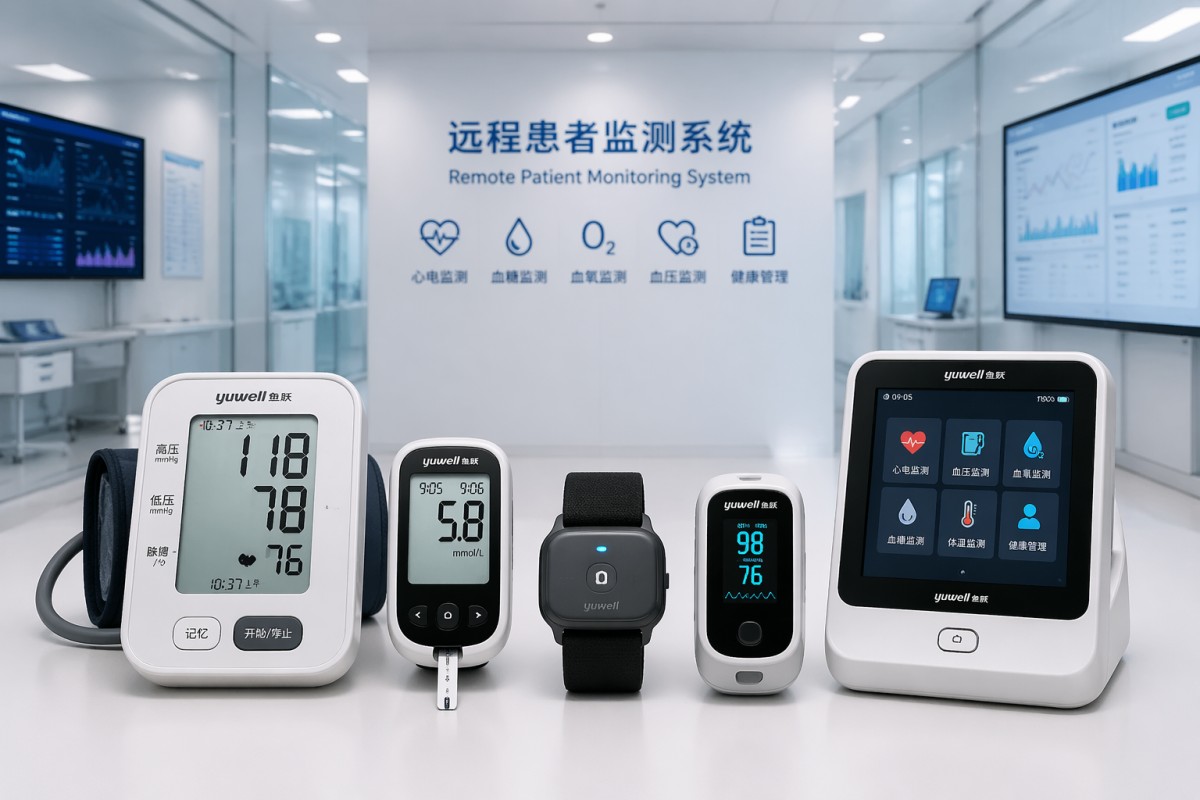
The short answer: not every remote patient monitoring program produces equal value. The highest return tends to come from solutions that combine four elements:
- Clinically meaningful data that supports earlier intervention
- Operational efficiency that avoids adding manual workload
- Reimbursement or cost-offset potential that is realistic in the target market
- Scalable device and data infrastructure that can support growth
Among the most commercially and operationally proven RPM categories are:
- Digital blood pressure monitors for hypertension management
- Smart glucometers for diabetes monitoring and adherence support
- Wearable ECG monitors for arrhythmia detection and cardiac follow-up
- Pulse oximetry and multiparameter kits for respiratory and post-discharge monitoring
These solutions often outperform more expensive or technically impressive products because they address large patient populations, are easier to deploy, and produce data clinicians can act on quickly.
Which RPM categories usually generate the strongest ROI?
For procurement leaders and financial approvers, ROI in remote patient monitoring should be judged by a mix of direct and indirect value. Direct value may include reimbursement, reduced readmissions, fewer emergency visits, or lower cost per managed patient. Indirect value may include clinician productivity, improved continuity of care, stronger patient retention, and better quality reporting.
1. Hypertension monitoring
Digital blood pressure monitoring is often one of the easiest RPM programs to justify. The devices are relatively affordable, patient training is straightforward, and blood pressure trends are actionable. Providers can identify uncontrolled hypertension earlier, support medication adjustment, and document longitudinal care.
Why it pays off:
- Large addressable patient base
- Low device cost compared with advanced monitoring systems
- Simple onboarding and repeatable workflows
- Strong fit for primary care and chronic disease management
2. Diabetes RPM with connected glucometers
Smart glucometers and related diabetes monitoring tools can generate meaningful value when they are connected to coaching, medication review, or care escalation workflows. Data alone is not enough. Programs pay off when abnormal trends trigger intervention.
Why it pays off:
- High prevalence of diabetes and prediabetes
- Frequent measurements create usable longitudinal data
- Supports adherence monitoring and early intervention
- Can be bundled into broader virtual chronic care programs
3. Cardiac monitoring with wearable ECG devices
Wearable ECG monitors can deliver strong value in selected use cases such as arrhythmia detection, post-procedure surveillance, and high-risk cardiac follow-up. However, this category usually requires more careful workflow design because data volumes, alert thresholds, and clinical review requirements are more demanding.
Why it pays off:
- High value per clinically relevant event detected
- Potential to reduce delayed diagnosis
- Useful for specialty care pathways with strong clinician ownership
4. Post-discharge and hospital-at-home monitoring kits
Programs using blood pressure, pulse oximetry, weight scales, and temperature monitoring often show value when focused on recently discharged patients, especially those at elevated risk of readmission.
Why it pays off:
- Targets patients with measurable near-term utilization risk
- Can improve discharge confidence and continuity
- Supports care teams in identifying deterioration earlier
What usually does not pay off as expected?
Many RPM initiatives underperform for reasons that have little to do with device quality. The common failure pattern is overinvestment in hardware before validating patient fit, staffing capacity, and reimbursement logic.
Programs often struggle when they rely on:
- Low-adherence patient groups without onboarding or engagement support
- Data-heavy devices that generate alerts but no clear triage process
- Standalone platforms that do not integrate with EHR, telehealth, or care management systems
- Premium devices deployed for conditions where cheaper tools deliver comparable clinical value
- Broad rollout strategies without phased testing by use case
Portable ultrasound scanners and telemedicine carts, for example, can absolutely create value, but they are often better viewed as part of broader virtual care infrastructure rather than core RPM ROI drivers. Their payoff depends heavily on service model, clinician adoption, and deployment environment. In many organizations, they support remote care delivery but do not independently produce the clearest RPM financial return compared with simpler connected monitoring devices.
How should buyers evaluate RPM investment beyond device price?
For enterprise buyers, the mistake is to compare remote patient monitoring solutions only by unit cost. The real decision should be based on total program economics.
Key evaluation areas include:
- Device reliability and patient usability
A lower-cost device that patients cannot use correctly becomes expensive very quickly. - Connectivity model
Bluetooth-only devices may create friction for some populations, while cellular-enabled kits may improve adherence but raise recurring costs. - Clinical workflow fit
Who reviews alerts? How fast? What happens next? If the answer is vague, ROI is at risk. - Data integration
Interoperability with EHRs, dashboards, and care coordination systems matters more than feature count. - Service and support
Training, logistics, replacement, onboarding, and technical support can materially affect program performance. - Regulatory and quality assurance
For healthcare technology procurement, device quality systems, data security, and traceability are non-negotiable.
For sourcing and engineering-oriented stakeholders, upstream components also matter. Custom PCB boards and flexible printed circuits may seem distant from care delivery, but they influence device miniaturization, durability, signal integrity, battery efficiency, and long-term manufacturability. In scalable RPM deployments, hardware architecture can affect product failure rates, service burden, and total lifecycle cost.
What metrics should decision-makers use to prove RPM value?
A credible remote patient monitoring business case should include measurable operational, clinical, and financial indicators. The most useful RPM metrics include:
- Patient adherence rate
- Successful data transmission rate
- Alert-to-intervention time
- Readmission reduction
- Emergency department avoidance
- Clinician time saved per patient
- Revenue captured or cost avoided per enrolled patient
- Program retention and scale-up rate
Not every organization will weight these equally. A provider organization may focus on outcomes and reimbursement. A distributor may prioritize device reliability, support burden, and implementation speed. A financial approver may look for payback period, gross margin impact, and utilization reduction. A project manager may focus on rollout complexity and service-level predictability.
How can healthcare organizations improve the odds that RPM will pay off?
The most successful remote patient monitoring programs usually start narrower than expected. Instead of launching across all conditions, they begin with one high-value cohort, one repeatable workflow, and one clear financial model.
Best practices include:
- Start with conditions that have high prevalence and clear intervention logic, such as hypertension or diabetes
- Select devices with proven usability, not just advanced specifications
- Design triage protocols before deployment, including escalation rules and staffing ownership
- Integrate data into existing systems to reduce duplicate work
- Run a pilot with baseline metrics so value can be quantified credibly
- Plan for supply continuity, replacement cycles, and quality monitoring from day one
For B2B buyers, this is also where supplier maturity matters. Vendors that can support documentation, product consistency, integration requirements, and post-sale service often outperform lower-cost alternatives over time. In RPM, reliability is not a secondary benefit. It is part of the return.
So, what really pays off in remote patient monitoring?
Remote patient monitoring pays off when it is practical, targeted, and operationally sustainable. In most cases, the strongest returns come from connected devices that manage common chronic conditions, fit existing care pathways, and generate data that clinicians can act on without creating excessive workload. Digital blood pressure monitors, smart glucometers, and wearable ECG monitors often offer better ROI than more complex technologies when deployed in the right settings.
For buyers and decision-makers, the key lesson is simple: the best RPM investment is rarely the most sophisticated device. It is the solution that aligns patient need, clinical workflow, reimbursement or cost savings, and scalable implementation. Organizations that evaluate remote patient monitoring through that lens are far more likely to choose technologies that deliver measurable and lasting value.
Get weekly intelligence in your inbox.
No noise. No sponsored content. Pure intelligence.
 Apr 29, 2026USITC Launches Section 337 Investigation into Chinese Wi-Fi 7 RF ModulesUSITC Launches Section 337 Investigation into Chinese Wi-Fi 7 RF Modules
 Apr 29, 2026Côte d'Ivoire Launches $500M Grid Storage Tender, Chinese BESS Fast-TrackedCôte d'Ivoire Launches $500M Grid Storage Tender, Chinese BESS Fast-Tracked
 Apr 29, 2026Morocco Enforces IEC 61427-2:2025 PV Mounting Certification from Q3 2026Morocco Enforces IEC 61427-2:2025 PV Mounting Certification from Q3 2026
 Apr 29, 2026UAE Becomes Global AI Hub: New CE-ADAS+ Path for Chinese Smart Industrial EquipmentUAE Becomes Global AI Hub: New CE-ADAS+ Path for Chinese Smart Industrial Equipment
 Apr 29, 2026Red Sea Crisis: Suez Canal Fees Up 12%, China-Europe Rail Premium at 35%Red Sea Crisis: Suez Canal Fees Up 12%, China-Europe Rail Premium at 35%
 Apr 29, 2026TÜV Rheinland Launches Fast-Track Certification for Chinese Warehouse RobotsTÜV Rheinland Launches Fast-Track Certification for Chinese Warehouse Robots
 Apr 29, 2026Vietnam's SMT Expansion Drives CNC Fixture Export DelaysVietnam's SMT Expansion Drives CNC Fixture Export Delays
![]() Apr 29, 2026NEOM Smart Infrastructure Phase II Opens Bidding: Chinese PV Mounting & BESS Pre-QualifiedNEOM Smart Infrastructure Phase II Opens Bidding: Chinese PV Mounting & BESS Pre-Qualified
Apr 29, 2026NEOM Smart Infrastructure Phase II Opens Bidding: Chinese PV Mounting & BESS Pre-QualifiedNEOM Smart Infrastructure Phase II Opens Bidding: Chinese PV Mounting & BESS Pre-Qualified Apr 29, 2026EU Enforces Battery Passport for Energy Storage Imports from July 2026EU Enforces Battery Passport for Energy Storage Imports from July 2026
 Apr 29, 2026Maine Bans New >20MW Data Centers — AI Hardware Delivery ImpactedMaine Bans New >20MW Data Centers — AI Hardware Delivery Impacted
 Apr 28, 2026Suez Canal Fee Hike & China-Europe Rail Premium: Q2 2026 ImpactSuez Canal Fee Hike & China-Europe Rail Premium: Q2 2026 Impact
 Apr 28, 2026TÜV Rheinland Launches Fast-Track Certification for Chinese Warehouse RobotsTÜV Rheinland Launches Fast-Track Certification for Chinese Warehouse Robots
 Apr 28, 2026EU Enforces Battery Passport Rule for Chinese ESS Exports from 2027EU Enforces Battery Passport Rule for Chinese ESS Exports from 2027
 Apr 28, 2026ADB Raises Vietnam GDP Forecast to 7.2%: SMT & Precision Fixture Demand RisesADB Raises Vietnam GDP Forecast to 7.2%: SMT & Precision Fixture Demand Rises
 Apr 28, 2026US ITC Launches Section 337 Investigation into Chinese Wi-Fi 7 RF FEMsUS ITC Launches Section 337 Investigation into Chinese Wi-Fi 7 RF FEMs
 Apr 28, 2026Côte d'Ivoire Opens $500M Power Tender: Chinese BESS Get Fast-Track AccessCôte d'Ivoire Opens $500M Power Tender: Chinese BESS Get Fast-Track Access
 Apr 28, 2026BP’s Algeria East Basin Permit Spurs Valve Demand, Lead Times Extend to 18 WeeksBP’s Algeria East Basin Permit Spurs Valve Demand, Lead Times Extend to 18 Weeks
") Apr 28, 2026Vietnam Mandates V-Trust for Smart Appliances Export (July 2026)Vietnam Mandates V-Trust for Smart Appliances Export (July 2026)
Apr 28, 2026Vietnam Mandates V-Trust for Smart Appliances Export (July 2026)Vietnam Mandates V-Trust for Smart Appliances Export (July 2026) Apr 28, 2026Morocco Enforces PV Mounting Structure Certification from Q3 2026Morocco Enforces PV Mounting Structure Certification from Q3 2026
 Apr 28, 2026UAE Establishes AI Hub Status, Opens CE-ADAS+ Pathway for Chinese Smart Industrial EquipmentUAE Establishes AI Hub Status, Opens CE-ADAS+ Pathway for Chinese Smart Industrial Equipment
 Apr 27, 2026Algeria’s Oil & Steel FDI Push Opens Valve, Corrosion-Resistant Material OrdersAlgeria’s Oil & Steel FDI Push Opens Valve, Corrosion-Resistant Material Orders
 Apr 27, 2026Azerbaijan’s New PV Mounting Standard Opens Path for Chinese SuppliersAzerbaijan’s New PV Mounting Standard Opens Path for Chinese Suppliers
 Apr 27, 2026Fitch Cuts East Africa Growth Forecasts, Raises Cross-Border Trade RisksFitch Cuts East Africa Growth Forecasts, Raises Cross-Border Trade Risks
 Apr 27, 2026ADB Raises Vietnam GDP Forecast to 7.2% on Electronics Export GrowthADB Raises Vietnam GDP Forecast to 7.2% on Electronics Export Growth
 Apr 27, 2026Maine Halts Large Data Centers: AI Server Export ImpactMaine Halts Large Data Centers: AI Server Export Impact
 Apr 27, 2026OFID $500M for Côte d'Ivoire: Boost to Factory Automation & Warehouse RoboticsOFID $500M for Côte d'Ivoire: Boost to Factory Automation & Warehouse Robotics
 Apr 27, 2026Morocco Ranks 4th in EU Energy Aid to AfricaMorocco Ranks 4th in EU Energy Aid to Africa