How to Pick Automatic Pet Water Fountains That Stay Clean
Choosing automatic pet water fountains that stay clean requires more than comparing looks or price. For buyers, operators, and evaluators, the right model should combine hygienic design, easy maintenance, durable materials, and reliable filtration. This guide explains how to assess key features, avoid common cleaning problems, and make smarter sourcing decisions for automatic pet water fountains in both consumer and commercial settings.
What makes an automatic pet water fountain easier to keep clean?
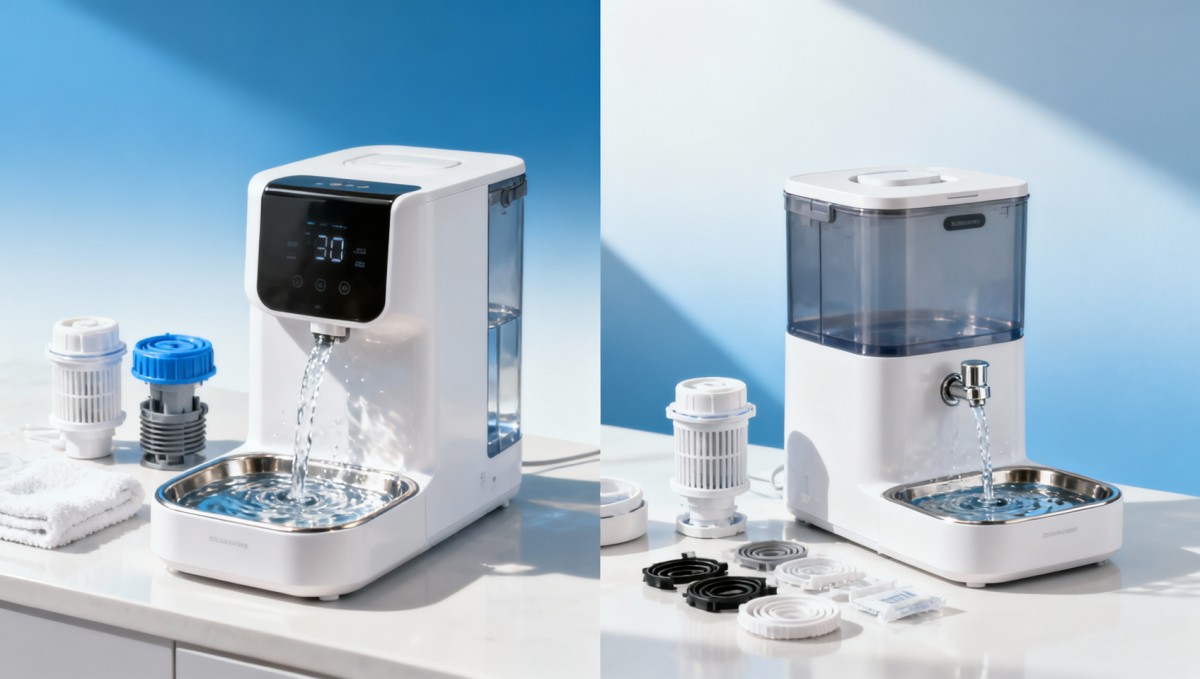
For most buyers, the real issue is not whether an automatic pet water fountain looks modern, but whether it can remain sanitary after 7–30 days of regular household or light commercial use. Cleanability depends on four linked factors: water path design, material stability, filter system layout, and the number of parts that require manual washing. If one of these fails, odor, slime, mineral buildup, or pump blockage usually follows.
A clean-running unit usually has a short, visible circulation route, a removable reservoir, and smooth internal corners. When the water channel includes hidden joints, narrow tubes, or decorative cascades that trap residue, cleaning time rises sharply. For operators handling multiple units in pet stores, clinics, boarding sites, or distributor demos, a difference of 5–10 minutes per cleaning cycle becomes a meaningful labor cost over a month or a quarter.
Material selection matters just as much. Stainless steel contact surfaces are often preferred for their resistance to scratching and odor retention, while some food-contact plastics can still perform well if they are thick, smooth, and easy to inspect. The key question is not metal versus plastic alone, but whether the material resists biofilm attachment, repeated washing, and exposure to mineral-rich water.
The 4 design signals procurement teams should check first
When procurement staff or technical reviewers screen automatic pet water fountains, the fastest first-pass review is to focus on a small set of practical indicators. This helps separate products built for daily use from those designed mainly for appearance. In B2B sourcing, this step reduces back-and-forth sampling and lowers the risk of selecting units that trigger service complaints after deployment.
- Fewer than 6–8 detachable wash parts is usually easier to manage than highly segmented structures.
- Pump housing should open without special tools, allowing weekly debris removal in less than 3 minutes.
- Water-contact surfaces should be smooth, with no deep ribs or blind corners where residue accumulates.
- Filters should be replaceable on a predictable cycle, commonly every 2–4 weeks depending on water quality and pet count.
These checks are especially useful for sourcing teams that compare private-label offers, OEM proposals, or catalog products from multiple suppliers. TradeNexus Pro readers often need more than product claims; they need decision logic that connects design details with operating cost, service burden, and downstream distributor satisfaction.
Which fountain designs create fewer hygiene problems over time?
Not all automatic pet water fountains age the same way. Some remain easy to maintain after months of repeated cleaning, while others become harder to sanitize because seals loosen, plastic clouds, or internal channels trap mineral scale. For purchasing teams, design comparison should focus on total hygiene behavior over a 6–12 month period rather than day-one appearance.
The table below compares common fountain configurations used in the consumer market, pet care environments, and reseller portfolios. It is intended to support product selection, technical screening, and channel assortment planning rather than to rank one format as universally better.
The main takeaway is that the cleanest automatic pet water fountain is often the one with the fewest hidden spaces, not the one with the most visual features. Buyers serving distributors or retail channels should also consider return risk: highly decorative units may sell quickly but generate more after-sales questions about pump noise, residue, and difficult cleaning access.
How to compare materials beyond surface appearance
Material comparison should include scratch resistance, odor retention, dishwasher tolerance where applicable, and how clearly users can see dirt. Stainless steel is often easier to inspect and can be a practical choice in high-turnover environments. Plastic can still be effective if the grade is stable and the molded finish is smooth, but thin or textured plastic tends to show wear sooner.
A simple material review checklist
- Check whether water-contact parts can tolerate repeated washing 1–3 times per week.
- Confirm whether the surface finish allows visual inspection for slime, scale, or trapped hair.
- Review whether replacement parts such as trays, pumps, and filters are available over a typical 6–12 month use cycle.
These details matter to technical evaluators, quality teams, and finance approvers because they shape not just unit price, but also support costs, product lifespan, and user satisfaction in the field.
What should buyers and evaluators ask before placing an order?
A strong procurement process for automatic pet water fountains combines product review, service review, and usage review. Many sourcing mistakes happen because teams compare capacity and price but ignore cleaning workflow, replacement parts, and real operating conditions. In practice, a sound review can be organized into 5 key checks completed before sample approval or bulk negotiation.
5 key checks before sample confirmation
- Ask how long a full cleaning takes for a first-time user and for a trained operator.
- Confirm filter replacement frequency under light, medium, and high-use conditions.
- Review pump maintenance steps, including whether the impeller can be removed for debris cleaning.
- Check noise behavior after continuous operation for 8–12 hours, especially as water levels drop.
- Verify spare part lead time, because delayed pump or filter supply can disrupt channel sales and end-user support.
This kind of structured questioning is especially useful for importers, distributors, and multi-site operators. A unit that looks cost-effective on the quote sheet may become expensive if each cleaning cycle takes too long or if filters are proprietary and difficult to replenish. For finance teams, recurring accessory cost over 3, 6, and 12 months is often more informative than the initial product price.
In many sourcing discussions, buyers also need to match water fountain design to target users. A single-cat household, a pet boarding room, and a retail demonstration space have different expectations for refill frequency, visual appeal, cleaning labor, and resilience to mishandling. That is why TradeNexus Pro emphasizes decision support that connects product attributes with operational context, not isolated specification reading.
The next table can help teams align selection criteria with user profile, maintenance burden, and budget sensitivity. It is useful for cross-functional review between procurement, quality, and business teams.
This matrix shows why the best automatic pet water fountain is rarely selected on aesthetics alone. The right unit is one that fits the cleaning capability of the user, the service model of the seller, and the documentation needs of the market.
How do operating environments change the right fountain choice?
An automatic pet water fountain used in a private home is not evaluated the same way as one used in a clinic waiting area, a grooming business, or a pet boarding facility. The number of animals, the water refill frequency, and the staff time available for cleaning all influence the right design choice. This is where scenario-based selection becomes more useful than generic product descriptions.
Common scenarios and what changes in the decision
In a single-pet home, visual simplicity and low weekly cleaning effort usually matter most. In a multi-pet setting, higher capacity and stronger pump stability may be necessary, but only if the internal system remains easy to flush and inspect. In a retail or distributor environment, shelf appeal matters, yet maintenance complaints can quickly affect returns and ratings.
Scenario-based guidance
- Home use: prioritize a simple reservoir, clear cleaning instructions, and filter replacement every 2–4 weeks.
- Pet clinics or grooming rooms: prefer durable surfaces, easy disinfection steps, and visible water-level monitoring during daily operation.
- Boarding or multi-animal care: focus on faster refill cycles, predictable pump maintenance, and spare parts planning for continuous use.
- Reseller or distributor channels: balance display value with low complaint risk, especially around cleaning complexity and replacement filter availability.
For project managers and business evaluators, the hidden question is whether the end user will actually maintain the unit correctly after purchase. If cleaning requires too many steps, real compliance drops. That is why some lower-feature designs outperform premium-looking models in long-term satisfaction and repeat purchase metrics.
A practical rule is to match maintenance intensity to the user group. If the fountain will be cleaned by busy operators, choose designs that can be fully rinsed, wiped, and reassembled in one short cycle. If the target market is premium retail, then appearance can be added, but not at the cost of inaccessible channels or hard-to-source consumables.
What compliance, maintenance, and risk issues are often overlooked?
Many problems with automatic pet water fountains begin after purchase, not during product listing review. Teams often overlook material declarations, electrical safety details, and the practical maintenance instructions that determine whether a product remains hygienic in use. In international sourcing, these issues can affect import review, warranty claims, and reseller acceptance.
Common mistakes that increase cleaning complaints
One common mistake is assuming that a larger filter always means cleaner water. In reality, filter quality, replacement interval, and pump chamber cleanliness must work together. Another mistake is focusing only on nominal capacity. A large tank may reduce refill frequency, but if water sits too long without regular cleaning, the hygiene benefit disappears. For many units, weekly washing and filter changes every few weeks remain the practical baseline.
A third issue is documentation. Buyers should ask for clear instructions covering 4 basic areas: disassembly, pump cleaning, filter replacement, and safe reassembly. Without this, even a well-designed automatic pet water fountain may underperform because users clean only the visible bowl and ignore the pump cavity where debris accumulates.
Risk checklist for quality and safety teams
- Check whether food-contact surfaces and electrical components are documented for the destination market.
- Review cable routing, low-voltage power configuration, and splash exposure around the base.
- Confirm that cleaning instructions specify routine frequency, such as daily rinse, weekly wash, and monthly deep check.
- Ask whether spare filters and pumps can be supplied across at least one standard sales season or reorder cycle.
For quality managers and procurement leaders, this review supports both compliance and customer satisfaction. It also helps reduce a common commercial risk: products that sell on image but generate avoidable after-sales friction because the maintenance burden was not evaluated early enough.
FAQ and next-step guidance for smarter sourcing decisions
Automatic pet water fountains are often purchased by users who want better hydration support for pets, but in B2B and channel decisions, the priorities are broader. Buyers need to evaluate cleanability, supply continuity, replacement parts, and the ability to explain maintenance clearly to the end customer. The questions below address the issues most often raised during comparison, approval, and quotation stages.
How often should an automatic pet water fountain be cleaned?
A practical routine is a quick rinse every few days, a more thorough wash about once a week, and filter replacement every 2–4 weeks depending on water hardness, hair load, and the number of pets. In heavier-use settings, pump inspection may be needed weekly. The exact schedule varies, but the right fountain should make this routine manageable rather than labor-intensive.
Are stainless steel fountains always better than plastic ones?
Not always. Stainless steel usually offers easier surface inspection and lower odor retention, but a well-made plastic automatic pet water fountain can still be practical if the material is stable, smooth, and supported by an easy-to-clean structure. The real test is how the complete product behaves after repeated cleaning cycles, not the headline material alone.
What should distributors ask suppliers before listing a model?
Ask about spare part availability, filter reorder cadence, user cleaning time, pump noise at low water level, and the documentation package for safety and material review. It is also worth requesting sample evaluation over 2–3 weeks to observe buildup, ease of disassembly, and reassembly consistency before final assortment decisions.
Why do some fountains become dirty quickly even with filters?
Filters help, but they do not eliminate residue from hair, saliva, mineral deposits, and biofilm. If the pump chamber is neglected or if water-contact channels are difficult to reach, contamination builds up faster. A fountain that stays clean is one that combines filtration with practical wash access and predictable maintenance intervals.
Why work with TradeNexus Pro when evaluating pet water fountain sourcing options?
TradeNexus Pro supports procurement directors, supply chain managers, technical reviewers, and commercial decision-makers who need more than product listings. We help teams interpret product structure, maintenance implications, supply-side risks, and market-fit logic so they can compare automatic pet water fountains with greater confidence and fewer hidden cost surprises.
If you are reviewing automatic pet water fountain options for retail, distribution, OEM, or multi-site use, you can consult on key areas such as parameter confirmation, cleaning structure comparison, replacement filter planning, delivery lead time, documentation readiness, sample support, and quotation alignment. This is especially useful when multiple departments need a shared basis for approval.
Our value is in connecting product detail with business decision quality. That includes helping you compare supplier responses, refine selection criteria, identify risk points before purchase, and prioritize the designs most likely to stay clean in real use. For teams managing budget control, product quality, and launch timing at the same time, this shortens the path from research to confident action.
Contact TradeNexus Pro to discuss your target specifications, preferred materials, cleaning expectations, sample review plan, certification questions, and delivery window. Whether you need a shortlist for sourcing, a structured comparison for internal approval, or support for distributor-ready product evaluation, the conversation can start with the exact technical and commercial points that matter to your project.
Get weekly intelligence in your inbox.
No noise. No sponsored content. Pure intelligence.
 Apr 29, 2026USITC Launches Section 337 Investigation into Chinese Wi-Fi 7 RF ModulesUSITC Launches Section 337 Investigation into Chinese Wi-Fi 7 RF Modules
 Apr 29, 2026Côte d'Ivoire Launches $500M Grid Storage Tender, Chinese BESS Fast-TrackedCôte d'Ivoire Launches $500M Grid Storage Tender, Chinese BESS Fast-Tracked
 Apr 29, 2026Morocco Enforces IEC 61427-2:2025 PV Mounting Certification from Q3 2026Morocco Enforces IEC 61427-2:2025 PV Mounting Certification from Q3 2026
 Apr 29, 2026UAE Becomes Global AI Hub: New CE-ADAS+ Path for Chinese Smart Industrial EquipmentUAE Becomes Global AI Hub: New CE-ADAS+ Path for Chinese Smart Industrial Equipment
 Apr 29, 2026Red Sea Crisis: Suez Canal Fees Up 12%, China-Europe Rail Premium at 35%Red Sea Crisis: Suez Canal Fees Up 12%, China-Europe Rail Premium at 35%
 Apr 29, 2026TÜV Rheinland Launches Fast-Track Certification for Chinese Warehouse RobotsTÜV Rheinland Launches Fast-Track Certification for Chinese Warehouse Robots
 Apr 29, 2026Vietnam's SMT Expansion Drives CNC Fixture Export DelaysVietnam's SMT Expansion Drives CNC Fixture Export Delays
![]() Apr 29, 2026NEOM Smart Infrastructure Phase II Opens Bidding: Chinese PV Mounting & BESS Pre-QualifiedNEOM Smart Infrastructure Phase II Opens Bidding: Chinese PV Mounting & BESS Pre-Qualified
Apr 29, 2026NEOM Smart Infrastructure Phase II Opens Bidding: Chinese PV Mounting & BESS Pre-QualifiedNEOM Smart Infrastructure Phase II Opens Bidding: Chinese PV Mounting & BESS Pre-Qualified Apr 29, 2026EU Enforces Battery Passport for Energy Storage Imports from July 2026EU Enforces Battery Passport for Energy Storage Imports from July 2026
 Apr 29, 2026Maine Bans New >20MW Data Centers — AI Hardware Delivery ImpactedMaine Bans New >20MW Data Centers — AI Hardware Delivery Impacted
 Apr 28, 2026Suez Canal Fee Hike & China-Europe Rail Premium: Q2 2026 ImpactSuez Canal Fee Hike & China-Europe Rail Premium: Q2 2026 Impact
 Apr 28, 2026TÜV Rheinland Launches Fast-Track Certification for Chinese Warehouse RobotsTÜV Rheinland Launches Fast-Track Certification for Chinese Warehouse Robots
 Apr 28, 2026EU Enforces Battery Passport Rule for Chinese ESS Exports from 2027EU Enforces Battery Passport Rule for Chinese ESS Exports from 2027
 Apr 28, 2026ADB Raises Vietnam GDP Forecast to 7.2%: SMT & Precision Fixture Demand RisesADB Raises Vietnam GDP Forecast to 7.2%: SMT & Precision Fixture Demand Rises
 Apr 28, 2026US ITC Launches Section 337 Investigation into Chinese Wi-Fi 7 RF FEMsUS ITC Launches Section 337 Investigation into Chinese Wi-Fi 7 RF FEMs
 Apr 28, 2026Côte d'Ivoire Opens $500M Power Tender: Chinese BESS Get Fast-Track AccessCôte d'Ivoire Opens $500M Power Tender: Chinese BESS Get Fast-Track Access
 Apr 28, 2026BP’s Algeria East Basin Permit Spurs Valve Demand, Lead Times Extend to 18 WeeksBP’s Algeria East Basin Permit Spurs Valve Demand, Lead Times Extend to 18 Weeks
") Apr 28, 2026Vietnam Mandates V-Trust for Smart Appliances Export (July 2026)Vietnam Mandates V-Trust for Smart Appliances Export (July 2026)
Apr 28, 2026Vietnam Mandates V-Trust for Smart Appliances Export (July 2026)Vietnam Mandates V-Trust for Smart Appliances Export (July 2026) Apr 28, 2026Morocco Enforces PV Mounting Structure Certification from Q3 2026Morocco Enforces PV Mounting Structure Certification from Q3 2026
 Apr 28, 2026UAE Establishes AI Hub Status, Opens CE-ADAS+ Pathway for Chinese Smart Industrial EquipmentUAE Establishes AI Hub Status, Opens CE-ADAS+ Pathway for Chinese Smart Industrial Equipment
 Apr 27, 2026Algeria’s Oil & Steel FDI Push Opens Valve, Corrosion-Resistant Material OrdersAlgeria’s Oil & Steel FDI Push Opens Valve, Corrosion-Resistant Material Orders
 Apr 27, 2026Azerbaijan’s New PV Mounting Standard Opens Path for Chinese SuppliersAzerbaijan’s New PV Mounting Standard Opens Path for Chinese Suppliers
 Apr 27, 2026Fitch Cuts East Africa Growth Forecasts, Raises Cross-Border Trade RisksFitch Cuts East Africa Growth Forecasts, Raises Cross-Border Trade Risks
 Apr 27, 2026ADB Raises Vietnam GDP Forecast to 7.2% on Electronics Export GrowthADB Raises Vietnam GDP Forecast to 7.2% on Electronics Export Growth
 Apr 27, 2026Maine Halts Large Data Centers: AI Server Export ImpactMaine Halts Large Data Centers: AI Server Export Impact
 Apr 27, 2026OFID $500M for Côte d'Ivoire: Boost to Factory Automation & Warehouse RoboticsOFID $500M for Côte d'Ivoire: Boost to Factory Automation & Warehouse Robotics
 Apr 27, 2026Morocco Ranks 4th in EU Energy Aid to AfricaMorocco Ranks 4th in EU Energy Aid to Africa