Smart Pet Feeders Which Features Matter Most in 2026
As smart pet feeders move from simple convenience devices to connected care tools in 2026, the features that matter most are no longer just app control or timed portions. For buyers evaluating products for retail, distribution, private label, or operational deployment, the real differentiators are feeding accuracy, fail-safe reliability, food freshness protection, connectivity resilience, data visibility, and long-term maintenance cost. In practical terms, the best smart pet feeders are the ones that continue working correctly when networks fail, prevent jams and overfeeding, support safer food management, and fit into broader smart home and pet care ecosystems without creating support problems later.
For procurement teams, technical evaluators, distributors, and business decision-makers, this means the buying question in 2026 is not “Which feeder has the most features?” but “Which features measurably reduce risk, improve user trust, and support commercial viability?” That is the standard that should guide product comparison.
Which smart pet feeder features actually matter most in 2026?
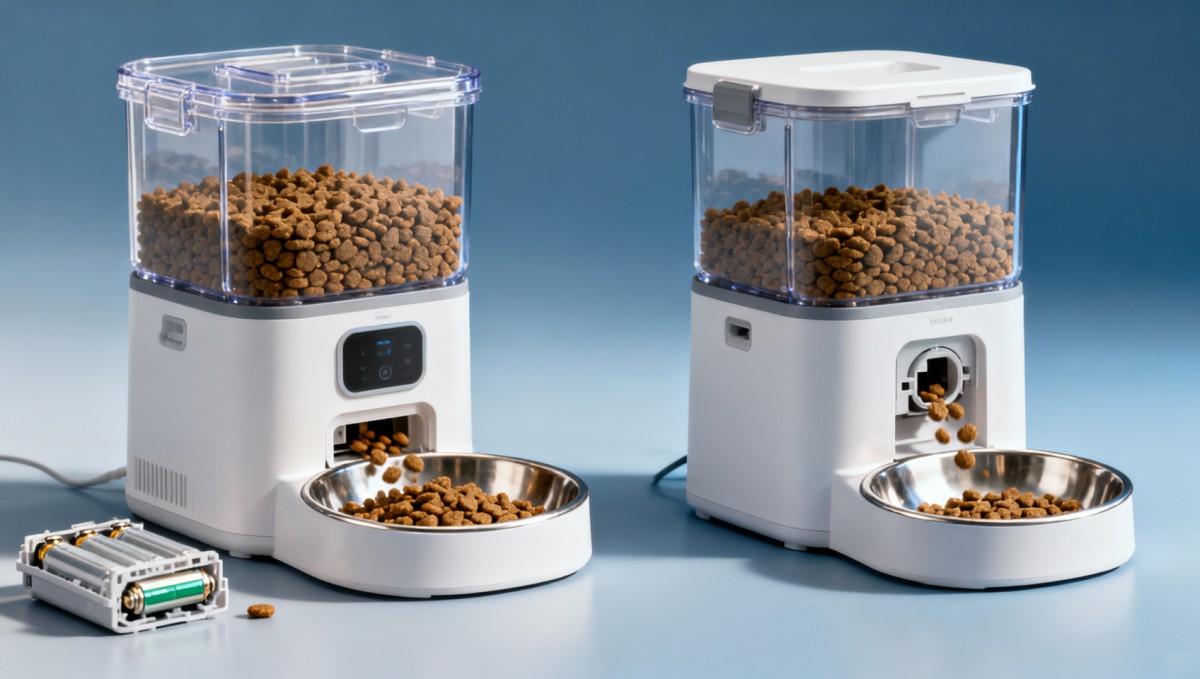
The market is crowded with models promising convenience, but only a smaller set of features consistently affects product quality, customer satisfaction, and after-sales performance. In 2026, the highest-value features typically fall into six priority areas:
- Accurate portion control with repeatable dispensing performance
- Anti-jam and fail-safe feeding mechanisms that reduce missed meals
- Offline operation and power backup for continuity during outages
- Food freshness and hygiene protection through sealed storage and easy cleaning
- Stable app connectivity and useful alerts rather than superficial smart functions
- Serviceability, compliance, and total cost of ownership for commercial buyers
For enterprise buyers, these matter more than cosmetic design upgrades or gimmicky AI claims. A feeder that dispenses accurately under real household conditions will outperform a more advanced-looking device that fails under humidity, kibble variation, or intermittent Wi-Fi.
Why feeding accuracy is still the most important feature
If one feature should lead every shortlist, it is dispensing accuracy. In both consumer and B2B channels, poor portion consistency is one of the fastest ways to damage trust. Underfeeding creates health concerns and customer complaints; overfeeding can create weight management problems and liability concerns, especially for animals on controlled diets.
Technical evaluators should examine:
- Portion size range and granularity
- Performance consistency across different kibble sizes and shapes
- Error rate over repeated feeding cycles
- Calibration options for food density differences
- Bowl-level verification via weight sensing or dispensing confirmation
In 2026, the more credible products are moving toward feedback-based dispensing rather than simple timer-and-rotation logic. If a feeder can confirm that food was actually delivered, not just that the motor turned, it substantially improves real-world reliability. For buyers comparing suppliers, this is a stronger value indicator than app aesthetics.
How important are anti-jam design and reliability safeguards?
They are critical. A smart pet feeder is only as “smart” as its ability to avoid or recover from common failure points. Jams remain one of the most common field issues, especially when users switch food brands, use irregular kibble shapes, or store devices in humid environments.
Features worth prioritizing include:
- Wide-angle or optimized hopper-to-dispensing path design
- Motor overload detection
- Automatic jam reversal or retry cycles
- Low-food detection that works reliably, not just theoretically
- Blocked outlet alerts
- Mechanical tolerance for varied kibble sizes
For distributors and sourcing managers, reliable anti-jam performance has direct financial value. It reduces returns, support tickets, and reputation damage. A product with a slightly higher unit cost but lower field failure rate is often the better procurement decision.
Do Wi-Fi, app control, and remote feeding still matter?
Yes, but only when they are implemented well. In 2026, app control is expected, not differentiating. What matters is whether connectivity features genuinely improve usability and monitoring.
The strongest connected features now include:
- Remote schedule adjustment with immediate synchronization
- Real-time feeding notifications
- Feeding history logs for care tracking
- Multi-user access for family or caregiver coordination
- Role-based permissions in premium or multi-site applications
- Firmware update support with secure deployment
However, buyers should be cautious about overvaluing connectivity alone. A feeder must continue scheduled feeding even if the internet goes down. Local memory, on-device scheduling, and stable fallback operation are more important than flashy cloud-only controls. For technical teams, a good test question is: What happens if power or Wi-Fi fails for 12 to 24 hours? The answer often reveals product maturity.
Why offline operation and power backup are now major buying criteria
This is one of the clearest shifts in 2026. As smart pet care devices become more embedded in everyday routines, resilience matters more. Pet owners and commercial buyers alike increasingly expect continuity.
Important reliability features include:
- Battery backup for emergency feeding continuity
- Stored local schedules independent of cloud access
- Power-loss recovery logic
- Alert systems for battery depletion or outage events
- Time synchronization recovery after interruptions
For buyers managing retail selection or OEM sourcing, these capabilities are not just technical extras. They are trust features. They protect the user experience in the exact moments when basic smart devices often fail.
How much should buyers care about food freshness, hygiene, and material safety?
Very much. For many users, a feeder touches food every day and must remain safe and easy to maintain over time. This makes storage sealing, material selection, and cleaning design commercially important, especially for higher-end channels.
Features that deserve close review:
- Moisture-resistant hopper sealing
- Desiccant integration where appropriate
- Food-contact-safe materials
- Removable bowls and internal components for cleaning
- Odor-resistant design
- Minimal residue zones inside the feed path
Quality control teams should pay attention to how easily mold risk, oil buildup, and food contamination can be prevented. This is particularly relevant when smart pet feeders are sold alongside automatic pet water fountains, where buyers already expect stronger hygiene positioning across the product line.
Are cameras, voice recording, and AI pet monitoring essential or optional?
In most cases, they are secondary. These features can add value, but they should not be treated as core purchase criteria unless the target market specifically demands them.
Cameras can be useful for remote confirmation, but they add cost, data privacy considerations, and support complexity. Voice recording may improve user appeal but rarely determines long-term product success. AI behavior monitoring is promising, yet in many products it remains uneven in accuracy and difficult to validate commercially.
For most B2B buyers, the right approach is simple: prioritize these features only after the feeder proves strong in dispensing performance, reliability, and food safety. Premium features cannot compensate for basic operational weakness.
What should procurement and technical evaluation teams compare before selecting a supplier?
To make a sound sourcing decision, buyers should move beyond front-end specifications and compare operational performance, support capability, and long-term economics.
A practical evaluation framework should include:
- Dispensing accuracy test data across food types
- Failure and jam rate benchmarks
- Connectivity stability and offline functionality
- Cleaning and maintenance workload
- Certifications and regulatory compliance
- OEM/ODM flexibility for brand customization
- Firmware support and update policy
- Warranty terms and spare parts availability
- Return rate history if available
- Total landed cost and support cost
Distributors and commercial buyers should also evaluate packaging quality, onboarding clarity, multilingual support materials, and compatibility with adjacent smart pet categories. A feeder that is technically good but difficult to explain, install, or support may underperform in the market.
How do smart pet feeders fit into broader 2026 product strategy?
In 2026, smart pet feeders are increasingly assessed as part of a connected pet care ecosystem rather than as standalone gadgets. This affects both product design and channel strategy.
For example, feeders that align well with automatic pet water fountains, pet monitoring cameras, and smart home platforms can create stronger bundle value. From a commercial perspective, that means better upsell opportunities, improved customer retention, and more coherent product positioning.
For B2B stakeholders, the strongest products tend to support three strategic goals at once:
- Reliable daily use that builds consumer trust
- Manageable support burden for retailers and distributors
- Scalable feature positioning across entry, mid, and premium product tiers
This is especially important for companies seeking future-ready smart electronics portfolios. The winning smart pet feeder is not necessarily the one with the longest feature list; it is the one that best balances dependable performance, customer confidence, and channel economics.
Final verdict: which features matter most when buying smart pet feeders in 2026?
The priority order is becoming clearer. In 2026, the most important smart pet feeder features are accurate dispensing, anti-jam reliability, offline feeding continuity, power backup, food freshness protection, easy cleaning, and truly useful app-based alerts. After that, buyers can evaluate premium additions such as cameras or AI functions based on target market needs.
For procurement professionals, technical reviewers, distributors, and decision-makers, the smartest buying strategy is to focus on features that reduce operational risk and increase long-term user trust. If a smart pet feeder can deliver food accurately, keep working through disruptions, maintain hygienic storage, and minimize support issues, it is already ahead of many competitors. In a more mature 2026 market, those are the features that matter most.
Get weekly intelligence in your inbox.
No noise. No sponsored content. Pure intelligence.
 Apr 29, 2026USITC Launches Section 337 Investigation into Chinese Wi-Fi 7 RF ModulesUSITC Launches Section 337 Investigation into Chinese Wi-Fi 7 RF Modules
 Apr 29, 2026Côte d'Ivoire Launches $500M Grid Storage Tender, Chinese BESS Fast-TrackedCôte d'Ivoire Launches $500M Grid Storage Tender, Chinese BESS Fast-Tracked
 Apr 29, 2026Morocco Enforces IEC 61427-2:2025 PV Mounting Certification from Q3 2026Morocco Enforces IEC 61427-2:2025 PV Mounting Certification from Q3 2026
 Apr 29, 2026UAE Becomes Global AI Hub: New CE-ADAS+ Path for Chinese Smart Industrial EquipmentUAE Becomes Global AI Hub: New CE-ADAS+ Path for Chinese Smart Industrial Equipment
 Apr 29, 2026Red Sea Crisis: Suez Canal Fees Up 12%, China-Europe Rail Premium at 35%Red Sea Crisis: Suez Canal Fees Up 12%, China-Europe Rail Premium at 35%
 Apr 29, 2026TÜV Rheinland Launches Fast-Track Certification for Chinese Warehouse RobotsTÜV Rheinland Launches Fast-Track Certification for Chinese Warehouse Robots
 Apr 29, 2026Vietnam's SMT Expansion Drives CNC Fixture Export DelaysVietnam's SMT Expansion Drives CNC Fixture Export Delays
![]() Apr 29, 2026NEOM Smart Infrastructure Phase II Opens Bidding: Chinese PV Mounting & BESS Pre-QualifiedNEOM Smart Infrastructure Phase II Opens Bidding: Chinese PV Mounting & BESS Pre-Qualified
Apr 29, 2026NEOM Smart Infrastructure Phase II Opens Bidding: Chinese PV Mounting & BESS Pre-QualifiedNEOM Smart Infrastructure Phase II Opens Bidding: Chinese PV Mounting & BESS Pre-Qualified Apr 29, 2026EU Enforces Battery Passport for Energy Storage Imports from July 2026EU Enforces Battery Passport for Energy Storage Imports from July 2026
 Apr 29, 2026Maine Bans New >20MW Data Centers — AI Hardware Delivery ImpactedMaine Bans New >20MW Data Centers — AI Hardware Delivery Impacted
 Apr 28, 2026Suez Canal Fee Hike & China-Europe Rail Premium: Q2 2026 ImpactSuez Canal Fee Hike & China-Europe Rail Premium: Q2 2026 Impact
 Apr 28, 2026TÜV Rheinland Launches Fast-Track Certification for Chinese Warehouse RobotsTÜV Rheinland Launches Fast-Track Certification for Chinese Warehouse Robots
 Apr 28, 2026EU Enforces Battery Passport Rule for Chinese ESS Exports from 2027EU Enforces Battery Passport Rule for Chinese ESS Exports from 2027
 Apr 28, 2026ADB Raises Vietnam GDP Forecast to 7.2%: SMT & Precision Fixture Demand RisesADB Raises Vietnam GDP Forecast to 7.2%: SMT & Precision Fixture Demand Rises
 Apr 28, 2026US ITC Launches Section 337 Investigation into Chinese Wi-Fi 7 RF FEMsUS ITC Launches Section 337 Investigation into Chinese Wi-Fi 7 RF FEMs
 Apr 28, 2026Côte d'Ivoire Opens $500M Power Tender: Chinese BESS Get Fast-Track AccessCôte d'Ivoire Opens $500M Power Tender: Chinese BESS Get Fast-Track Access
 Apr 28, 2026BP’s Algeria East Basin Permit Spurs Valve Demand, Lead Times Extend to 18 WeeksBP’s Algeria East Basin Permit Spurs Valve Demand, Lead Times Extend to 18 Weeks
") Apr 28, 2026Vietnam Mandates V-Trust for Smart Appliances Export (July 2026)Vietnam Mandates V-Trust for Smart Appliances Export (July 2026)
Apr 28, 2026Vietnam Mandates V-Trust for Smart Appliances Export (July 2026)Vietnam Mandates V-Trust for Smart Appliances Export (July 2026) Apr 28, 2026Morocco Enforces PV Mounting Structure Certification from Q3 2026Morocco Enforces PV Mounting Structure Certification from Q3 2026
 Apr 28, 2026UAE Establishes AI Hub Status, Opens CE-ADAS+ Pathway for Chinese Smart Industrial EquipmentUAE Establishes AI Hub Status, Opens CE-ADAS+ Pathway for Chinese Smart Industrial Equipment
 Apr 27, 2026Algeria’s Oil & Steel FDI Push Opens Valve, Corrosion-Resistant Material OrdersAlgeria’s Oil & Steel FDI Push Opens Valve, Corrosion-Resistant Material Orders
 Apr 27, 2026Azerbaijan’s New PV Mounting Standard Opens Path for Chinese SuppliersAzerbaijan’s New PV Mounting Standard Opens Path for Chinese Suppliers
 Apr 27, 2026Fitch Cuts East Africa Growth Forecasts, Raises Cross-Border Trade RisksFitch Cuts East Africa Growth Forecasts, Raises Cross-Border Trade Risks
 Apr 27, 2026ADB Raises Vietnam GDP Forecast to 7.2% on Electronics Export GrowthADB Raises Vietnam GDP Forecast to 7.2% on Electronics Export Growth
 Apr 27, 2026Maine Halts Large Data Centers: AI Server Export ImpactMaine Halts Large Data Centers: AI Server Export Impact
 Apr 27, 2026OFID $500M for Côte d'Ivoire: Boost to Factory Automation & Warehouse RoboticsOFID $500M for Côte d'Ivoire: Boost to Factory Automation & Warehouse Robotics
 Apr 27, 2026Morocco Ranks 4th in EU Energy Aid to AfricaMorocco Ranks 4th in EU Energy Aid to Africa