Portable Power Stations: What Size Do You Really Need?
Choosing the right portable power stations is not just about wattage—it is about matching real-world needs, budgets, and risk tolerance. For buyers comparing lithium ion batteries and solar battery options across field work, backup power, mobility scooters, portable monitors, and even smart electronics ecosystems, sizing mistakes can be costly. This guide helps technical, commercial, and operational teams determine what size they really need with confidence.
In B2B purchasing, the wrong capacity decision can create two expensive outcomes at once: underpowered systems that fail in critical moments, or oversized units that tie up capital and add transport, charging, and maintenance burden. Portable power stations are now used far beyond camping. They support service fleets, temporary job sites, healthcare-adjacent field devices, inspection teams, mobile retail, and distributed electronics testing.
For procurement teams, engineers, safety managers, and financial approvers, the practical question is not “What is the biggest unit available?” but “What runtime, peak load, portability, recharge method, and safety margin does this application require?” The answer usually sits in a narrow range, and getting there requires a structured sizing method.
Start with Load Profile, Not Marketing Capacity
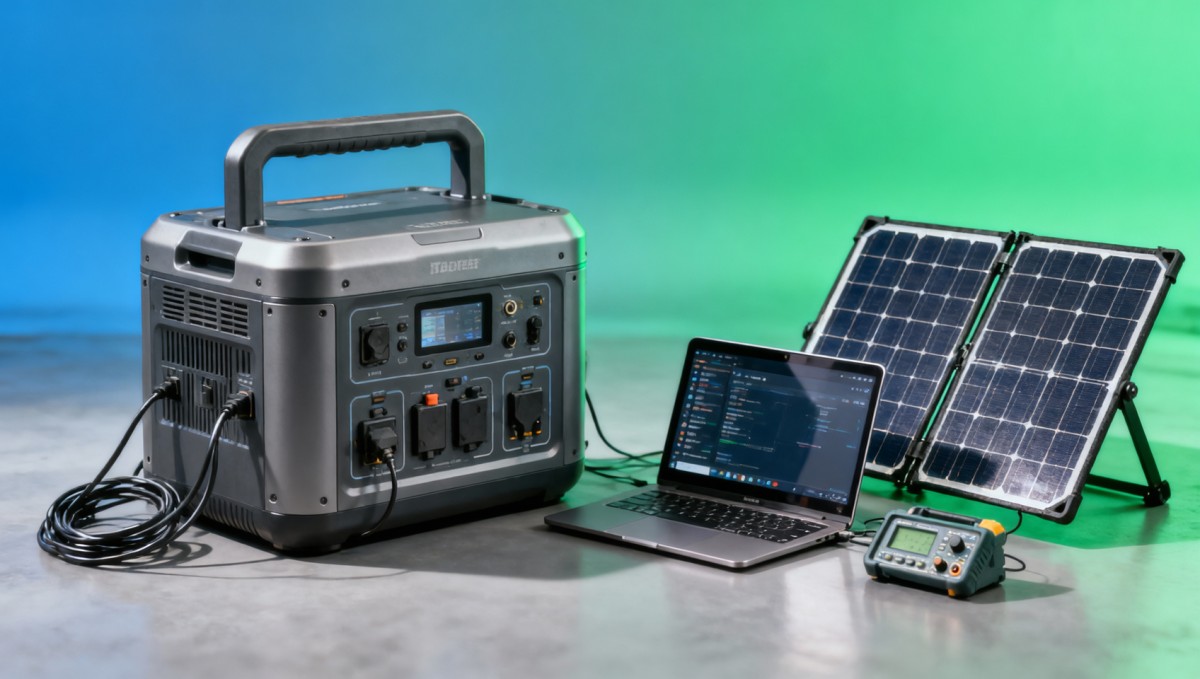
The most common buying mistake is selecting a portable power station based on a single number such as battery watt-hours or inverter watts. In real operations, you need at least 4 inputs: continuous load, surge load, daily runtime, and recharge window. A 1,000Wh unit may be more than enough for a portable monitor setup, but completely insufficient for a field team running refrigeration, tools, or communications gear for 8–10 hours.
A practical sizing formula begins with wattage. Add the running watts of all devices expected to operate at the same time, then identify any startup peaks. Motors, compressors, and some pumps can draw 2–3 times their running power for a few seconds. If your power station inverter cannot handle that surge, the system may trip even when average consumption looks acceptable on paper.
Runtime is the second filter. If a team uses 300W continuously for 5 hours, the energy demand is 1,500Wh before efficiency losses. Since inverter losses and conversion losses often reduce usable output by roughly 10%–15%, buyers should usually target at least 1,700Wh to 1,800Wh rather than a nominal 1,500Wh battery.
Portability also matters. A unit in the 300Wh–500Wh range may weigh under 8 kg, which is suitable for rapid movement between vehicles and inspection points. A 2,000Wh class unit may exceed 20 kg, which changes handling requirements, storage planning, and workplace safety procedures. For project managers, that shift can affect labor time and deployment speed as much as energy performance.
Key sizing questions before comparing suppliers
- What is the total continuous power draw in watts during normal operation?
- What is the highest startup surge, and how many devices may start simultaneously?
- How many hours of autonomy are required: 2–4 hours, 8 hours, or overnight backup?
- Will the unit recharge from AC only, vehicle input, or a solar battery setup?
- Is the system moved daily, weekly, or installed semi-permanently on site?
The table below shows how common use cases translate into realistic capacity ranges. These are typical planning ranges rather than fixed rules, but they help teams avoid oversizing by emotion or undersizing by headline price.
The key conclusion is simple: most business users do not need the largest portable power stations on the market. They need correctly matched energy storage and inverter headroom. A measured load profile can reduce unnecessary battery spend while improving runtime confidence and procurement accuracy.
Match Battery Chemistry and Recharge Strategy to the Job
Capacity is only one side of the selection process. The other side is battery chemistry and recharge behavior. Most buyers evaluating portable power stations today compare lithium ion batteries, especially lithium iron phosphate and other lithium-based formats, against use-case demands such as frequent cycling, transport limits, environmental temperature, and charging speed.
For operations that cycle the unit nearly every day, cycle life becomes a budget issue, not just a technical detail. A unit used 250–300 days per year reaches 1,000 cycles quickly. In that case, a battery platform with a higher cycle-life range may support lower total cost of ownership over 3–5 years, even if the purchase price is higher on day one.
Recharge strategy also changes the required size. If a team can recharge during lunch, in a service van, or from a solar battery input between tasks, a smaller unit may be sufficient. If there is only one overnight AC charging window, buyers often need more onboard capacity to cover the full shift plus a 15%–20% reserve margin.
This is especially important in mobile ecosystems. A mobility scooter support application may need predictable low-speed discharge over several hours, while a smart electronics demo unit may need frequent high-quality AC output with low noise for sensitive devices. Both scenarios use portable power stations, but not the same configuration priorities.
Battery and charging priorities by use case
The matrix below helps technical and commercial teams align chemistry, cycling pattern, and recharge method with deployment reality.
For procurement and finance teams, the takeaway is clear: the “best” portable power station depends on duty cycle. If the unit is used once a month, total lifecycle economics may favor a simpler specification. If it is cycled 5 days a week, battery longevity, thermal control, warranty terms, and charge rate deserve much heavier weighting.
A practical recharge rule
If a team needs same-day turnaround, target a charge strategy that restores at least 60%–80% of usable energy within the available downtime window. For example, a 1,200Wh daily requirement with only a 2-hour midday charging slot demands a much more deliberate charger and input selection than a unit recharged over 10 hours overnight.
Right-Size by Scenario: From Portable Monitors to Backup Power
Different workloads produce very different sizing logic. A portable monitor, laptop, barcode scanner, and network hotspot used at a trade event may draw only 120W–180W combined. For a 6-hour session, a 500Wh–800Wh portable power station can often cover the day with sensible reserve. That same unit would be inadequate for powering cooling devices, power tools, or mission-critical communications through a full shift.
Field service teams typically need a middle tier. Inspection cameras, testing tools, charging docks, tablets, and communication equipment may average 250W–450W. In this range, 1,000Wh–1,500Wh systems often hit the best balance between portability and endurance, especially when there is vehicle charging during transit between jobs.
Emergency backup is a separate category. Here, buyers should define critical loads only. Trying to support every device in a room forces unnecessary oversizing. A disciplined backup plan may isolate a 600W communications and lighting load, allowing a 2,000Wh system to deliver multiple hours of resilience. If buyers include nonessential devices, the required capacity can double quickly without improving continuity for core operations.
Mobility-support and healthcare-adjacent use cases require extra care. Even when power demand is modest, the consequences of interruption are higher. Procurement teams should include output stability, alarm behavior, charging predictability, portability, and safety review in addition to nominal watt-hours. In these contexts, a 10% reserve may be too thin; many teams prefer a 20%–30% operational buffer.
Scenario-based recommendations
- For light electronics ecosystems, start with 300Wh–700Wh and validate actual draw over a full work session.
- For mixed field work, move to 700Wh–1,500Wh with 20% surge headroom above peak measured load.
- For backup power and higher-consequence use, define essential circuits only and size for 15%–30% reserve.
- For solar battery integration, verify both input compatibility and realistic recharge time under partial sun rather than brochure assumptions.
A useful discipline for project managers is to divide applications into 3 categories: mobile convenience, operational continuity, and critical backup. Once teams label the scenario correctly, the ideal portable power station size becomes much easier to defend internally to engineering, finance, and operations.
Procurement, Safety, and Total Cost of Ownership
A good buying decision is not only about technical fit. B2B purchasers also need to evaluate transport risk, operating environment, serviceability, and cost over time. A cheaper unit with limited support, unclear battery replacement policy, or poor thermal behavior may become more expensive after 12–24 months, especially in hot, dusty, or high-frequency use conditions.
Safety managers should review enclosure robustness, cable quality, charging protections, ventilation requirements, and operating temperature guidance. Units used inside vehicles, mobile workshops, warehouses, or temporary structures need controlled charging and safe storage procedures. Even a correctly sized portable power station can become an operational risk if charging is poorly managed or if unsuitable extension methods are used.
Finance teams should look beyond unit price to cost per usable cycle, replacement timing, and labor impact. If a 25 kg power station requires two-person handling in certain workflows while a 14 kg model does not, that difference can influence deployment efficiency. The right size is often the point where runtime targets are met without creating hidden labor or logistics penalties.
Commercial evaluators should also compare support terms. In many projects, lead time matters as much as specification. A suitable portable power station available in 7–15 days may be preferable to a theoretically superior option with a 6–8 week delivery window, especially for time-bound installations or urgent fleet rollouts.
Procurement checklist for enterprise buyers
The checklist below can help cross-functional teams assess fit before approval and rollout.
The table shows why purchasing should not be isolated inside one department. Portable power stations affect users, engineers, safety staff, project leads, and financial approvers at the same time. The strongest decisions are built on a short validation process rather than a single brochure comparison.
Common sizing mistakes to avoid
- Buying only by maximum inverter watts and ignoring runtime in watt-hours.
- Ignoring surge loads from motors or compressor-based devices.
- Assuming 100% of rated battery capacity is usable under all conditions.
- Overlooking daily recharge limits, especially when solar battery input is part of the plan.
- Choosing oversized units that exceed safe handling or storage practices for routine staff.
Implementation Steps and FAQ for Confident Sizing
For most organizations, selecting portable power stations should follow a 5-step process. First, measure actual device loads instead of relying only on nameplate figures. Second, group devices by simultaneous use. Third, define minimum runtime and reserve margin. Fourth, map recharge options across AC, vehicle, and solar battery sources. Fifth, run a pilot with one or two real shifts before scaling procurement.
A pilot matters because real usage patterns often differ from desk assumptions. Teams may find that devices run only 60% of the expected time, allowing a smaller unit. Or they may discover higher surge behavior, longer shift gaps, or added equipment that justifies a larger system. Even a 3-day pilot can prevent costly fleet-wide misalignment.
This disciplined approach is especially useful for companies operating across advanced manufacturing, green energy service, smart electronics deployment, healthcare technology support, and mobile supply chain environments. In all of these sectors, portable power stations are increasingly part of distributed operations, and sizing errors ripple into productivity, safety, and budget performance.
How do you calculate the size you really need?
Multiply the combined running load in watts by the required operating hours, then add 10%–20% for conversion losses and reserve. If the total is 400W for 4 hours, start around 1,760Wh rather than exactly 1,600Wh. Then confirm that the inverter supports the highest expected surge.
When is a solar battery option worth adding?
Solar input becomes valuable when work is remote, charging windows are limited, or operations require reduced dependence on grid or vehicle charging. It is most effective for steady daytime replenishment, not for replacing all recharge needs in high-load applications. Buyers should model realistic weather and panel output rather than ideal conditions.
Are portable power stations suitable for mobility scooters and sensitive electronics?
They can be, but sizing and output quality matter. For mobility scooters, confirm voltage compatibility, charging profile, and safe connection method. For portable monitors and smart electronics, verify clean AC or stable DC output, correct port selection, and adequate reserve to prevent abrupt shutdowns during demonstrations or field diagnostics.
What is the best capacity range for most business users?
Many business applications land between 700Wh and 1,500Wh because that range covers a wide mix of field electronics, communications, and moderate backup tasks without excessive weight. However, that is a planning range, not a universal answer. Actual load measurements should always make the final decision.
The right portable power station size is the one that covers real load, real runtime, and real recharge constraints with a sensible safety margin. For B2B teams, that means looking beyond headline watts and evaluating application type, battery cycling, transport practicality, and total cost over time. If you are comparing lithium ion batteries, solar battery integration, or backup configurations across multiple operating scenarios, now is the time to build a sizing framework before committing budget.
TradeNexus Pro helps enterprise buyers and technical teams turn complex power decisions into practical procurement strategy. To discuss a tailored sizing approach, evaluate solution pathways, or explore broader supply-side options across energy and smart electronics ecosystems, contact us today to get a customized recommendation.
Get weekly intelligence in your inbox.
No noise. No sponsored content. Pure intelligence.
 Apr 29, 2026USITC Launches Section 337 Investigation into Chinese Wi-Fi 7 RF ModulesUSITC Launches Section 337 Investigation into Chinese Wi-Fi 7 RF Modules
 Apr 29, 2026Côte d'Ivoire Launches $500M Grid Storage Tender, Chinese BESS Fast-TrackedCôte d'Ivoire Launches $500M Grid Storage Tender, Chinese BESS Fast-Tracked
 Apr 29, 2026Morocco Enforces IEC 61427-2:2025 PV Mounting Certification from Q3 2026Morocco Enforces IEC 61427-2:2025 PV Mounting Certification from Q3 2026
 Apr 29, 2026UAE Becomes Global AI Hub: New CE-ADAS+ Path for Chinese Smart Industrial EquipmentUAE Becomes Global AI Hub: New CE-ADAS+ Path for Chinese Smart Industrial Equipment
 Apr 29, 2026Red Sea Crisis: Suez Canal Fees Up 12%, China-Europe Rail Premium at 35%Red Sea Crisis: Suez Canal Fees Up 12%, China-Europe Rail Premium at 35%
 Apr 29, 2026TÜV Rheinland Launches Fast-Track Certification for Chinese Warehouse RobotsTÜV Rheinland Launches Fast-Track Certification for Chinese Warehouse Robots
 Apr 29, 2026Vietnam's SMT Expansion Drives CNC Fixture Export DelaysVietnam's SMT Expansion Drives CNC Fixture Export Delays
![]() Apr 29, 2026NEOM Smart Infrastructure Phase II Opens Bidding: Chinese PV Mounting & BESS Pre-QualifiedNEOM Smart Infrastructure Phase II Opens Bidding: Chinese PV Mounting & BESS Pre-Qualified
Apr 29, 2026NEOM Smart Infrastructure Phase II Opens Bidding: Chinese PV Mounting & BESS Pre-QualifiedNEOM Smart Infrastructure Phase II Opens Bidding: Chinese PV Mounting & BESS Pre-Qualified Apr 29, 2026EU Enforces Battery Passport for Energy Storage Imports from July 2026EU Enforces Battery Passport for Energy Storage Imports from July 2026
 Apr 29, 2026Maine Bans New >20MW Data Centers — AI Hardware Delivery ImpactedMaine Bans New >20MW Data Centers — AI Hardware Delivery Impacted
 Apr 28, 2026Suez Canal Fee Hike & China-Europe Rail Premium: Q2 2026 ImpactSuez Canal Fee Hike & China-Europe Rail Premium: Q2 2026 Impact
 Apr 28, 2026TÜV Rheinland Launches Fast-Track Certification for Chinese Warehouse RobotsTÜV Rheinland Launches Fast-Track Certification for Chinese Warehouse Robots
 Apr 28, 2026EU Enforces Battery Passport Rule for Chinese ESS Exports from 2027EU Enforces Battery Passport Rule for Chinese ESS Exports from 2027
 Apr 28, 2026ADB Raises Vietnam GDP Forecast to 7.2%: SMT & Precision Fixture Demand RisesADB Raises Vietnam GDP Forecast to 7.2%: SMT & Precision Fixture Demand Rises
 Apr 28, 2026US ITC Launches Section 337 Investigation into Chinese Wi-Fi 7 RF FEMsUS ITC Launches Section 337 Investigation into Chinese Wi-Fi 7 RF FEMs
 Apr 28, 2026Côte d'Ivoire Opens $500M Power Tender: Chinese BESS Get Fast-Track AccessCôte d'Ivoire Opens $500M Power Tender: Chinese BESS Get Fast-Track Access
 Apr 28, 2026BP’s Algeria East Basin Permit Spurs Valve Demand, Lead Times Extend to 18 WeeksBP’s Algeria East Basin Permit Spurs Valve Demand, Lead Times Extend to 18 Weeks
") Apr 28, 2026Vietnam Mandates V-Trust for Smart Appliances Export (July 2026)Vietnam Mandates V-Trust for Smart Appliances Export (July 2026)
Apr 28, 2026Vietnam Mandates V-Trust for Smart Appliances Export (July 2026)Vietnam Mandates V-Trust for Smart Appliances Export (July 2026) Apr 28, 2026Morocco Enforces PV Mounting Structure Certification from Q3 2026Morocco Enforces PV Mounting Structure Certification from Q3 2026
 Apr 28, 2026UAE Establishes AI Hub Status, Opens CE-ADAS+ Pathway for Chinese Smart Industrial EquipmentUAE Establishes AI Hub Status, Opens CE-ADAS+ Pathway for Chinese Smart Industrial Equipment
 Apr 27, 2026Algeria’s Oil & Steel FDI Push Opens Valve, Corrosion-Resistant Material OrdersAlgeria’s Oil & Steel FDI Push Opens Valve, Corrosion-Resistant Material Orders
 Apr 27, 2026Azerbaijan’s New PV Mounting Standard Opens Path for Chinese SuppliersAzerbaijan’s New PV Mounting Standard Opens Path for Chinese Suppliers
 Apr 27, 2026Fitch Cuts East Africa Growth Forecasts, Raises Cross-Border Trade RisksFitch Cuts East Africa Growth Forecasts, Raises Cross-Border Trade Risks
 Apr 27, 2026ADB Raises Vietnam GDP Forecast to 7.2% on Electronics Export GrowthADB Raises Vietnam GDP Forecast to 7.2% on Electronics Export Growth
 Apr 27, 2026Maine Halts Large Data Centers: AI Server Export ImpactMaine Halts Large Data Centers: AI Server Export Impact
 Apr 27, 2026OFID $500M for Côte d'Ivoire: Boost to Factory Automation & Warehouse RoboticsOFID $500M for Côte d'Ivoire: Boost to Factory Automation & Warehouse Robotics
 Apr 27, 2026Morocco Ranks 4th in EU Energy Aid to AfricaMorocco Ranks 4th in EU Energy Aid to Africa