World's First 10,000-Car PCTC Delivered in Guangzhou
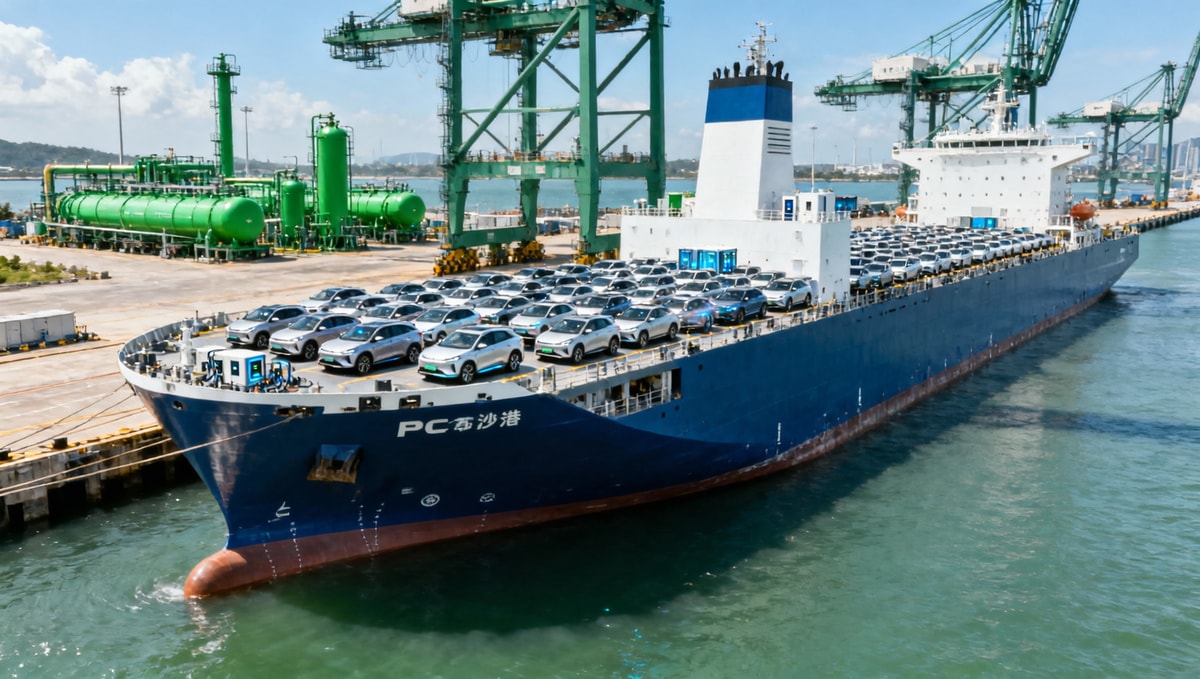
On April 28, 2026, the world’s first 10,000-car-capacity pure car and truck carrier (PCTC), built by Guangzhou Shipyard International (GSI), was delivered in Nansha, Guangzhou. This milestone directly impacts exporters of new energy vehicles (NEVs), EV infrastructure components (e.g., charging module assemblies, onboard chargers, liquid-cooled battery enclosure parts), and maritime logistics providers serving transatlantic and transpacific routes.
Event Overview
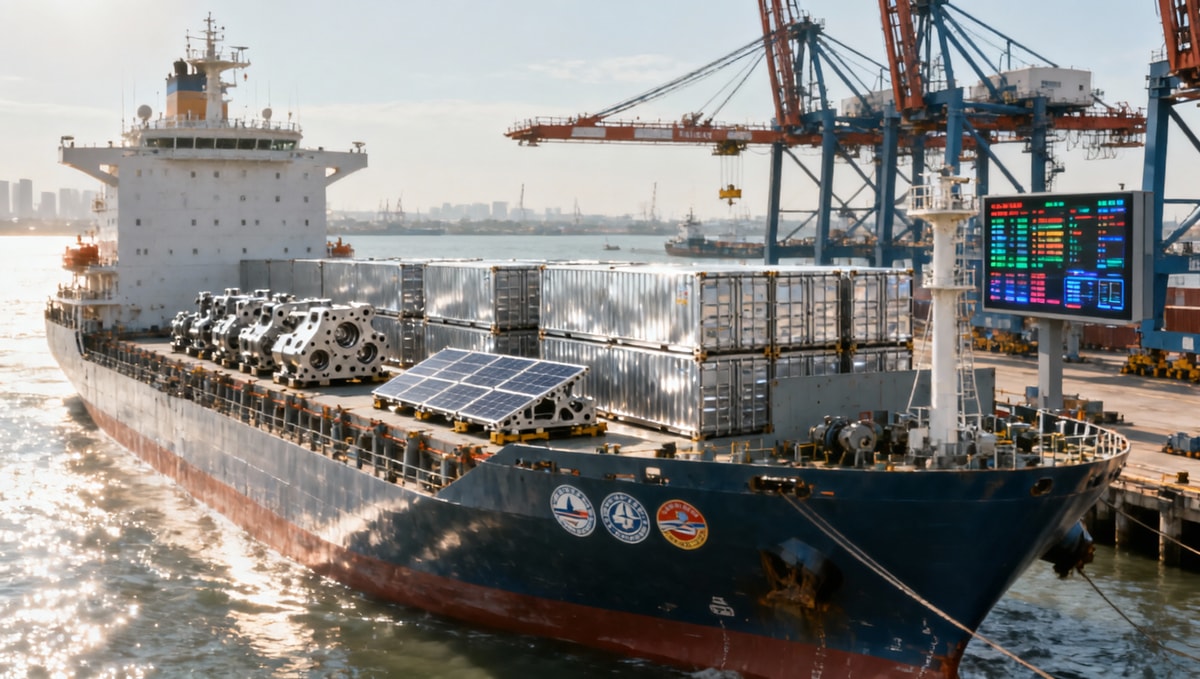
On April 28, 2026, Guangzhou Shipyard International delivered a newly constructed PCTC in Nansha, Guangzhou. The vessel is 230 meters long and certified for carrying up to 10,800 vehicles. It features dedicated loading systems for electric vehicles, hydrogen-powered vehicles, and heavy-duty trucks, and is powered by green fuel. No further technical or commercial details beyond those publicly confirmed have been released.
Industries Affected
Direct Exporters of NEVs and EV Infrastructure Components
These enterprises face reduced port-to-port transit time expectations starting Q3 2026 — reportedly shortened by 5–7 days for shipments to Europe and North America. The vessel’s specialized design supports secure stowage of high-value, sensitive EV components (e.g., OBCs, liquid-cooled structural parts), potentially lowering damage-related claims and insurance premiums on specific cargo categories.
Maritime Logistics & Ro-Ro Carrier Operators
Operators managing NEV-focused routes may see increased capacity allocation pressure as demand for dedicated PCTC slots rises. The vessel’s green-fuel propulsion system sets a new operational benchmark; carriers may need to reassess bunkering infrastructure compatibility and charter rate benchmarks for future green-PCTC deployments.
EV Infrastructure Component Manufacturers (Charging Modules, OBCs, Battery Enclosures)
Manufacturers supplying to export-oriented OEMs or Tier-1 integrators may experience improved predictability in overseas delivery windows. Stable vessel availability supports just-in-time inventory planning for EU and US distribution hubs — especially relevant where local assembly or final integration depends on imported modules or subassemblies.
Automotive Aftermarket & Channel Distributors in EU/US Markets
Distributors reliant on sea freight for restocking EV service parts or infrastructure kits may observe tighter lead-time consistency from Q3 onward. Reduced variability in transit duration enables more accurate demand forecasting and warehouse replenishment scheduling — particularly for time-sensitive SKUs like replacement liquid-cooled battery frames or fast-charging controller boards.
What Stakeholders Should Monitor and Act On
Track official deployment schedules and route assignments
Confirm whether this PCTC will operate on fixed liner services or be chartered ad hoc. Its actual routing (e.g., Asia–Europe vs. Asia–US West Coast) determines which export corridors benefit first — monitor announcements from GSI, shipping lines, and port authorities in Nansha, Rotterdam, and Los Angeles.
Review current shipment profiles against new vessel specifications
Assess whether existing cargo (e.g., stacked OBC units, palletized charging modules) meets the vessel’s deck strength, height clearance, and electrical isolation requirements. Non-compliant packaging or lashing methods could delay booking acceptance — consult updated stowage guidelines once published.
Update logistics cost models with green-fuel premium assumptions
Although green-fuel operation lowers emissions, it may carry higher charter or surcharge costs initially. Evaluate whether projected transit time savings offset potential rate increases — especially for high-margin, low-bulk EV infrastructure items where time value exceeds fuel cost sensitivity.
Align with forwarders on documentation readiness for EV-specific compliance
Prepare for enhanced documentation requirements, including battery state-of-charge declarations, thermal management status logs, and UN 3480/3481 certification updates. Early coordination with freight forwarders reduces port-side delays during customs and safety inspections.
Editorial Perspective / Industry Observation
This delivery is observably a capacity signal — not yet an operational outcome. While the vessel is physically delivered, its real-world impact hinges on consistent deployment, charter uptake, and integration into scheduled services. Analysis shows that vessel-level milestones often precede systemic supply chain improvements by 3–6 months due to crewing, certification, and commercial contracting timelines. From an industry perspective, this event signals growing alignment between shipbuilding capability and NEV export scale — but sustained vessel utilization and route stability remain key variables to watch. It is better understood as an enabler than an immediate solution.
Conclusion
The delivery of the world’s first 10,000-car PCTC marks a tangible step toward addressing maritime capacity constraints for China’s NEV and EV infrastructure exports. However, its near-term influence remains conditional on operational rollout rather than construction completion. Stakeholders should treat this development as a leading indicator of improving logistics reliability — not as an immediate reduction in lead times. Current conditions favor proactive planning over reactive adjustment.
Source Attribution
Main source: Official delivery announcement issued by Guangzhou Shipyard International on April 28, 2026.
Areas requiring ongoing observation: Actual vessel deployment schedule, charter agreements, route frequency, and associated freight rate developments — none of which have been publicly disclosed as of the delivery date.
Get weekly intelligence in your inbox.
No noise. No sponsored content. Pure intelligence.
 May 02, 2026China’s '15th Five-Year Plan' Prioritizes Low-Altitude Economy, Boosting Warehouse Robotics ExportsChina’s '15th Five-Year Plan' Prioritizes Low-Altitude Economy, Boosting Warehouse Robotics Exports
 May 02, 2026Q1 2026 Industrial Profits +15.5%; CNC Machining Capacity Utilization RisesQ1 2026 Industrial Profits +15.5%; CNC Machining Capacity Utilization Rises
 May 02, 2026China Opens Green Channel for Smart Home Exporters with Int'l CertsChina Opens Green Channel for Smart Home Exporters with Int'l Certs
 May 02, 2026Solar PV Export Timeliness Rises via Western Land-Sea CorridorSolar PV Export Timeliness Rises via Western Land-Sea Corridor
 May 02, 2026UAE Tops Global AI Hub Ranking; Demand Rises for Chinese FA SolutionsUAE Tops Global AI Hub Ranking; Demand Rises for Chinese FA Solutions
 May 02, 2026ADB Raises Vietnam GDP Forecast to 7.2% for 2026ADB Raises Vietnam GDP Forecast to 7.2% for 2026
") May 02, 2026China’s Trade SaaS Export Standards Updated (2026–2030)China’s Trade SaaS Export Standards Updated (2026–2030)
May 02, 2026China’s Trade SaaS Export Standards Updated (2026–2030)China’s Trade SaaS Export Standards Updated (2026–2030) May 02, 2026World's First 10,000-Car PCTC Delivered in GuangzhouWorld's First 10,000-Car PCTC Delivered in Guangzhou
 May 02, 2026China’s 5-Dept Battery Recycling Traceability Rule Affects ESS ExportsChina’s 5-Dept Battery Recycling Traceability Rule Affects ESS Exports
 May 02, 2026WeChat Pay QR Integration for 5 Countries: Eases Cross-Border ProcurementWeChat Pay QR Integration for 5 Countries: Eases Cross-Border Procurement
 May 01, 2026Beijing’s New E-Bike Rules Trigger Dual-Certification Demand for China’s Swappable Battery CabinetsBeijing’s New E-Bike Rules Trigger Dual-Certification Demand for China’s Swappable Battery Cabinets
 May 01, 2026GNA’s GEO Service Assessment Elevates AI Search as Digital Procurement Metric for Chinese ExportersGNA’s GEO Service Assessment Elevates AI Search as Digital Procurement Metric for Chinese Exporters
 May 01, 20262026 China Cycle Expo: Chinese EPS Systems Achieve UL 2849:2026 Full Certification2026 China Cycle Expo: Chinese EPS Systems Achieve UL 2849:2026 Full Certification
 May 01, 2026GB 42236-2026 Enforces EV Charger Efficiency & Overload Protection from May 2026GB 42236-2026 Enforces EV Charger Efficiency & Overload Protection from May 2026
 May 01, 2026GB/T 43790-2026 Drone EMC Standard Effective May 2026GB/T 43790-2026 Drone EMC Standard Effective May 2026
 May 01, 20262026 Foshan Tanzhou Auto Industry Expo Opens2026 Foshan Tanzhou Auto Industry Expo Opens
 May 01, 2026China’s New Hazardous Chemicals Safety Law Takes Effect May 2026China’s New Hazardous Chemicals Safety Law Takes Effect May 2026
 May 01, 2026New Maritime and Fisheries Laws Take Effect May 1, 2026New Maritime and Fisheries Laws Take Effect May 1, 2026
 May 01, 2026Supply Chain Automation Works Best Where Delays RepeatSupply Chain Automation Works Best Where Delays Repeat
 May 01, 2026High Strength Steel Forgings: What Should Be Tested First?High Strength Steel Forgings: What Should Be Tested First?
 May 01, 2026Automotive Steel Forging: Cost Pressure vs Part ReliabilityAutomotive Steel Forging: Cost Pressure vs Part Reliability
 May 01, 2026Why High Durability Steel Forgings Fail Earlier Than ExpectedWhy High Durability Steel Forgings Fail Earlier Than Expected
 May 01, 2026Construction Aluminum Extrusions: Which Finish Lasts Longer?Construction Aluminum Extrusions: Which Finish Lasts Longer?
 May 01, 2026Lightweight Aluminum Extrusions: Where Savings Really HappenLightweight Aluminum Extrusions: Where Savings Really Happen
 May 01, 2026Aerospace Aluminum Extrusions Need More Than Low WeightAerospace Aluminum Extrusions Need More Than Low Weight
 May 01, 2026Precision Lathe Turning Problems That Show Up After AssemblyPrecision Lathe Turning Problems That Show Up After Assembly
 May 01, 2026High Precision Lathe Turning: Tolerance Claims to VerifyHigh Precision Lathe Turning: Tolerance Claims to Verify