Lightweight Aluminum Extrusions: Where Savings Really Happen
For enterprise decision-makers, lightweight aluminum extrusions are more than a material upgrade—they are a strategic lever for reducing transport costs, improving energy efficiency, and simplifying manufacturing. This article explores where aluminum extrusions lightweight solutions deliver measurable savings across design, production, logistics, and long-term operational performance.
In B2B procurement, material choice is rarely about unit price alone. The more relevant question is total delivered value across the full lifecycle: design hours, tooling complexity, assembly steps, freight load, installation speed, maintenance intervals, and end-of-life recyclability. For sectors such as advanced manufacturing, green energy, smart electronics, healthcare technology, and supply chain infrastructure, that lifecycle view often changes the economics in favor of aluminum extrusion.
The strongest business case for aluminum extrusions lightweight solutions appears when weight reduction creates secondary savings. A lighter frame can lower shipping costs by 8%–20% in some common industrial applications, reduce handling labor, support faster installation, and enable smaller drive systems or support structures. Those gains do not show up on the quotation line for raw material, but they strongly influence project ROI.
Where Lightweight Aluminum Extrusions Create Financial Impact
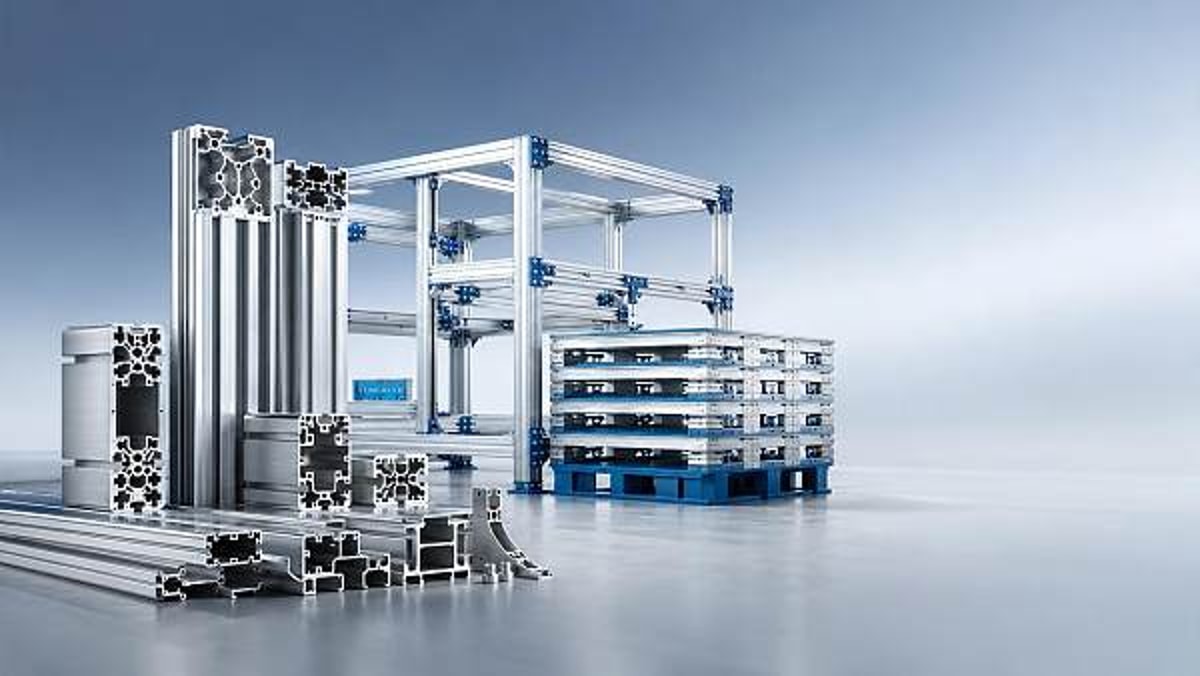
The value of aluminum extrusions lightweight solutions becomes clearer when the cost model is broken into stages. Savings typically emerge in four layers: design optimization, fabrication efficiency, logistics performance, and operational use. For enterprise buyers, the key is to quantify each layer instead of comparing only the per-kilogram material rate.
1. Design Efficiency and Material Optimization
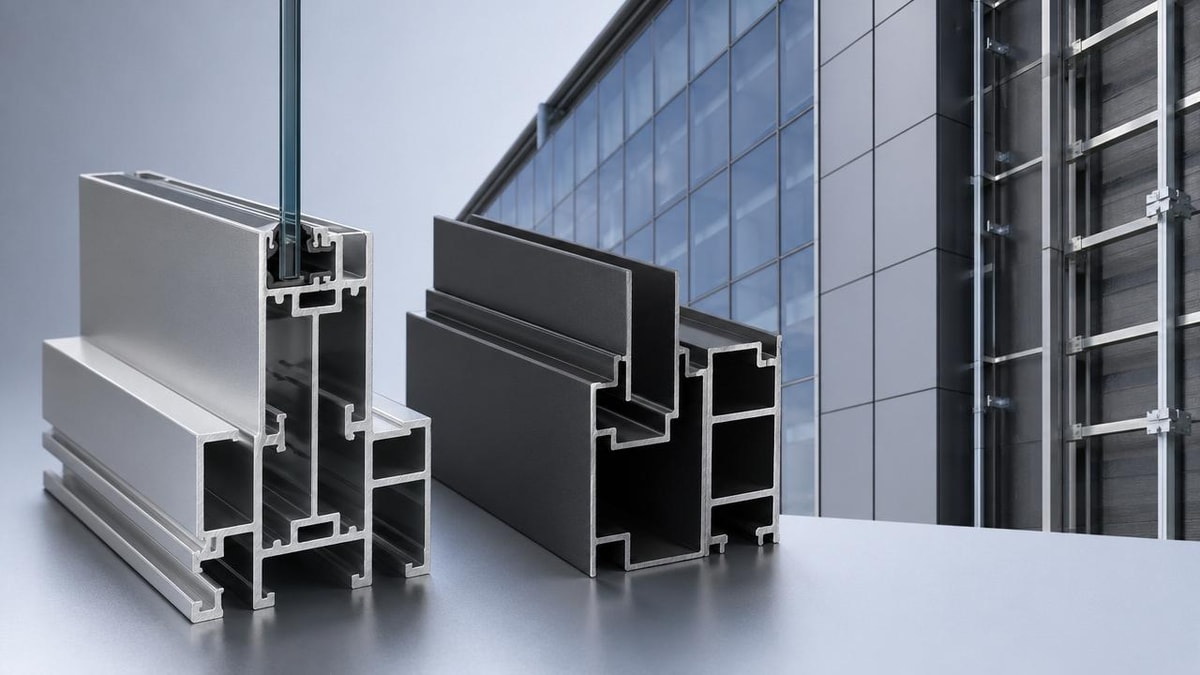
Extruded profiles allow engineers to integrate multiple functions into one section. Cable channels, mounting grooves, fastening points, heat-dissipation fins, and reinforcement ribs can often be designed into a single profile. This reduces part count by 15%–40% in many assemblies and can eliminate secondary brackets, welded tabs, or separate housings.
For decision-makers, fewer components usually mean lower drafting time, shorter BOMs, and less procurement fragmentation. In projects with 20–50 repeated assemblies, reducing even 3 to 5 components per unit can significantly lower purchasing administration, inventory tracking, and quality inspection effort.
Typical design-related savings points
- 10%–25% lower assembly complexity through integrated profile features
- Reduced fastener count, often by 20% or more in modular frame systems
- Shorter prototype cycles, commonly 1–3 weeks faster than custom welded redesigns
- Better repeatability for scaled production runs across multiple markets
2. Manufacturing and Assembly Cost Reduction
Compared with fabricated steel structures or multi-part sheet assemblies, aluminum extrusions can streamline downstream processing. Many projects only require cutting, drilling, tapping, and surface finishing. This can reduce welding-related distortion, post-processing labor, and rework risk, especially when tolerance expectations are within common industrial ranges such as ±0.2 mm to ±0.5 mm for secondary features.
On labor-sensitive lines, lightweight profiles are also easier to move and position. A frame section that weighs 30% less may require fewer lifts, less fixture reinforcement, and less ergonomic intervention. That matters in production cells where throughput targets depend on repeatable assembly times over 2 or 3 shifts per day.
The following comparison helps explain how savings often shift from material cost to process cost in enterprise manufacturing environments.
The key conclusion is that lightweight extrusions often win when buyers evaluate process simplification, not just raw input cost. In medium-volume industrial programs, the accumulated savings from fewer parts and fewer labor steps can outweigh a higher per-unit material quote within the first 6–12 months of deployment.
3. Logistics, Freight, and Installation Savings
Transport is one of the most visible savings categories. A lower shipment weight can improve pallet utilization, reduce fuel exposure, and simplify cross-border handling. In global B2B supply chains, even a 5% reduction in packed shipment mass can create measurable annual savings when products move in monthly or weekly dispatch cycles.
Installation economics also matter. Lighter structures can reduce crane dependency, shorten on-site assembly windows, and improve technician productivity. For example, a modular aluminum support frame installed by a 2-person crew in 1 day may replace a heavier assembly requiring 3 or 4 people, more lifting support, and a 2-day schedule.
How Different Industries Capture the Savings
Not every business captures value in the same way. The best aluminum extrusions lightweight solutions are application-specific. In some sectors, the biggest gain is energy efficiency. In others, it is serviceability, hygiene, portability, or modular expansion. Enterprise buyers should align profile selection with the actual operational bottleneck.
Advanced Manufacturing
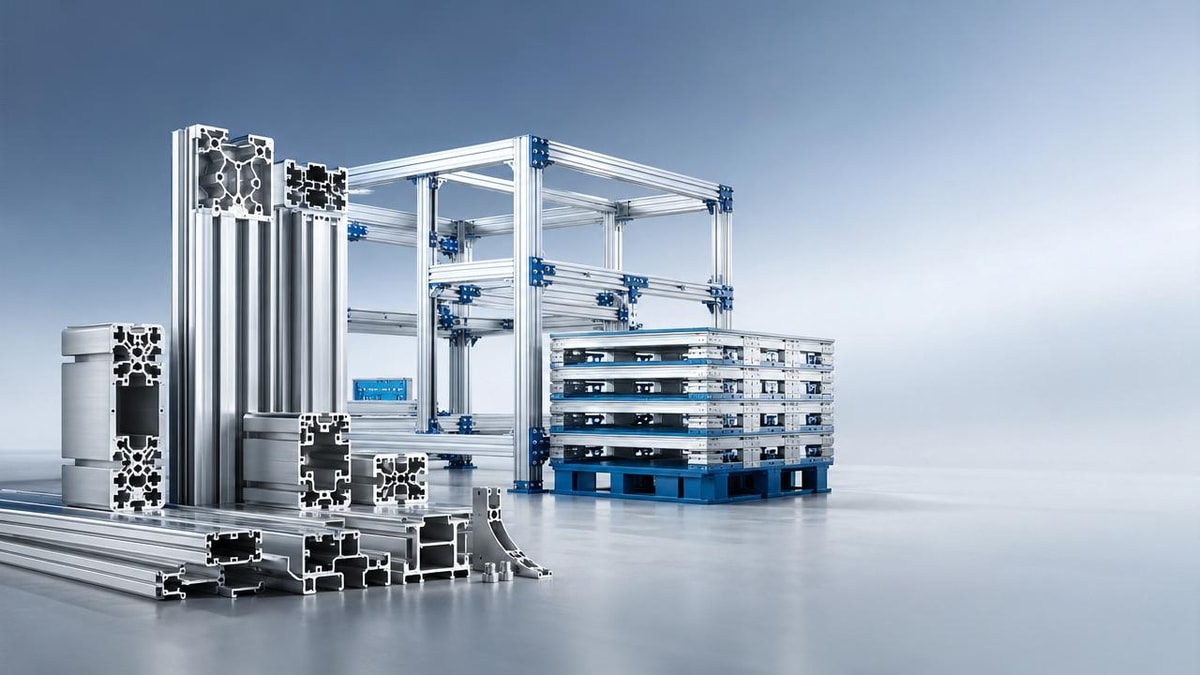
Factory automation systems frequently use aluminum extrusion for machine frames, guarding, workstations, conveyor structures, and sensor mounts. Here, the savings often come from modularity. Production lines change every 12–36 months in many fast-moving environments, so a reconfigurable frame system can preserve asset value and reduce retrofit time by several days per line section.
Green Energy
In solar, storage, and charging infrastructure, reducing structural weight can lower transport and field installation cost. Corrosion resistance also improves long-term economics in outdoor conditions. Where mounting systems remain exposed for 10–20 years, lower maintenance frequency and easier replacement access become major procurement considerations.
Smart Electronics and Thermal Management
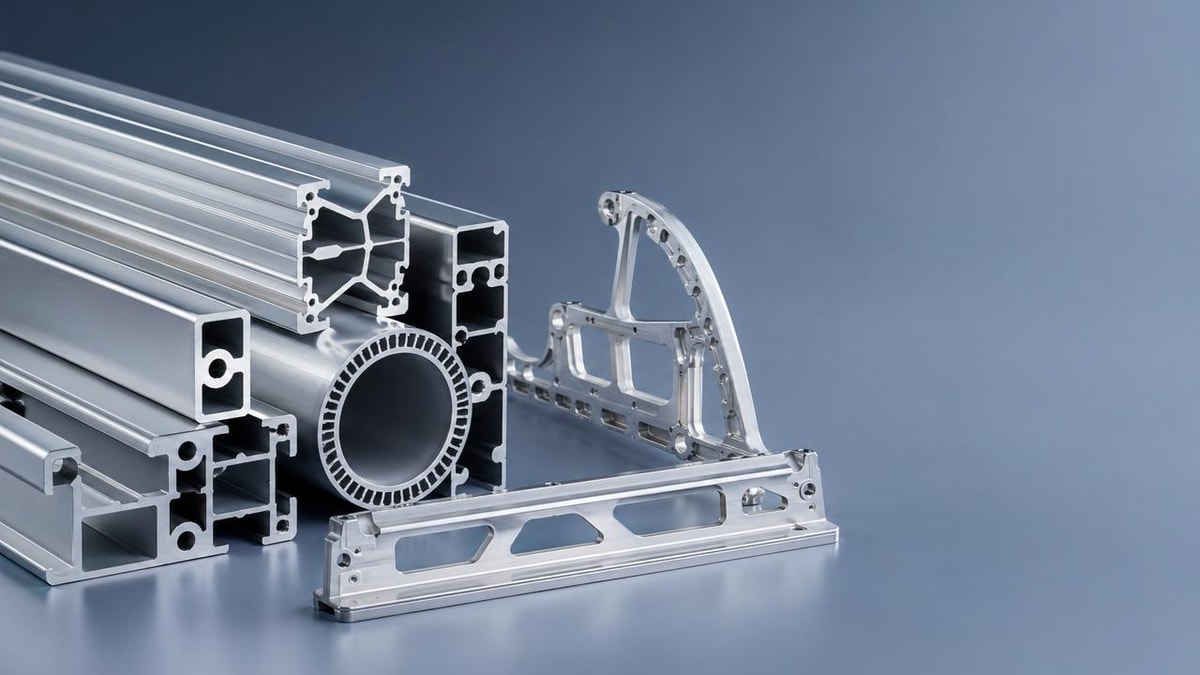
For enclosures, heat sinks, and electronic support frames, aluminum extrusions offer a useful balance of low weight and thermal conductivity. Integrating housing and cooling features into one extrusion can reduce component interfaces and support compact design, especially in edge devices, industrial controls, and power electronics installations.
Healthcare Technology
Medical carts, imaging supports, cleanable housings, and portable equipment frames benefit from lighter construction and easier surface finishing. Buyers in this sector often weigh 3 practical criteria: ease of cleaning, mobility, and stable repeatability across regulated production environments. Lightweight profiles can help meet all three without overcomplicating assembly.
The table below maps where enterprise users most commonly capture financial value from lightweight extrusion strategies.
The pattern is consistent: the financial upside depends less on the metal itself and more on how profile design changes the operating model. Buyers that identify the dominant cost driver early usually make better sourcing decisions.
What Procurement Teams Should Evaluate Before Buying
A successful sourcing decision requires more than choosing the lightest section. Procurement, engineering, and operations teams should evaluate load requirements, joining method, finishing needs, lead time, and future change risk. A profile that is 12% lighter but requires expensive machining or longer tooling approval may not be the best commercial option.
Five Evaluation Criteria
- Structural performance under expected static and dynamic loads
- Compatibility with connectors, panels, wiring, and accessories
- Machining and finishing requirements, including anodizing or powder coating
- Tooling and production lead time, often ranging from 2–6 weeks for custom profiles
- Total landed cost across freight, packaging, installation, and maintenance
Common sourcing mistakes
One common mistake is optimizing only for initial weight reduction. Another is ignoring tolerances and interface fit. If a profile is under-engineered, downstream issues can include vibration, alignment drift, or premature fastener wear. On the other side, over-specification increases section mass and weakens the cost case. The target is controlled performance, not theoretical minimum weight.
A practical procurement review should also cover packaging and handling. Long extrusions may need protective separators, corner guards, or custom crates. These additions can affect freight class and packing density. For international shipments, preventing transit damage on 3-meter to 6-meter lengths can be just as important as achieving a lower nominal material weight.
Implementation Strategy: Turning Lightweight Design Into Measurable ROI
Enterprise adoption works best when lightweight extrusion projects follow a staged validation process. Instead of a full portfolio switch, many organizations begin with one platform, one subassembly, or one high-volume SKU. This makes it easier to compare labor time, freight data, field feedback, and service impact over a 90-day to 180-day review period.
A practical 4-step rollout model
Step 1: Baseline the current cost structure
Capture the present-state metrics: unit weight, shipping cost, assembly minutes, rework rate, installed labor, and maintenance interventions. Without this baseline, savings claims remain difficult to verify.
Step 2: Redesign for functional integration
The strongest returns usually come when the profile is redesigned to eliminate adjacent parts. Simply replacing one material with another may deliver modest gains, but integrating channels, supports, and fastening geometry can shift the economics much more meaningfully.
Step 3: Pilot at controlled volume
Run a pilot lot that is large enough to reveal real process conditions. For many B2B programs, 20–100 units provide enough data to evaluate packing, operator handling, installation time, and defect patterns without creating major supply risk.
Step 4: Scale with supplier alignment
Once the pilot confirms value, standardize specifications, inspection points, and delivery cadence. This is especially important when multiple facilities or export markets are involved. Consistency in profile geometry, finishing, and cut-to-length tolerance supports repeatable procurement outcomes.
Frequently Asked Questions from Enterprise Buyers
Are lightweight extrusions always cheaper than heavier fabricated alternatives?
Not always on a direct material basis. The advantage usually appears in total cost of ownership, especially when reduced part count, lower freight mass, faster installation, and simpler maintenance are included in the evaluation.
When do custom profiles make financial sense?
Custom profiles are more likely to justify tooling cost when annual volume is stable, redesign savings are substantial, or integrated features can remove several downstream operations. In lower volumes, standard profiles may offer a better balance of flexibility and speed.
What is a reasonable lead time expectation?
For standard profiles, procurement can often move within days if stock is available. For custom extrusion programs, design review, tooling, sampling, and first production commonly take 2–6 weeks, with longer timing possible for complex geometries or finishing requirements.
How should buyers compare suppliers?
Compare them on manufacturability input, secondary processing capability, consistency of dimensional control, packaging discipline, and communication responsiveness. A lower quote has limited value if it introduces schedule risk or costly fit-up issues in the field.
Lightweight aluminum extrusions create value where they reduce more than mass. The real savings come from integrated design, fewer fabrication steps, lower freight exposure, faster installation, and easier long-term service. For enterprise teams operating across manufacturing, energy, electronics, healthcare, or logistics infrastructure, aluminum extrusions lightweight solutions can become a practical lever for cost control and operational resilience.
If your organization is evaluating new sourcing strategies, product redesign opportunities, or cross-border supply options, this is the right time to assess where lightweight profile systems fit your commercial priorities. Contact TradeNexus Pro to explore tailored market insights, compare solution pathways, and learn more about high-value B2B opportunities in aluminum extrusion applications.
Get weekly intelligence in your inbox.
No noise. No sponsored content. Pure intelligence.
 May 01, 2026Beijing’s New E-Bike Rules Trigger Dual-Certification Demand for China’s Swappable Battery CabinetsBeijing’s New E-Bike Rules Trigger Dual-Certification Demand for China’s Swappable Battery Cabinets
 May 01, 2026GNA’s GEO Service Assessment Elevates AI Search as Digital Procurement Metric for Chinese ExportersGNA’s GEO Service Assessment Elevates AI Search as Digital Procurement Metric for Chinese Exporters
 May 01, 20262026 China Cycle Expo: Chinese EPS Systems Achieve UL 2849:2026 Full Certification2026 China Cycle Expo: Chinese EPS Systems Achieve UL 2849:2026 Full Certification
 May 01, 2026GB 42236-2026 Enforces EV Charger Efficiency & Overload Protection from May 2026GB 42236-2026 Enforces EV Charger Efficiency & Overload Protection from May 2026
 May 01, 2026GB/T 43790-2026 Drone EMC Standard Effective May 2026GB/T 43790-2026 Drone EMC Standard Effective May 2026
 May 01, 20262026 Foshan Tanzhou Auto Industry Expo Opens2026 Foshan Tanzhou Auto Industry Expo Opens
 May 01, 2026China’s New Hazardous Chemicals Safety Law Takes Effect May 2026China’s New Hazardous Chemicals Safety Law Takes Effect May 2026
 May 01, 2026New Maritime and Fisheries Laws Take Effect May 1, 2026New Maritime and Fisheries Laws Take Effect May 1, 2026
 May 01, 2026Supply Chain Automation Works Best Where Delays RepeatSupply Chain Automation Works Best Where Delays Repeat
 May 01, 2026High Strength Steel Forgings: What Should Be Tested First?High Strength Steel Forgings: What Should Be Tested First?
 May 01, 2026Automotive Steel Forging: Cost Pressure vs Part ReliabilityAutomotive Steel Forging: Cost Pressure vs Part Reliability
 May 01, 2026Why High Durability Steel Forgings Fail Earlier Than ExpectedWhy High Durability Steel Forgings Fail Earlier Than Expected
 May 01, 2026Construction Aluminum Extrusions: Which Finish Lasts Longer?Construction Aluminum Extrusions: Which Finish Lasts Longer?
 May 01, 2026Lightweight Aluminum Extrusions: Where Savings Really HappenLightweight Aluminum Extrusions: Where Savings Really Happen
 May 01, 2026Aerospace Aluminum Extrusions Need More Than Low WeightAerospace Aluminum Extrusions Need More Than Low Weight
 May 01, 2026Precision Lathe Turning Problems That Show Up After AssemblyPrecision Lathe Turning Problems That Show Up After Assembly
 May 01, 2026High Precision Lathe Turning: Tolerance Claims to VerifyHigh Precision Lathe Turning: Tolerance Claims to Verify
 May 01, 2026When CNC Lathe Turning Is Better Than General MachiningWhen CNC Lathe Turning Is Better Than General Machining
 May 01, 2026Medical Device Prototyping Needs More Than SpeedMedical Device Prototyping Needs More Than Speed
 May 01, 20263D Printing Prototyping: Fast Turnaround or Better Finish?3D Printing Prototyping: Fast Turnaround or Better Finish?
 May 01, 2026Low Cost Rapid Prototyping: Where Quality Gets LostLow Cost Rapid Prototyping: Where Quality Gets Lost
 May 01, 2026Quick EV Charger Installation Still Needs Site ChecksQuick EV Charger Installation Still Needs Site Checks
 May 01, 2026Public Parking EV Chargers: What Slows Installation DownPublic Parking EV Chargers: What Slows Installation Down
 May 01, 2026Choosing a Lithium Ion Battery Manufacturer in ChinaChoosing a Lithium Ion Battery Manufacturer in China
 May 01, 2026How to Vet a Lithium Ion Battery OEM SupplierHow to Vet a Lithium Ion Battery OEM Supplier
 May 01, 2026EV Lithium Ion Batteries: Range Is Not the Only MetricEV Lithium Ion Batteries: Range Is Not the Only Metric
 May 01, 2026Lithium Ion ESS Batteries: Safety Details Worth CheckingLithium Ion ESS Batteries: Safety Details Worth Checking