Beijing’s New E-Bike Rules Trigger Dual-Certification Demand for China’s Swappable Battery Cabinets
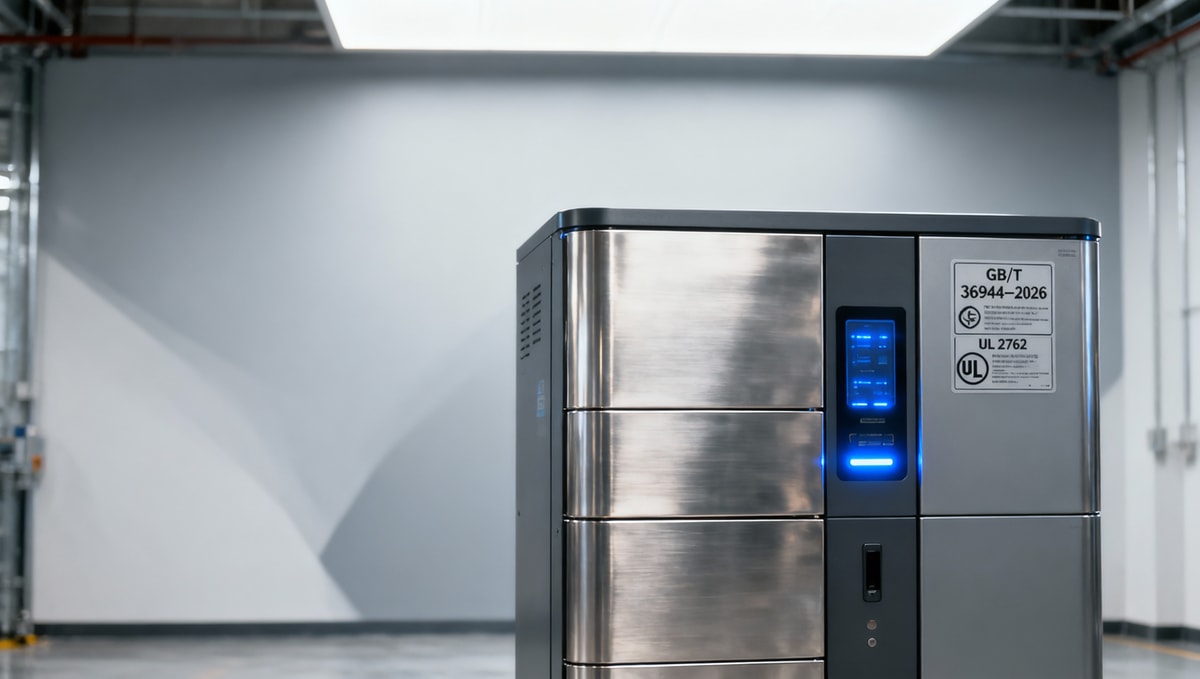
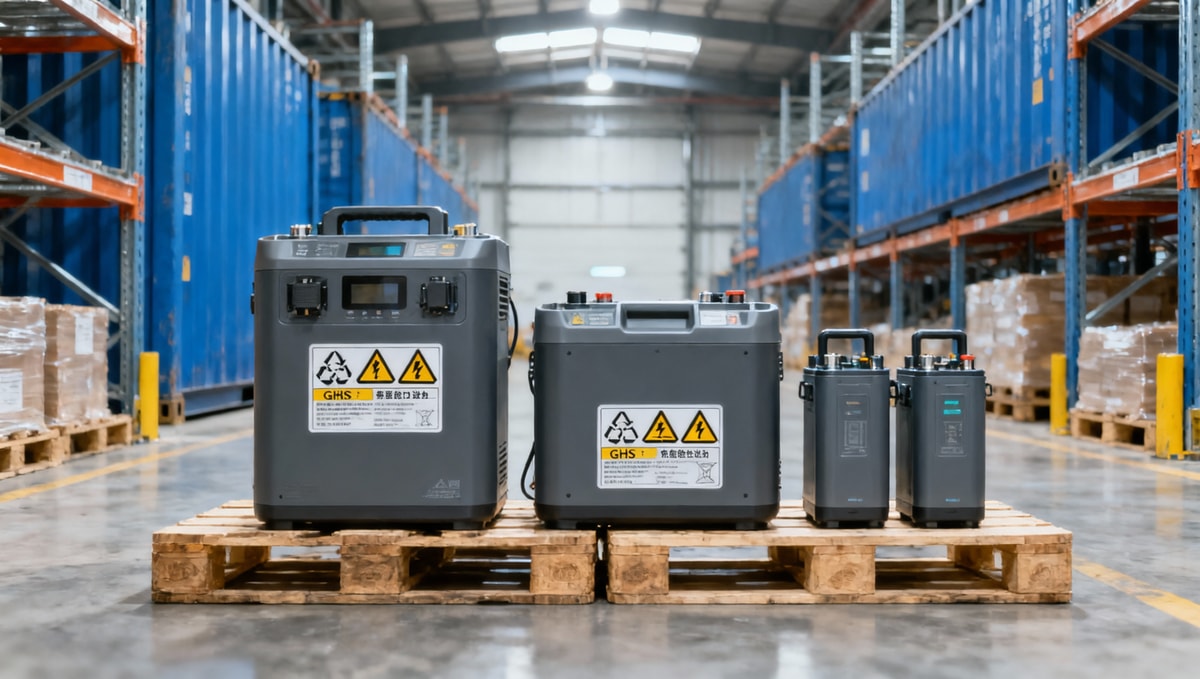
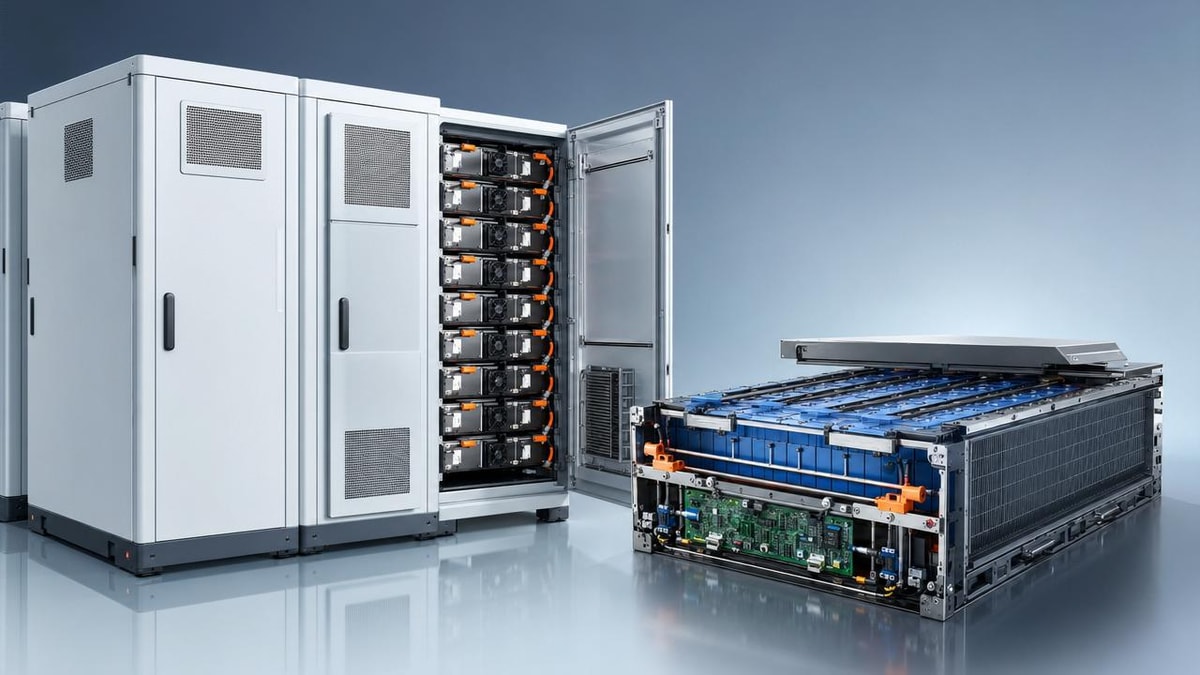
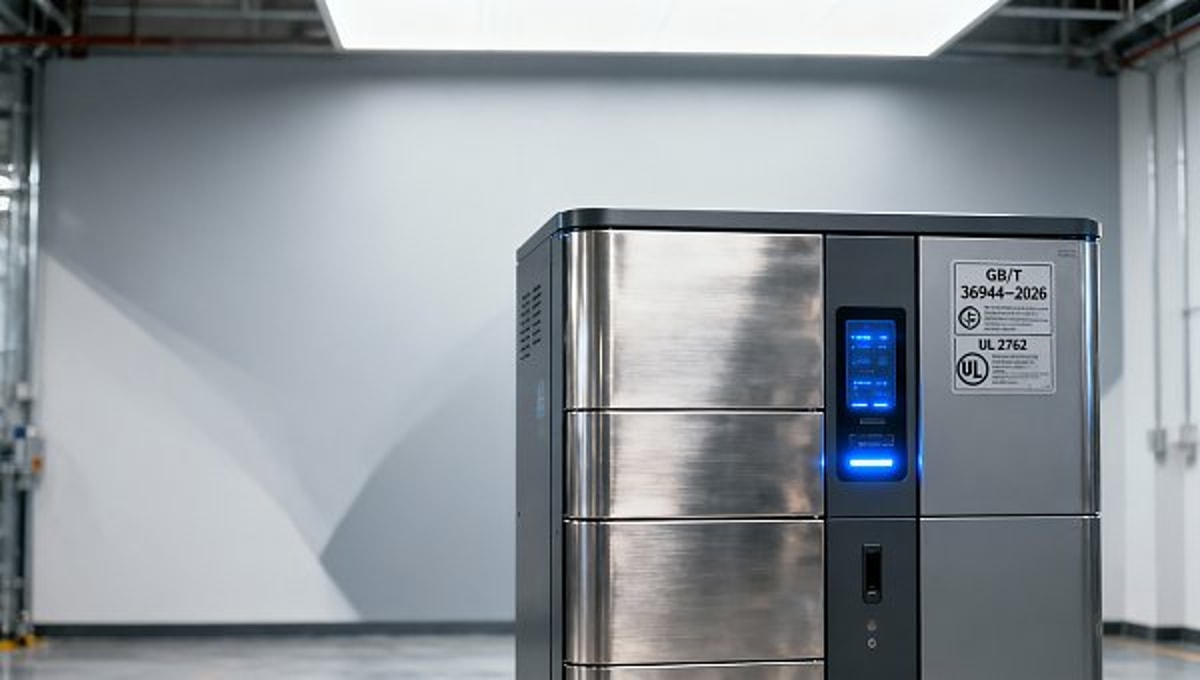
Starting May 1, 2026, Beijing’s tightened non-motorized vehicle management regulations have triggered a new compliance requirement for Chinese manufacturers of shared swappable battery cabinets: export orders now routinely demand concurrent certification to both GB/T 36944–2026 (governing battery interface and communication protocols) and UL 2762 (covering fire containment and thermal runaway mitigation in battery storage compartments). This development directly impacts battery infrastructure exporters, EV charging ecosystem integrators, and cross-border logistics service providers — signaling a structural shift from single-standard compliance toward layered, jurisdiction-specific certification frameworks.
Event Overview
Effective May 1, 2026, Beijing implemented updated non-motorized vehicle management rules. In response, international buyers — particularly in North America and the Middle East — are increasingly requiring that exported shared swappable battery cabinets meet both GB/T 36944–2026 and UL 2762 standards. As of the rule’s implementation date, only two Chinese manufacturers have completed dual certification. For all others, lead times have extended to 14 weeks.
Industries Affected
Export-Oriented Battery Infrastructure Manufacturers
These companies face direct pressure on product certification timelines and cost structure. Dual certification requires parallel testing, documentation alignment, and potential hardware or firmware revisions — especially for thermal management systems and communication layer interoperability. The 14-week delay reflects not just lab queue times but also iterative engineering adjustments needed to satisfy divergent safety logic between GB/T and UL requirements.
International Distributors & Channel Partners
Distributors serving North American or Middle Eastern markets must now verify dual certification status before accepting shipments or committing to customer delivery schedules. Absence of UL 2762 validation may block customs clearance or violate local fire code enforcement — creating liability exposure and contract renegotiation risk.
Supply Chain Service Providers (Testing Labs, Certification Consultants)
Third-party labs and compliance advisors are seeing increased demand for coordinated GB/T + UL test planning. However, capacity remains constrained: few labs hold both CNAS accreditation for GB/T 36944–2026 and UL-recognized status for UL 2762 evaluation. This bottleneck contributes to the extended lead times observed across the sector.
What Stakeholders Should Monitor and Do Now
Track regulatory updates beyond Beijing
While the trigger is Beijing’s local regulation, its ripple effect stems from how overseas buyers interpret domestic policy signals. Stakeholders should monitor whether other Chinese municipalities issue similar directives — and whether national-level standardization bodies initiate harmonization efforts between GB/T 36944 and UL 2762.
Prioritize certification for high-demand export markets
UL 2762 is not universally required — it is currently driven by buyer mandates in North America and select Gulf Cooperation Council (GCC) countries. Companies should assess which end markets in their pipeline explicitly reference UL 2762 in RFPs or technical specifications, and allocate testing resources accordingly.
Distinguish policy intent from commercial adoption
The Beijing regulation itself does not mandate UL 2762 for domestic use. Its relevance lies in how foreign procurement teams use it as justification for added requirements. Businesses should avoid conflating municipal enforcement with global compliance necessity — instead, treat UL 2762 as a market-access condition, not a regulatory obligation outside applicable jurisdictions.
Prepare documentation and component traceability in advance
UL 2762 testing involves detailed review of material flammability data, cell-level thermal propagation test reports, and enclosure integrity validation. Manufacturers should begin compiling supplier-submitted evidence (e.g., UL-certified component datasheets, flame-retardant material certifications) well before initiating formal testing.
Editorial Perspective / Industry Observation
Observably, this is not yet a de facto global standard shift — but rather an early-stage market-driven convergence signal. Analysis shows that dual certification is emerging not from harmonized regulation, but from procurement risk mitigation: importers seek to align product safety expectations with evolving fire safety enforcement trends in their own jurisdictions. From an industry perspective, the trend reflects growing recognition that battery storage infrastructure sits at the intersection of EV infrastructure, energy storage, and building fire safety — demanding cross-domain compliance literacy. Current developments are better understood as a stress test for supply chain agility than a finalized regulatory mandate.
Conclusion
Beijing’s May 2026 non-motorized vehicle regulation serves less as a direct export control and more as a catalyst exposing pre-existing gaps in international certification readiness among Chinese battery cabinet suppliers. The resulting dual-certification requirement highlights how localized policy can accelerate global compliance complexity — particularly where safety-critical infrastructure interfaces with urban mobility systems. For stakeholders, this is best interpreted not as an isolated compliance hurdle, but as an indicator of broader convergence pressure across battery storage and EV infrastructure standards.
Information Sources
Main source: Official notice on Beijing Municipal Regulations for Non-Motorized Vehicle Management (effective May 1, 2026); publicly confirmed certification status of Chinese manufacturers (as reported by industry verification platforms); buyer specification updates documented in Q1 2026 export tender archives.
Note: Ongoing monitoring is advised for potential expansion of UL 2762 referencing in EU or ASEAN procurement guidelines — no such updates have been confirmed as of publication.
Get weekly intelligence in your inbox.
No noise. No sponsored content. Pure intelligence.
 May 01, 2026Beijing’s New E-Bike Rules Trigger Dual-Certification Demand for China’s Swappable Battery CabinetsBeijing’s New E-Bike Rules Trigger Dual-Certification Demand for China’s Swappable Battery Cabinets
 May 01, 2026GNA’s GEO Service Assessment Elevates AI Search as Digital Procurement Metric for Chinese ExportersGNA’s GEO Service Assessment Elevates AI Search as Digital Procurement Metric for Chinese Exporters
 May 01, 20262026 China Cycle Expo: Chinese EPS Systems Achieve UL 2849:2026 Full Certification2026 China Cycle Expo: Chinese EPS Systems Achieve UL 2849:2026 Full Certification
 May 01, 2026GB 42236-2026 Enforces EV Charger Efficiency & Overload Protection from May 2026GB 42236-2026 Enforces EV Charger Efficiency & Overload Protection from May 2026
 May 01, 2026GB/T 43790-2026 Drone EMC Standard Effective May 2026GB/T 43790-2026 Drone EMC Standard Effective May 2026
 May 01, 20262026 Foshan Tanzhou Auto Industry Expo Opens2026 Foshan Tanzhou Auto Industry Expo Opens
 May 01, 2026China’s New Hazardous Chemicals Safety Law Takes Effect May 2026China’s New Hazardous Chemicals Safety Law Takes Effect May 2026
 May 01, 2026New Maritime and Fisheries Laws Take Effect May 1, 2026New Maritime and Fisheries Laws Take Effect May 1, 2026
 May 01, 2026Supply Chain Automation Works Best Where Delays RepeatSupply Chain Automation Works Best Where Delays Repeat
 May 01, 2026High Strength Steel Forgings: What Should Be Tested First?High Strength Steel Forgings: What Should Be Tested First?
 May 01, 2026Automotive Steel Forging: Cost Pressure vs Part ReliabilityAutomotive Steel Forging: Cost Pressure vs Part Reliability
 May 01, 2026Why High Durability Steel Forgings Fail Earlier Than ExpectedWhy High Durability Steel Forgings Fail Earlier Than Expected
 May 01, 2026Construction Aluminum Extrusions: Which Finish Lasts Longer?Construction Aluminum Extrusions: Which Finish Lasts Longer?
 May 01, 2026Lightweight Aluminum Extrusions: Where Savings Really HappenLightweight Aluminum Extrusions: Where Savings Really Happen
 May 01, 2026Aerospace Aluminum Extrusions Need More Than Low WeightAerospace Aluminum Extrusions Need More Than Low Weight
 May 01, 2026Precision Lathe Turning Problems That Show Up After AssemblyPrecision Lathe Turning Problems That Show Up After Assembly
 May 01, 2026High Precision Lathe Turning: Tolerance Claims to VerifyHigh Precision Lathe Turning: Tolerance Claims to Verify
 May 01, 2026When CNC Lathe Turning Is Better Than General MachiningWhen CNC Lathe Turning Is Better Than General Machining
 May 01, 2026Medical Device Prototyping Needs More Than SpeedMedical Device Prototyping Needs More Than Speed
 May 01, 20263D Printing Prototyping: Fast Turnaround or Better Finish?3D Printing Prototyping: Fast Turnaround or Better Finish?
 May 01, 2026Low Cost Rapid Prototyping: Where Quality Gets LostLow Cost Rapid Prototyping: Where Quality Gets Lost
 May 01, 2026Quick EV Charger Installation Still Needs Site ChecksQuick EV Charger Installation Still Needs Site Checks
 May 01, 2026Public Parking EV Chargers: What Slows Installation DownPublic Parking EV Chargers: What Slows Installation Down
 May 01, 2026Choosing a Lithium Ion Battery Manufacturer in ChinaChoosing a Lithium Ion Battery Manufacturer in China
 May 01, 2026How to Vet a Lithium Ion Battery OEM SupplierHow to Vet a Lithium Ion Battery OEM Supplier
 May 01, 2026EV Lithium Ion Batteries: Range Is Not the Only MetricEV Lithium Ion Batteries: Range Is Not the Only Metric
 May 01, 2026Lithium Ion ESS Batteries: Safety Details Worth CheckingLithium Ion ESS Batteries: Safety Details Worth Checking