Automotive Steel Forging: Cost Pressure vs Part Reliability
For finance approvers, the real question in steel forging for automotive parts is not simply unit price, but the total cost of failure, warranty exposure, and supply risk. As automakers push for lower procurement costs without compromising safety or durability, forging decisions increasingly shape both margin protection and long-term operational reliability.
The core search intent behind this topic is practical and commercial: decision-makers want to understand when forged steel parts justify a higher upfront cost, where they reduce downstream risk, and how to evaluate suppliers without relying only on engineering claims. For this audience, the issue is not whether forging is technically superior in theory, but whether it makes financial sense under real sourcing conditions.
Finance approvers typically care most about five questions: How much more does forging cost? Which part categories truly need it? What is the cost of failure if a cheaper process is chosen? How stable is the supplier base? And what purchasing framework can balance cost pressure with reliability targets? The most useful article, therefore, is one that connects metallurgical advantages to business outcomes such as warranty control, recall avoidance, production continuity, and lifecycle economics.
Why the lowest piece price is often the most expensive decision
In automotive sourcing, unit price is visible immediately, while failure cost appears later and often in fragmented budgets. A forged component may come in at a higher piece price than a cast or machined alternative, yet the real financial comparison includes scrap rates, machining waste, fatigue life, field failures, downtime, logistics complexity, and the probability of a safety-related claim.
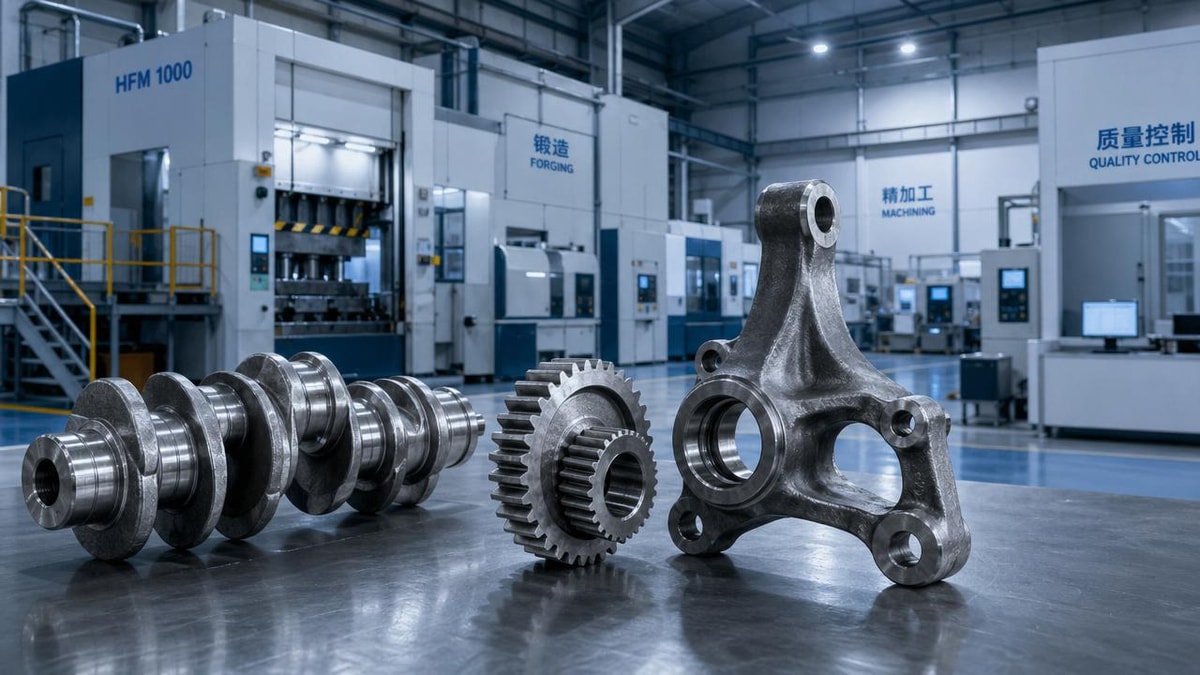
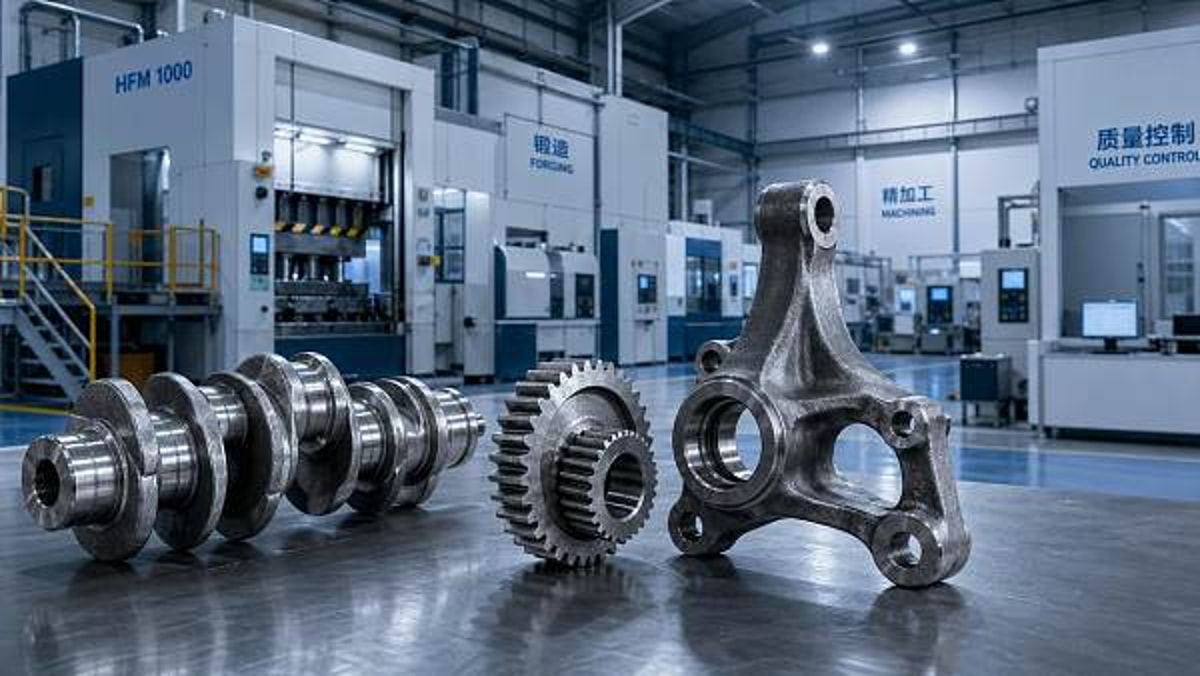
This is especially important for parts exposed to cyclic loads, impact, torque, or vibration. Components such as connecting rods, crankshafts, gears, steering knuckles, axle parts, suspension arms, and transmission elements operate under conditions where grain flow, density, and mechanical consistency matter. Forging improves these characteristics in ways that can materially reduce breakage risk.
For a finance approver, the relevant question is simple: if a lower-cost part has even a small increase in defect or failure probability, does the savings survive after warranty and operational risk are included? In many high-load applications, the answer is no. The cheapest quote can quickly become the costliest option once customer claims, brand damage, emergency replacement, and production interruptions are considered.
What users searching “steel forging for automotive parts” usually need to know
Most users searching this topic are not looking for a basic definition of forging. They are trying to decide whether forged steel remains economically justified in a cost-constrained market. That means they need guidance on where forging creates measurable value and where it may be over-specified.
From a procurement and finance perspective, the most valuable distinction is between critical-load parts and non-critical parts. Forging is often the strongest business case for safety-related, load-bearing, wear-intensive, or high-cycle parts. In contrast, for brackets, covers, housings, and low-stress geometries, lower-cost manufacturing routes may be sufficient if quality requirements can still be met consistently.
This distinction matters because many cost reduction programs fail by applying broad percentage targets across all part categories. That approach may generate apparent savings in the sourcing spreadsheet while increasing enterprise risk in the field. A more effective strategy is selective cost compression: reduce spend where failure consequences are low, but preserve forged solutions where reliability drives total value.
Where forged steel parts deliver the strongest return on cost
Forged steel typically delivers the best return in applications where mechanical failure is expensive, dangerous, or difficult to predict before service. In these cases, forging supports business performance through higher structural integrity, improved fatigue resistance, better impact strength, and more stable material properties across production lots.
Consider drivetrain and chassis components. A forged gear blank or axle part may cost more upfront, but if it extends service life, lowers defect variability, and reduces the need for overdesign, it can improve both warranty economics and vehicle performance. For OEMs and tier suppliers operating on narrow margins, avoiding a single major field issue may justify years of incremental forging premiums.
Forging can also reduce hidden manufacturing costs. Because forged near-net shapes require less material removal than machining from bar stock, they may lower scrap and improve material utilization. Depending on geometry and volume, they can also shorten downstream processing and reduce quality deviations caused by inconsistent raw stock. These savings do not always appear in the initial RFQ comparison, but they matter in total landed cost.
How finance approvers should evaluate cost pressure without weakening reliability
Finance teams do not need to become metallurgists, but they do need a better screening model than “forging equals expensive.” A sound approval process starts by ranking parts according to consequence of failure, load profile, service environment, replacement difficulty, and customer safety impact. Once those factors are clear, the cost discussion becomes more disciplined.
A practical framework is to separate sourcing decisions into three tiers. First, mission-critical parts where forged steel should be strongly favored unless an alternative has proven equivalent reliability. Second, performance-sensitive parts where forging competes against other routes based on validated test data. Third, low-risk parts where lowest-cost compliant manufacturing can be acceptable.
Finance approvers should also insist on comparing total cost of ownership rather than purchase price alone. This includes tooling amortization, yield loss, secondary machining, inspection burden, defect containment, logistics resilience, PPAP performance, warranty assumptions, and supplier recovery costs. A supplier with a lower quote but weaker process capability can be more expensive over the contract term.
Supplier risk is now part of the reliability equation
Part reliability is no longer determined solely by material and process design. It is increasingly shaped by supplier discipline, energy costs, labor stability, raw material availability, regional concentration, and traceability controls. In steel forging for automotive parts, a technically capable supplier that cannot maintain consistent delivery or process repeatability still creates financial risk.
This is particularly relevant in a market affected by volatile steel pricing, tighter emissions rules, and shifting regional manufacturing footprints. Finance approvers should ask whether the supplier has dual-source steel input options, stable die maintenance practices, robust heat treatment control, documented metallurgical testing, and enough financial strength to sustain quality under pricing pressure.
Another common oversight is assuming all forging suppliers deliver the same risk profile. In reality, differences in tool design capability, process simulation, press capacity, automation, and quality systems can have major effects on defect rates and repeatability. The sourcing decision should therefore assess both price competitiveness and operational maturity.
Questions finance leaders should ask before approving a forged parts program
Strong purchasing decisions often come from asking better commercial questions early. Before approving a supplier or process route, finance leaders should require clear answers to several points that directly affect economic outcomes.
First, what is the failure consequence if the part underperforms in service? Second, what evidence shows that forging improves reliability versus alternatives for this exact geometry and duty cycle? Third, what are the expected warranty, scrap, and rework differences over annual volume? Fourth, how much of the quoted cost is driven by raw material, die life, heat treatment, and machining? Fifth, what contingency exists if the supplier experiences disruption?
It is also wise to ask how much cost can be reduced within forging itself before changing the manufacturing route altogether. Sometimes value engineering, die optimization, tolerance review, machining reduction, or lot-size adjustments can deliver savings without sacrificing the core advantages of forging. That is often a safer path than switching to a less robust process.
When cost-down demands should be challenged
Not every cost reduction request is strategically sound. Finance approvers should be cautious when a proposed savings initiative targets forged automotive parts with high liability exposure but offers little validation beyond lower quoted price. If the supporting analysis excludes fatigue testing, field-history comparison, and supplier process capability, the savings case is incomplete.
This is especially true for applications tied to steering, braking, suspension, and power transmission. In such categories, even rare failures can create outsized financial consequences through recalls, legal claims, lost contracts, and reputational damage. A small annual piece-price saving may be immaterial compared with the downside of one serious quality event.
A useful internal principle is this: the higher the consequence of failure, the stronger the evidence required to justify moving away from a forged solution. This keeps sourcing decisions aligned with enterprise risk tolerance rather than short-term cost pressure alone.
How to build a balanced approval model for steel forging decisions
The best approval models combine engineering validation with commercial discipline. Instead of treating forged parts as a premium to be automatically challenged, organizations should create a structured scoring method that measures both savings opportunity and risk exposure. This helps finance, procurement, and engineering work from a shared framework.
A balanced model might assign weighted scores to part criticality, lifetime load conditions, field failure cost, supplier capability, process Cp/Cpk, tooling investment, annual volume, material utilization, and recovery options in the event of disruption. The result is a sourcing decision that can be defended both technically and financially.
This approach also improves supplier negotiations. When buyers understand which cost drivers are flexible and which reliability factors are non-negotiable, they can pursue better terms without weakening part integrity. In many cases, the answer is not “accept the high price” or “switch process,” but “optimize the forged program intelligently.”
Final takeaway for finance approvers
In steel forging for automotive parts, cost pressure is real, but part reliability is rarely a separate issue from finance. It is a finance issue. The more critical the application, the more dangerous it becomes to evaluate sourcing only through piece price. Forging often carries a visible upfront premium, yet it can lower the far larger costs associated with defects, claims, downtime, and supply instability.
For finance approvers, the smartest question is not whether forged steel is more expensive. It is whether any proposed alternative can deliver equal reliability, equal supply assurance, and equal lifecycle economics under real operating conditions. If that proof is weak, the lower quote is not a bargain. It is an exposure.
The most effective organizations do not defend forging everywhere, and they do not remove it blindly. They segment parts by risk, evaluate total cost of ownership, challenge unsupported cost-down requests, and work with capable suppliers to reduce cost inside the forged solution where possible. That is how companies protect both margin and reliability in a market where failure is far more expensive than price.
Get weekly intelligence in your inbox.
No noise. No sponsored content. Pure intelligence.
 May 01, 2026Beijing’s New E-Bike Rules Trigger Dual-Certification Demand for China’s Swappable Battery CabinetsBeijing’s New E-Bike Rules Trigger Dual-Certification Demand for China’s Swappable Battery Cabinets
 May 01, 2026GNA’s GEO Service Assessment Elevates AI Search as Digital Procurement Metric for Chinese ExportersGNA’s GEO Service Assessment Elevates AI Search as Digital Procurement Metric for Chinese Exporters
 May 01, 20262026 China Cycle Expo: Chinese EPS Systems Achieve UL 2849:2026 Full Certification2026 China Cycle Expo: Chinese EPS Systems Achieve UL 2849:2026 Full Certification
 May 01, 2026GB 42236-2026 Enforces EV Charger Efficiency & Overload Protection from May 2026GB 42236-2026 Enforces EV Charger Efficiency & Overload Protection from May 2026
 May 01, 2026GB/T 43790-2026 Drone EMC Standard Effective May 2026GB/T 43790-2026 Drone EMC Standard Effective May 2026
 May 01, 20262026 Foshan Tanzhou Auto Industry Expo Opens2026 Foshan Tanzhou Auto Industry Expo Opens
 May 01, 2026China’s New Hazardous Chemicals Safety Law Takes Effect May 2026China’s New Hazardous Chemicals Safety Law Takes Effect May 2026
 May 01, 2026New Maritime and Fisheries Laws Take Effect May 1, 2026New Maritime and Fisheries Laws Take Effect May 1, 2026
 May 01, 2026Supply Chain Automation Works Best Where Delays RepeatSupply Chain Automation Works Best Where Delays Repeat
 May 01, 2026High Strength Steel Forgings: What Should Be Tested First?High Strength Steel Forgings: What Should Be Tested First?
 May 01, 2026Automotive Steel Forging: Cost Pressure vs Part ReliabilityAutomotive Steel Forging: Cost Pressure vs Part Reliability
 May 01, 2026Why High Durability Steel Forgings Fail Earlier Than ExpectedWhy High Durability Steel Forgings Fail Earlier Than Expected
 May 01, 2026Construction Aluminum Extrusions: Which Finish Lasts Longer?Construction Aluminum Extrusions: Which Finish Lasts Longer?
 May 01, 2026Lightweight Aluminum Extrusions: Where Savings Really HappenLightweight Aluminum Extrusions: Where Savings Really Happen
 May 01, 2026Aerospace Aluminum Extrusions Need More Than Low WeightAerospace Aluminum Extrusions Need More Than Low Weight
 May 01, 2026Precision Lathe Turning Problems That Show Up After AssemblyPrecision Lathe Turning Problems That Show Up After Assembly
 May 01, 2026High Precision Lathe Turning: Tolerance Claims to VerifyHigh Precision Lathe Turning: Tolerance Claims to Verify
 May 01, 2026When CNC Lathe Turning Is Better Than General MachiningWhen CNC Lathe Turning Is Better Than General Machining
 May 01, 2026Medical Device Prototyping Needs More Than SpeedMedical Device Prototyping Needs More Than Speed
 May 01, 20263D Printing Prototyping: Fast Turnaround or Better Finish?3D Printing Prototyping: Fast Turnaround or Better Finish?
 May 01, 2026Low Cost Rapid Prototyping: Where Quality Gets LostLow Cost Rapid Prototyping: Where Quality Gets Lost
 May 01, 2026Quick EV Charger Installation Still Needs Site ChecksQuick EV Charger Installation Still Needs Site Checks
 May 01, 2026Public Parking EV Chargers: What Slows Installation DownPublic Parking EV Chargers: What Slows Installation Down
 May 01, 2026Choosing a Lithium Ion Battery Manufacturer in ChinaChoosing a Lithium Ion Battery Manufacturer in China
 May 01, 2026How to Vet a Lithium Ion Battery OEM SupplierHow to Vet a Lithium Ion Battery OEM Supplier
 May 01, 2026EV Lithium Ion Batteries: Range Is Not the Only MetricEV Lithium Ion Batteries: Range Is Not the Only Metric
 May 01, 2026Lithium Ion ESS Batteries: Safety Details Worth CheckingLithium Ion ESS Batteries: Safety Details Worth Checking