How to Vet a Lithium Ion Battery OEM Supplier
Choosing the right lithium ion batteries OEM supplier can determine product safety, cost control, compliance, and long-term supply stability. For procurement professionals, proper vetting goes far beyond price comparisons—it requires evaluating manufacturing capability, quality systems, certifications, customization support, and delivery reliability. This guide outlines the key criteria and warning signs to help you select a supplier that aligns with both operational goals and market demands.
For most buyers, the core search intent behind this topic is practical: how to reduce sourcing risk and identify a supplier that can consistently deliver safe, compliant, and commercially viable battery products. Procurement teams are not looking for generic battery definitions. They want a decision framework they can apply during supplier screening, audits, RFQs, pilot builds, and contract negotiations.
The biggest concern is rarely unit price alone. In lithium ion battery sourcing, a low quote can hide major downstream costs such as certification delays, field failures, warranty claims, shipping restrictions, or unstable lead times. A capable OEM partner should help protect product performance, regulatory readiness, and business continuity, not simply offer attractive pricing on paper.
Start with the real procurement question: can this supplier protect quality, compliance, and continuity?

When evaluating a lithium ion batteries OEM supplier, the first question should be whether the company can support your product and supply chain over time. That means checking not only technical output, but also process discipline, documentation standards, traceability, engineering responsiveness, and capacity planning. A supplier that looks acceptable in a catalog may fail under real production pressure.
For procurement professionals, a useful mindset is to assess the supplier in four layers: manufacturing capability, quality and compliance, commercial reliability, and collaboration maturity. If one layer is weak, the total risk profile rises quickly. For example, a factory may have strong cell assembly knowledge but poor export compliance. Another may have good certifications but weak customization support or unstable raw material sourcing.
This is why vetting should be cross-functional. Procurement should involve quality, engineering, operations, and sometimes legal or regulatory teams. Lithium ion batteries affect product safety, transport requirements, and after-sales exposure. A sourcing decision made only on lead time and price can create expensive problems later in the product lifecycle.
Check whether the OEM’s manufacturing capability matches your actual product needs
Not every battery manufacturer is suited to every application. Some focus on consumer electronics packs, others on energy storage modules, power tools, medical devices, telecom backup systems, or light electric mobility. Before advancing a supplier, confirm that its production processes, engineering resources, and test methods are relevant to your use case rather than merely adjacent to it.
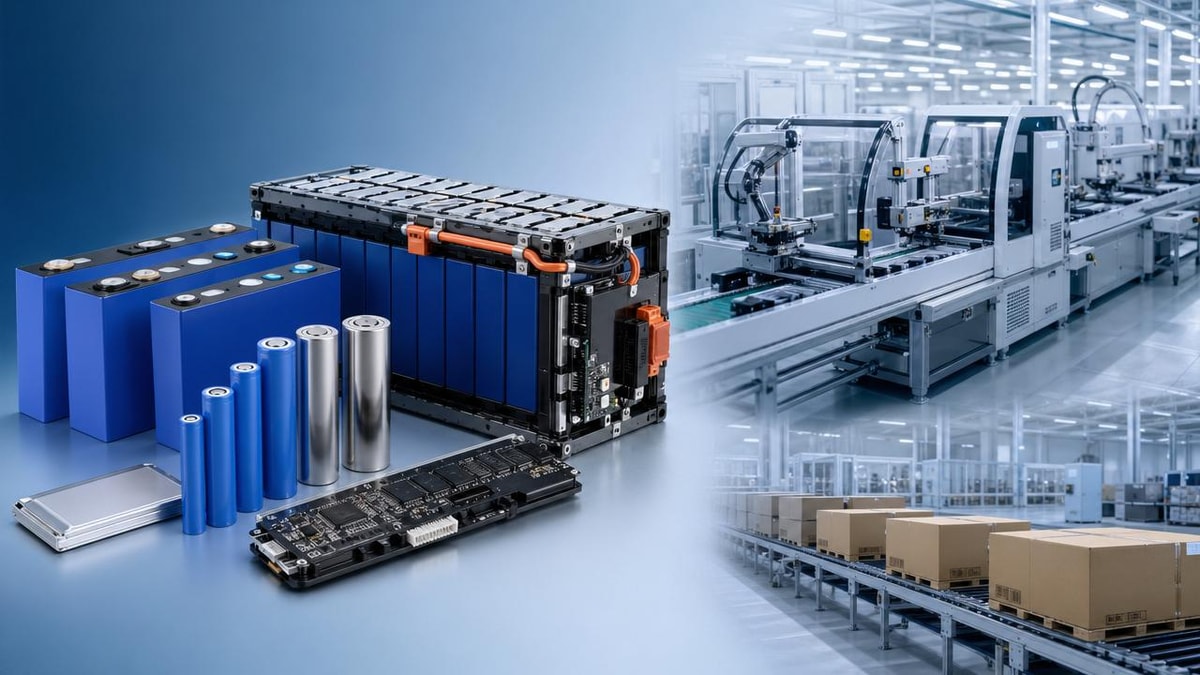
Ask what the supplier actually manufactures in-house. Important processes may include cell selection, pack design, BMS integration, spot welding, thermal management assembly, aging, grading, testing, and final packaging. The more critical processes are controlled internally, the easier it is to manage consistency and accountability. Heavy dependence on subcontractors may increase variation and reduce transparency.
Production scale also matters. A supplier serving only small prototype orders may struggle with repeatability at commercial volume. On the other hand, a very large factory may deprioritize mid-sized customers unless your forecasts are attractive. Procurement teams should ask about monthly output, line utilization, peak capacity, minimum order quantities, ramp-up lead times, and the supplier’s experience handling demand fluctuations.
Customization capability is another key filter. If your product requires a specific form factor, connector type, discharge profile, enclosure standard, communication protocol, or charging behavior, the OEM must demonstrate design-for-manufacturing competence. A credible supplier should be able to explain how design changes affect tooling, testing, certification scope, cost, and timeline.
Verify quality systems beyond certificate logos
Many suppliers present ISO certificates and test reports in early discussions, but procurement should go deeper than document collection. The issue is not whether a certificate exists. The issue is whether the company runs a disciplined quality system that can prevent defects, isolate root causes, and maintain traceability from incoming materials to shipped lots.
Ask how the supplier handles incoming inspection for cells, PCBs, housings, wires, and protection components. Review in-process controls such as weld strength verification, BMS programming checks, aging tests, impedance testing, and final electrical safety inspection. Strong suppliers can explain their control points clearly and provide records, not just promises.
Traceability is especially important in lithium ion battery manufacturing. You should be able to understand how batches are tracked, how serial numbers are assigned, and how non-conforming units are quarantined. If a field issue occurs, the supplier should be able to identify the affected lots quickly and support containment actions without confusion.
It is also worth asking for yield data, failure modes, and corrective action examples. A mature OEM will not claim perfection. Instead, it will show how problems are detected, investigated, corrected, and prevented from recurring. That level of operational honesty is often a better indicator of long-term performance than polished sales presentations.
Make compliance and safety validation non-negotiable
Battery sourcing carries regulatory and safety exposure that extends beyond the factory gate. Depending on your market and application, you may need evidence related to UN38.3 transport testing, IEC or UL standards, MSDS documentation, RoHS, REACH, and country-specific import or product safety requirements. A serious lithium ion batteries OEM supplier should understand which certifications apply to your program and what lead times are involved.
Do not assume that a certificate for one battery model automatically covers a modified version. Changes in cell chemistry, pack structure, enclosure, connector layout, or BMS configuration may affect compliance scope. Procurement teams should ask whether existing reports apply directly to the proposed product and whether any additional validation will be required before launch.
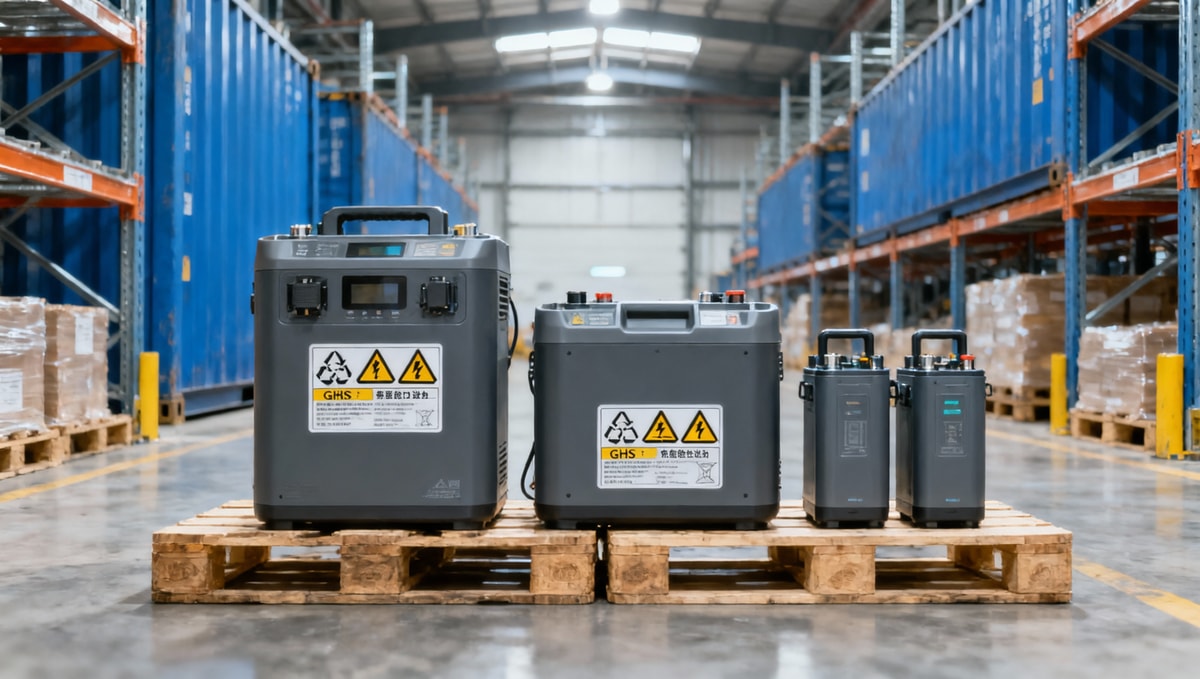
Shipping knowledge matters too. Lithium ion batteries involve restrictions around packaging, labeling, air freight eligibility, and dangerous goods documentation. A supplier that lacks export experience can create customs delays or carrier rejections. Ask about past shipments to your target regions, packaging methods, transport partners, and internal compliance procedures for hazardous goods handling.
If your product enters regulated sectors such as medical, industrial, or infrastructure-related applications, require early involvement from your compliance team. The right supplier should be able to support document packages, change control notifications, validation testing, and audit readiness. This is where procurement can add strategic value by aligning sourcing with future market access requirements.
Assess supplier stability, not just battery performance
A technically acceptable supplier may still be a poor business partner if it lacks financial resilience, raw material visibility, or operational consistency. Lithium ion supply chains can be affected by cell shortages, metals pricing volatility, export controls, and sudden logistics disruptions. Procurement should evaluate whether the supplier has the planning maturity to absorb shocks without compromising service.
Ask where the cells come from and whether the OEM works with tier-one, tier-two, or mixed-source cell providers. Clarify whether approved alternatives exist and how qualification is managed when a cell source changes. Undocumented substitutions are a major risk in battery sourcing and can affect performance, safety, and compliance status.
Lead time discipline should be checked with evidence. Review historical on-time delivery data, forecast handling practices, safety stock policies, and the supplier’s approach to capacity reservation. If your demand profile includes seasonality or launch spikes, ask how these will be accommodated contractually and operationally.
Financial and organizational stability are also relevant. Look for signs such as frequent management changes, unclear ownership, overdependence on a few customers, or aggressive quoting that appears unsustainable. In B2B procurement, supplier failure is not always sudden. It often shows up first through slower responses, inconsistent documentation, quality drift, or extended lead times.
Use factory audits and sample validation to test claims
Supplier presentations can only take you so far. For strategic programs, a factory audit remains one of the most effective ways to verify capability. During the audit, procurement and technical stakeholders should review line layout, material flow, ESD controls, aging areas, test stations, calibration records, warehouse discipline, and traceability systems. Observed process behavior often reveals more than formal documents do.
Pay attention to how teams answer operational questions. If engineering, quality, and sales provide conflicting explanations, internal alignment may be weak. If records are difficult to retrieve, process control may be immature. If production areas look organized but sample storage or quarantine practices are unclear, there may be hidden weaknesses in nonconformance handling.
Sample builds should also be treated as a structured qualification stage rather than a routine procurement step. Evaluate not just whether the sample works, but whether performance is consistent across units, whether documentation is complete, and whether engineering questions are resolved efficiently. Sample responsiveness is often a preview of future program management quality.
Where possible, run validation under realistic use conditions. That may include cycle life testing, thermal performance checks, drop or vibration testing, charging behavior evaluation, and compatibility with your end product. If a supplier is hesitant to support robust testing, that reluctance itself is an important signal.
Compare quotes using total cost of ownership, not unit price alone
One of the most common procurement mistakes is selecting a lithium ion batteries OEM supplier based on ex-works price without accounting for the total cost of ownership. A lower initial quote can become more expensive if it leads to higher defect rates, certification rework, logistics complications, engineering delays, or inventory buffers needed to offset unreliable delivery.
Build a comparison model that includes tooling cost, NRE charges, testing fees, compliance support, packaging, freight constraints, warranty terms, payment structure, expected scrap or failure risk, and lead time reliability. Also consider internal costs such as engineering hours, audit resources, and the operational burden of managing corrective actions.
For customized battery packs, change management should be included in commercial discussions early. Ask how engineering changes are priced, how obsolete inventory is handled, and what notice period applies to component substitutions. Clear agreements reduce conflict later, especially when demand plans or product revisions shift quickly.
It is also wise to define service expectations in measurable terms. These may include response time to quality issues, maximum corrective action turnaround, agreed lead times, forecast windows, and penalties or remedies for non-performance. Strong procurement outcomes often come from disciplined expectation setting rather than hard bargaining alone.
Watch for red flags that suggest elevated supplier risk
Certain warning signs deserve immediate scrutiny. One is vague or inconsistent answers about cell sourcing, safety testing, or certification ownership. Another is refusal to share basic quality documentation under a reasonable NDA. Overly broad capability claims without application-specific examples should also be treated cautiously.
Be careful with suppliers that offer unusually low prices but cannot explain the cost structure clearly. This may indicate hidden compromises in materials, inadequate testing, weak packaging standards, or unrealistic commercial assumptions. Similarly, a supplier that promises very short lead times during onboarding but cannot show capacity planning data may be overcommitting to win business.
Poor change control is another major risk. If the OEM cannot describe how design revisions, BOM updates, firmware changes, or alternate material approvals are documented, your downstream exposure increases. For battery products, undocumented change is especially dangerous because its effects may appear only after shipping and deployment.
Finally, evaluate communication quality. Slow responses, incomplete answers, and generic technical support are not minor annoyances. They often predict future friction during ramp-up, issue resolution, and continuous improvement. A dependable OEM partner should communicate with precision, speed, and accountability.
A practical vetting checklist for procurement teams
To make the evaluation process more actionable, procurement teams can use a weighted checklist. Core categories should include product fit, in-house manufacturing scope, quality system maturity, traceability, certifications, export compliance, sample performance, delivery history, cell source control, customization capability, commercial clarity, and responsiveness.
Each category should be scored using evidence rather than impressions. For example, quality maturity can be scored through audit findings, CAPA examples, and control records. Delivery reliability can be scored through historical KPI data. Compliance readiness can be scored through valid reports, document completeness, and market-specific export experience.
Where sourcing risk is high, dual-source planning may be appropriate. Even if one supplier becomes the primary awardee, qualifying a second source can improve resilience and negotiation leverage. This is especially useful in markets where cell availability or freight conditions can shift rapidly.
In many cases, the best supplier is not the cheapest or the largest. It is the one that can consistently meet your technical requirements, support your compliance pathway, communicate transparently, and scale with your business without introducing unnecessary operational risk.
Conclusion: choose the supplier that lowers future problems, not just today’s quote
Vetting a lithium ion batteries OEM supplier is ultimately about risk-adjusted decision-making. Procurement teams should prioritize evidence of manufacturing discipline, safety and compliance readiness, stable sourcing, and collaborative execution. These factors have a direct impact on product quality, launch timing, total landed cost, and long-term customer satisfaction.
If you approach supplier selection with a structured framework, cross-functional validation, and a total-cost mindset, you can avoid many of the failures that undermine battery sourcing programs. The right OEM partner should strengthen your supply chain, not become its weakest link. In a market where safety, reliability, and traceability matter deeply, rigorous vetting is not optional—it is a competitive advantage.
Get weekly intelligence in your inbox.
No noise. No sponsored content. Pure intelligence.
 May 01, 2026Beijing’s New E-Bike Rules Trigger Dual-Certification Demand for China’s Swappable Battery CabinetsBeijing’s New E-Bike Rules Trigger Dual-Certification Demand for China’s Swappable Battery Cabinets
 May 01, 2026GNA’s GEO Service Assessment Elevates AI Search as Digital Procurement Metric for Chinese ExportersGNA’s GEO Service Assessment Elevates AI Search as Digital Procurement Metric for Chinese Exporters
 May 01, 20262026 China Cycle Expo: Chinese EPS Systems Achieve UL 2849:2026 Full Certification2026 China Cycle Expo: Chinese EPS Systems Achieve UL 2849:2026 Full Certification
 May 01, 2026GB 42236-2026 Enforces EV Charger Efficiency & Overload Protection from May 2026GB 42236-2026 Enforces EV Charger Efficiency & Overload Protection from May 2026
 May 01, 2026GB/T 43790-2026 Drone EMC Standard Effective May 2026GB/T 43790-2026 Drone EMC Standard Effective May 2026
 May 01, 20262026 Foshan Tanzhou Auto Industry Expo Opens2026 Foshan Tanzhou Auto Industry Expo Opens
 May 01, 2026China’s New Hazardous Chemicals Safety Law Takes Effect May 2026China’s New Hazardous Chemicals Safety Law Takes Effect May 2026
 May 01, 2026New Maritime and Fisheries Laws Take Effect May 1, 2026New Maritime and Fisheries Laws Take Effect May 1, 2026
 May 01, 2026Supply Chain Automation Works Best Where Delays RepeatSupply Chain Automation Works Best Where Delays Repeat
 May 01, 2026High Strength Steel Forgings: What Should Be Tested First?High Strength Steel Forgings: What Should Be Tested First?
 May 01, 2026Automotive Steel Forging: Cost Pressure vs Part ReliabilityAutomotive Steel Forging: Cost Pressure vs Part Reliability
 May 01, 2026Why High Durability Steel Forgings Fail Earlier Than ExpectedWhy High Durability Steel Forgings Fail Earlier Than Expected
 May 01, 2026Construction Aluminum Extrusions: Which Finish Lasts Longer?Construction Aluminum Extrusions: Which Finish Lasts Longer?
 May 01, 2026Lightweight Aluminum Extrusions: Where Savings Really HappenLightweight Aluminum Extrusions: Where Savings Really Happen
 May 01, 2026Aerospace Aluminum Extrusions Need More Than Low WeightAerospace Aluminum Extrusions Need More Than Low Weight
 May 01, 2026Precision Lathe Turning Problems That Show Up After AssemblyPrecision Lathe Turning Problems That Show Up After Assembly
 May 01, 2026High Precision Lathe Turning: Tolerance Claims to VerifyHigh Precision Lathe Turning: Tolerance Claims to Verify
 May 01, 2026When CNC Lathe Turning Is Better Than General MachiningWhen CNC Lathe Turning Is Better Than General Machining
 May 01, 2026Medical Device Prototyping Needs More Than SpeedMedical Device Prototyping Needs More Than Speed
 May 01, 20263D Printing Prototyping: Fast Turnaround or Better Finish?3D Printing Prototyping: Fast Turnaround or Better Finish?
 May 01, 2026Low Cost Rapid Prototyping: Where Quality Gets LostLow Cost Rapid Prototyping: Where Quality Gets Lost
 May 01, 2026Quick EV Charger Installation Still Needs Site ChecksQuick EV Charger Installation Still Needs Site Checks
 May 01, 2026Public Parking EV Chargers: What Slows Installation DownPublic Parking EV Chargers: What Slows Installation Down
 May 01, 2026Choosing a Lithium Ion Battery Manufacturer in ChinaChoosing a Lithium Ion Battery Manufacturer in China
 May 01, 2026How to Vet a Lithium Ion Battery OEM SupplierHow to Vet a Lithium Ion Battery OEM Supplier
 May 01, 2026EV Lithium Ion Batteries: Range Is Not the Only MetricEV Lithium Ion Batteries: Range Is Not the Only Metric
 May 01, 2026Lithium Ion ESS Batteries: Safety Details Worth CheckingLithium Ion ESS Batteries: Safety Details Worth Checking