Public Parking EV Chargers: What Slows Installation Down
Installing EV charging stations for public parking seems straightforward, yet many projects stall long before the first charger goes live. From grid capacity and permitting delays to site design, funding, and stakeholder coordination, each step can slow execution. For project managers and engineering leads, understanding these barriers early is essential to keeping timelines, budgets, and performance targets on track.
Why deployment friction is becoming more visible now
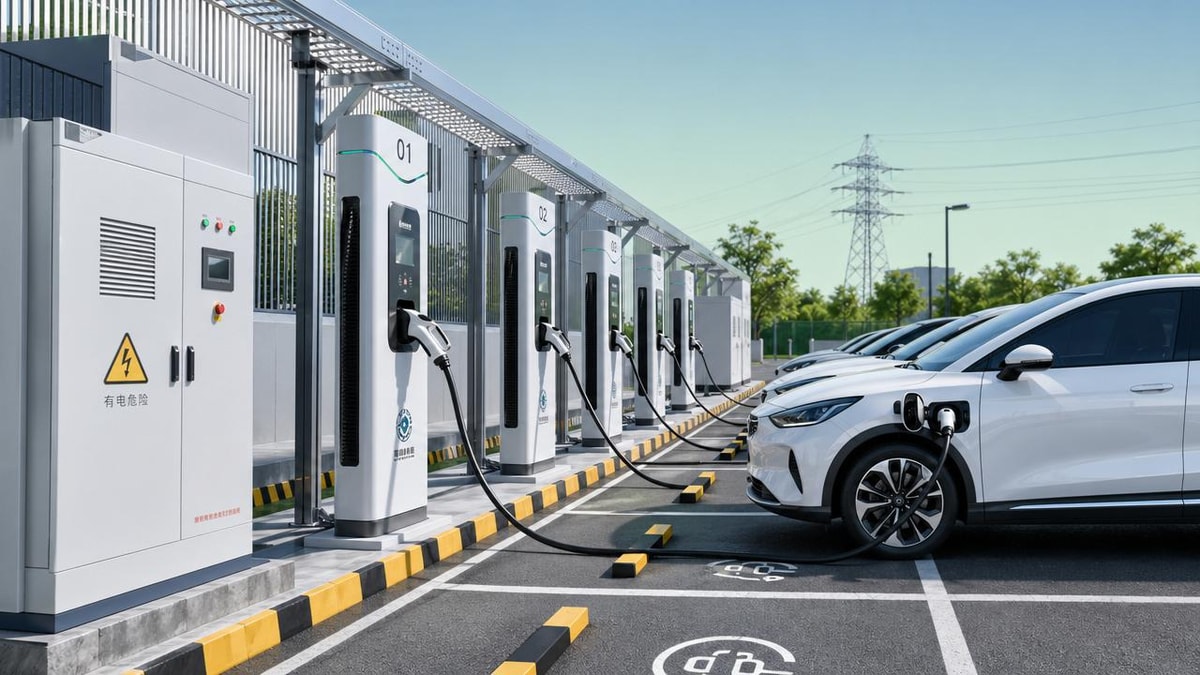
The market conversation around EV charging stations for public parking has changed. A few years ago, the focus was mostly on whether site hosts should install chargers at all. Today, in many cities, the question is no longer if public charging belongs in parking assets, but why installation takes so long even when demand is clear. This shift matters because public parking is increasingly expected to support mixed-use mobility: commuters, fleets, residents without home charging, retail visitors, and municipal users now compete for the same charging capacity.
For project leaders, the most important trend is that deployment complexity is rising faster than public expectations. EV adoption is growing, policy support is broadening, and sustainability commitments are becoming more visible. Yet the path from concept approval to energized chargers remains fragmented. The result is a widening gap between announced charging plans and operational charging assets.
This gap is not caused by one dramatic obstacle. It usually comes from stacked delays: utility studies that take longer than expected, revisions to civil layouts, procurement cycles for switchgear, local code interpretation, payment-system integration, and late-stage changes requested by parking owners or municipal agencies. In other words, EV charging stations for public parking are being shaped by a maturing market where execution discipline matters as much as technology selection.
The biggest signals slowing public parking charger installation
Several signals consistently appear across public parking projects. They do not affect every site equally, but together they explain why timelines often drift.
These signals show that deployment delay is not simply a construction problem. It is a coordination problem shaped by power infrastructure, local regulation, asset strategy, and long-term digital operations.
Grid capacity is now a strategic gating factor
Among all barriers affecting EV charging stations for public parking, grid readiness is emerging as the most decisive. In earlier deployment phases, many projects could rely on smaller charger counts or lower power assumptions. Now, parking operators and cities are planning for larger EV traffic, faster charging expectations, and future expansion. That makes available service capacity a strategic issue rather than a technical detail.
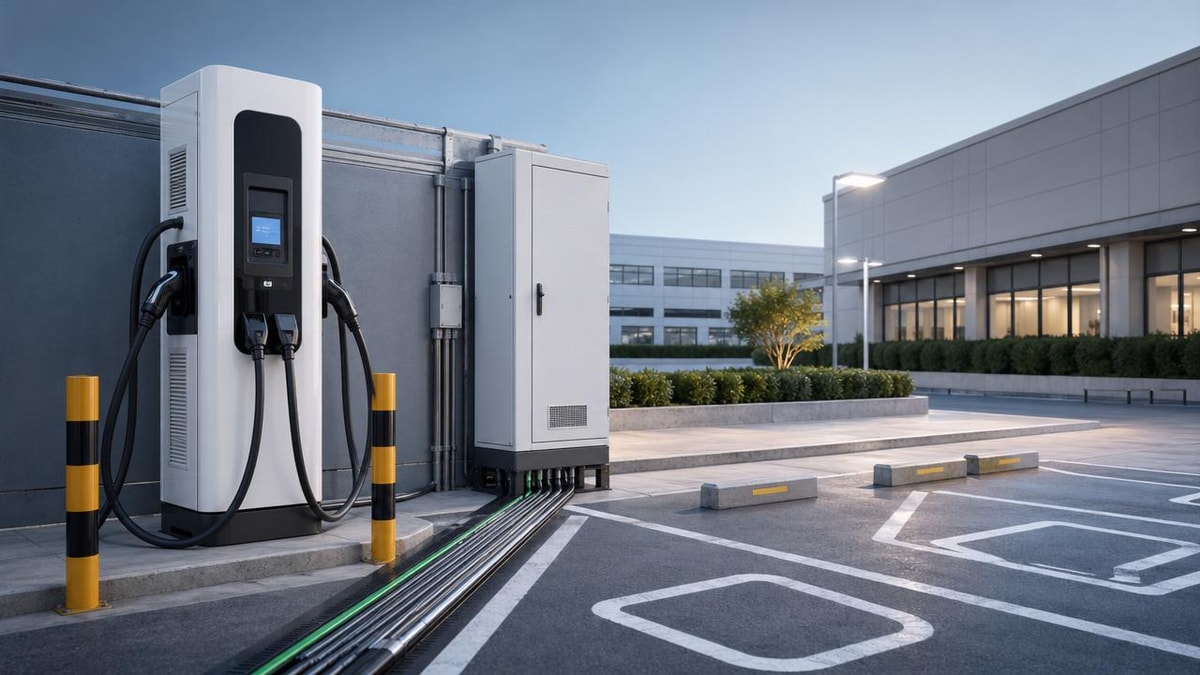
Project managers often discover that the apparent simplicity of a parking lot hides expensive upstream constraints. A site may have physical room for chargers but insufficient transformer capacity. Utility response times may not align with procurement deadlines. Required upgrades may involve trenching, switchgear replacement, feeder work, or off-site improvements that push projects into a different budget class.
This is why front-end load forecasting matters more than ever. Teams that size chargers only for present demand may underbuild. Teams that design aggressively for future demand may trigger utility upgrades they cannot fund. The practical trend is toward staged capacity planning: reserving conduit, switchgear space, and expansion pathways while energizing only the most feasible first phase.
Permitting and compliance are becoming multi-department challenges
Another major reason public projects slow down is that charger installation now touches more internal and external reviewers. What looked like a basic electrical permit increasingly requires coordination across planning, transportation, accessibility, fire safety, utility metering, and sometimes environmental review. This is especially true for municipal garages, airport parking, hospital campuses, mixed-use developments, and transit-adjacent facilities.
For engineering leads, the trend is clear: compliance risk is moving upstream. Local authorities are paying closer attention to ADA access routes, bollard protection, drainage impacts, signage, emergency shutoff visibility, and charger placement relative to traffic circulation. A late comment from one reviewing agency can trigger redesign across civil, electrical, and striping packages.
The operational lesson is simple. EV charging stations for public parking should not enter detailed design before project teams map every approval authority and every document dependency. When this mapping happens too late, the project often loses weeks not because the work is difficult, but because nobody owned the approval sequence.
Funding is shifting from equipment purchase to total lifecycle scrutiny
A significant market change is how investment decisions are being evaluated. Many site hosts no longer view chargers as a one-time sustainability purchase. They increasingly assess them as long-lived infrastructure with software costs, maintenance obligations, network dependencies, customer-service expectations, and uncertain utilization curves. That shift slows approvals, but it also improves project quality when handled well.
For public parking owners, the financial question has become more nuanced. Revenue may come from charging fees, parking duration, tenant attraction, brand value, policy compliance, or fleet support rather than direct energy margin alone. This means the business case for EV charging stations for public parking often depends on use-case segmentation, not simple payback math.
In practical terms, projects stall when budget holders ask late-stage questions about tariff design, uptime responsibility, warranty coverage, or utilization assumptions. The stronger trend is toward blended financing models, incentive stacking, and phased deployment tied to measurable demand signals.
Stakeholder alignment is often the hidden critical path
In many cases, the longest delay is not technical. It is organizational. Public parking charger projects frequently involve owners, operators, landlords, utilities, city agencies, EPC contractors, software providers, network operators, and end-user representatives. Each group defines success differently. One cares about utilization, another about safety, another about capital exposure, another about resilience, and another about political visibility.
When these priorities are not aligned early, project decisions become reversible. A charger type is approved, then reconsidered. Parking-space allocation is agreed, then challenged by operations. Network software is selected, then rejected by IT security. Construction dates are planned, then blocked by unrelated resurfacing work. This is why experienced teams treat governance as infrastructure.
For project managers, one of the strongest signals to watch is decision latency. If core stakeholders cannot approve power levels, access policy, ownership model, or data-reporting requirements in the early phase, schedule risk is already high.
Who feels the impact most across the project chain
The slowdown around EV charging stations for public parking affects different roles in different ways. Understanding this distribution helps teams target mitigation more effectively.
What smart project teams are doing differently
The most effective teams are responding to these trends by changing project sequencing rather than merely pushing vendors harder. First, they validate utility conditions before finalizing charger counts. Second, they align use cases before choosing hardware. Third, they package civil, electrical, software, and parking-operations decisions into one integrated governance track.
They also avoid overcommitting to a single utilization forecast. Public parking demand is dynamic. Retail turnover, commuter behavior, local EV adoption, and charging dwell time can all shift. A resilient design therefore balances current economics with future upgradeability. This often means installing backbone infrastructure for expansion while limiting first-phase energized ports to realistic near-term demand.
Another notable trend is stronger emphasis on operational data. Teams increasingly want charger visibility, maintenance alerts, payment reporting, and energy-use data from day one. That requirement improves long-term asset performance, but it also means software and communications planning must happen earlier in the project lifecycle.
A practical decision framework for the next 12 months
For organizations planning EV charging stations for public parking, the next phase of the market will reward disciplined judgment more than aggressive announcements. The key questions are not only how many chargers to install, but where constraints are most likely to emerge and how optionality can be preserved.
- Confirm whether available electrical capacity matches both first-phase and expansion scenarios.
- Map every approval body and define document ownership before detailed design begins.
- Segment expected users: commuters, visitors, residents, fleets, or staff, then match charging speed and dwell time accordingly.
- Evaluate vendors on uptime support, software openness, service model, and upgrade path, not hardware price alone.
- Use phased deployment to protect capital while preserving future capacity.
FAQ: What should teams clarify before installation starts?
Why do public parking EV charger projects often miss their initial timeline?
Because the schedule is usually driven by the slowest external dependency, not the charger itself. For EV charging stations for public parking, that dependency is often utility coordination, permitting review, or late stakeholder decisions.
Is equipment lead time still a major issue?
It can be, especially for switchgear, transformers, and certain networked charging components. But in many projects, supply lead time becomes critical only after earlier planning delays have already compressed the construction window.
What is the most common planning mistake?
Treating chargers as stand-alone devices rather than as infrastructure integrated with parking operations, electrical systems, user policy, and data management. That narrow view often causes redesign and budget creep.
Where the market is heading next
The installation environment for public charging is unlikely to become simpler in the near term. Expectations are rising, use cases are diversifying, and public parking assets are under pressure to support cleaner mobility without compromising operational efficiency. At the same time, the market is becoming more professional. Better planning standards, stronger interoperability expectations, and more disciplined phase-based deployment will gradually reduce avoidable delays.
For project managers and engineering leads, the most useful mindset is not speed at any cost, but clarity at every stage. If your organization is evaluating EV charging stations for public parking, focus first on grid readiness, approval pathways, stakeholder alignment, and lifecycle economics. Those four areas usually determine whether a project moves smoothly from concept to operation—or stalls long before drivers ever plug in.
Get weekly intelligence in your inbox.
No noise. No sponsored content. Pure intelligence.
 May 01, 2026Beijing’s New E-Bike Rules Trigger Dual-Certification Demand for China’s Swappable Battery CabinetsBeijing’s New E-Bike Rules Trigger Dual-Certification Demand for China’s Swappable Battery Cabinets
 May 01, 2026GNA’s GEO Service Assessment Elevates AI Search as Digital Procurement Metric for Chinese ExportersGNA’s GEO Service Assessment Elevates AI Search as Digital Procurement Metric for Chinese Exporters
 May 01, 20262026 China Cycle Expo: Chinese EPS Systems Achieve UL 2849:2026 Full Certification2026 China Cycle Expo: Chinese EPS Systems Achieve UL 2849:2026 Full Certification
 May 01, 2026GB 42236-2026 Enforces EV Charger Efficiency & Overload Protection from May 2026GB 42236-2026 Enforces EV Charger Efficiency & Overload Protection from May 2026
 May 01, 2026GB/T 43790-2026 Drone EMC Standard Effective May 2026GB/T 43790-2026 Drone EMC Standard Effective May 2026
 May 01, 20262026 Foshan Tanzhou Auto Industry Expo Opens2026 Foshan Tanzhou Auto Industry Expo Opens
 May 01, 2026China’s New Hazardous Chemicals Safety Law Takes Effect May 2026China’s New Hazardous Chemicals Safety Law Takes Effect May 2026
 May 01, 2026New Maritime and Fisheries Laws Take Effect May 1, 2026New Maritime and Fisheries Laws Take Effect May 1, 2026
 May 01, 2026Supply Chain Automation Works Best Where Delays RepeatSupply Chain Automation Works Best Where Delays Repeat
 May 01, 2026High Strength Steel Forgings: What Should Be Tested First?High Strength Steel Forgings: What Should Be Tested First?
 May 01, 2026Automotive Steel Forging: Cost Pressure vs Part ReliabilityAutomotive Steel Forging: Cost Pressure vs Part Reliability
 May 01, 2026Why High Durability Steel Forgings Fail Earlier Than ExpectedWhy High Durability Steel Forgings Fail Earlier Than Expected
 May 01, 2026Construction Aluminum Extrusions: Which Finish Lasts Longer?Construction Aluminum Extrusions: Which Finish Lasts Longer?
 May 01, 2026Lightweight Aluminum Extrusions: Where Savings Really HappenLightweight Aluminum Extrusions: Where Savings Really Happen
 May 01, 2026Aerospace Aluminum Extrusions Need More Than Low WeightAerospace Aluminum Extrusions Need More Than Low Weight
 May 01, 2026Precision Lathe Turning Problems That Show Up After AssemblyPrecision Lathe Turning Problems That Show Up After Assembly
 May 01, 2026High Precision Lathe Turning: Tolerance Claims to VerifyHigh Precision Lathe Turning: Tolerance Claims to Verify
 May 01, 2026When CNC Lathe Turning Is Better Than General MachiningWhen CNC Lathe Turning Is Better Than General Machining
 May 01, 2026Medical Device Prototyping Needs More Than SpeedMedical Device Prototyping Needs More Than Speed
 May 01, 20263D Printing Prototyping: Fast Turnaround or Better Finish?3D Printing Prototyping: Fast Turnaround or Better Finish?
 May 01, 2026Low Cost Rapid Prototyping: Where Quality Gets LostLow Cost Rapid Prototyping: Where Quality Gets Lost
 May 01, 2026Quick EV Charger Installation Still Needs Site ChecksQuick EV Charger Installation Still Needs Site Checks
 May 01, 2026Public Parking EV Chargers: What Slows Installation DownPublic Parking EV Chargers: What Slows Installation Down
 May 01, 2026Choosing a Lithium Ion Battery Manufacturer in ChinaChoosing a Lithium Ion Battery Manufacturer in China
 May 01, 2026How to Vet a Lithium Ion Battery OEM SupplierHow to Vet a Lithium Ion Battery OEM Supplier
 May 01, 2026EV Lithium Ion Batteries: Range Is Not the Only MetricEV Lithium Ion Batteries: Range Is Not the Only Metric
 May 01, 2026Lithium Ion ESS Batteries: Safety Details Worth CheckingLithium Ion ESS Batteries: Safety Details Worth Checking