GB/T 43790-2026 Drone EMC Standard Effective May 2026
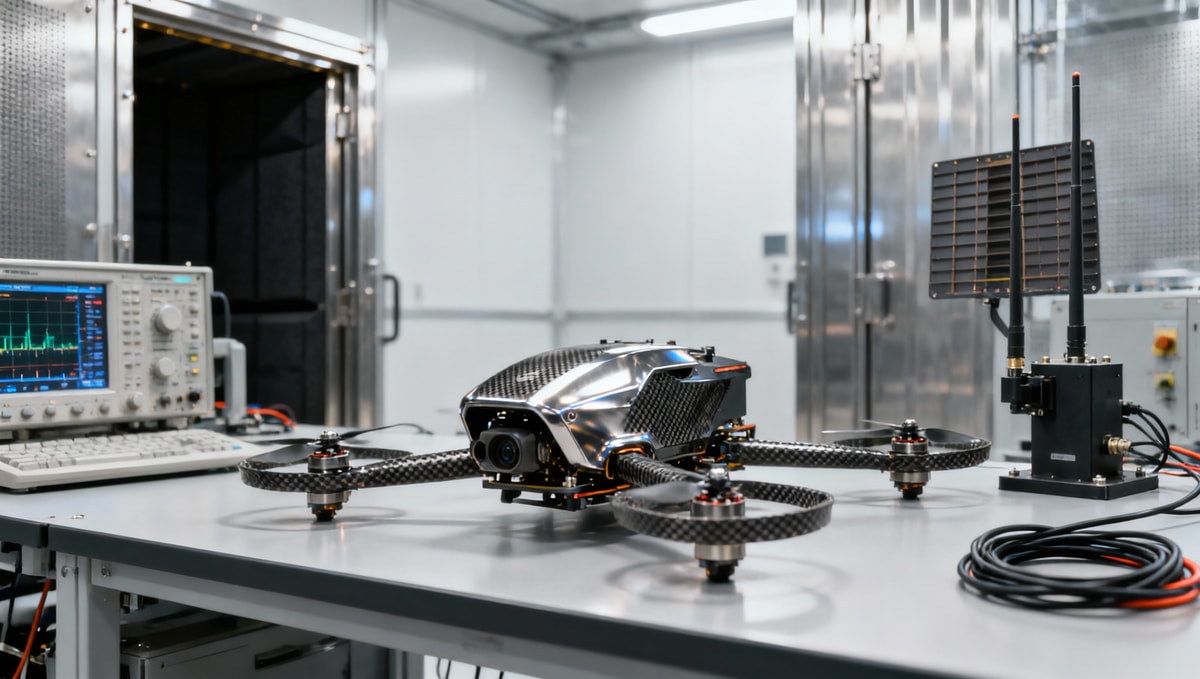
Starting 1 May 2026, China’s new national standard GB/T 43790-2026 — Civil Unmanned Aircraft System Electromagnetic Compatibility Requirements and Test Methods — becomes mandatory for FPV racing and industrial-application drones. This regulation introduces two new compulsory electromagnetic compatibility (EMC) tests: radio frequency (RF) emission power spectral density and transient immunity. Exporters of Chinese FPV racing drones targeting North American and European markets must now comply, directly impacting supply chain timing and solution deployment in Smart Home and IoT Devices applications.
Event Overview
The State Administration for Market Regulation approved GB/T 43790-2026, which takes effect on 1 May 2026. The standard mandates RF emission power spectral density and transient immunity testing for FPV racing and industry-use drones. It has been formally referenced by the U.S. Federal Communications Commission (FCC) and the European Telecommunications Standards Institute (ETSI) for mutual recognition purposes. Major Chinese FPV manufacturers have initiated production line adjustments; export delivery cycles are projected to extend to 6–8 weeks from May 2026 onward, affecting overseas rollout timelines for drone-based Smart Home and IoT Devices solutions.
Industries Affected
Direct Exporters & Trade Enterprises
These enterprises face immediate compliance obligations when shipping FPV racing drones to FCC- or ETSI-regulated markets. Non-compliant units will fail regulatory acceptance, triggering shipment delays, retesting costs, and potential customs rejection.
Manufacturers & OEM/ODM Producers
FPV drone producers must redesign RF front-end circuits, shielding layouts, and firmware-triggered emission control logic to meet spectral density limits. Transient immunity testing requires hardware-level hardening (e.g., enhanced ESD protection, improved power rail filtering), adding validation time and component cost.
IoT Solution Integrators & Smart Home Platform Providers
Companies embedding FPV-derived drone modules into Smart Home or IoT Devices ecosystems may encounter integration delays. Certification dependencies mean pre-integrated drone subsystems must now be re-validated under GB/T 43790-2026 before final product certification (e.g., FCC ID or CE-RED), slowing time-to-market for end solutions.
What Enterprises and Practitioners Should Focus On
Monitor official implementation guidance from SAC and provincial market supervision bureaus
While GB/T 43790-2026 is effective 1 May 2026, technical enforcement details — such as transitional arrangements for existing stock, test lab accreditation timelines, and conformity assessment pathways — remain pending official clarification.
Prioritize RF and immunity test readiness for FPV racing models destined for U.S. and EU markets
Given FCC and ETSI’s reference to this standard, exporters should treat GB/T 43790-2026 test reports as de facto prerequisites for new model submissions — even where not yet formally required by local authorities.
Distinguish between regulatory signal and operational impact
Analysis shows that while the standard is mandatory from May 2026, enforcement ramp-up may be phased. However, lead times for accredited EMC labs are already extending; early engagement with test providers is advisable to avoid bottlenecks.
Adjust procurement planning, logistics scheduling, and customer communication for 6–8 week delivery extensions
Observably, the stated 6–8 week export cycle extension reflects current manufacturer capacity constraints post-implementation. Firms should revise order intake windows, update channel partners on revised lead times, and secure buffer inventory where feasible.
Editorial Perspective / Industry Observation
This standard is better understood as a regulatory inflection point than an isolated compliance milestone. From an industry perspective, its adoption by both FCC and ETSI signals growing alignment between Chinese EMC frameworks and global wireless device requirements — particularly for high-speed, low-latency UAV systems. However, it does not yet constitute harmonized legislation: mutual recognition remains procedural (i.e., referencing), not automatic (i.e., test report acceptance without retesting). Current impact is most pronounced on lead time and design iteration speed — not market access denial. Continued observation is warranted on whether future revisions introduce harmonized test protocols or expanded scope beyond FPV and industrial drones.
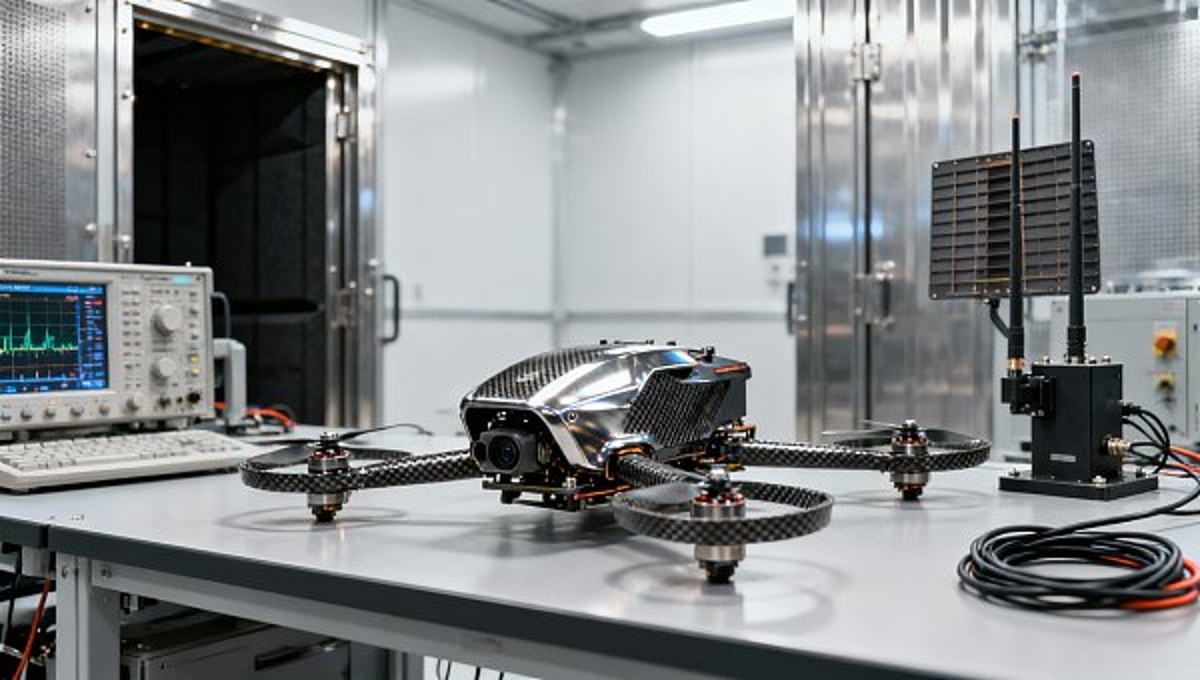
In summary, GB/T 43790-2026 marks the formalization of stricter electromagnetic compatibility discipline for Chinese FPV and industrial drones entering regulated markets. Its primary near-term effect is operational — lengthening certification cycles and compressing development windows — rather than strategic or prohibitive. For stakeholders, it is more accurately interpreted as a calibration of technical due diligence expectations than a barrier to trade.
Source: State Administration for Market Regulation (SAMR), approval notice for GB/T 43790-2026; public statements from major Chinese FPV manufacturers regarding production line adjustments; FCC and ETSI documentation referencing GB/T 43790-2026 as a basis for mutual recognition.
Noted for ongoing observation: official implementation guidelines, accredited test laboratory capacity updates, and any transitional provisions issued prior to 1 May 2026.
Get weekly intelligence in your inbox.
No noise. No sponsored content. Pure intelligence.
 May 01, 2026Beijing’s New E-Bike Rules Trigger Dual-Certification Demand for China’s Swappable Battery CabinetsBeijing’s New E-Bike Rules Trigger Dual-Certification Demand for China’s Swappable Battery Cabinets
 May 01, 2026GNA’s GEO Service Assessment Elevates AI Search as Digital Procurement Metric for Chinese ExportersGNA’s GEO Service Assessment Elevates AI Search as Digital Procurement Metric for Chinese Exporters
 May 01, 20262026 China Cycle Expo: Chinese EPS Systems Achieve UL 2849:2026 Full Certification2026 China Cycle Expo: Chinese EPS Systems Achieve UL 2849:2026 Full Certification
 May 01, 2026GB 42236-2026 Enforces EV Charger Efficiency & Overload Protection from May 2026GB 42236-2026 Enforces EV Charger Efficiency & Overload Protection from May 2026
 May 01, 2026GB/T 43790-2026 Drone EMC Standard Effective May 2026GB/T 43790-2026 Drone EMC Standard Effective May 2026
 May 01, 20262026 Foshan Tanzhou Auto Industry Expo Opens2026 Foshan Tanzhou Auto Industry Expo Opens
 May 01, 2026China’s New Hazardous Chemicals Safety Law Takes Effect May 2026China’s New Hazardous Chemicals Safety Law Takes Effect May 2026
 May 01, 2026New Maritime and Fisheries Laws Take Effect May 1, 2026New Maritime and Fisheries Laws Take Effect May 1, 2026
 May 01, 2026Supply Chain Automation Works Best Where Delays RepeatSupply Chain Automation Works Best Where Delays Repeat
 May 01, 2026High Strength Steel Forgings: What Should Be Tested First?High Strength Steel Forgings: What Should Be Tested First?
 May 01, 2026Automotive Steel Forging: Cost Pressure vs Part ReliabilityAutomotive Steel Forging: Cost Pressure vs Part Reliability
 May 01, 2026Why High Durability Steel Forgings Fail Earlier Than ExpectedWhy High Durability Steel Forgings Fail Earlier Than Expected
 May 01, 2026Construction Aluminum Extrusions: Which Finish Lasts Longer?Construction Aluminum Extrusions: Which Finish Lasts Longer?
 May 01, 2026Lightweight Aluminum Extrusions: Where Savings Really HappenLightweight Aluminum Extrusions: Where Savings Really Happen
 May 01, 2026Aerospace Aluminum Extrusions Need More Than Low WeightAerospace Aluminum Extrusions Need More Than Low Weight
 May 01, 2026Precision Lathe Turning Problems That Show Up After AssemblyPrecision Lathe Turning Problems That Show Up After Assembly
 May 01, 2026High Precision Lathe Turning: Tolerance Claims to VerifyHigh Precision Lathe Turning: Tolerance Claims to Verify
 May 01, 2026When CNC Lathe Turning Is Better Than General MachiningWhen CNC Lathe Turning Is Better Than General Machining
 May 01, 2026Medical Device Prototyping Needs More Than SpeedMedical Device Prototyping Needs More Than Speed
 May 01, 20263D Printing Prototyping: Fast Turnaround or Better Finish?3D Printing Prototyping: Fast Turnaround or Better Finish?
 May 01, 2026Low Cost Rapid Prototyping: Where Quality Gets LostLow Cost Rapid Prototyping: Where Quality Gets Lost
 May 01, 2026Quick EV Charger Installation Still Needs Site ChecksQuick EV Charger Installation Still Needs Site Checks
 May 01, 2026Public Parking EV Chargers: What Slows Installation DownPublic Parking EV Chargers: What Slows Installation Down
 May 01, 2026Choosing a Lithium Ion Battery Manufacturer in ChinaChoosing a Lithium Ion Battery Manufacturer in China
 May 01, 2026How to Vet a Lithium Ion Battery OEM SupplierHow to Vet a Lithium Ion Battery OEM Supplier
 May 01, 2026EV Lithium Ion Batteries: Range Is Not the Only MetricEV Lithium Ion Batteries: Range Is Not the Only Metric
 May 01, 2026Lithium Ion ESS Batteries: Safety Details Worth CheckingLithium Ion ESS Batteries: Safety Details Worth Checking