China’s New Hazardous Chemicals Safety Law Takes Effect May 2026
The Hazardous Chemicals Safety Law enters into force on May 1, 2026, marking the first time lithium-ion battery packs and portable energy storage systems (≤100 Wh) are formally classified as hazardous goods under Chinese regulatory oversight. This change directly affects exporters of battery storage and EV infrastructure products—especially those targeting the U.S., EU, and Southeast Asia—and warrants close attention from manufacturers, logistics providers, and compliance officers in the energy storage and electromobility supply chains.
Event Overview
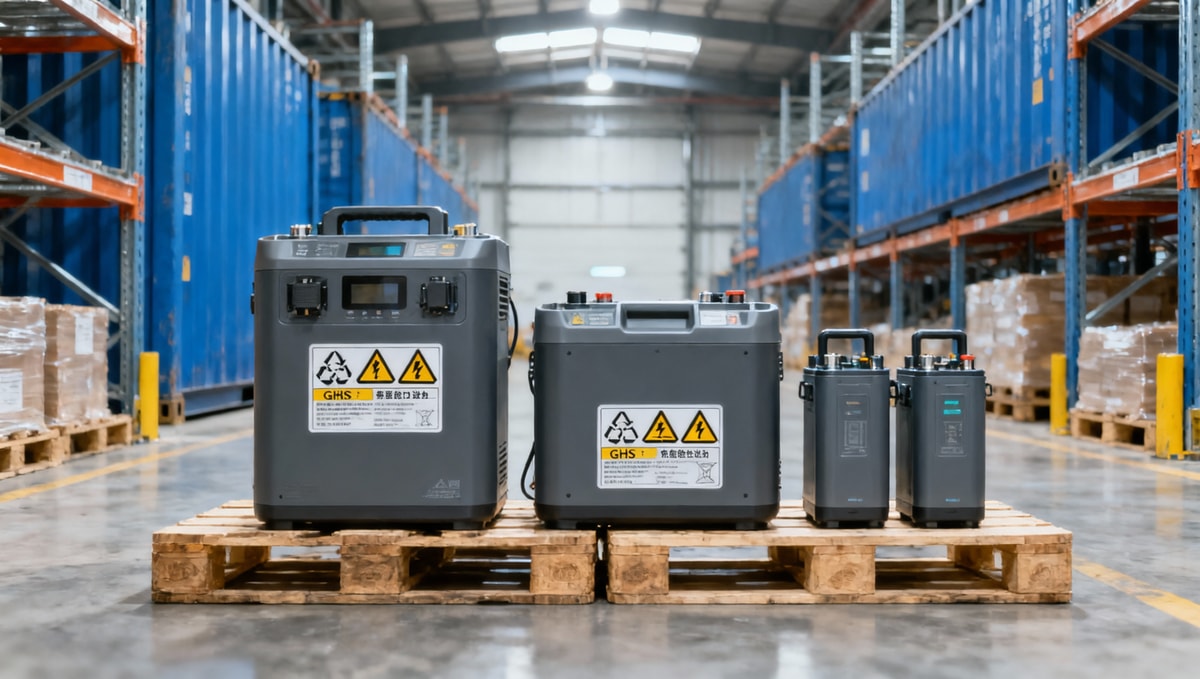
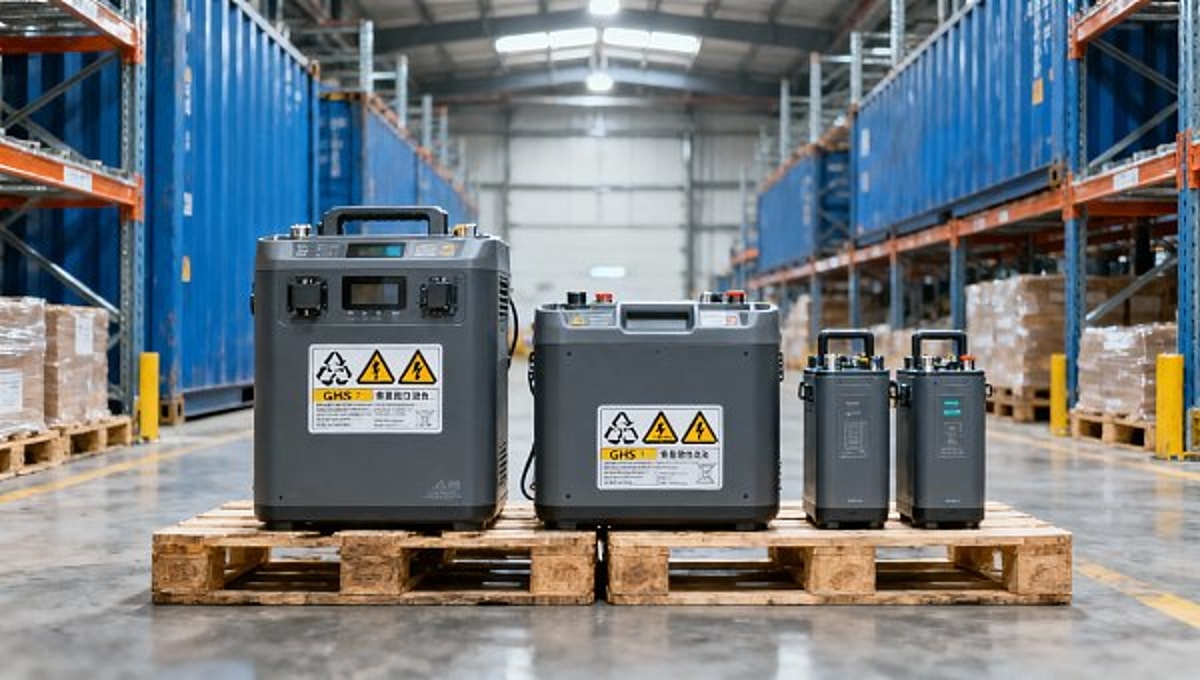
The Hazardous Chemicals Safety Law becomes effective on May 1, 2026. It newly includes lithium-ion battery packs and portable energy storage power supplies (with capacity ≤100 Wh) within the scope of hazardous goods regulation. Compliance requires classification, labeling, and Safety Data Sheet (SDS) preparation according to the updated national standard GB 30000.29-2026. As confirmed by port authorities, shipments lacking compliant labels have undergone mandatory container inspections at Shenzhen and Ningbo ports, resulting in average customs clearance delays of 72 hours.
Industries Affected by Segment
Direct Exporters (Battery Storage & EV Infrastructure)
These enterprises face immediate operational impact: non-compliant labeling triggers physical inspection at key export ports. The delay directly affects shipment schedules, inventory turnover, and contractual delivery commitments—particularly for time-sensitive B2B deliveries to North America and Europe.
Manufacturers of Lithium Battery Packs & Portable ESS Units
Manufacturers must revise product labeling, SDS documentation, and internal classification procedures to align with GB 30000.29-2026. Since the standard introduces updated hazard classification criteria specific to lithium-based electrochemical systems, existing SDS templates and label designs may no longer meet legal requirements—even if previously accepted under older frameworks.
Logistics & Customs Clearance Service Providers
Firms handling documentation, labeling verification, or port coordination now bear increased due diligence responsibilities. Verified label compliance has become a prerequisite for release—not just a pre-shipment formality. Unverified or mislabeled consignments risk detention prior to inspection, increasing liability exposure and service-level agreement (SLA) pressure.
Supply Chain Integrators & OEMs Sourcing Battery Subsystems
OEMs integrating battery modules into larger systems (e.g., microgrids, mobile charging units) must now validate upstream supplier compliance—not only for CE or UN38.3 but also for China’s new GB 30000.29-2026 labeling and SDS alignment. Failure to do so may expose final products to rework, rejection, or customs hold upon export from China.
What Enterprises Should Focus On Now
Monitor official implementation guidance from MEE and SAMR
While GB 30000.29-2026 is cited as mandatory, neither the Ministry of Ecology and Environment (MEE) nor the State Administration for Market Regulation (SAMR) has yet published detailed enforcement guidelines or transition timelines. Enterprises should track official notices for clarification on grandfathering provisions, labeling format specifications, and SDS language requirements (e.g., bilingual vs. Chinese-only).
Prioritize labeling and SDS updates for high-volume export SKUs
Focus revision efforts on top-ten export SKUs by volume or destination—especially those shipped to the U.S. (under PHMSA/49 CFR), EU (under CLP/ADR), and ASEAN markets (where China-origin labeling increasingly serves as de facto reference). Avoid blanket updates; instead, map SKU-level classification against GB 30000.29-2026 Annexes.
Distinguish between regulatory signal and enforceable requirement
Current port inspections reflect early-stage enforcement targeting obvious non-compliance (e.g., missing hazard pictograms, incorrect signal words). Analysis shows this is not yet a full-scale audit regime—but rather a calibrated signal indicating that classification and labeling will be treated as gatekeeping criteria moving forward. Enterprises should treat May 2026 as a hard deadline, not a soft transition period.
Initiate cross-functional alignment ahead of Q2 2026
Update labeling workflows across R&D, production, QA, and export documentation teams. Confirm printer capabilities for GHS-compliant pictograms and verify SDS authoring tools support GB 30000.29-2026’s revised hazard categories (e.g., new subcategories for thermal runaway potential). Where third-party labs or SDS authors are used, confirm their readiness to issue GB 30000.29-2026–aligned documentation by April 2026.
Editorial Perspective / Industry Observation
Observably, this regulation signals a structural shift—not just an incremental update—in how China governs electrochemical energy storage for export. Its inclusion of portable ESS (≤100 Wh) reflects growing regulatory convergence with international transport standards, yet its enforcement via domestic port controls adds a distinct layer of origin-country accountability. Analysis shows this is less about harmonization and more about asserting upstream compliance responsibility: Chinese exporters now serve as the first line of classification assurance for global supply chains. From an industry perspective, it underscores that battery safety governance is no longer siloed by application (e.g., transport vs. stationary) or jurisdictional boundary—it is becoming vertically integrated, starting at the manufacturing source.
Conclusion
Effective May 2026, the Hazardous Chemicals Safety Law establishes a binding compliance baseline for lithium battery and portable energy storage exports from China. It does not introduce new technical testing requirements, but it elevates documentation, classification, and labeling to legally enforceable checkpoints—starting at Chinese ports. Current evidence suggests this is already operational, not prospective: inspections and delays are occurring now. It is better understood not as a future risk, but as an active compliance threshold that reshapes pre-shipment workflow priorities across the battery and energy storage value chain.
Source Attribution:
Main source: Official announcement of the Hazardous Chemicals Safety Law, effective date May 1, 2026; referenced standard GB 30000.29-2026; verified port inspection reports from Shenzhen and Ningbo Customs.
Note: Implementation details—including transitional arrangements, enforcement thresholds, and official interpretation documents—are still pending publication by MEE and SAMR and remain subject to ongoing observation.
Get weekly intelligence in your inbox.
No noise. No sponsored content. Pure intelligence.
 May 01, 2026Beijing’s New E-Bike Rules Trigger Dual-Certification Demand for China’s Swappable Battery CabinetsBeijing’s New E-Bike Rules Trigger Dual-Certification Demand for China’s Swappable Battery Cabinets
 May 01, 2026GNA’s GEO Service Assessment Elevates AI Search as Digital Procurement Metric for Chinese ExportersGNA’s GEO Service Assessment Elevates AI Search as Digital Procurement Metric for Chinese Exporters
 May 01, 20262026 China Cycle Expo: Chinese EPS Systems Achieve UL 2849:2026 Full Certification2026 China Cycle Expo: Chinese EPS Systems Achieve UL 2849:2026 Full Certification
 May 01, 2026GB 42236-2026 Enforces EV Charger Efficiency & Overload Protection from May 2026GB 42236-2026 Enforces EV Charger Efficiency & Overload Protection from May 2026
 May 01, 2026GB/T 43790-2026 Drone EMC Standard Effective May 2026GB/T 43790-2026 Drone EMC Standard Effective May 2026
 May 01, 20262026 Foshan Tanzhou Auto Industry Expo Opens2026 Foshan Tanzhou Auto Industry Expo Opens
 May 01, 2026China’s New Hazardous Chemicals Safety Law Takes Effect May 2026China’s New Hazardous Chemicals Safety Law Takes Effect May 2026
 May 01, 2026New Maritime and Fisheries Laws Take Effect May 1, 2026New Maritime and Fisheries Laws Take Effect May 1, 2026
 May 01, 2026Supply Chain Automation Works Best Where Delays RepeatSupply Chain Automation Works Best Where Delays Repeat
 May 01, 2026High Strength Steel Forgings: What Should Be Tested First?High Strength Steel Forgings: What Should Be Tested First?
 May 01, 2026Automotive Steel Forging: Cost Pressure vs Part ReliabilityAutomotive Steel Forging: Cost Pressure vs Part Reliability
 May 01, 2026Why High Durability Steel Forgings Fail Earlier Than ExpectedWhy High Durability Steel Forgings Fail Earlier Than Expected
 May 01, 2026Construction Aluminum Extrusions: Which Finish Lasts Longer?Construction Aluminum Extrusions: Which Finish Lasts Longer?
 May 01, 2026Lightweight Aluminum Extrusions: Where Savings Really HappenLightweight Aluminum Extrusions: Where Savings Really Happen
 May 01, 2026Aerospace Aluminum Extrusions Need More Than Low WeightAerospace Aluminum Extrusions Need More Than Low Weight
 May 01, 2026Precision Lathe Turning Problems That Show Up After AssemblyPrecision Lathe Turning Problems That Show Up After Assembly
 May 01, 2026High Precision Lathe Turning: Tolerance Claims to VerifyHigh Precision Lathe Turning: Tolerance Claims to Verify
 May 01, 2026When CNC Lathe Turning Is Better Than General MachiningWhen CNC Lathe Turning Is Better Than General Machining
 May 01, 2026Medical Device Prototyping Needs More Than SpeedMedical Device Prototyping Needs More Than Speed
 May 01, 20263D Printing Prototyping: Fast Turnaround or Better Finish?3D Printing Prototyping: Fast Turnaround or Better Finish?
 May 01, 2026Low Cost Rapid Prototyping: Where Quality Gets LostLow Cost Rapid Prototyping: Where Quality Gets Lost
 May 01, 2026Quick EV Charger Installation Still Needs Site ChecksQuick EV Charger Installation Still Needs Site Checks
 May 01, 2026Public Parking EV Chargers: What Slows Installation DownPublic Parking EV Chargers: What Slows Installation Down
 May 01, 2026Choosing a Lithium Ion Battery Manufacturer in ChinaChoosing a Lithium Ion Battery Manufacturer in China
 May 01, 2026How to Vet a Lithium Ion Battery OEM SupplierHow to Vet a Lithium Ion Battery OEM Supplier
 May 01, 2026EV Lithium Ion Batteries: Range Is Not the Only MetricEV Lithium Ion Batteries: Range Is Not the Only Metric
 May 01, 2026Lithium Ion ESS Batteries: Safety Details Worth CheckingLithium Ion ESS Batteries: Safety Details Worth Checking