Medical Device Prototyping Needs More Than Speed
In healthcare technology, rapid prototyping for medical devices is essential, but speed alone cannot guarantee clinical relevance, regulatory readiness, or manufacturability. For technical evaluators, the real challenge is balancing fast iteration with material performance, usability validation, and compliance risk. This article examines why a smarter prototyping strategy creates stronger outcomes than accelerated timelines alone.
Why scenario differences matter more than raw prototype speed
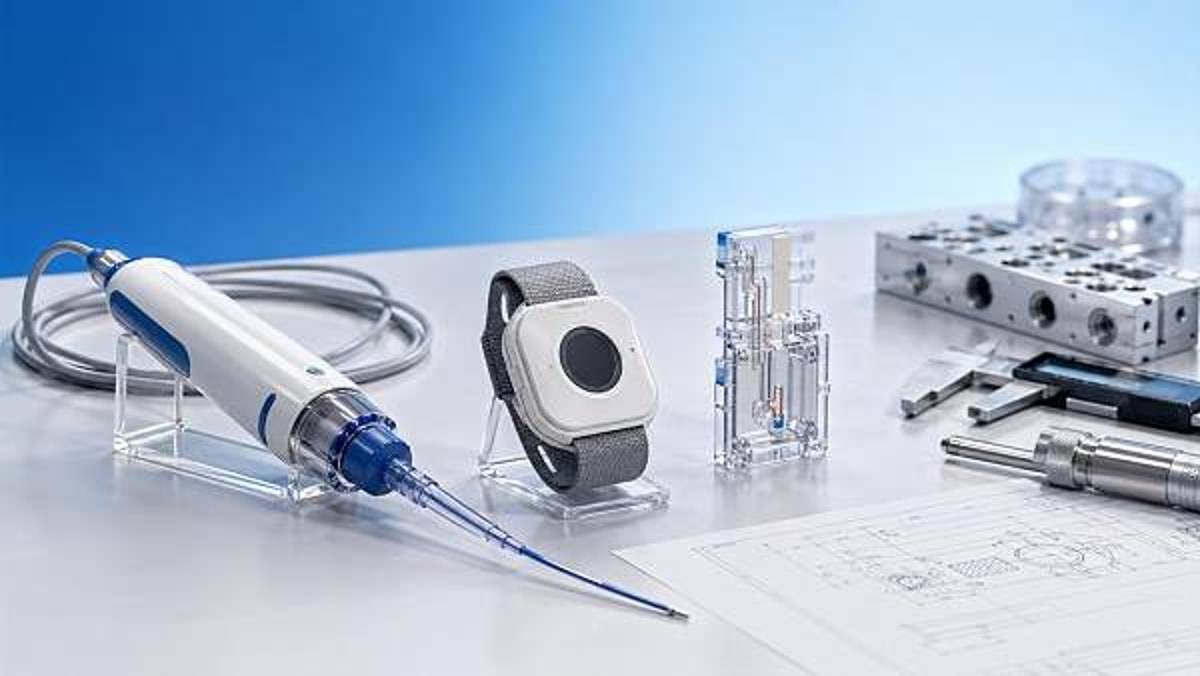
For technical evaluation teams, rapid prototyping for medical devices is rarely a one-dimensional decision. A catheter handle, a wearable monitor enclosure, a surgical guide, and an in vitro diagnostic cartridge may all require fast iteration, yet they do not carry the same design constraints, material expectations, sterilization needs, or documentation burden. Treating them as if they share the same path often leads to false confidence: a prototype may look production-ready while failing in usability testing, biocompatibility screening, or assembly verification.
This is why scenario-based evaluation matters. In one project, speed helps teams visualize form and clinician interaction. In another, the priority is simulating production tolerances or proving fluid performance. In a higher-risk project, the prototype must also support design history documentation and verification planning. The most effective rapid prototyping for medical devices therefore depends on what the prototype is supposed to prove, for whom, and at which development stage.
For procurement leaders, R&D managers, and technical assessors, the key question is not simply “How fast can a supplier print parts?” It is “Can the prototype answer the most critical technical and regulatory questions for this specific use case?” That shift in framing improves both cost efficiency and project quality.
Typical application scenarios for rapid prototyping for medical devices
Medical development programs use prototypes for very different reasons. Understanding these scenarios helps evaluators define realistic expectations and avoid overbuying speed where deeper engineering support is needed.
1. Early concept validation for clinician feedback
At the concept stage, teams often need appearance models or basic functional mockups to test ergonomics, access angles, grip comfort, user workflow, or device footprint. Here, rapid prototyping for medical devices should focus on speed, visual clarity, and design flexibility. Surface finish, color coding, and approximate geometry may matter more than long-term material durability. However, even in this early stage, poor anatomical fit or unrealistic dimensions can distort clinician feedback and misguide design decisions.
2. Functional testing for moving parts and assemblies
Devices with hinges, latches, valves, connectors, or dosing mechanisms require a different approach. In this scenario, a prototype must represent mechanical behavior well enough to evaluate fit, friction, retention force, and assembly sequence. Fast output remains useful, but tolerance control, repeatability, and part interaction become higher priorities than visual appearance alone.
3. Patient-contact or clinician-contact workflow evaluation
Some prototypes are built to observe how clinicians, technicians, or patients interact with the device in realistic environments. Examples include handheld diagnostic tools, wearable housings, inhaler components, or rehabilitation aids. In these projects, rapid prototyping for medical devices must support human factors engineering. Texture, edge quality, weight distribution, visibility, and cleaning assumptions can all affect usability outcomes.
4. Pre-production design transfer and manufacturability review
Later-stage teams often use prototypes to reduce scale-up risk. The goal is no longer just to see the device, but to confirm whether design intent can survive tooling, molding, machining, bonding, or packaging processes. In this scenario, rapid prototyping for medical devices should mimic production constraints as closely as possible. That may include material analogs, draft analysis, wall-thickness review, assembly fixtures, and tolerance stack-up checks.
5. Regulatory and verification preparation
For higher-complexity or higher-risk devices, prototypes may support verification planning, preclinical setups, or documentation packages. They are not necessarily final verification units, but they must be traceable, consistent, and suitable for structured testing. Here, rapid prototyping for medical devices becomes less about urgency and more about disciplined iteration with controlled records.
A practical comparison table for technical evaluators
The table below shows how evaluation priorities shift by application scenario. This comparison helps teams decide when a fast-turn prototype is enough and when a more robust development partner is required.
How requirements change across device categories
Technical evaluators should also remember that device category shapes prototype expectations. A one-size-fits-all vendor brief often creates unnecessary revision cycles.
Diagnostic devices and cartridges
For diagnostics, fluid paths, sealing integrity, optical access, and small-feature consistency often dominate. Rapid prototyping for medical devices in this area must consider whether the selected process can represent channel dimensions, transparency needs, and joining methods closely enough. A visually accurate prototype may still fail as a test article if fluid behavior is not realistic.
Surgical and procedural tools
For surgical guides, instrument handles, or procedural accessories, anatomical fit, clinician grip, and sterilization assumptions become central. In these cases, technical teams should verify whether the prototype will be used only for visual review, cadaver lab work, or simulated procedure testing. Each use level requires different material and finishing decisions.
Wearables and patient-facing electronics
Here, housing durability, skin-contact comfort, cable routing, charging access, and user acceptance tend to matter more than lab-only dimensional checks. Rapid prototyping for medical devices in wearable formats should therefore include repeated fit checks, environmental assumptions, and enclosure-serviceability review, not just industrial design evaluation.
Disposable consumables
Single-use components usually face intense cost and manufacturability pressure. Teams that prototype them only for speed may miss ejection issues, thin-wall instability, snap-feature weakness, or packaging inefficiencies. In this scenario, a prototype should help filter out designs that are fast to build but expensive to scale.
Scenario-based recommendations for choosing a prototyping approach
A better selection process starts by matching the method to the decision that must be made next. Technical evaluators can use the following logic when sourcing rapid prototyping for medical devices.
- If the next decision is about clinician acceptance, prioritize ergonomic realism, anatomy fit, and user workflow over pure turnaround speed.
- If the next decision is about assembly performance, require tolerance discussion, material behavior review, and repeat-build consistency.
- If the next decision is about scale-up, ask for DFM feedback, production-process alignment, and likely tooling constraints.
- If the next decision is regulatory, ensure that prototype revisions, test intent, and traceability are documented from the start.
This approach helps enterprises avoid a common sourcing error: choosing a vendor solely because they can deliver parts in days, without confirming whether those parts can answer the actual engineering question.
Common misjudgments in rapid prototyping for medical devices
Across the healthcare technology sector, several recurring mistakes undermine prototype value.
- Confusing appearance with evidence. A polished part can create stakeholder confidence without proving mechanical reliability, user safety, or manufacturability.
- Skipping material logic too early. Even when final material is not required, the prototype should still approximate the critical behavior being evaluated.
- Ignoring downstream process constraints. Designs that work in additive fabrication may break down during molding, bonding, sterilization, or packaging transfer.
- Underestimating human factors. In many devices, usability risk is not a finishing detail but a central technical requirement.
- Separating prototyping from documentation. In regulated development, undocumented iteration can slow progress later even if it appears faster now.
What technical evaluators should verify before approving a prototype plan
Before moving forward, technical evaluation teams should align stakeholders around a small set of decision criteria. This is especially important in cross-functional environments involving R&D, quality, sourcing, and clinical input.
First, define the job of the prototype: appearance review, usability insight, functional test, manufacturing rehearsal, or compliance preparation. Second, identify the failure mode that matters most in the current stage, such as leakage, breakage, poor grip, assembly variation, or user confusion. Third, confirm whether the selected prototyping process can realistically represent that risk. Fourth, decide what level of documentation is required so prototype learnings can be carried into formal development.
When these points are clarified, rapid prototyping for medical devices becomes a strategic filter rather than a rushed output. It accelerates good decisions instead of accelerating uncertainty.
FAQ: evaluating fit-for-purpose medical device prototyping
Is rapid prototyping for medical devices mainly useful in early-stage development?
No. It is valuable from concept exploration through pre-production review. The difference is that later stages require stronger control over tolerances, documentation, and production relevance.
When should teams prioritize production-like materials over speed?
When the prototype must inform mechanical function, user safety, wear behavior, sterilization assumptions, or process transfer decisions. In those cases, unrealistic material behavior can invalidate the learning.
Can fast prototype cycles reduce regulatory risk?
Yes, but only if the cycles are structured. Fast iteration can uncover design issues early, yet it reduces regulatory risk only when changes, rationale, and test intent are captured in a disciplined way.
Final takeaway for scenario-driven decision making
The strongest rapid prototyping for medical devices programs do not chase speed in isolation. They match prototype strategy to application scenario, device risk, and the next business or engineering decision. For technical evaluators, that means asking not only how quickly a part can be produced, but also whether it can support realistic testing, cross-functional alignment, and downstream execution.
Organizations operating in advanced healthcare supply chains increasingly benefit from partners that combine prototyping capability with manufacturability insight, quality awareness, and sector-specific judgment. For enterprises seeking stronger decision support across healthcare technology and adjacent industrial ecosystems, platforms such as TradeNexus Pro help surface credible market intelligence, supplier perspectives, and practical benchmarks that make scenario-based evaluation more reliable. The right next step is to map your current device program by use scenario, identify the decision each prototype must enable, and then confirm whether your prototyping path is designed for evidence rather than speed alone.
Get weekly intelligence in your inbox.
No noise. No sponsored content. Pure intelligence.
 May 01, 2026Beijing’s New E-Bike Rules Trigger Dual-Certification Demand for China’s Swappable Battery CabinetsBeijing’s New E-Bike Rules Trigger Dual-Certification Demand for China’s Swappable Battery Cabinets
 May 01, 2026GNA’s GEO Service Assessment Elevates AI Search as Digital Procurement Metric for Chinese ExportersGNA’s GEO Service Assessment Elevates AI Search as Digital Procurement Metric for Chinese Exporters
 May 01, 20262026 China Cycle Expo: Chinese EPS Systems Achieve UL 2849:2026 Full Certification2026 China Cycle Expo: Chinese EPS Systems Achieve UL 2849:2026 Full Certification
 May 01, 2026GB 42236-2026 Enforces EV Charger Efficiency & Overload Protection from May 2026GB 42236-2026 Enforces EV Charger Efficiency & Overload Protection from May 2026
 May 01, 2026GB/T 43790-2026 Drone EMC Standard Effective May 2026GB/T 43790-2026 Drone EMC Standard Effective May 2026
 May 01, 20262026 Foshan Tanzhou Auto Industry Expo Opens2026 Foshan Tanzhou Auto Industry Expo Opens
 May 01, 2026China’s New Hazardous Chemicals Safety Law Takes Effect May 2026China’s New Hazardous Chemicals Safety Law Takes Effect May 2026
 May 01, 2026New Maritime and Fisheries Laws Take Effect May 1, 2026New Maritime and Fisheries Laws Take Effect May 1, 2026
 May 01, 2026Supply Chain Automation Works Best Where Delays RepeatSupply Chain Automation Works Best Where Delays Repeat
 May 01, 2026High Strength Steel Forgings: What Should Be Tested First?High Strength Steel Forgings: What Should Be Tested First?
 May 01, 2026Automotive Steel Forging: Cost Pressure vs Part ReliabilityAutomotive Steel Forging: Cost Pressure vs Part Reliability
 May 01, 2026Why High Durability Steel Forgings Fail Earlier Than ExpectedWhy High Durability Steel Forgings Fail Earlier Than Expected
 May 01, 2026Construction Aluminum Extrusions: Which Finish Lasts Longer?Construction Aluminum Extrusions: Which Finish Lasts Longer?
 May 01, 2026Lightweight Aluminum Extrusions: Where Savings Really HappenLightweight Aluminum Extrusions: Where Savings Really Happen
 May 01, 2026Aerospace Aluminum Extrusions Need More Than Low WeightAerospace Aluminum Extrusions Need More Than Low Weight
 May 01, 2026Precision Lathe Turning Problems That Show Up After AssemblyPrecision Lathe Turning Problems That Show Up After Assembly
 May 01, 2026High Precision Lathe Turning: Tolerance Claims to VerifyHigh Precision Lathe Turning: Tolerance Claims to Verify
 May 01, 2026When CNC Lathe Turning Is Better Than General MachiningWhen CNC Lathe Turning Is Better Than General Machining
 May 01, 2026Medical Device Prototyping Needs More Than SpeedMedical Device Prototyping Needs More Than Speed
 May 01, 20263D Printing Prototyping: Fast Turnaround or Better Finish?3D Printing Prototyping: Fast Turnaround or Better Finish?
 May 01, 2026Low Cost Rapid Prototyping: Where Quality Gets LostLow Cost Rapid Prototyping: Where Quality Gets Lost
 May 01, 2026Quick EV Charger Installation Still Needs Site ChecksQuick EV Charger Installation Still Needs Site Checks
 May 01, 2026Public Parking EV Chargers: What Slows Installation DownPublic Parking EV Chargers: What Slows Installation Down
 May 01, 2026Choosing a Lithium Ion Battery Manufacturer in ChinaChoosing a Lithium Ion Battery Manufacturer in China
 May 01, 2026How to Vet a Lithium Ion Battery OEM SupplierHow to Vet a Lithium Ion Battery OEM Supplier
 May 01, 2026EV Lithium Ion Batteries: Range Is Not the Only MetricEV Lithium Ion Batteries: Range Is Not the Only Metric
 May 01, 2026Lithium Ion ESS Batteries: Safety Details Worth CheckingLithium Ion ESS Batteries: Safety Details Worth Checking