When CNC Lathe Turning Is Better Than General Machining
When precision, repeatability, and part geometry matter most, CNC lathe turning often outperforms general machining. For information researchers comparing production methods, understanding where lathe turning CNC machining services deliver faster cycles, tighter tolerances, and lower costs can reveal clear sourcing and engineering advantages. This article explores when turning is the smarter choice for modern manufacturing needs.
For most buyers and technical researchers, the short answer is this: CNC lathe turning is usually the better option when a part is primarily round, cylindrical, concentric, threaded, or rotationally symmetric, and when production efficiency, dimensional consistency, and surface finish are high priorities. General machining remains essential for complex prismatic shapes, irregular geometries, and features that cannot be created efficiently on a turning center.
The real decision is not whether one process is universally better. It is whether the part’s geometry, tolerance requirements, batch size, material, and downstream use align more naturally with turning. That is where experienced suppliers of lathe turning CNC machining services can create measurable value in lead time, unit economics, and quality stability.
What information researchers really need to know before choosing turning over general machining
People searching this topic are rarely looking for a textbook definition of machining. They want a practical way to decide which process better fits a sourcing project, an engineering specification, or a supplier comparison. In other words, they need decision criteria, not generic manufacturing theory.
The most important questions usually sound like this: Is the part shape suitable for a lathe? Will turning reduce cost per piece? Can it hold the required tolerances more reliably than general machining? Will cycle times improve enough to justify the process choice? And what trade-offs should be expected if the part also includes milled flats, cross-holes, slots, or off-center features?
For enterprise buyers, these questions are tied directly to procurement outcomes. A poor process match can create avoidable cost inflation, scrap risk, unstable quality, and supplier delays. A strong process match can simplify quoting, increase throughput, and make total landed cost more predictable.
When CNC lathe turning is clearly better than general machining
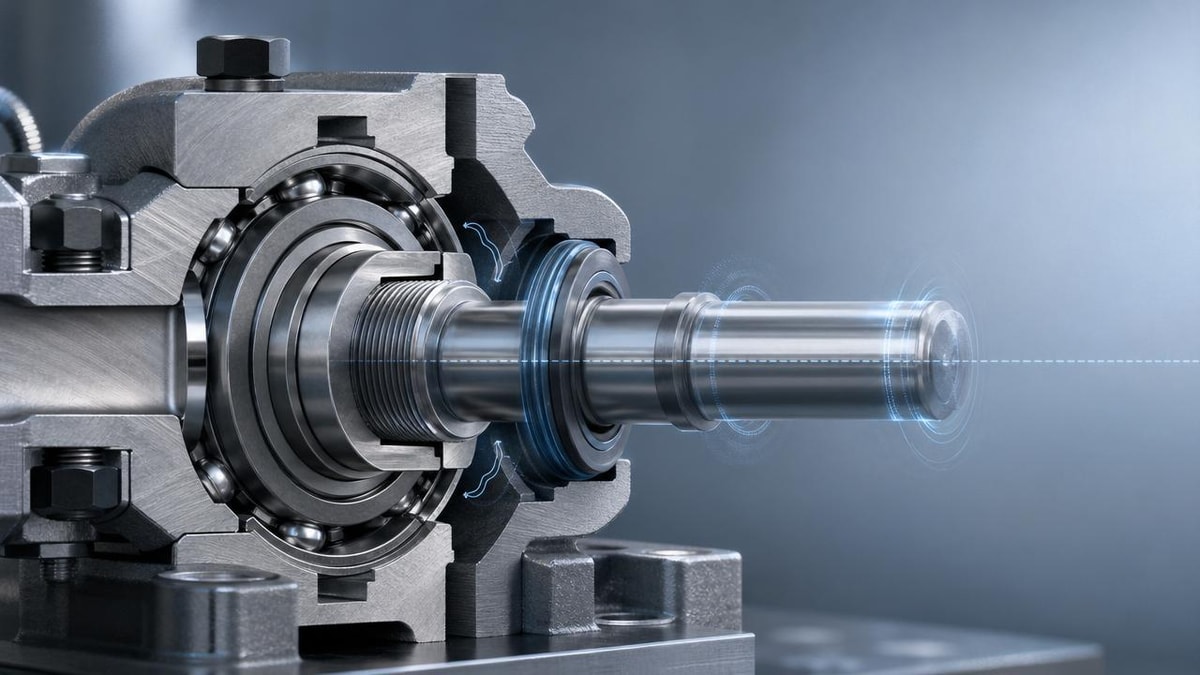
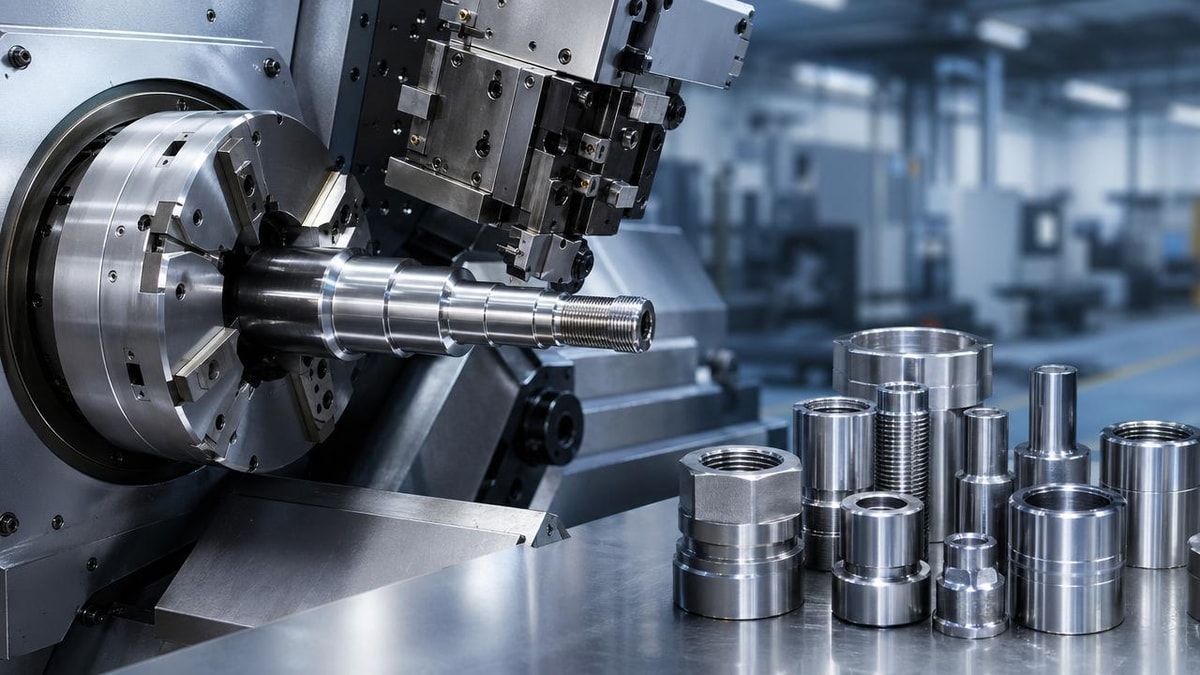
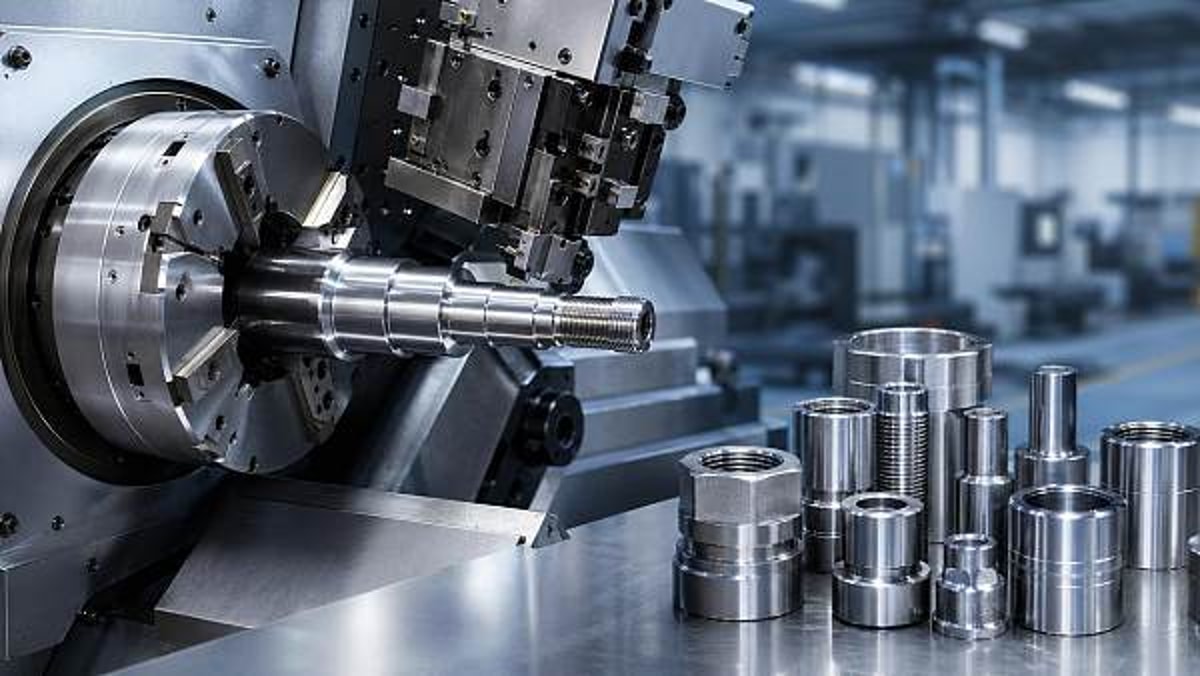
CNC lathe turning is better when the part’s main geometry is based on rotation around a central axis. Shafts, bushings, pins, collars, spacers, threaded connectors, sleeves, fittings, rollers, and bearing-related components are common examples. These parts are naturally suited to a lathe because the cutting process works with the shape rather than against it.
Turning also becomes the stronger choice when concentricity is critical. Since the workpiece rotates in a controlled axis during machining, features such as outer diameters, inner diameters, grooves, tapers, and threads can be produced with excellent alignment relative to one another. In general machining setups, achieving that same concentric relationship may require extra fixturing, more setups, or tighter process control.
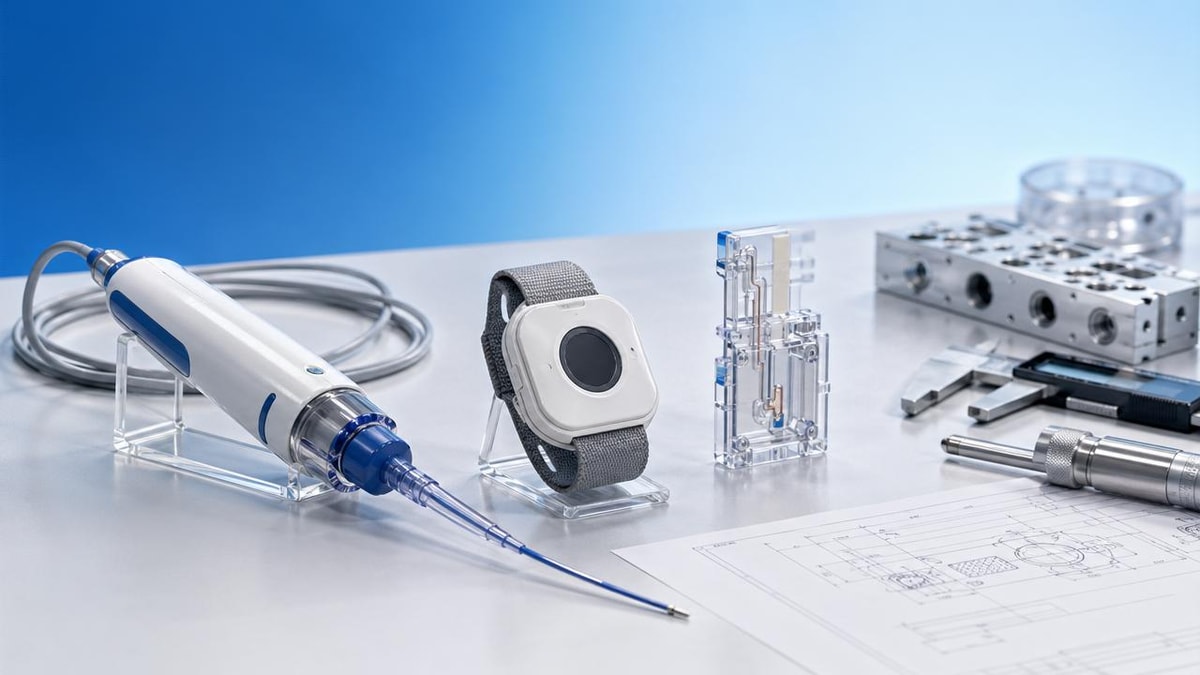
Another clear advantage appears in medium- to high-volume production. Once tooling, programs, and bar-feeding or chucking methods are optimized, CNC lathe turning can produce parts quickly and repeatedly with limited variation. That makes it especially attractive for industries where repeatability matters as much as nominal accuracy, including automotive, medical devices, fluid systems, smart electronics hardware, and advanced industrial assemblies.
Surface finish is another major reason to choose turning. Cylindrical surfaces often come off a lathe with a smoother and more uniform finish than can be achieved economically through broader general machining strategies. For sealing surfaces, bearing seats, visible metal hardware, and parts requiring secondary coating or plating, that finish advantage can reduce rework and support better final performance.
Why lathe turning often wins on cost, speed, and repeatability
From a production economics perspective, turning is efficient because the machine motion is optimized for rotational parts. Toolpaths are simpler, material removal is more direct, and setups are often faster than trying to machine the same part family on a general-purpose process route. In many cases, this translates into shorter cycle times and lower cost per unit.
There is also a labor and inspection advantage. When a component is designed around turned features, it may require fewer repositionings and fewer chances for cumulative error. Fewer setups often mean more stable dimensions and less manual intervention. That improves consistency not only in the first batch, but across repeat orders.
Material utilization can be better as well, depending on the stock form. Parts made from bar stock on a CNC lathe can be highly efficient to run, particularly when using automatic feeders for long production runs. For procurement teams evaluating quotes, this matters because lower process complexity often produces more competitive pricing and fewer hidden quality costs.
In addition, modern lathe turning CNC machining services frequently include live tooling, sub-spindles, and multi-axis capability. These features allow suppliers to perform secondary operations such as drilling, milling, slotting, or cross-hole creation within the same machine cycle. When done well, this reduces handling and compresses lead times compared with routing the part through multiple pieces of equipment.
What part features make turning the best-fit process
If a part has a dominant outer diameter and a series of stepped diameters, turning is usually a strong candidate. The same is true for internal bores, counterbores, tapers, grooves, snap-ring features, external and internal threads, and precision shoulders. These are classic turned features that can be generated efficiently and repeatably.
Long, slender parts also often benefit from turning, especially when straightness and cylindrical uniformity are important. Shafts used in motors, pumps, actuators, and mechanical drive systems are a strong example. A capable turning supplier can manage support, chatter control, and tool selection to protect both geometry and finish.
Parts requiring tight runout control are another area where lathes excel. Because the part stays referenced around its rotational centerline, key diameters and internal features can maintain better relationship to each other. For assemblies that rely on rotational balance, seal performance, or bearing fit, this can be a decisive factor.
Even relatively simple components can justify turning if purchased in volume. A spacer, sleeve, or threaded insert may not look technically advanced, but when the annual demand is high, the cumulative value of cycle-time efficiency and lower scrap rates becomes substantial.
When general machining is still the better choice
Turning should not be treated as the default answer for every metal part. General machining is still better when a component is primarily block-shaped, plate-based, asymmetrical, or heavily dependent on flat surfaces, pockets, ribs, contours, and multiple off-axis features. These geometries are better aligned with milling and broader machining center operations.
If a part requires extensive 3D profiling, non-cylindrical cavities, or multiple faces that must be machined in complex spatial relationships, a general machining route may be faster and more practical overall. Trying to force a non-rotational design into a turning-first strategy can introduce unnecessary complexity.
There is also a threshold where secondary features can overwhelm the benefits of turning. A mostly round part with one or two milled flats may still be ideal for a turning center with live tooling. But if the part includes many cross-features, irregular indexing, or substantial non-axisymmetric geometry, the efficiency advantage can fade quickly.
For researchers comparing suppliers, this is a useful warning sign: if a vendor promotes turning for a design that is only marginally rotational, ask whether the part will require extra handling, multiple machines, or special fixturing that erodes the original cost benefit.
How to evaluate whether a supplier’s lathe turning CNC machining services are truly the right fit
Not all turning suppliers have the same capability depth. Some are highly efficient at standard shafts and bushings but less capable with tight-tolerance, multi-operation, or material-sensitive components. A good sourcing decision depends on matching supplier capability to the actual technical profile of the part.
Start by reviewing machine range and process scope. Does the supplier offer only 2-axis turning, or do they also provide live tooling, Y-axis machining, sub-spindle operations, and bar-fed automation? The answer affects whether your part can be completed in one setup or will require separate operations that add cost and risk.
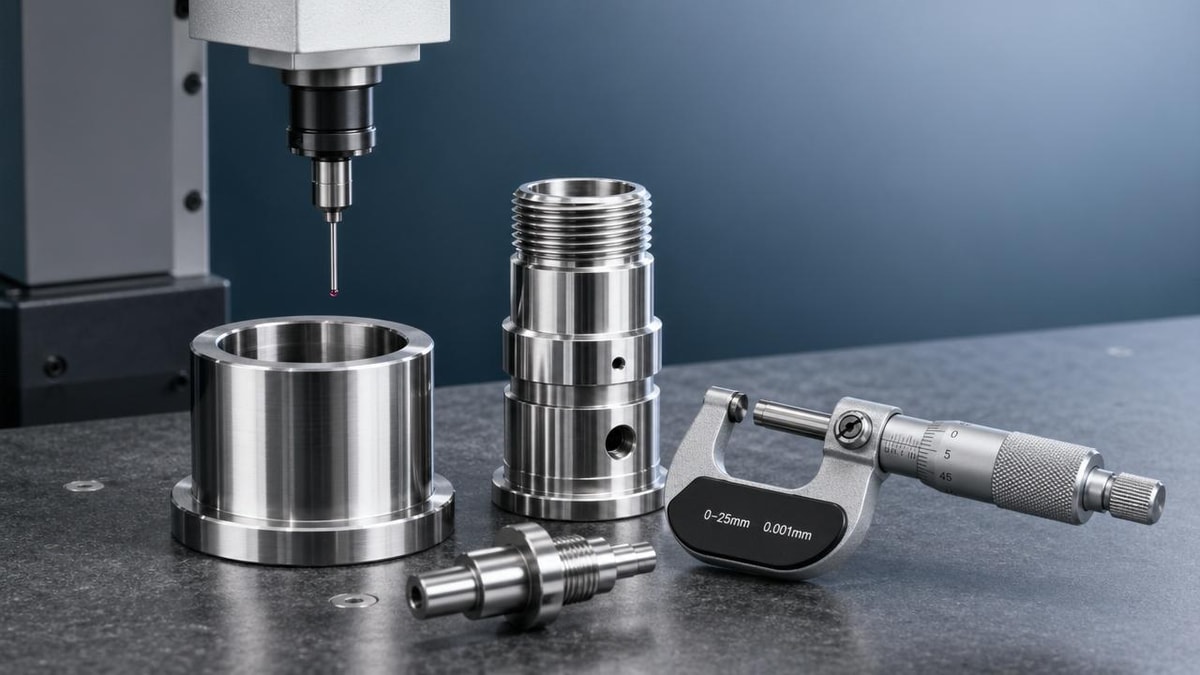
Next, examine tolerance experience by feature type, not only by broad claims. A supplier may advertise high precision, but buyers should ask about concentricity, runout, thread quality, bore accuracy, surface finish, and repeatability across batches. These are the dimensions that matter most in turned components.
Material competence is equally important. Stainless steel, brass, aluminum, titanium, engineering plastics, and hardened alloys behave differently under cutting conditions. The best lathe turning CNC machining services understand chip control, tool wear, heat effects, and finish optimization for each material family.
Finally, assess quality systems and manufacturability input. Reliable suppliers do more than machine to print. They identify geometry that could be simplified, tolerances that may be unnecessarily expensive, and design details that could improve yield or shorten cycle time without compromising performance.
A practical decision framework for buyers and researchers
If you are comparing turning with general machining, use a simple checklist. First, ask whether more than half of the part’s value-defining geometry is rotational. If yes, turning deserves serious consideration. Second, determine whether concentricity, cylindrical accuracy, or thread quality are core performance drivers. If they are, turning usually gains another point in its favor.
Third, evaluate production volume. The larger and more repeatable the order pattern, the more turning’s efficiency can pay off. Fourth, review whether the part can be completed in one machine or one workflow. A turned part that stays largely in one setup is often highly economical. A turned part that requires many secondary operations may not be.
Fifth, consider tolerance cost sensitivity. If the drawing has demanding diameter relationships and finish requirements, turning may achieve them more naturally and consistently. Sixth, check downstream use. Parts that rotate, seal, align with bearings, or fit into cylindrical assemblies often benefit from turning-centered production logic.
This framework will not replace a detailed DFM review, but it helps researchers and sourcing teams narrow the process choice quickly and intelligently before moving into RFQ or supplier audit stages.
Common mistakes that lead to poor process selection
One common mistake is comparing turning and general machining only on piece price without understanding feature mix. A low quote can become expensive if the process requires multiple handoffs, secondary fixtures, or excessive inspection. Process fit matters more than headline cost.
Another mistake is overlooking tolerance relationships. Buyers may specify tight diameters but fail to consider runout, concentricity, or coaxial alignment. A general machining approach might hit individual dimensions while struggling to control their relationship as efficiently as a lathe-based process would.
A third mistake is assuming that all round-looking parts are ideal for turning. Some parts appear cylindrical but contain enough side features, pockets, or irregular geometry that milling-centered strategies become more practical. The shape should be evaluated based on manufacturing effort, not visual impression alone.
There is also the reverse error: assuming general machining is more flexible and therefore safer. Flexibility is valuable, but it is not always the most efficient route. For recurring rotational components, overusing broad general machining can lock in unnecessary cost and longer lead times.
Why this matters in modern sourcing and industrial decision-making
In today’s global manufacturing environment, process selection affects more than engineering elegance. It influences sourcing resilience, quote comparability, capacity planning, and quality predictability. Buyers and analysts who understand when CNC lathe turning is better than general machining can make stronger supplier decisions and identify value beyond the unit price.
This is particularly relevant in sectors such as advanced manufacturing, healthcare technology, smart electronics, and industrial supply systems, where precision parts must meet both performance standards and procurement timelines. A well-chosen process reduces operational friction across design, production, inspection, and logistics.
For companies seeking dependable suppliers, the best partners are those who can explain why turning is or is not appropriate for a given part, support the answer with capability evidence, and recommend design or process adjustments that improve outcomes. That level of technical honesty is often a stronger sign of quality than aggressive quoting alone.
Conclusion: choose turning when the part’s geometry and economics support it
CNC lathe turning is better than general machining when the part is fundamentally rotational, when concentricity and cylindrical precision matter, and when production efficiency and repeatability are important business goals. It often delivers faster cycle times, stronger dimensional consistency, better surface finish, and lower cost per part for the right component families.
General machining still has a critical role for non-rotational and feature-dense parts, but it should not be the automatic default. For researchers and sourcing teams, the smartest approach is to match geometry, tolerances, and volume to the process that creates value most naturally.
In practical terms, if your component looks like a shaft, sleeve, bushing, pin, fitting, or threaded cylindrical part, qualified lathe turning CNC machining services are likely worth prioritizing in your supplier search. The right process choice will not only improve manufacturability, but also strengthen cost control, quality confidence, and supply-chain decision-making.
Get weekly intelligence in your inbox.
No noise. No sponsored content. Pure intelligence.
 May 01, 2026Beijing’s New E-Bike Rules Trigger Dual-Certification Demand for China’s Swappable Battery CabinetsBeijing’s New E-Bike Rules Trigger Dual-Certification Demand for China’s Swappable Battery Cabinets
 May 01, 2026GNA’s GEO Service Assessment Elevates AI Search as Digital Procurement Metric for Chinese ExportersGNA’s GEO Service Assessment Elevates AI Search as Digital Procurement Metric for Chinese Exporters
 May 01, 20262026 China Cycle Expo: Chinese EPS Systems Achieve UL 2849:2026 Full Certification2026 China Cycle Expo: Chinese EPS Systems Achieve UL 2849:2026 Full Certification
 May 01, 2026GB 42236-2026 Enforces EV Charger Efficiency & Overload Protection from May 2026GB 42236-2026 Enforces EV Charger Efficiency & Overload Protection from May 2026
 May 01, 2026GB/T 43790-2026 Drone EMC Standard Effective May 2026GB/T 43790-2026 Drone EMC Standard Effective May 2026
 May 01, 20262026 Foshan Tanzhou Auto Industry Expo Opens2026 Foshan Tanzhou Auto Industry Expo Opens
 May 01, 2026China’s New Hazardous Chemicals Safety Law Takes Effect May 2026China’s New Hazardous Chemicals Safety Law Takes Effect May 2026
 May 01, 2026New Maritime and Fisheries Laws Take Effect May 1, 2026New Maritime and Fisheries Laws Take Effect May 1, 2026
 May 01, 2026Supply Chain Automation Works Best Where Delays RepeatSupply Chain Automation Works Best Where Delays Repeat
 May 01, 2026High Strength Steel Forgings: What Should Be Tested First?High Strength Steel Forgings: What Should Be Tested First?
 May 01, 2026Automotive Steel Forging: Cost Pressure vs Part ReliabilityAutomotive Steel Forging: Cost Pressure vs Part Reliability
 May 01, 2026Why High Durability Steel Forgings Fail Earlier Than ExpectedWhy High Durability Steel Forgings Fail Earlier Than Expected
 May 01, 2026Construction Aluminum Extrusions: Which Finish Lasts Longer?Construction Aluminum Extrusions: Which Finish Lasts Longer?
 May 01, 2026Lightweight Aluminum Extrusions: Where Savings Really HappenLightweight Aluminum Extrusions: Where Savings Really Happen
 May 01, 2026Aerospace Aluminum Extrusions Need More Than Low WeightAerospace Aluminum Extrusions Need More Than Low Weight
 May 01, 2026Precision Lathe Turning Problems That Show Up After AssemblyPrecision Lathe Turning Problems That Show Up After Assembly
 May 01, 2026High Precision Lathe Turning: Tolerance Claims to VerifyHigh Precision Lathe Turning: Tolerance Claims to Verify
 May 01, 2026When CNC Lathe Turning Is Better Than General MachiningWhen CNC Lathe Turning Is Better Than General Machining
 May 01, 2026Medical Device Prototyping Needs More Than SpeedMedical Device Prototyping Needs More Than Speed
 May 01, 20263D Printing Prototyping: Fast Turnaround or Better Finish?3D Printing Prototyping: Fast Turnaround or Better Finish?
 May 01, 2026Low Cost Rapid Prototyping: Where Quality Gets LostLow Cost Rapid Prototyping: Where Quality Gets Lost
 May 01, 2026Quick EV Charger Installation Still Needs Site ChecksQuick EV Charger Installation Still Needs Site Checks
 May 01, 2026Public Parking EV Chargers: What Slows Installation DownPublic Parking EV Chargers: What Slows Installation Down
 May 01, 2026Choosing a Lithium Ion Battery Manufacturer in ChinaChoosing a Lithium Ion Battery Manufacturer in China
 May 01, 2026How to Vet a Lithium Ion Battery OEM SupplierHow to Vet a Lithium Ion Battery OEM Supplier
 May 01, 2026EV Lithium Ion Batteries: Range Is Not the Only MetricEV Lithium Ion Batteries: Range Is Not the Only Metric
 May 01, 2026Lithium Ion ESS Batteries: Safety Details Worth CheckingLithium Ion ESS Batteries: Safety Details Worth Checking