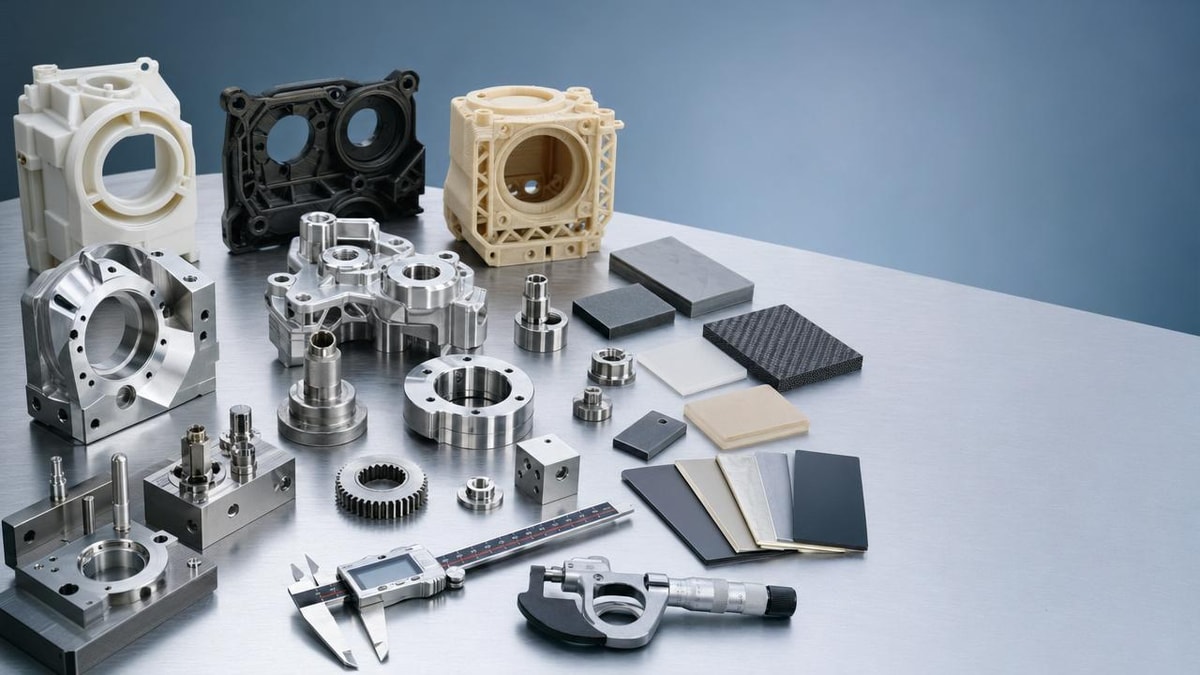
3D Printing Prototyping: Fast Turnaround or Better Finish?
When speed matters, many teams turn to rapid prototyping 3D printing services to validate concepts, test fit, and shorten development cycles. But does faster production always mean compromising surface quality, precision, or end-use performance? For researchers and sourcing professionals, understanding this trade-off is essential to choosing the right prototyping strategy.
In most cases, the answer is no: fast turnaround does not automatically mean poor finish. The better question is whether the chosen process, material, geometry, and post-processing plan match the purpose of the prototype. A concept model for internal review has very different requirements from a customer-facing demo part, a fit-check assembly, or a functional pre-production unit.
For information researchers and procurement-oriented readers, the practical takeaway is clear. You should not compare suppliers only by lead time or only by visual quality. The most reliable decision comes from evaluating prototype intent, acceptable tolerances, cosmetic expectations, and total iteration speed. That is where rapid prototyping 3D printing services create real business value.
What Is the Real Trade-Off: Speed vs. Finish, or Speed vs. Process Fit?
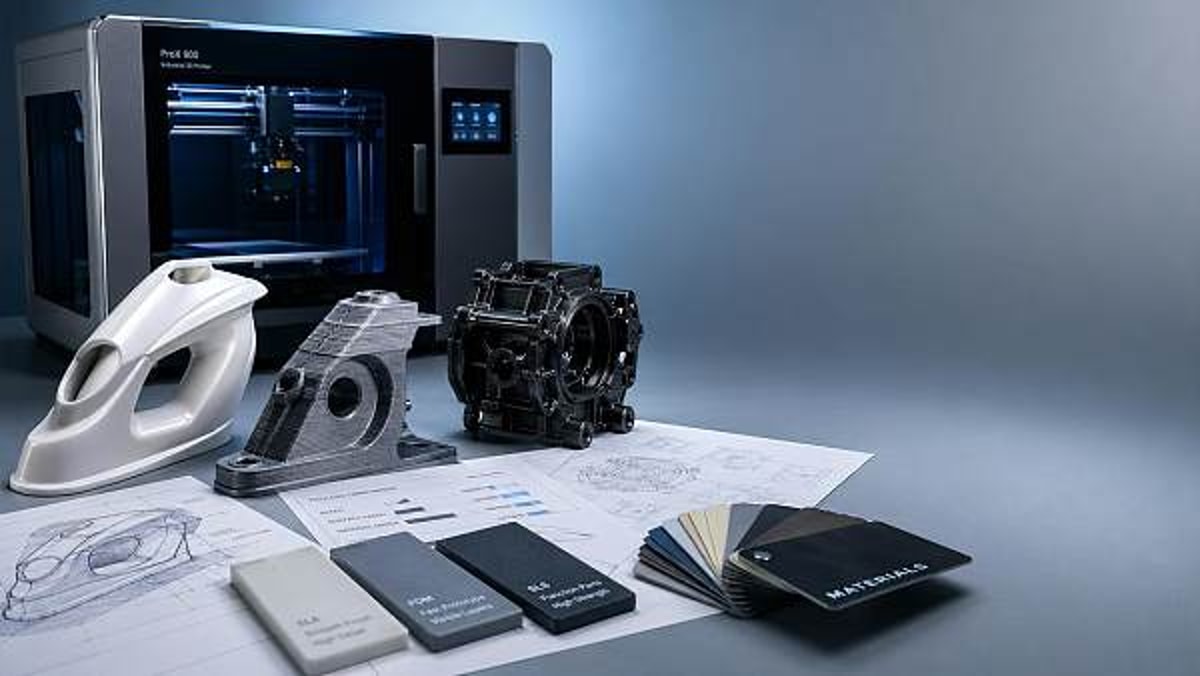
Many buyers frame the decision as a simple trade-off: get the part fast, or wait longer for a better-looking result. In reality, the trade-off is usually between speed and process suitability. Different 3D printing technologies are optimized for different outcomes, and the finish you receive depends less on “3D printing” as a category and more on which method is used.
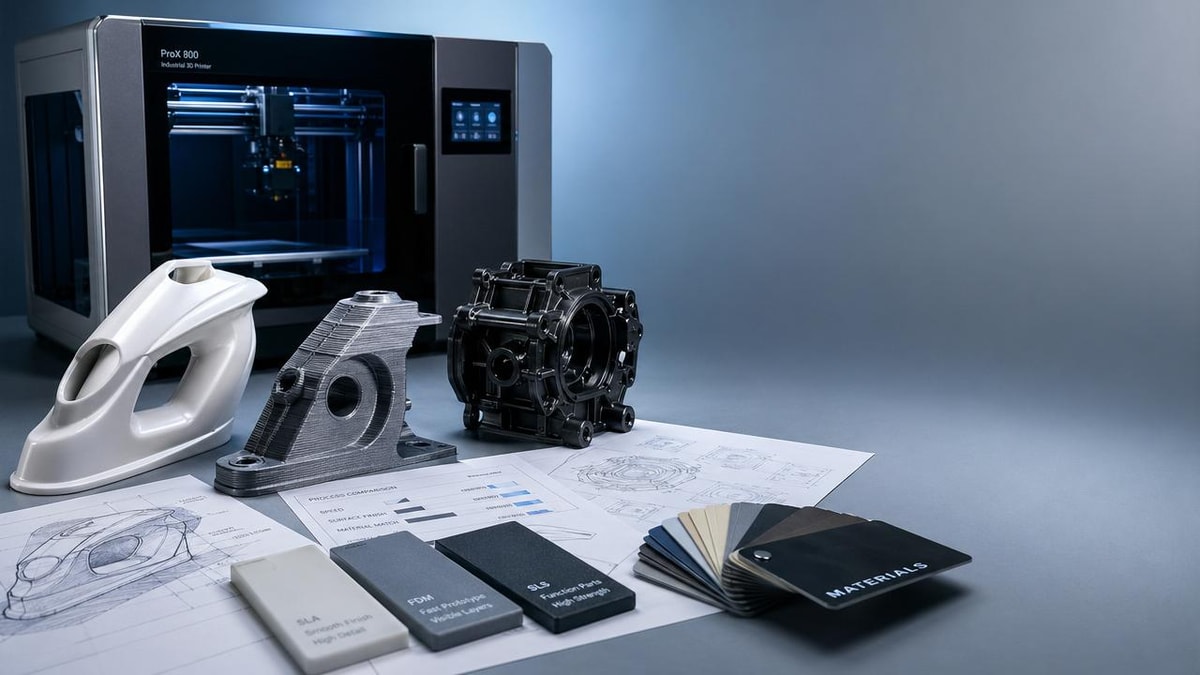
For example, fused deposition modeling, or FDM, often offers low cost and quick access, especially for basic concept validation. However, visible layer lines and anisotropic strength may make it less ideal for executive presentations or fine-detail assemblies. Stereolithography, or SLA, can produce smoother surfaces and sharper detail, but material behavior, curing needs, and handling requirements may increase complexity.
Selective laser sintering, or SLS, often sits in a useful middle ground for functional prototypes. It can support complex geometries without dedicated support structures and often delivers strong, usable parts quickly. Yet its surface texture is usually more matte and grainy than SLA. PolyJet and similar jetting technologies can create impressive finishes and multi-material detail, but they may come with higher costs and different durability considerations.
This means the real sourcing question is not “Do I want fast or good?” It is “What level of finish is actually necessary for the decision this prototype must support?” Once that is defined, the right service and workflow become much easier to identify.
What Information-Focused Buyers Usually Need to Know First
Readers researching rapid prototyping 3D printing services are usually not looking for a generic overview of additive manufacturing. They want to know how to choose intelligently under project pressure. In B2B settings, that often means understanding what affects lead time, what drives visible quality, and what can go wrong if the wrong process is selected.
The first priority is turnaround reliability. A supplier that quotes “fast” but lacks process discipline can create more delay through rework, dimensional issues, or shipment inconsistency than a slightly slower but well-managed vendor. This is especially relevant for procurement teams coordinating engineering, marketing, and manufacturing milestones across regions.
The second priority is fitness for purpose. A sourcing manager does not need the “best” prototype in abstract terms. They need the prototype that resolves uncertainty at the current stage of development. If the goal is ergonomic review, then touch and visual quality may matter most. If the goal is thread testing or enclosure assembly, then dimensional consistency matters more than showroom aesthetics.
The third priority is total iteration efficiency. One overnight prototype that reveals a design flaw can be more valuable than a cosmetically polished part delivered days later. Conversely, if a prototype is intended for investor review, trade show display, or customer pre-approval, poor finish can undermine commercial outcomes even if the geometry is technically correct.
When Fast Turnaround Delivers the Most Value
Fast-turn prototyping creates the greatest value when teams are trying to answer narrow, high-impact questions quickly. In early product development, uncertainty is expensive. Every day spent debating a CAD model instead of testing a physical part can slow downstream tooling, supplier selection, and launch planning.
Concept validation is one of the strongest use cases. Early-stage teams often need to confirm overall form, user interaction, mounting logic, or basic internal packaging. In such cases, high cosmetic fidelity may not improve decision quality. A fast part, even with visible print lines, can move the project forward faster than a delayed “perfect” model.
Fit and assembly checks are another common scenario. Engineers may need to verify snap features, connector clearance, cable routing, or component stacking. Here, dimensional behavior and repeatability matter more than visual refinement. Rapid prototyping 3D printing services are particularly effective when they support short iteration loops and transparent communication on tolerance expectations.
Fast turnaround also helps sourcing and operations teams reduce risk before committing to more expensive steps. A quick prototype can validate supplier assumptions, packaging concepts, service access, or installation sequence before tooling investment or field deployment. That is often where the return on speed becomes most visible in business terms.
When Better Surface Finish Should Take Priority
There are also many situations where finish is not secondary at all. If the prototype will be seen by customers, internal executives, investors, or channel partners, perceived quality can influence decision-making just as much as technical accuracy. A rough surface can distract stakeholders and create the false impression that the design itself is immature.
Marketing mockups and pre-sales demonstration units are a clear example. In these cases, the prototype is not only testing geometry; it is communicating brand confidence. Surface smoothness, color consistency, edge definition, and post-processing quality all shape how the product is judged. Here, a slower but better-finished process may create more value than a same-day output.
Human-contact parts also deserve more finish attention. In healthcare technology, smart electronics, and consumer-adjacent hardware, tactile feel matters. Surface roughness can influence how users perceive comfort, cleanliness, and quality. A process chosen only for speed may produce a part that answers engineering questions but fails user-evaluation goals.
Better finish may also be necessary when prototypes are used as bridge models for downstream manufacturing discussions. If suppliers are reviewing cosmetic standards, mating surfaces, or visible industrial design intent, a smoother prototype often communicates requirements more clearly and reduces interpretation errors.
How 3D Printing Technology Affects Both Speed and Finish
To make a smart comparison among vendors, buyers should understand the practical strengths of the main processes rather than rely on broad claims. Each technology balances throughput, detail, durability, and post-processing differently.
FDM is often the most accessible and economical option for simple prototypes. It can be very effective for large parts, internal-use models, jigs, and quick fit checks. However, layer visibility and support marks are common. It is usually the right choice when speed and low cost matter more than premium aesthetics.
SLA is often preferred for fine detail, smoother surfaces, and presentation-quality geometry. It is useful for compact parts, intricate features, and appearance models. However, buyers should ask about resin type, brittleness, post-curing steps, and finishing workflow. A great-looking part that cracks easily may not serve functional evaluation needs.
SLS is valuable for functional nylon parts, especially where complex geometry and good mechanical performance are needed. It avoids many support-related artifacts and can be efficient for batches. The surface is usually not glossy, but it is often acceptable for engineering validation. For many industrial applications, SLS offers a strong balance between turnaround and usable performance.
Material jetting and similar high-resolution systems can produce excellent visual results and fine features, making them useful for display models and detailed presentations. But cost, material aging, and performance under stress should be checked carefully. The best visual finish is not always the best route for hands-on testing.
What Actually Determines Lead Time Beyond the Printer Itself
Buyers often assume that printer speed determines delivery speed. In reality, turnaround depends on the entire production chain. File review, orientation decisions, support generation, queue management, post-processing, inspection, and shipping can each add time. A sophisticated vendor manages all of these steps, not just the machine time.
Part geometry has a major effect. Thin walls, enclosed channels, tight tolerances, and fragile features may require more cautious setup or cleaning. Large parts can also extend build time and cooling time. If appearance matters, sanding, vapor smoothing, coating, dyeing, or painting can easily add one or more days, depending on complexity.
Material availability matters too. Standard materials may ship quickly, while specialty resins, reinforced polymers, or regulated materials can introduce scheduling constraints. For global sourcing teams, geography also affects the definition of “fast.” A local supplier may deliver in two days, while an overseas supplier with a lower part price may lose that advantage in freight and customs time.
That is why request-for-quote comparisons should separate production time from total received time. A realistic schedule includes print time, finishing time, quality verification, packaging, and logistics. Without that clarity, fast-turn claims can be misleading.
How to Evaluate Rapid Prototyping 3D Printing Services Like a Professional Buyer
For decision-makers comparing vendors, the best approach is to use a purpose-based evaluation framework. Start by stating what the prototype must prove. Is it validating form, fit, function, appearance, or stakeholder confidence? Once that is clear, the service can be judged against the right criteria instead of generic promises.
Ask suppliers to specify the exact process, material, expected tolerance range, surface condition, and post-processing steps. If the project is time-sensitive, ask what timeline is guaranteed and what assumptions that timeline depends on. Strong vendors can explain not just when they can print, but how they control inspection and finishing quality under compressed schedules.
It is also useful to request example photos or prior case references for similar applications. A supplier may be fast for housings but less experienced with threaded assemblies or cosmetic prototypes. Relevant examples reduce ambiguity and help align expectations before ordering.
Communication quality is another important signal. Reliable providers of rapid prototyping 3D printing services often flag design risks early, suggest process alternatives, and explain trade-offs in plain language. That advisory capability matters because the wrong fast prototype can waste more time than it saves.
Questions to Ask Before You Choose Speed or Finish
A few focused questions can prevent common sourcing mistakes. First, who will use or evaluate this prototype? Engineers, buyers, end users, executives, and customers each notice different things. Second, what decision will the part enable? If the answer is unclear, the prototype requirements are probably not defined well enough.
Third, what level of surface quality is acceptable to achieve that goal? Not every project needs painted, polished, or presentation-grade finishing. Fourth, what are the must-hit tolerances and functional interfaces? These details often matter more than broad material claims.
Fifth, what is the cost of one extra iteration versus one extra day? In some programs, iteration speed is more valuable than premium finish. In others, a poor-looking prototype can delay stakeholder approval and create hidden commercial costs. Finally, ask whether one supplier can support multiple prototype stages, from rough concept models to refined demo parts. That continuity can reduce onboarding friction and improve learning across iterations.
A Practical Decision Framework: Which Should You Prioritize?
If your project is in early design, prioritize speed unless visual presentation is central to the next decision. If your prototype is for internal engineering review, assembly verification, or risk reduction, a fast and functionally useful part usually outperforms a slower premium model.
If your part will be shown externally, used in user testing, or assessed for aesthetic approval, prioritize finish or choose a process that balances both. In many cases, the best strategy is phased. Teams first use a quick, lower-cost prototype to validate geometry, then order a refined version once the design stabilizes. This sequence often delivers the best overall speed to decision.
For procurement professionals, this phased approach also improves budget efficiency. Instead of paying for high-end finishing at every iteration, you align spend with project maturity. The result is better resource control, faster learning, and fewer avoidable revisions.
Conclusion: The Best Prototype Is the One That Answers the Right Question Fast Enough
Fast turnaround and better finish are not always opposing goals, but they do compete when project requirements are vague. The most effective use of rapid prototyping 3D printing services comes from matching process, material, and finishing effort to the specific decision the prototype must support.
For information researchers and sourcing professionals, the key insight is simple. Do not buy speed in isolation, and do not pay for finish that the project does not need. Define prototype purpose first, compare vendors by process fit and delivery reliability, and evaluate total iteration value rather than headline lead time alone.
When approached this way, 3D printing prototyping becomes more than a fabrication shortcut. It becomes a strategic decision tool that helps teams reduce uncertainty, align stakeholders, and move from concept to execution with greater confidence.
Get weekly intelligence in your inbox.
No noise. No sponsored content. Pure intelligence.
 May 01, 2026Beijing’s New E-Bike Rules Trigger Dual-Certification Demand for China’s Swappable Battery CabinetsBeijing’s New E-Bike Rules Trigger Dual-Certification Demand for China’s Swappable Battery Cabinets
 May 01, 2026GNA’s GEO Service Assessment Elevates AI Search as Digital Procurement Metric for Chinese ExportersGNA’s GEO Service Assessment Elevates AI Search as Digital Procurement Metric for Chinese Exporters
 May 01, 20262026 China Cycle Expo: Chinese EPS Systems Achieve UL 2849:2026 Full Certification2026 China Cycle Expo: Chinese EPS Systems Achieve UL 2849:2026 Full Certification
 May 01, 2026GB 42236-2026 Enforces EV Charger Efficiency & Overload Protection from May 2026GB 42236-2026 Enforces EV Charger Efficiency & Overload Protection from May 2026
 May 01, 2026GB/T 43790-2026 Drone EMC Standard Effective May 2026GB/T 43790-2026 Drone EMC Standard Effective May 2026
 May 01, 20262026 Foshan Tanzhou Auto Industry Expo Opens2026 Foshan Tanzhou Auto Industry Expo Opens
 May 01, 2026China’s New Hazardous Chemicals Safety Law Takes Effect May 2026China’s New Hazardous Chemicals Safety Law Takes Effect May 2026
 May 01, 2026New Maritime and Fisheries Laws Take Effect May 1, 2026New Maritime and Fisheries Laws Take Effect May 1, 2026
 May 01, 2026Supply Chain Automation Works Best Where Delays RepeatSupply Chain Automation Works Best Where Delays Repeat
 May 01, 2026High Strength Steel Forgings: What Should Be Tested First?High Strength Steel Forgings: What Should Be Tested First?
 May 01, 2026Automotive Steel Forging: Cost Pressure vs Part ReliabilityAutomotive Steel Forging: Cost Pressure vs Part Reliability
 May 01, 2026Why High Durability Steel Forgings Fail Earlier Than ExpectedWhy High Durability Steel Forgings Fail Earlier Than Expected
 May 01, 2026Construction Aluminum Extrusions: Which Finish Lasts Longer?Construction Aluminum Extrusions: Which Finish Lasts Longer?
 May 01, 2026Lightweight Aluminum Extrusions: Where Savings Really HappenLightweight Aluminum Extrusions: Where Savings Really Happen
 May 01, 2026Aerospace Aluminum Extrusions Need More Than Low WeightAerospace Aluminum Extrusions Need More Than Low Weight
 May 01, 2026Precision Lathe Turning Problems That Show Up After AssemblyPrecision Lathe Turning Problems That Show Up After Assembly
 May 01, 2026High Precision Lathe Turning: Tolerance Claims to VerifyHigh Precision Lathe Turning: Tolerance Claims to Verify
 May 01, 2026When CNC Lathe Turning Is Better Than General MachiningWhen CNC Lathe Turning Is Better Than General Machining
 May 01, 2026Medical Device Prototyping Needs More Than SpeedMedical Device Prototyping Needs More Than Speed
 May 01, 20263D Printing Prototyping: Fast Turnaround or Better Finish?3D Printing Prototyping: Fast Turnaround or Better Finish?
 May 01, 2026Low Cost Rapid Prototyping: Where Quality Gets LostLow Cost Rapid Prototyping: Where Quality Gets Lost
 May 01, 2026Quick EV Charger Installation Still Needs Site ChecksQuick EV Charger Installation Still Needs Site Checks
 May 01, 2026Public Parking EV Chargers: What Slows Installation DownPublic Parking EV Chargers: What Slows Installation Down
 May 01, 2026Choosing a Lithium Ion Battery Manufacturer in ChinaChoosing a Lithium Ion Battery Manufacturer in China
 May 01, 2026How to Vet a Lithium Ion Battery OEM SupplierHow to Vet a Lithium Ion Battery OEM Supplier
 May 01, 2026EV Lithium Ion Batteries: Range Is Not the Only MetricEV Lithium Ion Batteries: Range Is Not the Only Metric
 May 01, 2026Lithium Ion ESS Batteries: Safety Details Worth CheckingLithium Ion ESS Batteries: Safety Details Worth Checking