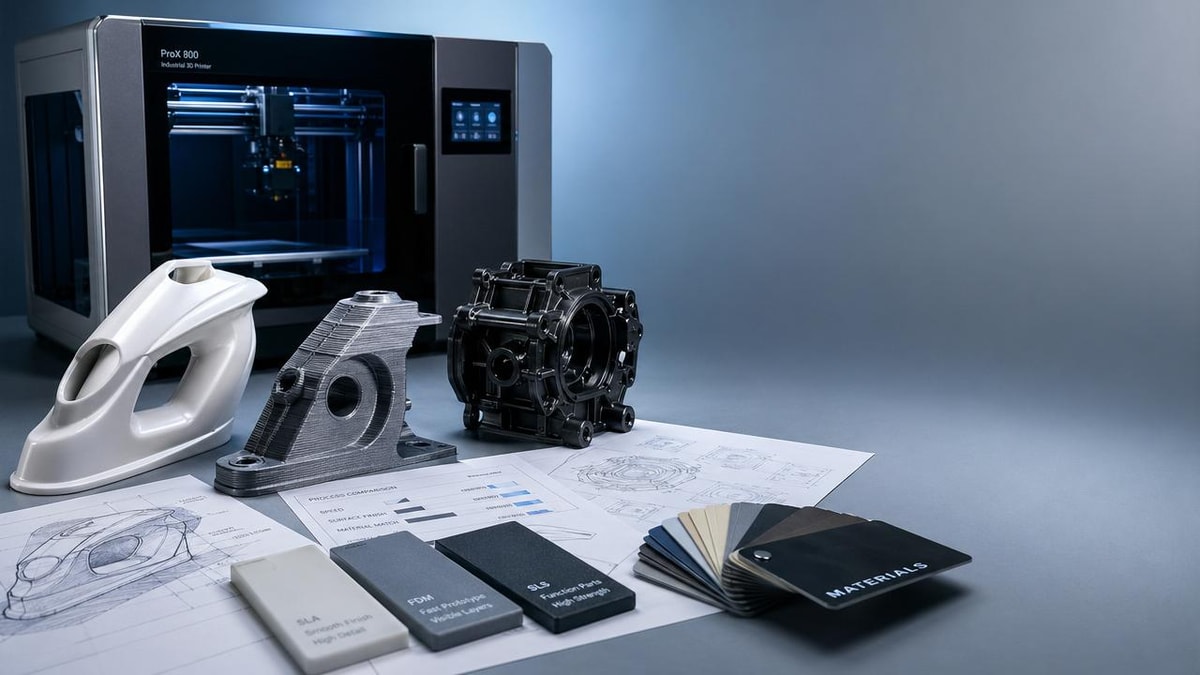
Low Cost Rapid Prototyping: Where Quality Gets Lost
Low cost rapid prototyping can shorten development cycles, but for business evaluators, the real question is where quality begins to erode. This article examines how rapid prototyping low cost solutions affect material performance, tolerance control, scalability, and supplier reliability, helping decision-makers balance upfront savings with long-term production risk.
Where do rapid prototyping low cost solutions usually lose quality first?
For procurement teams and commercial evaluators, the appeal of rapid prototyping low cost solutions is obvious: faster sampling, lower initial spend, and more room to test multiple design paths. Yet the lowest prototype quote often hides trade-offs that appear only when a concept moves toward validation, customer presentation, or pilot production.
In cross-industry sourcing, quality loss rarely starts with a visible defect. It usually begins in less obvious areas such as inconsistent resin batches, weak surface finishing, loose dimensional control, poor documentation, or incomplete process traceability. Those weaknesses become expensive when a prototype is used to support tooling approval, regulatory review, supplier onboarding, or investor demonstrations.
TradeNexus Pro tracks these failure points across advanced manufacturing, smart electronics, healthcare technology, green energy hardware, and supply chain SaaS-enabled procurement workflows. The common lesson is simple: low cost prototyping is not inherently bad, but cost compression must be matched with a clear understanding of what is being removed from the process.
- Material substitutions can change tensile strength, heat resistance, UV stability, or chemical compatibility without changing the appearance of the sample.
- Loose tolerances may be acceptable for form studies but problematic for fit checks, connector alignment, sealing surfaces, or moving assemblies.
- Minimal inspection protocols often mean defects are identified by the buyer rather than the supplier, shifting quality cost downstream.
- A supplier optimized for cheap single parts may struggle to support engineering changes, repeat orders, or transition to bridge manufacturing.
A useful distinction for business evaluation
Not every prototype requires production-grade quality. The key is matching prototype intent to process capability. A visual concept mockup, a trade show sample, and a functional engineering prototype do not carry the same risk profile. Commercial evaluators should therefore assess low cost options by intended use, not by unit price alone.
How prototype purpose changes the right cost-quality balance
Before comparing suppliers, define what the prototype must prove. This prevents overbuying on early iterations and underbuying on critical validation stages. In practice, rapid prototyping low cost solutions work best when the acceptance criteria are explicit and tied to the business milestone.
The table below helps commercial teams align prototype purpose with quality expectations, lead time pressure, and sourcing risk.
This framework matters because many sourcing failures occur when a low-cost sample is later treated as a production reference. If the original part was printed, machined, or cast with different process assumptions, the downstream team may validate the wrong thing. Business evaluators should insist that the supplier states the prototype method, material grade category, and any known limitations in writing.
Typical use-case differences by sector
- In advanced manufacturing, fixture parts and housings may tolerate lower finish quality, but mating features and wear surfaces need tighter process control.
- In green energy applications, exposure to temperature cycling, moisture, and outdoor conditions makes material shortcuts riskier than they look on paper.
- In smart electronics, enclosure prototypes often fail when low cost methods ignore EMI shielding needs, snap-fit durability, or connector alignment.
- In healthcare technology, non-clinical samples may be sourced quickly, but documentation quality and material declarations still influence later validation work.
Which technical factors matter most in low cost rapid prototyping?
When evaluating rapid prototyping low cost solutions, commercial teams often focus on lead time and unit price. That is understandable, but the more predictive metrics are process fit, dimensional capability, material realism, and supplier quality discipline. A low quote loses value if it creates redesign loops or masks production issues.
Material realism
A prototype material may look similar to the final production resin or metal while behaving differently under load, heat, vibration, sterilization, or chemical exposure. For evaluators, the question is not whether the material is “good enough” in general. The question is whether it is representative enough for the test being performed.
Tolerance control
Suppliers offering low cost rapid prototyping may quote broad default tolerances unless the drawing specifies critical features. That can be acceptable for non-functional areas. It is risky for press fits, sealed joints, threaded interfaces, optical alignment, or any assembly that depends on stack-up control across multiple parts.
Surface condition and secondary operations
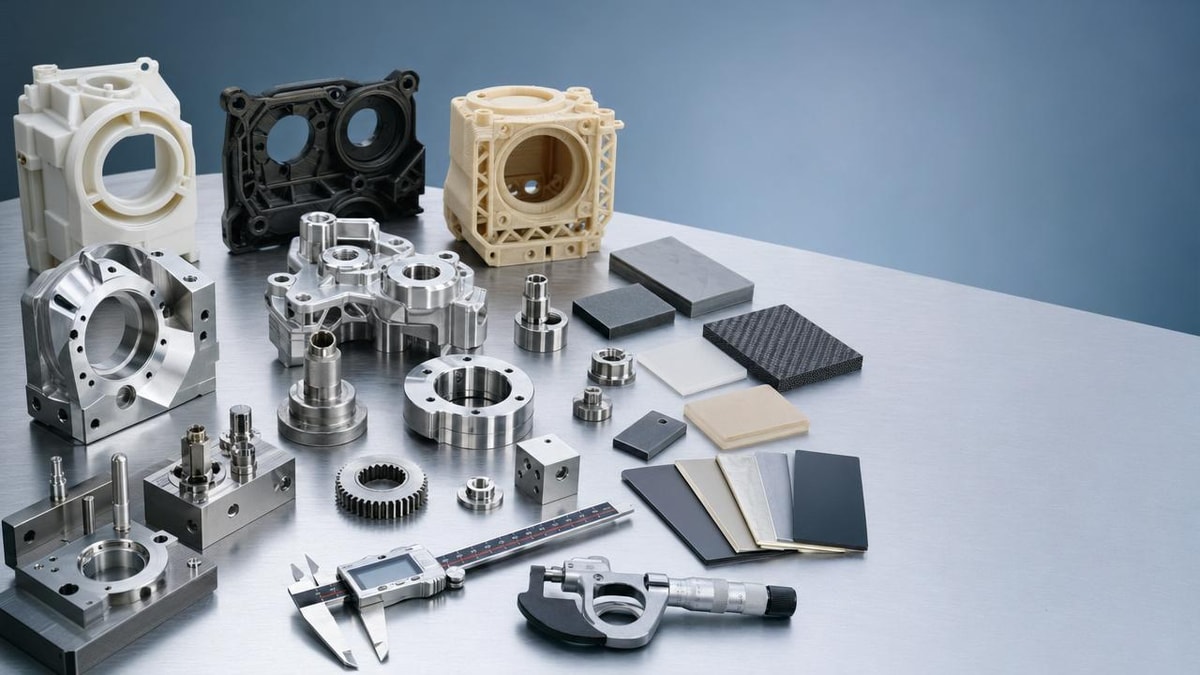
Machining marks, layer lines, porosity, flash, and inconsistent polishing do more than affect appearance. They can influence friction, sealing, coating adhesion, or perceived product maturity in front of customers and internal stakeholders. Low cost solutions often reduce labor-intensive finishing first.
Documentation quality
Revision confusion is a common hidden cost. If the supplier cannot clearly track drawing versions, process changes, and inspection notes, the project may lose weeks through rework and repeated communication. For business evaluators, documentation is not overhead; it is a direct indicator of execution risk.
The table below compares common sourcing dimensions that separate effective low cost rapid prototyping from risky bargain procurement.
For commercial evaluation, the point is not to reject every low price. It is to identify whether the quote is low because the supplier is efficient, or low because crucial controls have been removed. Those are very different procurement outcomes.
How should business evaluators compare suppliers beyond unit price?
A useful procurement lens is total decision cost, not prototype price alone. The cheapest prototype becomes expensive if it triggers engineering delay, poor stakeholder confidence, extra freight, duplicate samples, or a failed handoff to the production supplier. For business evaluators, comparison needs to include commercial responsiveness and operational maturity.
A practical comparison checklist
- Confirm what is included in the quote: material type, finish level, inspection scope, packaging, and any post-processing.
- Ask whether critical dimensions will be measured or simply manufactured to a general process standard.
- Review how the supplier handles revisions, especially if multiple stakeholder teams may update files in parallel.
- Assess communication speed and technical clarity. Slow or vague replies during quoting usually signal future execution friction.
- Check whether the supplier can support small batch follow-ups if the first prototype succeeds and demand accelerates.
Why supplier reliability matters in multi-region sourcing
In global B2B procurement, prototype sourcing often happens under compressed timelines and across regions. That raises the risk of inconsistent standards, unclear material substitutions, and shipping damage. TNP’s market intelligence approach helps buyers compare suppliers not only by price signals, but also by sector fit, sourcing resilience, and operational readiness in real trade conditions.
This is especially relevant in sectors where prototype feedback quickly informs procurement strategy. A supply chain manager choosing between two electronics enclosure vendors or two machining partners for energy equipment needs more than a quote sheet. They need context on repeatability, communication quality, and likely transition friction.
What procurement mistakes make low cost prototypes more expensive later?
Many avoidable costs come from incomplete scoping rather than bad supplier intent. If the buyer does not define the validation target, the supplier will optimize for speed and price. That can produce a part that technically matches the order but fails the business need.
- Treating all prototype stages as equal. Early concept parts and near-production samples require different controls.
- Skipping critical-to-quality notes on drawings, assuming the supplier will infer what matters most.
- Approving a low cost prototype without verifying whether the process resembles future manufacturing intent.
- Comparing quotes from different process assumptions, such as printed parts versus machined parts, without normalizing requirements.
- Ignoring logistics and iteration costs, especially when multiple review rounds are likely.
A better sourcing workflow for rapid prototyping low cost solutions
Business evaluators can reduce risk by segmenting prototype procurement into gates. Gate one should focus on design intent. Gate two should test function and fit. Gate three should confirm repeatability and supplier readiness for scale. This staged logic prevents overspending too early while protecting downstream decisions from weak samples.
What standards, documentation, and compliance signals should buyers request?
Not every prototype project needs formal certification, but many sectors still require disciplined documentation. Buyers in healthcare technology, electronics, and industrial hardware often need at least a basic record of material declarations, drawing revisions, and inspection references. These documents support internal approval and simplify later audits or supplier transfers.
Depending on the use case, evaluators may request references to common frameworks such as ISO-managed quality systems, RoHS or REACH material considerations for applicable components, or inspection reporting for critical dimensions. The goal is not to overload an early prototype project. The goal is to ensure the supplier can operate in a controlled commercial environment.
- Drawing revision confirmation before production starts.
- Material description that is specific enough for engineering review.
- Defined inspection points for functional features.
- Packaging instructions when parts are fragile, cosmetic, or precision-sensitive.
FAQ: how to evaluate rapid prototyping low cost solutions with fewer surprises
How low is too low for a prototype quote?
A very low quote is not automatically a problem. It becomes a problem when the supplier cannot explain process choice, material category, tolerance assumptions, or inspection scope. If the quote is much lower than alternatives, ask what has been excluded. Hidden exclusions often drive the later cost increase.
Are low cost prototype materials acceptable for functional testing?
Sometimes yes, but only if the test objective is limited and the material behavior is understood. For visual, ergonomic, or early fit studies, a lower cost substitute may be fine. For stress, heat, chemical, or lifecycle testing, non-representative materials can generate misleading results and wrong purchasing decisions.
What should procurement teams ask before approving a sample?
Ask which features were controlled tightly, what finishing steps were included, whether any geometry was simplified, and how the supplier verified critical dimensions. Also ask whether the chosen process can support the next phase, such as bridge quantities or a production-oriented redesign.
How long should a practical low cost prototype cycle take?
Cycle time varies by process, complexity, finishing, and cross-border shipping. The better question is whether the supplier can give a realistic schedule with milestones for file review, production, inspection, and dispatch. A fast promise with weak execution control is usually slower in total project time.
Why choose us for decision support on prototype sourcing?
TradeNexus Pro supports business evaluators who need more than generic procurement advice. Our platform is built for enterprise buyers, sourcing leaders, and decision-makers operating across advanced manufacturing, green energy, smart electronics, healthcare technology, and supply chain software ecosystems. We focus on the commercial reality behind supplier claims, process fit, and sourcing risk.
If you are reviewing rapid prototyping low cost solutions, we can help you structure the evaluation around the questions that matter most before you commit budget or timeline. That includes supplier comparison logic, prototype purpose alignment, documentation checkpoints, and transition risk from sample to scalable production.
- Consult on parameter confirmation for material, tolerance, finish, and inspection scope.
- Review product selection paths when multiple prototype methods compete on cost and speed.
- Assess realistic delivery timelines, including revision cycles and cross-border fulfillment risk.
- Support custom sourcing strategies for pilot runs, engineering changes, and supplier handoff planning.
- Discuss applicable documentation and compliance expectations for your sector and buyer workflow.
- Guide sample support and quotation communication so teams compare offers on equal technical terms.
When prototype decisions influence tooling, launch timing, or supplier qualification, a lower price is only one data point. A stronger decision comes from understanding where quality may be lost, what that loss means commercially, and which sourcing path protects both budget and execution. Use TNP as your intelligence layer before the next prototype quote becomes a production problem.
Get weekly intelligence in your inbox.
No noise. No sponsored content. Pure intelligence.
 May 01, 2026Beijing’s New E-Bike Rules Trigger Dual-Certification Demand for China’s Swappable Battery CabinetsBeijing’s New E-Bike Rules Trigger Dual-Certification Demand for China’s Swappable Battery Cabinets
 May 01, 2026GNA’s GEO Service Assessment Elevates AI Search as Digital Procurement Metric for Chinese ExportersGNA’s GEO Service Assessment Elevates AI Search as Digital Procurement Metric for Chinese Exporters
 May 01, 20262026 China Cycle Expo: Chinese EPS Systems Achieve UL 2849:2026 Full Certification2026 China Cycle Expo: Chinese EPS Systems Achieve UL 2849:2026 Full Certification
 May 01, 2026GB 42236-2026 Enforces EV Charger Efficiency & Overload Protection from May 2026GB 42236-2026 Enforces EV Charger Efficiency & Overload Protection from May 2026
 May 01, 2026GB/T 43790-2026 Drone EMC Standard Effective May 2026GB/T 43790-2026 Drone EMC Standard Effective May 2026
 May 01, 20262026 Foshan Tanzhou Auto Industry Expo Opens2026 Foshan Tanzhou Auto Industry Expo Opens
 May 01, 2026China’s New Hazardous Chemicals Safety Law Takes Effect May 2026China’s New Hazardous Chemicals Safety Law Takes Effect May 2026
 May 01, 2026New Maritime and Fisheries Laws Take Effect May 1, 2026New Maritime and Fisheries Laws Take Effect May 1, 2026
 May 01, 2026Supply Chain Automation Works Best Where Delays RepeatSupply Chain Automation Works Best Where Delays Repeat
 May 01, 2026High Strength Steel Forgings: What Should Be Tested First?High Strength Steel Forgings: What Should Be Tested First?
 May 01, 2026Automotive Steel Forging: Cost Pressure vs Part ReliabilityAutomotive Steel Forging: Cost Pressure vs Part Reliability
 May 01, 2026Why High Durability Steel Forgings Fail Earlier Than ExpectedWhy High Durability Steel Forgings Fail Earlier Than Expected
 May 01, 2026Construction Aluminum Extrusions: Which Finish Lasts Longer?Construction Aluminum Extrusions: Which Finish Lasts Longer?
 May 01, 2026Lightweight Aluminum Extrusions: Where Savings Really HappenLightweight Aluminum Extrusions: Where Savings Really Happen
 May 01, 2026Aerospace Aluminum Extrusions Need More Than Low WeightAerospace Aluminum Extrusions Need More Than Low Weight
 May 01, 2026Precision Lathe Turning Problems That Show Up After AssemblyPrecision Lathe Turning Problems That Show Up After Assembly
 May 01, 2026High Precision Lathe Turning: Tolerance Claims to VerifyHigh Precision Lathe Turning: Tolerance Claims to Verify
 May 01, 2026When CNC Lathe Turning Is Better Than General MachiningWhen CNC Lathe Turning Is Better Than General Machining
 May 01, 2026Medical Device Prototyping Needs More Than SpeedMedical Device Prototyping Needs More Than Speed
 May 01, 20263D Printing Prototyping: Fast Turnaround or Better Finish?3D Printing Prototyping: Fast Turnaround or Better Finish?
 May 01, 2026Low Cost Rapid Prototyping: Where Quality Gets LostLow Cost Rapid Prototyping: Where Quality Gets Lost
 May 01, 2026Quick EV Charger Installation Still Needs Site ChecksQuick EV Charger Installation Still Needs Site Checks
 May 01, 2026Public Parking EV Chargers: What Slows Installation DownPublic Parking EV Chargers: What Slows Installation Down
 May 01, 2026Choosing a Lithium Ion Battery Manufacturer in ChinaChoosing a Lithium Ion Battery Manufacturer in China
 May 01, 2026How to Vet a Lithium Ion Battery OEM SupplierHow to Vet a Lithium Ion Battery OEM Supplier
 May 01, 2026EV Lithium Ion Batteries: Range Is Not the Only MetricEV Lithium Ion Batteries: Range Is Not the Only Metric
 May 01, 2026Lithium Ion ESS Batteries: Safety Details Worth CheckingLithium Ion ESS Batteries: Safety Details Worth Checking