High Precision Lathe Turning: Tolerance Claims to Verify
In high-stakes machining, tolerance claims are only as reliable as the methods used to verify them. For quality control and safety teams sourcing lathe turning high precision components, small deviations can lead to major compliance, performance, and risk issues. This article outlines the key tolerance claims to question, the inspection data to request, and the verification standards that matter before approving production or procurement.
Why do tolerance claims for lathe turning high precision components deserve extra scrutiny?
Tolerance statements often look simple on a drawing: a diameter held to a few microns, a concentricity target, or a surface finish requirement. In practice, however, many claims for lathe turning high precision components are influenced by machine condition, tooling wear, material behavior, thermal variation, fixturing strategy, operator method, and inspection discipline. A supplier may be able to hit a number on a first article, but that does not automatically prove stable serial production capability.
For quality and safety personnel, the core issue is not whether a part can be machined once within spec. The real question is whether the process can repeatedly produce compliant parts across batches, shifts, and environmental changes. This matters especially in sectors such as medical devices, precision electronics housings, fluid control systems, rotating assemblies, and safety-critical industrial hardware, where slight dimensional drift can cause vibration, leakage, misalignment, assembly damage, or premature failure.
That is why verification must go beyond a marketing claim like “high precision turning” or “tight tolerance machining.” Procurement teams should ask what tolerance was achieved, on which feature, under what inspection method, over how many samples, and with what evidence of process capability. Without that context, tolerance language may be technically true but commercially misleading.
Which tolerance claims should QC teams question first?
Not all tolerance claims carry the same risk. Some dimensions are straightforward to verify, while others depend heavily on reference datums, instrument accuracy, and setup consistency. When reviewing suppliers of lathe turning high precision components, start with the claims most likely to affect fit, function, and safety.
First, question extremely tight diameter tolerances without supporting process data. A supplier that quotes ±0.002 mm on an external diameter should be able to explain machine capability, in-process compensation, temperature control, and final measurement system. Second, examine runout and concentricity claims carefully. These are often presented confidently but depend on how the part is clamped, what datums are used, and whether measurements reflect actual assembly conditions.
Third, verify cylindricity, roundness, and straightness promises on long or slender parts. Deflection during machining can create hidden geometry issues even when basic diameter readings look acceptable. Fourth, challenge surface finish claims that are disconnected from application. A Ra number alone does not confirm sealing performance, fatigue behavior, coating adhesion, or cleanliness suitability. Finally, review thread, groove, shoulder, and chamfer tolerances on mating features. Small edge-condition errors can trigger downstream assembly hazards or hidden stress concentrations.
What inspection data should you request before approving a supplier?
The most useful answer is not “we inspect everything,” but a structured data package tied to the drawing and control plan. For lathe turning high precision components, quality teams should request first article inspection results, ballooned drawings, gauge lists, calibration records, and evidence of measurement system suitability. If the supplier offers statistical process control, ask for Cp and Cpk values on critical dimensions, not just averages.
A first article inspection should identify each dimension, tolerance, measured result, instrument used, and pass/fail status. For critical-to-quality features, a few passing values are not enough. Ask whether the data came from one setup, one machine, one operator, or multiple production conditions. A trustworthy supplier should be prepared to discuss repeatability and reproducibility, not only final numbers.
Measurement system analysis is another essential checkpoint. If a tolerance band is extremely narrow, the gauge error must be small enough to make the result meaningful. Otherwise, you may be approving or rejecting parts based on measurement noise. For safety-sensitive applications, also request traceability records linking raw material batch, machine route, revision level, and inspection release status.
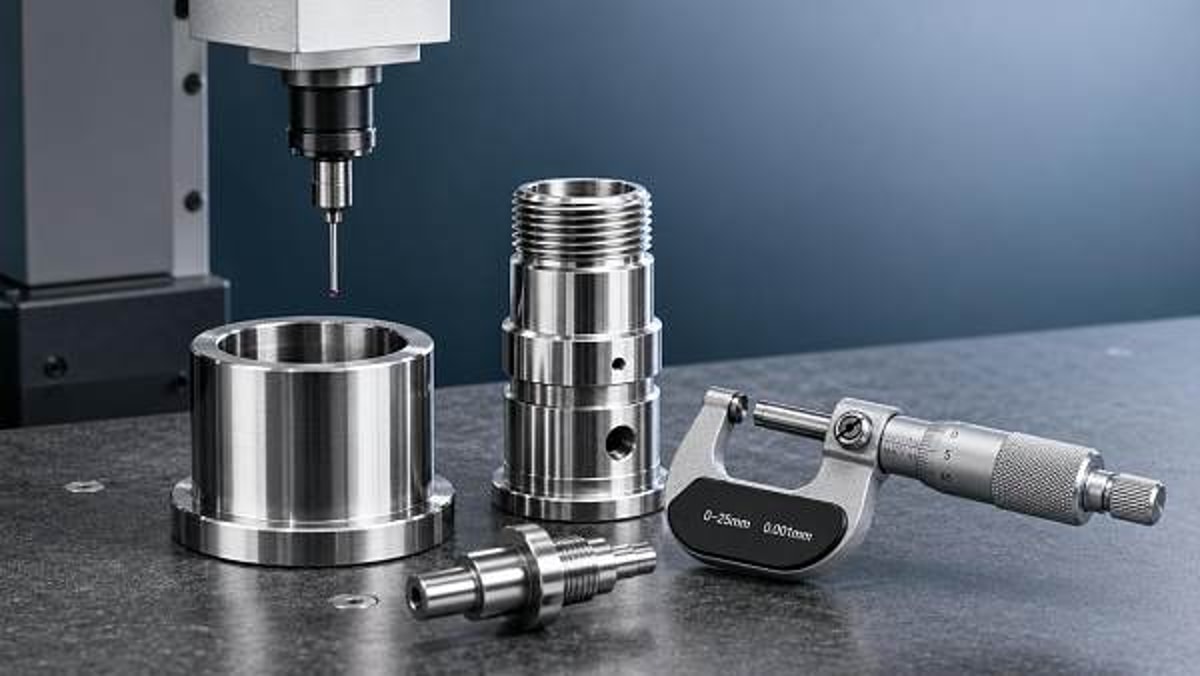
Where possible, ask for data in original format rather than summary claims. A process capability chart, CMM output, profilometer trace, or in-process control log reveals much more than a certificate that simply states compliance. The goal is to verify whether the supplier can sustain dimensional integrity over time, not merely provide acceptable paperwork.
Which standards and verification methods matter most for high precision turning?
The right standards depend on industry and application, but several verification principles apply broadly. Drawings should define dimensions and geometric tolerances clearly, with unambiguous datums and acceptance rules. Inspection methods should align with recognized practices such as GD&T interpretation, calibrated gauge control, and documented sampling logic. If components enter regulated or safety-managed environments, dimensional verification should connect with broader quality systems such as ISO 9001, IATF-oriented controls, or sector-specific traceability expectations.
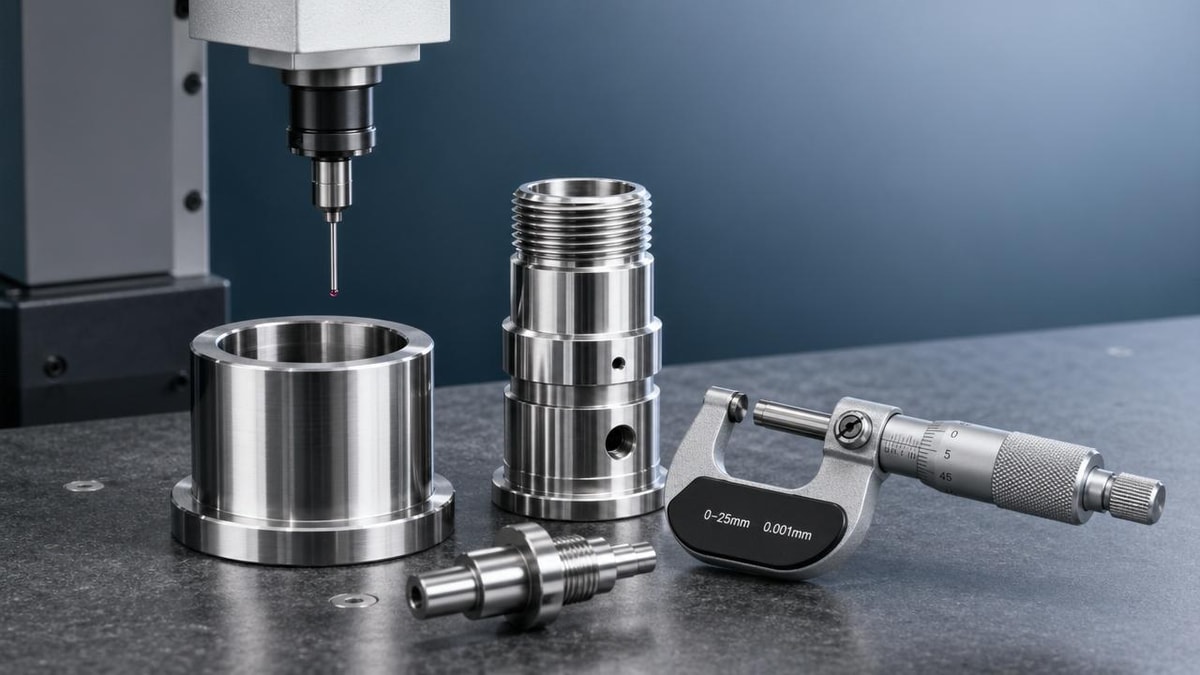
For dimensional checks, micrometers, bore gauges, air gauges, comparators, and CMMs each have different strengths. The method must match the feature. A supplier claiming precision on deep internal bores should explain whether the measurement method truly captures taper, form, and repeatability. Likewise, surface finish should be verified by an appropriate profilometer setup with clear cutoff and evaluation length parameters.
QC teams should also examine environmental control. High precision claims lose value if measurements are taken in uncontrolled temperatures or if parts are checked immediately after machining while still thermally unstable. For many lathe turning high precision components, a valid verification system includes part stabilization, clean handling, trained inspectors, and controlled gauge maintenance. Precision is not only a machine outcome; it is a measurement discipline.
How can you tell whether a supplier’s precision is repeatable rather than occasional?
Repeatability is the dividing line between a capable source and a risky one. Many suppliers can produce good-looking samples, but sustained production requires process control under normal manufacturing pressures. To evaluate repeatability for lathe turning high precision components, ask how tool wear is monitored, how offsets are adjusted, how often first-off and last-off inspections occur, and what actions trigger line holds or corrective response.
Look for signs of a controlled process rather than reactive sorting. A mature supplier will define critical characteristics, in-process check frequency, containment steps, and escalation rules. They should know which dimensions drift fastest and which materials produce the most variation. If they cannot explain common failure modes in turning operations, their tolerance promise may depend too heavily on operator experience rather than robust process engineering.
Another strong indicator is lot-to-lot consistency. Request data from multiple batches if possible, especially when the component will be used in assemblies with strict interchangeability requirements. Repeatability also includes subcontract controls for heat treatment, plating, grinding, or cleaning, because post-turning processes can alter dimensions or surface conditions. A precise turned component is only truly compliant after all relevant process steps are complete.
What are the most common mistakes buyers make when evaluating lathe turning high precision components?
One common mistake is focusing only on the smallest tolerance value in the quote. A supplier may highlight a micron-level capability on one diameter while other functional features receive less control. Another mistake is treating all inspection reports as equally reliable. A neat-looking report does not guarantee suitable instruments, calibrated gauges, or correct datum selection.
Buyers also underestimate the effect of material and geometry. A short brass part and a long stainless shaft do not behave the same in turning, even if the nominal tolerance is identical. Thin walls, interrupted cuts, internal features, and aggressive surface finish requirements all change the risk profile. Safety and quality teams should therefore assess manufacturability together with tolerance demand.
A further mistake is approving production without clarifying what happens when a feature trends toward the limit. Does the supplier have in-process alarms, quarantine procedures, and documented rework restrictions? If not, the organization may discover dimensional nonconformance only after assembly complaints, field issues, or audit findings. In regulated or mission-critical environments, that delay can become a safety problem, not just a quality cost.
How should QC and safety teams balance precision, cost, and lead time?
The goal is not to demand the tightest possible tolerance everywhere. It is to verify the right tolerance on the right feature, supported by a realistic process and a credible inspection plan. Over-specified requirements can increase scrap, inspection burden, setup time, and delivery risk without improving functional safety. Under-specified requirements, however, can create hidden reliability issues. The best approach is feature-based prioritization.
For each critical feature on lathe turning high precision components, define whether it affects sealing, rotation, alignment, electrical contact, pressure containment, or operator safety. Then decide what evidence level is justified: first article only, batch inspection, capability study, or full traceability with retained records. This prevents both overcontrol and dangerous undercontrol.
Lead time discussions should also include inspection readiness. If a supplier promises fast delivery but must outsource critical metrology or lacks fixture validation, schedule risk rises. Procurement should treat measurement capacity as part of manufacturing capacity. In many sourcing decisions, the real bottleneck is not turning time but trustworthy verification time.
What questions should you ask before moving to RFQ, pilot production, or supplier approval?
Before finalizing a source for lathe turning high precision components, quality and safety teams should ask a practical set of questions that reveal whether precision is engineered, measured, and sustained. The answers will often show more than the quote itself.
A strong supplier should answer these points clearly and with evidence. If responses remain vague, rely on phrases like “our machinists are experienced,” or avoid lot-based data, the risk profile is higher than the quotation suggests.
Final takeaway: what should be confirmed first?
When evaluating lathe turning high precision components, the most important shift is to verify capability claims through method, data, and context. Ask not only what tolerance can be achieved, but how it is measured, how often it is sustained, and how deviations are controlled before they affect product safety or downstream quality. For QC and safety teams, the strongest sourcing decisions come from evidence-based review of critical dimensions, inspection systems, process stability, and traceability discipline.
If you need to confirm a specific machining plan, drawing tolerance stack, inspection route, sampling strategy, lead time risk, or supplier qualification path, prioritize discussions around critical features, measurement methods, capability history, environmental controls, and nonconformance response. Those are the questions that turn a precision claim into a decision you can defend.
Get weekly intelligence in your inbox.
No noise. No sponsored content. Pure intelligence.
 May 01, 2026Beijing’s New E-Bike Rules Trigger Dual-Certification Demand for China’s Swappable Battery CabinetsBeijing’s New E-Bike Rules Trigger Dual-Certification Demand for China’s Swappable Battery Cabinets
 May 01, 2026GNA’s GEO Service Assessment Elevates AI Search as Digital Procurement Metric for Chinese ExportersGNA’s GEO Service Assessment Elevates AI Search as Digital Procurement Metric for Chinese Exporters
 May 01, 20262026 China Cycle Expo: Chinese EPS Systems Achieve UL 2849:2026 Full Certification2026 China Cycle Expo: Chinese EPS Systems Achieve UL 2849:2026 Full Certification
 May 01, 2026GB 42236-2026 Enforces EV Charger Efficiency & Overload Protection from May 2026GB 42236-2026 Enforces EV Charger Efficiency & Overload Protection from May 2026
 May 01, 2026GB/T 43790-2026 Drone EMC Standard Effective May 2026GB/T 43790-2026 Drone EMC Standard Effective May 2026
 May 01, 20262026 Foshan Tanzhou Auto Industry Expo Opens2026 Foshan Tanzhou Auto Industry Expo Opens
 May 01, 2026China’s New Hazardous Chemicals Safety Law Takes Effect May 2026China’s New Hazardous Chemicals Safety Law Takes Effect May 2026
 May 01, 2026New Maritime and Fisheries Laws Take Effect May 1, 2026New Maritime and Fisheries Laws Take Effect May 1, 2026
 May 01, 2026Supply Chain Automation Works Best Where Delays RepeatSupply Chain Automation Works Best Where Delays Repeat
 May 01, 2026High Strength Steel Forgings: What Should Be Tested First?High Strength Steel Forgings: What Should Be Tested First?
 May 01, 2026Automotive Steel Forging: Cost Pressure vs Part ReliabilityAutomotive Steel Forging: Cost Pressure vs Part Reliability
 May 01, 2026Why High Durability Steel Forgings Fail Earlier Than ExpectedWhy High Durability Steel Forgings Fail Earlier Than Expected
 May 01, 2026Construction Aluminum Extrusions: Which Finish Lasts Longer?Construction Aluminum Extrusions: Which Finish Lasts Longer?
 May 01, 2026Lightweight Aluminum Extrusions: Where Savings Really HappenLightweight Aluminum Extrusions: Where Savings Really Happen
 May 01, 2026Aerospace Aluminum Extrusions Need More Than Low WeightAerospace Aluminum Extrusions Need More Than Low Weight
 May 01, 2026Precision Lathe Turning Problems That Show Up After AssemblyPrecision Lathe Turning Problems That Show Up After Assembly
 May 01, 2026High Precision Lathe Turning: Tolerance Claims to VerifyHigh Precision Lathe Turning: Tolerance Claims to Verify
 May 01, 2026When CNC Lathe Turning Is Better Than General MachiningWhen CNC Lathe Turning Is Better Than General Machining
 May 01, 2026Medical Device Prototyping Needs More Than SpeedMedical Device Prototyping Needs More Than Speed
 May 01, 20263D Printing Prototyping: Fast Turnaround or Better Finish?3D Printing Prototyping: Fast Turnaround or Better Finish?
 May 01, 2026Low Cost Rapid Prototyping: Where Quality Gets LostLow Cost Rapid Prototyping: Where Quality Gets Lost
 May 01, 2026Quick EV Charger Installation Still Needs Site ChecksQuick EV Charger Installation Still Needs Site Checks
 May 01, 2026Public Parking EV Chargers: What Slows Installation DownPublic Parking EV Chargers: What Slows Installation Down
 May 01, 2026Choosing a Lithium Ion Battery Manufacturer in ChinaChoosing a Lithium Ion Battery Manufacturer in China
 May 01, 2026How to Vet a Lithium Ion Battery OEM SupplierHow to Vet a Lithium Ion Battery OEM Supplier
 May 01, 2026EV Lithium Ion Batteries: Range Is Not the Only MetricEV Lithium Ion Batteries: Range Is Not the Only Metric
 May 01, 2026Lithium Ion ESS Batteries: Safety Details Worth CheckingLithium Ion ESS Batteries: Safety Details Worth Checking