Construction Aluminum Extrusions: Which Finish Lasts Longer?
Choosing the right finish can determine how long construction aluminum extrusions perform under weather, wear, and project-specific demands. For project leaders evaluating aluminum extrusions for construction industry applications, understanding the durability differences between anodizing, powder coating, and other treatments is essential to reducing lifecycle costs, avoiding premature failure, and specifying materials that deliver both structural reliability and long-term visual value.
For most construction projects, the short answer is this: no finish lasts longest in every situation. Hard anodizing and high-quality architectural anodizing usually deliver the best long-term resistance to UV exposure, abrasion, and color stability. Powder coating often performs very well when appearance, color range, and corrosion protection are priorities, especially in urban, commercial, and façade applications. In highly aggressive coastal or industrial environments, the “longest-lasting” solution often depends less on the finish name and more on pretreatment quality, coating class, alloy selection, design detailing, and maintenance planning.
That is the decision framework project managers actually need. The real question is not simply whether anodizing outlasts powder coating. It is which finish will maintain performance, appearance, warranty compliance, and replacement-cycle economics in the exact environment where the aluminum will be installed. For buyers and specifiers sourcing aluminum extrusions for construction industry use, this distinction has direct consequences for project risk, budget control, and long-term owner satisfaction.
What project managers are really asking when they search “which finish lasts longer?”
Behind this search query, most project leaders are trying to reduce uncertainty in specification and procurement. They want to know which finish is least likely to fail early, what will happen in coastal weather, whether visual fading will become a client complaint, and how to balance initial price with maintenance and replacement costs over the building lifecycle.
They are also comparing supplier claims. Many manufacturers promote their preferred finish as the most durable, but project owners need a more practical answer: durable against what, for how long, and under which exposure conditions? A finish that performs well on an inland office façade may underperform on a seaside transit hub, a high-touch handrail system, or a logistics building exposed to chemicals and dirt.
For that reason, the best-performing aluminum extrusions for construction industry projects are not chosen by generic preference. They are chosen by matching finish type to exposure severity, expected service life, aesthetic priorities, cleaning access, and contractual performance requirements.
The main finish options used on construction aluminum extrusions
In commercial and infrastructure projects, four finish categories appear most often: mill finish, anodized finish, powder-coated finish, and occasionally PVDF or liquid paint systems for highly specialized architectural needs. Mill finish is the least protected and is usually unsuitable where long-term appearance or corrosion resistance matters.
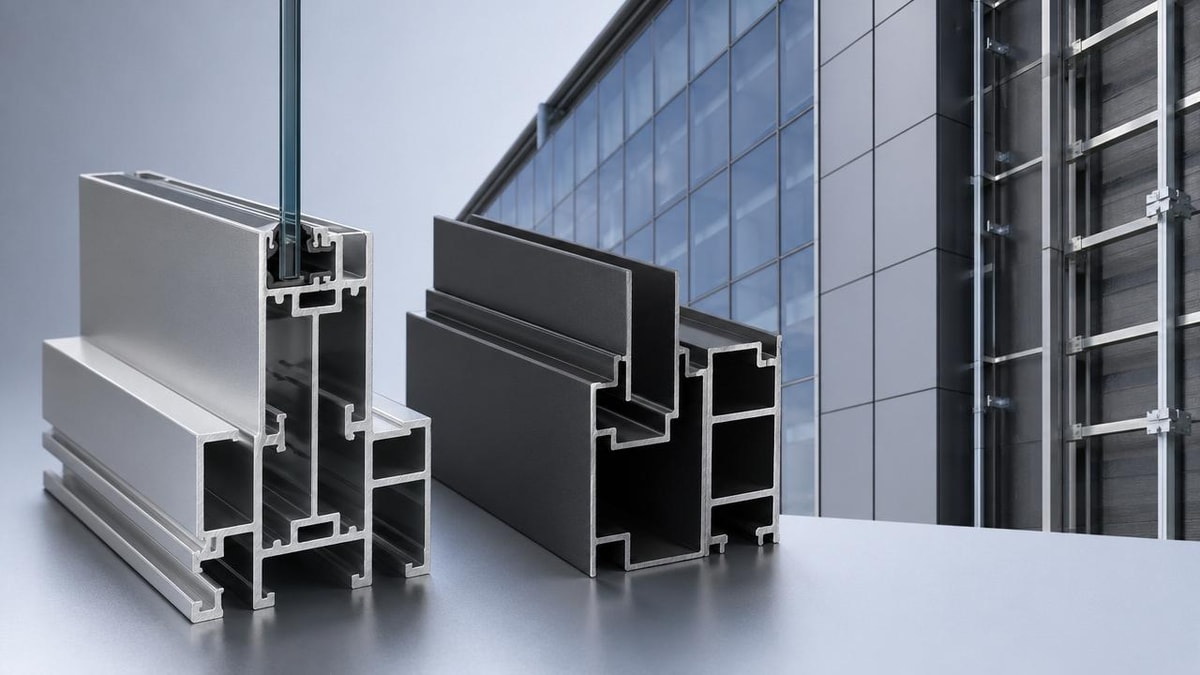
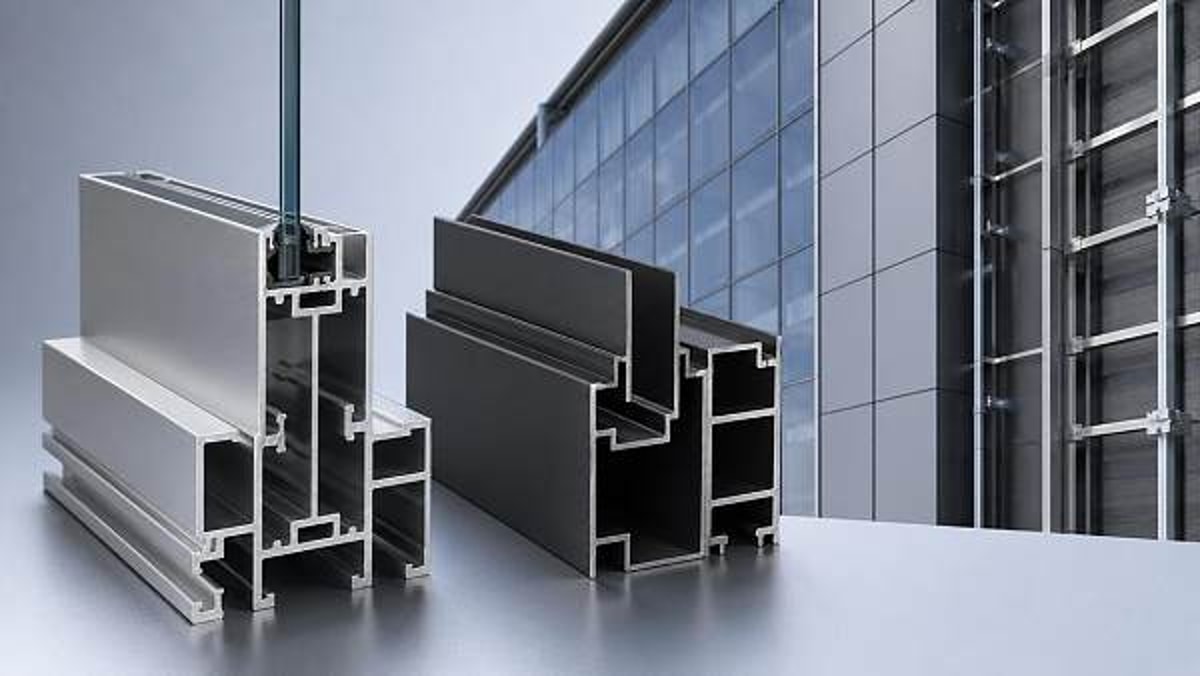
Anodizing is an electrochemical process that thickens the natural oxide layer on aluminum. The result is a finish integrated into the metal surface rather than sitting on top of it like paint. This is one reason anodized surfaces are known for strong wear resistance and good long-term UV stability. They are widely used for curtain walls, window frames, trims, railings, and exterior architectural components.
Powder coating applies a dry coating electrostatically and then cures it under heat. It creates a protective and decorative surface available in a broad range of colors, gloss levels, and textures. Because it offers strong design flexibility and good corrosion resistance when properly specified, powder coating is common in façades, storefronts, cladding systems, louvers, fencing, and visible structural accents.
PVDF and other high-performance liquid coatings can also be relevant, especially in premium façade systems. However, in many mid-market and mainstream construction applications, the most realistic comparison remains anodizing versus powder coating, since these are the finishes most project teams regularly evaluate.
Which finish typically lasts longer in real construction environments?
If “lasting longer” means resistance to sunlight, color degradation, and surface wear, anodizing often has the advantage. Because the finish becomes part of the aluminum surface, it does not peel in the same way an applied coating can. High-quality anodized aluminum can maintain a consistent metallic appearance for many years, particularly in exterior architectural applications with frequent UV exposure.
If “lasting longer” means preserving decorative appearance while also offering broad color choice and barrier protection, powder coating can be equally compelling. Premium architectural-grade powder coating systems can perform very well over long service periods, especially when pretreatment is thorough and the coating is applied at the correct thickness. In many building envelopes, the practical lifespan difference between a top-tier powder-coated system and a standard anodized system may be smaller than buyers assume.
In abrasive, high-contact areas such as handrails, frames in high-traffic public spaces, and components exposed to repeated friction, anodizing often holds up better against scratching and wear. In design-driven commercial projects where brand color consistency matters, powder coating may be preferred, but the specification must account for possible chalking, fading, or coating damage over time if the product quality is inconsistent.
So, which finish lasts longer? In a strictly mechanical and UV-stability sense, anodizing often leads. In a balanced real-world construction sense, the longer-lasting finish is the one correctly matched to environment and delivered by a qualified finisher under recognized architectural standards.
Environment matters more than most finish comparisons admit
Project managers should be cautious about any durability claim made without reference to project location. Exposure environment is usually the biggest predictor of finish lifespan. Coastal projects face salt-laden air, which accelerates corrosion and exposes weak pretreatment processes. Industrial sites may involve airborne pollutants or chemical exposure. Dense urban areas add dirt retention and cleaning challenges. Dry inland climates may be less corrosive but can still subject finishes to intense UV radiation and thermal cycling.
For coastal applications, both anodizing and powder coating can succeed, but only if specified at the right performance class and maintained properly. Thin or poorly processed finishes are far more likely to fail than robust systems chosen specifically for marine exposure. In practice, coastal durability often depends on details such as sealing quality for anodized surfaces or pretreatment and edge coverage for powder-coated surfaces.
Orientation and design also matter. Horizontal surfaces that trap water and debris usually degrade faster than vertical surfaces with good runoff. Hidden crevices, unventilated joints, and contact with incompatible metals can reduce effective service life regardless of finish type. This is why experienced specifiers evaluate finish performance together with drainage, detailing, and assembly design rather than as an isolated product choice.
Anodizing: where it performs best and where it may not
Anodizing is often the strongest option when a project requires long-term metallic appearance, excellent hardness, and strong resistance to ultraviolet degradation. It is particularly suitable for window systems, curtain wall framing, architectural trims, canopies, and visible structural elements expected to maintain a clean, premium look over time.
Another advantage is that anodized surfaces do not suffer from peeling in the conventional sense. For owners concerned about aging aesthetics, that can reduce visible coating-related complaints over the lifecycle. The finish is also valued where touchpoints or cleaning frequency could wear down softer surface systems.
However, anodizing has limits. Color choices are narrower than powder coating, and exact shade consistency across batches can require close control. Repairing damaged anodized surfaces in the field is also more difficult than repainting or refinishing some coated systems. In some highly corrosive settings, poor anodizing quality or inadequate thickness will still lead to disappointing results. Project teams should not assume that any anodized finish is automatically high performance; finish class, thickness, and processor capability matter greatly.
Powder coating: where it adds value and where risk increases
Powder coating is often the preferred choice when aesthetics are central to the project. It allows architects and owners to specify exact colors, textures, and gloss levels while still achieving strong exterior durability. For commercial façades, retail developments, office buildings, public facilities, and branded environments, this flexibility can be a major advantage.
High-quality powder-coated aluminum extrusions for construction industry use can provide long service life and very good corrosion resistance. Modern architectural powder systems have improved significantly, and when sourced from certified applicators using proper pretreatment, they can meet demanding project requirements. This makes powder coating especially attractive where appearance and protective function must work together.
The risk lies in variation. Powder coating performance is highly dependent on substrate preparation, pretreatment chemistry, curing control, film thickness, and application consistency. A low-cost supplier can offer a finish that looks good at delivery but fails prematurely in the field through chalking, blistering, fading, or edge corrosion. For project managers, this means powder coating should never be evaluated on color sample appearance alone.
The factors that often decide lifespan more than finish type itself
Many failures blamed on “the wrong finish” are actually caused by weak upstream decisions. Alloy selection matters because some aluminum grades respond differently to finishing and environmental stress. Surface preparation matters because contaminants or inconsistent pretreatment reduce coating adhesion and corrosion resistance. Fabrication sequence matters because drilling, cutting, or joining after finishing can expose vulnerable areas.
Supplier quality systems also play a major role. Project teams should ask whether the finisher follows recognized architectural standards, what testing is performed, how batch consistency is documented, and whether the supplier has project references in similar climates. A finish with a strong laboratory profile but weak production control may underperform quickly.
Installation practice is another overlooked issue. Damage during transport, site handling, storage in wet packaging, or contact with dissimilar metals can trigger staining or corrosion before the building is even commissioned. In other words, durability is a chain, and the finish is only one link.
How to compare lifecycle cost instead of just purchase price
For project managers, the better procurement question is not “Which finish is cheapest today?” but “Which finish creates the lowest total cost over the intended service life?” A lower upfront price may look attractive during tender evaluation, yet become expensive if the finish fades early, requires frequent cleaning, leads to warranty disputes, or forces panel replacement in occupied buildings.
Lifecycle cost should include expected service duration, maintenance interval, access cost for cleaning or replacement, visual aging risk, and the consequences of failure in high-visibility areas. On a mid-rise commercial façade, replacing visibly degraded extrusions can involve access equipment, tenant disruption, and reputational damage far exceeding the original finish cost difference.
This is why many sophisticated buyers of aluminum extrusions for construction industry projects use a cost-of-service model. They compare finish systems not only by unit cost, but by annualized value across the building lifecycle. In many cases, paying more for a better-qualified finish process produces the strongest economic outcome.
A practical specification checklist for construction decision-makers
To make a defensible finish decision, start with the service environment. Is the project inland, coastal, industrial, high-UV, high-touch, or exposed to deicing salts or pollutants? Next, define the owner’s priority: longest visual retention, best abrasion resistance, strict brand color, minimum maintenance, or the lowest long-term replacement risk.
Then review finish performance requirements in measurable terms. Ask for coating or anodizing class, thickness range, pretreatment standard, corrosion testing data, color retention benchmarks, warranty terms, and case references from comparable projects. If a supplier cannot provide this information clearly, the project team is assuming unnecessary risk.
Also confirm how the finish interacts with design details. Will the profiles trap water? Are there cut edges or concealed connections that need added protection? Is cleaning access realistic over the building’s service life? These practical questions often reveal whether a finish choice is truly suitable beyond the sample board.
So which finish should you choose?
If your project prioritizes maximum hardness, UV stability, metallic appearance, and long-term resistance to wear, anodizing is often the safer choice. It is especially strong for exterior architectural systems that must look consistent over time and withstand frequent handling or abrasive cleaning.
If your project prioritizes color flexibility, visual customization, and strong all-around exterior performance, premium powder coating is often the better fit. It can deliver excellent durability, but only when the applicator, pretreatment, and specification level are strong enough for the site conditions.
For project managers, the most reliable answer is this: choose anodizing when durability against wear and sun exposure is the leading concern; choose powder coating when design flexibility and protective appearance are both central; and in either case, qualify the supplier as rigorously as the finish itself. The wrong supplier can make the “best” finish fail early, while the right process can make either system perform impressively well.
Conclusion: the longest-lasting finish is the one matched to risk, not marketing
When evaluating construction aluminum extrusions, there is no universal winner detached from context. Anodizing often offers the strongest long-term resistance to abrasion and UV-related aging. Powder coating offers outstanding visual versatility and can also achieve excellent durability when specified and applied to architectural standards.
For teams sourcing aluminum extrusions for construction industry projects, the most valuable decision is not simply selecting a finish category. It is aligning finish type, environmental exposure, supplier quality, design detailing, and lifecycle expectations into one coordinated specification. That approach reduces rework, protects project budgets, and delivers the long-term performance owners actually care about.
In short, if you want the finish that lasts longer, start by defining what “lasts” means on your project: appearance, corrosion resistance, abrasion performance, warranty confidence, or total cost of ownership. Once that is clear, the right finish decision becomes far easier—and far more defensible.
Get weekly intelligence in your inbox.
No noise. No sponsored content. Pure intelligence.
 May 01, 2026Beijing’s New E-Bike Rules Trigger Dual-Certification Demand for China’s Swappable Battery CabinetsBeijing’s New E-Bike Rules Trigger Dual-Certification Demand for China’s Swappable Battery Cabinets
 May 01, 2026GNA’s GEO Service Assessment Elevates AI Search as Digital Procurement Metric for Chinese ExportersGNA’s GEO Service Assessment Elevates AI Search as Digital Procurement Metric for Chinese Exporters
 May 01, 20262026 China Cycle Expo: Chinese EPS Systems Achieve UL 2849:2026 Full Certification2026 China Cycle Expo: Chinese EPS Systems Achieve UL 2849:2026 Full Certification
 May 01, 2026GB 42236-2026 Enforces EV Charger Efficiency & Overload Protection from May 2026GB 42236-2026 Enforces EV Charger Efficiency & Overload Protection from May 2026
 May 01, 2026GB/T 43790-2026 Drone EMC Standard Effective May 2026GB/T 43790-2026 Drone EMC Standard Effective May 2026
 May 01, 20262026 Foshan Tanzhou Auto Industry Expo Opens2026 Foshan Tanzhou Auto Industry Expo Opens
 May 01, 2026China’s New Hazardous Chemicals Safety Law Takes Effect May 2026China’s New Hazardous Chemicals Safety Law Takes Effect May 2026
 May 01, 2026New Maritime and Fisheries Laws Take Effect May 1, 2026New Maritime and Fisheries Laws Take Effect May 1, 2026
 May 01, 2026Supply Chain Automation Works Best Where Delays RepeatSupply Chain Automation Works Best Where Delays Repeat
 May 01, 2026High Strength Steel Forgings: What Should Be Tested First?High Strength Steel Forgings: What Should Be Tested First?
 May 01, 2026Automotive Steel Forging: Cost Pressure vs Part ReliabilityAutomotive Steel Forging: Cost Pressure vs Part Reliability
 May 01, 2026Why High Durability Steel Forgings Fail Earlier Than ExpectedWhy High Durability Steel Forgings Fail Earlier Than Expected
 May 01, 2026Construction Aluminum Extrusions: Which Finish Lasts Longer?Construction Aluminum Extrusions: Which Finish Lasts Longer?
 May 01, 2026Lightweight Aluminum Extrusions: Where Savings Really HappenLightweight Aluminum Extrusions: Where Savings Really Happen
 May 01, 2026Aerospace Aluminum Extrusions Need More Than Low WeightAerospace Aluminum Extrusions Need More Than Low Weight
 May 01, 2026Precision Lathe Turning Problems That Show Up After AssemblyPrecision Lathe Turning Problems That Show Up After Assembly
 May 01, 2026High Precision Lathe Turning: Tolerance Claims to VerifyHigh Precision Lathe Turning: Tolerance Claims to Verify
 May 01, 2026When CNC Lathe Turning Is Better Than General MachiningWhen CNC Lathe Turning Is Better Than General Machining
 May 01, 2026Medical Device Prototyping Needs More Than SpeedMedical Device Prototyping Needs More Than Speed
 May 01, 20263D Printing Prototyping: Fast Turnaround or Better Finish?3D Printing Prototyping: Fast Turnaround or Better Finish?
 May 01, 2026Low Cost Rapid Prototyping: Where Quality Gets LostLow Cost Rapid Prototyping: Where Quality Gets Lost
 May 01, 2026Quick EV Charger Installation Still Needs Site ChecksQuick EV Charger Installation Still Needs Site Checks
 May 01, 2026Public Parking EV Chargers: What Slows Installation DownPublic Parking EV Chargers: What Slows Installation Down
 May 01, 2026Choosing a Lithium Ion Battery Manufacturer in ChinaChoosing a Lithium Ion Battery Manufacturer in China
 May 01, 2026How to Vet a Lithium Ion Battery OEM SupplierHow to Vet a Lithium Ion Battery OEM Supplier
 May 01, 2026EV Lithium Ion Batteries: Range Is Not the Only MetricEV Lithium Ion Batteries: Range Is Not the Only Metric
 May 01, 2026Lithium Ion ESS Batteries: Safety Details Worth CheckingLithium Ion ESS Batteries: Safety Details Worth Checking