2026 China Cycle Expo: Chinese EPS Systems Achieve UL 2849:2026 Full Certification
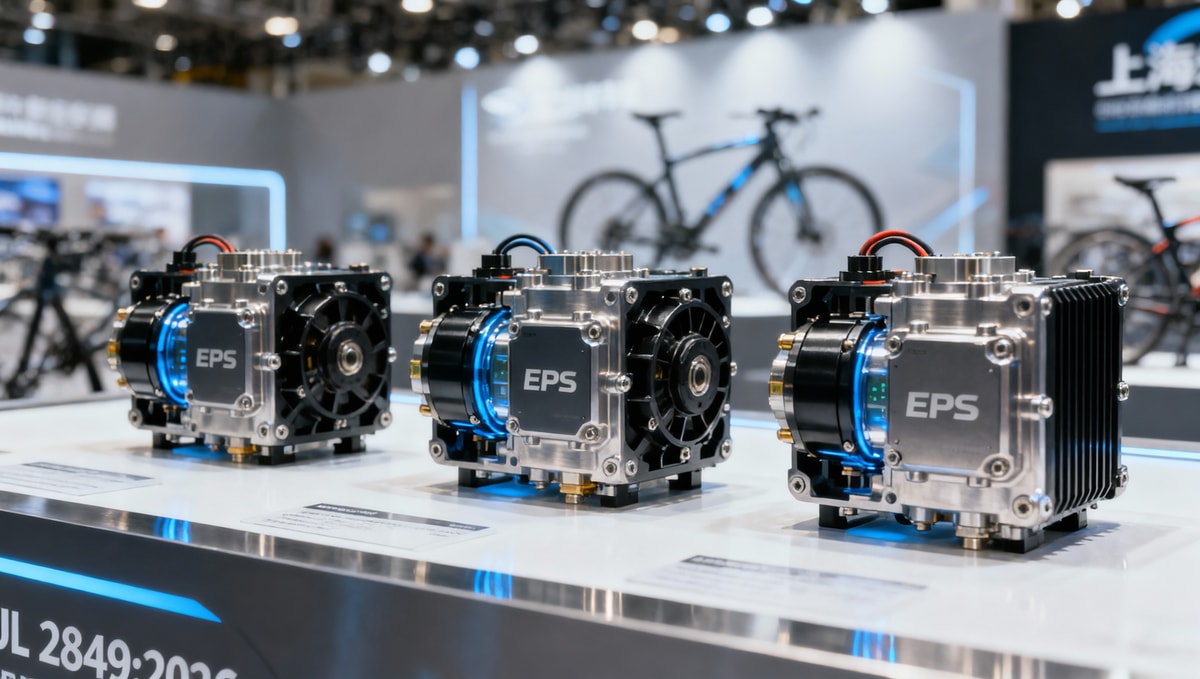
On May 5, 2026, the China International Bicycle Exhibition opens in Shanghai — marking the first public disclosure that three leading Chinese electric power assist (EPS) system suppliers have achieved full certification to UL 2849:2026, including motor thermal runaway protection, torque sensor redundancy design, and OTA upgrade security protocols. This development is especially relevant for exporters targeting North American premium e-bike markets, cross-category microgrid integrators (e.g., solar PV + storage + EPS), and EV infrastructure solution providers.
Event Overview
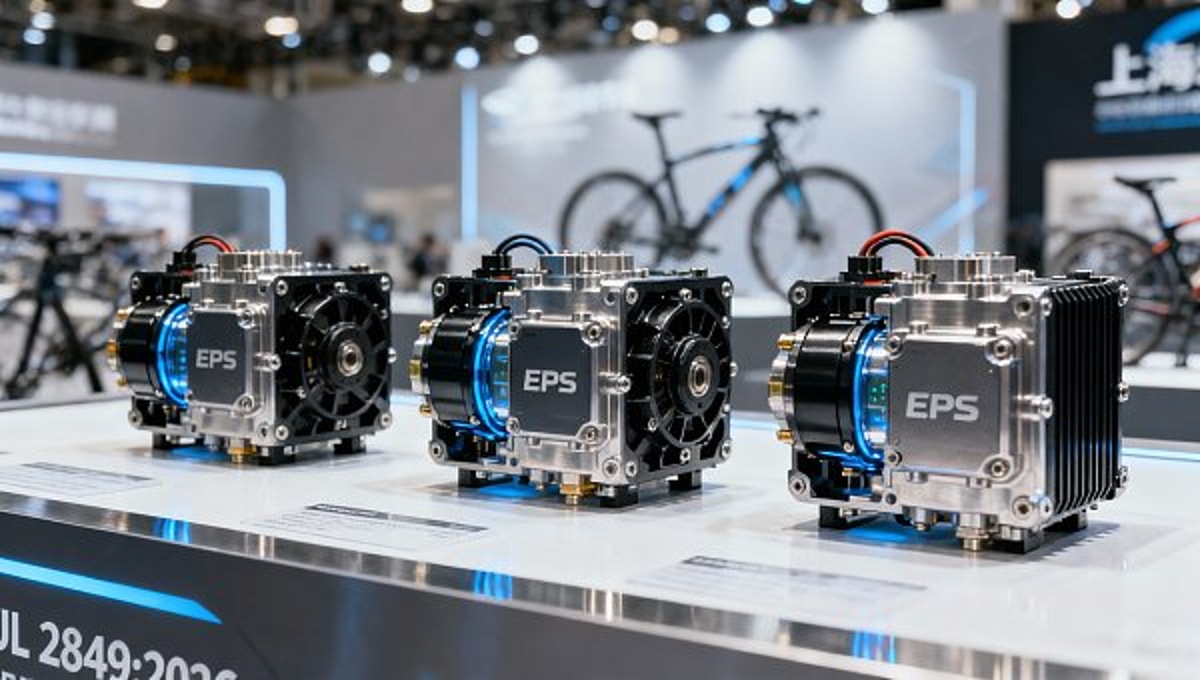
The 2026 China International Bicycle Exhibition will open on May 5, 2026, in Shanghai. At the event, it was confirmed that three Chinese head-tier EPS system suppliers have passed full-scope certification against UL 2849:2026 — covering motor thermal runaway protection, torque sensor redundancy design, and OTA upgrade security protocols. UL 2849:2026 is a mandatory safety requirement for high-end e-bike complete units imported into North America. This achievement positions these suppliers as among the first globally to meet the updated standard in its entirety.
Industries Affected
Direct Exporters to North America
These exporters face reduced technical barriers for EPS module integration into UL-compliant e-bike assemblies. Since UL 2849:2026 compliance is required at the complete-unit level, certified EPS modules lower downstream validation effort for importers — particularly those supplying brands such as Shimano or Bosch.
Manufacturers of Integrated Energy Solutions
Firms developing hybrid systems — e.g., solar PV + battery storage + EPS microgrids — may now leverage certified EPS modules as pre-validated subsystems. This supports faster system-level safety documentation and accelerates export readiness for off-grid mobility applications.
EV Charging & Infrastructure Suppliers
For vendors bundling EPS with EV-related infrastructure (e.g., shared-mobility hubs, last-mile charging nodes), UL 2849:2026 alignment strengthens interoperability claims and reduces third-party testing scope when entering regulated markets.
What Relevant Enterprises or Practitioners Should Monitor and Do Now
Track official UL and CPSC updates on enforcement timelines
UL 2849:2026 is newly published; actual enforcement dates for imports into the U.S. remain subject to CPSC guidance. Companies should monitor official announcements rather than assume immediate applicability.
Verify certification scope per supplier — not just pass/fail status
Full certification includes specific test criteria (e.g., thermal runaway under sustained load, dual-sensor fault tolerance). Buyers should request test reports — not only certificates — to confirm coverage matches intended application use cases.
Assess impact on existing supply chain validation cycles
Shimano, Bosch, and other Tier-1 OEMs often require internal revalidation even after UL certification. Suppliers should proactively engage with downstream partners to clarify whether UL 2849:2026 certification shortens — but does not eliminate — their qualification timelines.
Prepare documentation for integrated system submissions
Firms combining EPS with energy storage or photovoltaics should begin aligning labeling, firmware update logs, and thermal test records with UL 2849:2026’s traceability and cybersecurity annexes — ahead of formal system-level certification requests.
Editorial Perspective / Industry Observation
Observably, this milestone reflects progress in harmonizing Chinese component-level safety rigor with evolving North American regulatory expectations — but it is not yet a de facto market access license. Analysis shows the certification is a necessary, not sufficient, condition for entry: final acceptance depends on how OEMs and importers operationalize it within their own quality gates. From an industry perspective, the real signal lies not in the certification itself, but in the narrowing gap between Chinese EPS design maturity and global safety architecture requirements — particularly around functional safety and secure software updates.
Current observation suggests this is primarily a procedural signal — one that enables faster downstream engagement, not automatic approval. Continued attention is warranted as UL and CPSC clarify implementation pathways, and as Tier-1 OEMs disclose how they weight UL 2849:2026 in sourcing decisions.
In summary, the UL 2849:2026 full certification by three Chinese EPS suppliers marks a tangible step toward greater technical alignment with North American safety standards — particularly for modular components used in e-bikes and integrated mobility-energy systems. It does not replace OEM validation, nor does it guarantee tariff or customs clearance advantages. Instead, it lowers one layer of technical friction in cross-border supply chains — a development best understood as an enabler, not a threshold crossed.
Source: Official disclosures from the 2026 China International Bicycle Exhibition (May 5, 2026, Shanghai); UL Standards documentation for UL 2849:2026 (published Q1 2026). Note: Enforcement timelines and OEM adoption policies remain under observation and are not yet publicly confirmed.
Get weekly intelligence in your inbox.
No noise. No sponsored content. Pure intelligence.
 May 01, 2026Beijing’s New E-Bike Rules Trigger Dual-Certification Demand for China’s Swappable Battery CabinetsBeijing’s New E-Bike Rules Trigger Dual-Certification Demand for China’s Swappable Battery Cabinets
 May 01, 2026GNA’s GEO Service Assessment Elevates AI Search as Digital Procurement Metric for Chinese ExportersGNA’s GEO Service Assessment Elevates AI Search as Digital Procurement Metric for Chinese Exporters
 May 01, 20262026 China Cycle Expo: Chinese EPS Systems Achieve UL 2849:2026 Full Certification2026 China Cycle Expo: Chinese EPS Systems Achieve UL 2849:2026 Full Certification
 May 01, 2026GB 42236-2026 Enforces EV Charger Efficiency & Overload Protection from May 2026GB 42236-2026 Enforces EV Charger Efficiency & Overload Protection from May 2026
 May 01, 2026GB/T 43790-2026 Drone EMC Standard Effective May 2026GB/T 43790-2026 Drone EMC Standard Effective May 2026
 May 01, 20262026 Foshan Tanzhou Auto Industry Expo Opens2026 Foshan Tanzhou Auto Industry Expo Opens
 May 01, 2026China’s New Hazardous Chemicals Safety Law Takes Effect May 2026China’s New Hazardous Chemicals Safety Law Takes Effect May 2026
 May 01, 2026New Maritime and Fisheries Laws Take Effect May 1, 2026New Maritime and Fisheries Laws Take Effect May 1, 2026
 May 01, 2026Supply Chain Automation Works Best Where Delays RepeatSupply Chain Automation Works Best Where Delays Repeat
 May 01, 2026High Strength Steel Forgings: What Should Be Tested First?High Strength Steel Forgings: What Should Be Tested First?
 May 01, 2026Automotive Steel Forging: Cost Pressure vs Part ReliabilityAutomotive Steel Forging: Cost Pressure vs Part Reliability
 May 01, 2026Why High Durability Steel Forgings Fail Earlier Than ExpectedWhy High Durability Steel Forgings Fail Earlier Than Expected
 May 01, 2026Construction Aluminum Extrusions: Which Finish Lasts Longer?Construction Aluminum Extrusions: Which Finish Lasts Longer?
 May 01, 2026Lightweight Aluminum Extrusions: Where Savings Really HappenLightweight Aluminum Extrusions: Where Savings Really Happen
 May 01, 2026Aerospace Aluminum Extrusions Need More Than Low WeightAerospace Aluminum Extrusions Need More Than Low Weight
 May 01, 2026Precision Lathe Turning Problems That Show Up After AssemblyPrecision Lathe Turning Problems That Show Up After Assembly
 May 01, 2026High Precision Lathe Turning: Tolerance Claims to VerifyHigh Precision Lathe Turning: Tolerance Claims to Verify
 May 01, 2026When CNC Lathe Turning Is Better Than General MachiningWhen CNC Lathe Turning Is Better Than General Machining
 May 01, 2026Medical Device Prototyping Needs More Than SpeedMedical Device Prototyping Needs More Than Speed
 May 01, 20263D Printing Prototyping: Fast Turnaround or Better Finish?3D Printing Prototyping: Fast Turnaround or Better Finish?
 May 01, 2026Low Cost Rapid Prototyping: Where Quality Gets LostLow Cost Rapid Prototyping: Where Quality Gets Lost
 May 01, 2026Quick EV Charger Installation Still Needs Site ChecksQuick EV Charger Installation Still Needs Site Checks
 May 01, 2026Public Parking EV Chargers: What Slows Installation DownPublic Parking EV Chargers: What Slows Installation Down
 May 01, 2026Choosing a Lithium Ion Battery Manufacturer in ChinaChoosing a Lithium Ion Battery Manufacturer in China
 May 01, 2026How to Vet a Lithium Ion Battery OEM SupplierHow to Vet a Lithium Ion Battery OEM Supplier
 May 01, 2026EV Lithium Ion Batteries: Range Is Not the Only MetricEV Lithium Ion Batteries: Range Is Not the Only Metric
 May 01, 2026Lithium Ion ESS Batteries: Safety Details Worth CheckingLithium Ion ESS Batteries: Safety Details Worth Checking