UAE Tops Global AI Hub Ranking; Demand Rises for Chinese FA Solutions
On April 24, 2026, the UAE ranked first globally as an AI hub according to the 2026 AI Index Report, triggering accelerated adoption of AI-powered quality inspection systems across Middle Eastern manufacturing. This shift is directly increasing procurement interest in Chinese-made industrial camera modules, edge AI controllers, and PLC-AI integration kits — particularly among local system integrators — making Factory Automation (FA) suppliers in China a key focus for trade, supply chain, and engineering stakeholders.
Event Overview
According to the publicly released 2026 AI Index Report, the UAE has for the first time assumed the top position among global AI hubs. As of April 24, 2026, manufacturers in the UAE and broader Middle East are deploying AI visual inspection and predictive maintenance systems at scale. Local system integrators initiated concentrated inquiries in April 2026 for Chinese-sourced industrial camera modules, edge AI controllers, and PLC+AI fusion kits. As a result, Q2 2026 inquiry volume for Chinese Factory Automation suppliers rose 41% year-on-year, with confirmed delivery cycles holding steady at 8–10 weeks.
Which Subsectors Are Affected
Direct Trade Enterprises
These enterprises handle cross-border export logistics and commercial coordination for Chinese FA equipment. They are affected because rising inquiry volume from UAE-based integrators increases order processing workload, documentation requirements (e.g., GCC conformity, bilingual technical specs), and lead-time sensitivity. Impact manifests in tighter margin pressure on freight forwarding, higher demand for Arabic-English bilingual support, and greater scrutiny of customs classification for AI-enabled hardware.
Component & Module Suppliers
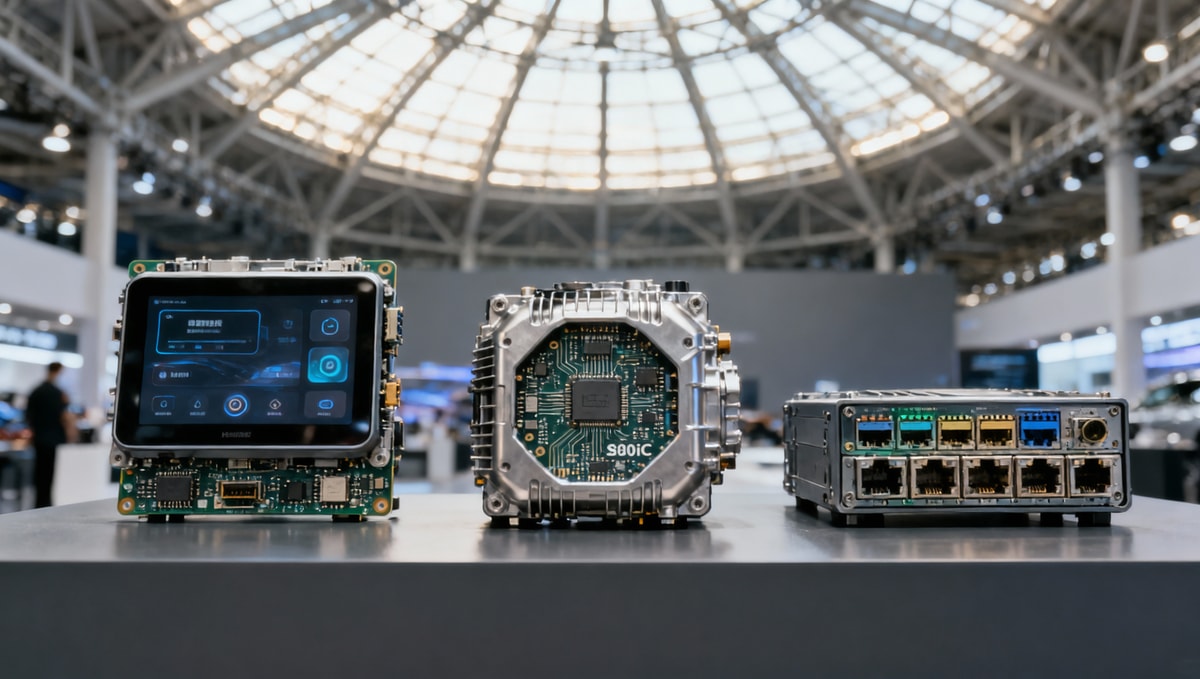
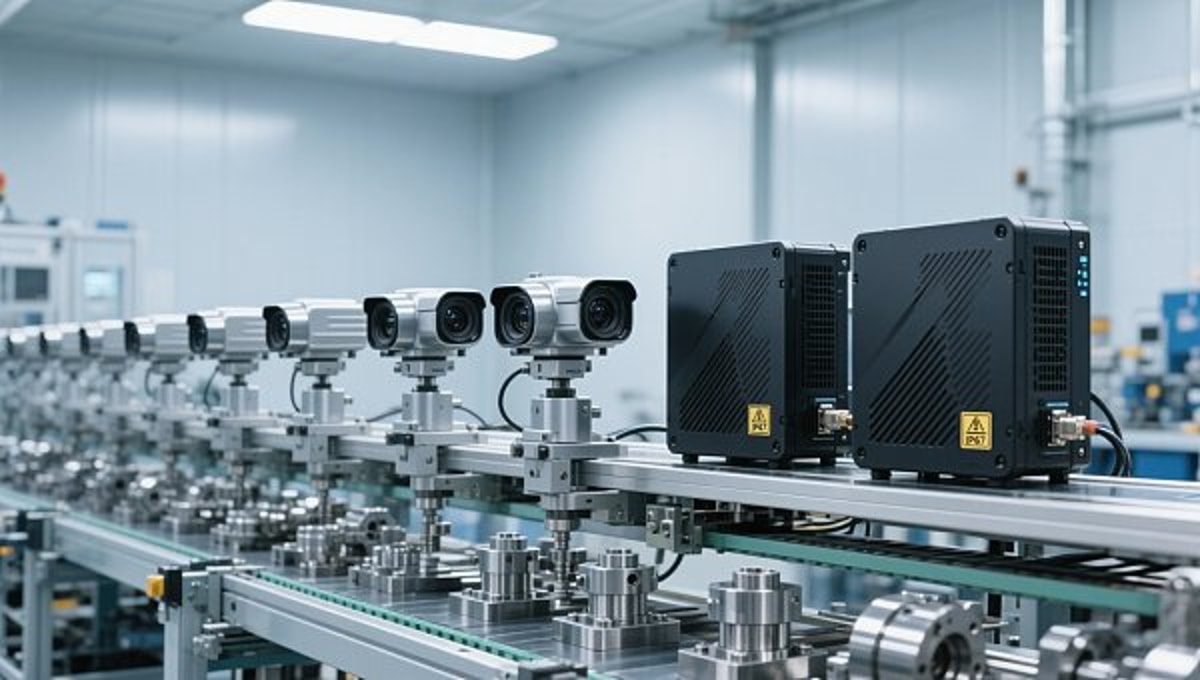
Suppliers of industrial camera modules and edge AI controllers face direct demand signals. The April 2026 inquiry surge reflects not just volume but specific technical preferences: compact form factors compatible with existing UAE factory layouts, support for Arabic-language UIs in configuration tools, and certification readiness for IEC 61508 or ISO 13849 (where applicable). Delivery cycle stability (8–10 weeks) suggests current production capacity is aligned, but sustained demand may test scalability.
PLC & Industrial Control System Integrators
Firms offering PLC-AI fusion solutions — especially those with pre-validated firmware stacks or modular AI inference add-ons — are seeing increased technical evaluation requests from regional partners. The impact lies in heightened expectations for interoperability (e.g., Modbus TCP + ONNX runtime), local technical documentation, and post-deployment remote diagnostics capability. Integration timelines are now more frequently benchmarked against AI model retraining latency and edge inference throughput — not just logic scan cycles.
Supply Chain Service Providers
Third-party providers supporting warehousing, localized testing, and after-sales calibration for imported FA hardware are experiencing early-stage demand signals. While no large-scale deployment has yet been reported, the concentration of April inquiries implies potential near-term need for GCC-region staging hubs, certified calibration labs for vision systems, and multilingual field service technicians trained on Chinese-branded edge AI devices.
What Relevant Companies or Practitioners Should Monitor and Do
Track official UAE AI strategy updates and sectoral rollout roadmaps
Analysis shows the UAE’s #1 ranking reflects policy coherence rather than just private-sector activity. The UAE Ministry of Industry and Advanced Technology and Dubai Electricity and Water Authority (DEWA) have published phased implementation plans for AI in manufacturing through 2027. Current procurement by integrators aligns with Phase 1 (pilot automation in automotive and electronics assembly); tracking Phase 2 announcements will clarify expansion into food & pharma or heavy industry — each requiring distinct hardware specifications.
Monitor inquiry patterns for three priority categories: camera module resolution/low-light performance, edge controller thermal tolerance, and PLC-AI interface standardization
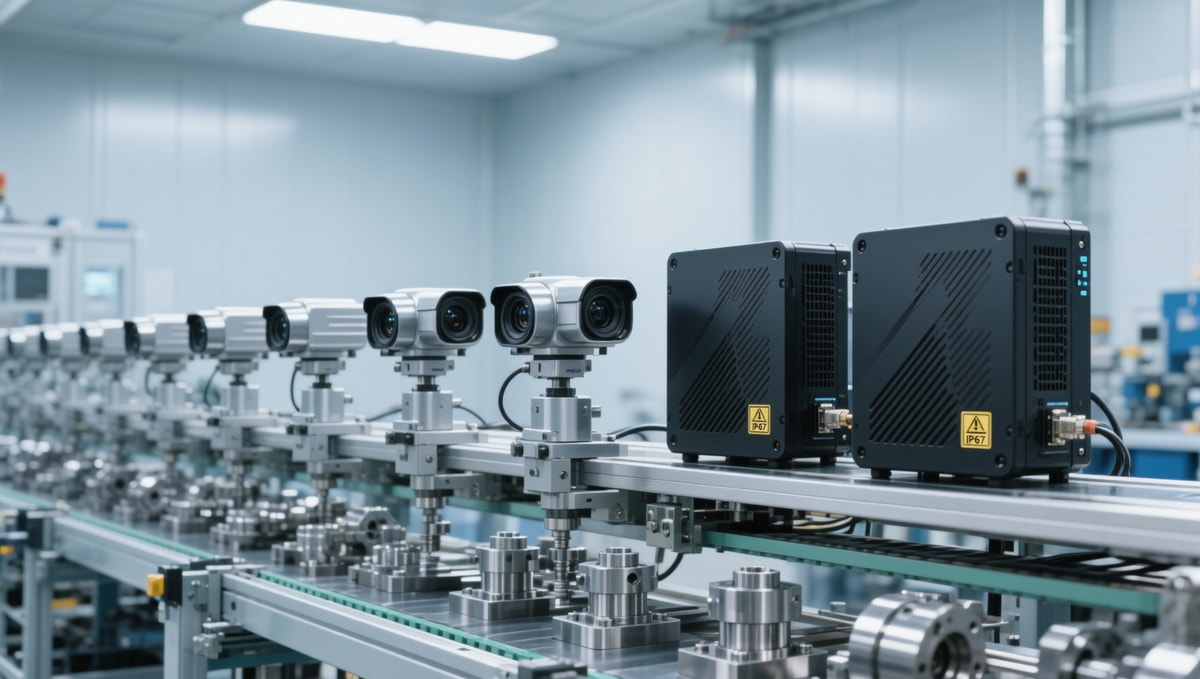
Observably, UAE integrators’ April 2026 RFQs emphasized ambient temperature resilience (up to 55°C), IP67-rated housings for dusty environments, and native support for MQTT/OPC UA over proprietary protocols. These are not generic preferences but regionally grounded operational constraints. Suppliers should prioritize validation data under Gulf environmental conditions — not just lab benchmarks.
Distinguish between pilot-phase procurement signals and scalable deployment readiness
From industry perspective, the 41% YoY inquiry increase reflects exploratory engagement — not yet full project commitment. Most April RFQs requested sample units, third-party test reports (e.g., TÜV SÜD), and Arabic-language user manuals. Actual PO conversion remains pending integration testing and local regulatory review. Companies should avoid scaling production or hiring before confirming minimum order volumes tied to verified pilot outcomes.
Prepare documentation, compliance, and channel communication for GCC-specific workflows
Current more actionable than broad market entry planning is readiness for GCC-specific steps: updating product labeling per UAE SIRAS requirements, securing Emirates Authority for Standardization and Metrology (ESMA) conformity assessments where applicable, and training local distributors on explaining AI inference latency vs. traditional PLC response times to end users. These are discrete, near-term actions — not strategic initiatives.
Editorial Perspective / Industry Observation
This development is better understood as a policy-accelerated demand signal — not yet a mature market transition. Analysis shows the UAE’s top ranking stems from coordinated national investment in AI infrastructure, talent pipelines, and regulatory sandboxes — not organic industrial AI adoption velocity. The April 2026 inquiry wave is therefore an early indicator of downstream commercial translation, not evidence of widespread deployment. Observably, it mirrors prior inflection points seen in Singapore (2022) and South Korea (2023), where government-led AI hub designation preceded 12–18 months of integration trials before volume procurement. The significance lies less in immediate revenue and more in timing alignment: companies that treat this as a 2026–2027 capability-building window — not a 2026 sales surge — are better positioned for sustainable engagement.
Conclusion
The UAE’s emergence as the world’s top-ranked AI hub — as confirmed in the 2026 AI Index Report — is catalyzing targeted, early-stage procurement activity in Factory Automation hardware, with measurable impact on Chinese suppliers’ inquiry volumes. However, this is best interpreted not as a sudden market opening, but as the initial phase of a structured, policy-guided industrial AI rollout. Stakeholders should prioritize technical readiness, regional compliance, and phased engagement over assumptions of rapid scale.
Information Source
Main source: 2026 AI Index Report.
Note: Delivery cycle data (8–10 weeks) and Q2 inquiry growth (41% YoY) are based on aggregated, anonymized supplier reporting cited in the report’s regional procurement annex. Ongoing observation is recommended for confirmation of actual PO conversion rates and Phase 2 sectoral expansion timelines.
Get weekly intelligence in your inbox.
No noise. No sponsored content. Pure intelligence.
 May 02, 2026China’s '15th Five-Year Plan' Prioritizes Low-Altitude Economy, Boosting Warehouse Robotics ExportsChina’s '15th Five-Year Plan' Prioritizes Low-Altitude Economy, Boosting Warehouse Robotics Exports
 May 02, 2026Q1 2026 Industrial Profits +15.5%; CNC Machining Capacity Utilization RisesQ1 2026 Industrial Profits +15.5%; CNC Machining Capacity Utilization Rises
 May 02, 2026China Opens Green Channel for Smart Home Exporters with Int'l CertsChina Opens Green Channel for Smart Home Exporters with Int'l Certs
 May 02, 2026Solar PV Export Timeliness Rises via Western Land-Sea CorridorSolar PV Export Timeliness Rises via Western Land-Sea Corridor
 May 02, 2026UAE Tops Global AI Hub Ranking; Demand Rises for Chinese FA SolutionsUAE Tops Global AI Hub Ranking; Demand Rises for Chinese FA Solutions
 May 02, 2026ADB Raises Vietnam GDP Forecast to 7.2% for 2026ADB Raises Vietnam GDP Forecast to 7.2% for 2026
") May 02, 2026China’s Trade SaaS Export Standards Updated (2026–2030)China’s Trade SaaS Export Standards Updated (2026–2030)
May 02, 2026China’s Trade SaaS Export Standards Updated (2026–2030)China’s Trade SaaS Export Standards Updated (2026–2030) May 02, 2026World's First 10,000-Car PCTC Delivered in GuangzhouWorld's First 10,000-Car PCTC Delivered in Guangzhou
 May 02, 2026China’s 5-Dept Battery Recycling Traceability Rule Affects ESS ExportsChina’s 5-Dept Battery Recycling Traceability Rule Affects ESS Exports
 May 02, 2026WeChat Pay QR Integration for 5 Countries: Eases Cross-Border ProcurementWeChat Pay QR Integration for 5 Countries: Eases Cross-Border Procurement
 May 01, 2026Beijing’s New E-Bike Rules Trigger Dual-Certification Demand for China’s Swappable Battery CabinetsBeijing’s New E-Bike Rules Trigger Dual-Certification Demand for China’s Swappable Battery Cabinets
 May 01, 2026GNA’s GEO Service Assessment Elevates AI Search as Digital Procurement Metric for Chinese ExportersGNA’s GEO Service Assessment Elevates AI Search as Digital Procurement Metric for Chinese Exporters
 May 01, 20262026 China Cycle Expo: Chinese EPS Systems Achieve UL 2849:2026 Full Certification2026 China Cycle Expo: Chinese EPS Systems Achieve UL 2849:2026 Full Certification
 May 01, 2026GB 42236-2026 Enforces EV Charger Efficiency & Overload Protection from May 2026GB 42236-2026 Enforces EV Charger Efficiency & Overload Protection from May 2026
 May 01, 2026GB/T 43790-2026 Drone EMC Standard Effective May 2026GB/T 43790-2026 Drone EMC Standard Effective May 2026
 May 01, 20262026 Foshan Tanzhou Auto Industry Expo Opens2026 Foshan Tanzhou Auto Industry Expo Opens
 May 01, 2026China’s New Hazardous Chemicals Safety Law Takes Effect May 2026China’s New Hazardous Chemicals Safety Law Takes Effect May 2026
 May 01, 2026New Maritime and Fisheries Laws Take Effect May 1, 2026New Maritime and Fisheries Laws Take Effect May 1, 2026
 May 01, 2026Supply Chain Automation Works Best Where Delays RepeatSupply Chain Automation Works Best Where Delays Repeat
 May 01, 2026High Strength Steel Forgings: What Should Be Tested First?High Strength Steel Forgings: What Should Be Tested First?
 May 01, 2026Automotive Steel Forging: Cost Pressure vs Part ReliabilityAutomotive Steel Forging: Cost Pressure vs Part Reliability
 May 01, 2026Why High Durability Steel Forgings Fail Earlier Than ExpectedWhy High Durability Steel Forgings Fail Earlier Than Expected
 May 01, 2026Construction Aluminum Extrusions: Which Finish Lasts Longer?Construction Aluminum Extrusions: Which Finish Lasts Longer?
 May 01, 2026Lightweight Aluminum Extrusions: Where Savings Really HappenLightweight Aluminum Extrusions: Where Savings Really Happen
 May 01, 2026Aerospace Aluminum Extrusions Need More Than Low WeightAerospace Aluminum Extrusions Need More Than Low Weight
 May 01, 2026Precision Lathe Turning Problems That Show Up After AssemblyPrecision Lathe Turning Problems That Show Up After Assembly
 May 01, 2026High Precision Lathe Turning: Tolerance Claims to VerifyHigh Precision Lathe Turning: Tolerance Claims to Verify